Dental implants in 1010 Vienna: artificial tooth roots for replacement teeth
A gap can affect eating, speaking or smiling. Together, we assess whether an implant suits your situation and what the steps towards replacing your missing teeth could involve.
Your missing tooth in focus
Individually planned
Each step clearly explained
Care from the outset
Dental Implants Vienna
zahnimplantate-wien
4.9★
Doctify rating
25+
Years of experience
Personal
In-practice consultation
1010 Vienna
Kärntner Straße 9
At a glance
Who may be suitable for dental implants?
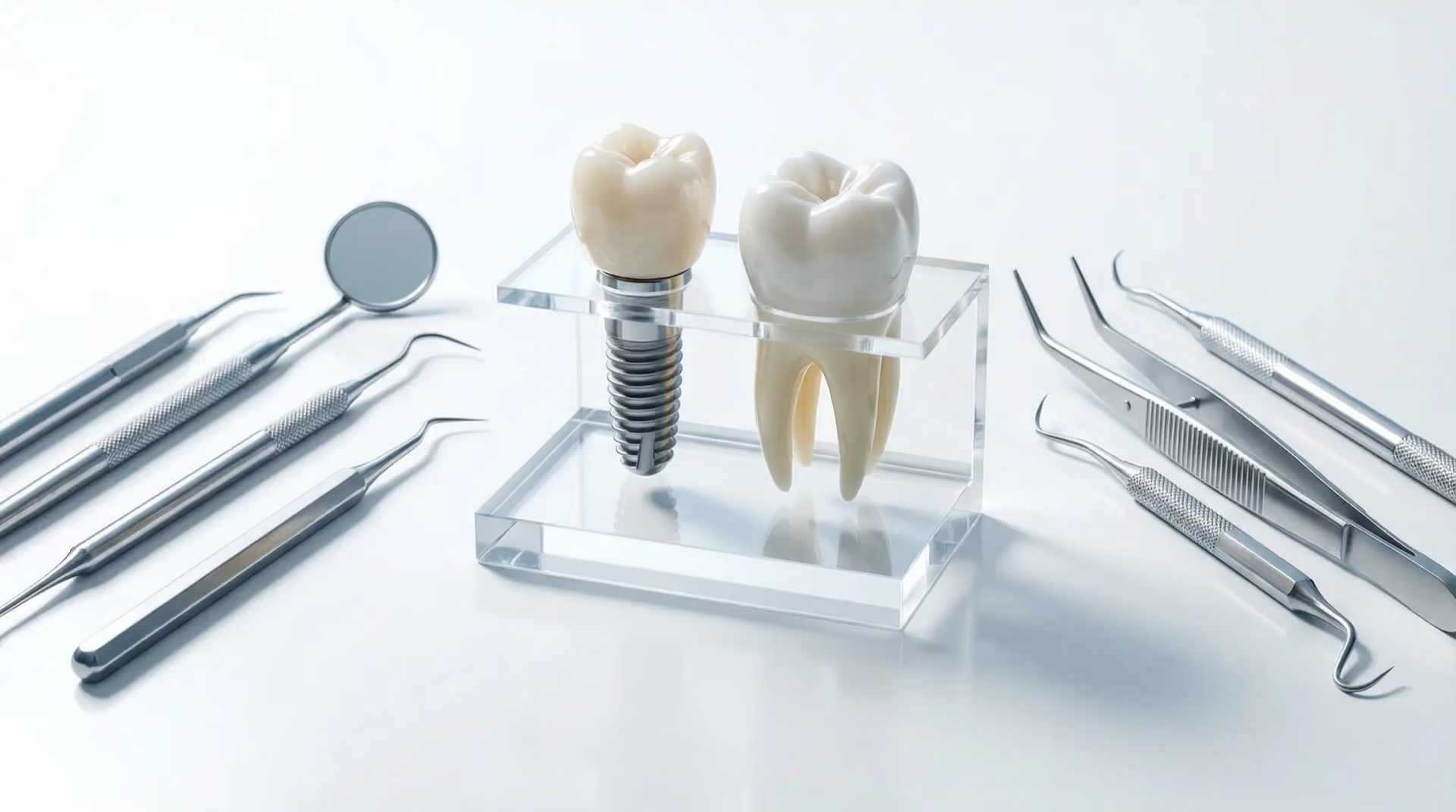
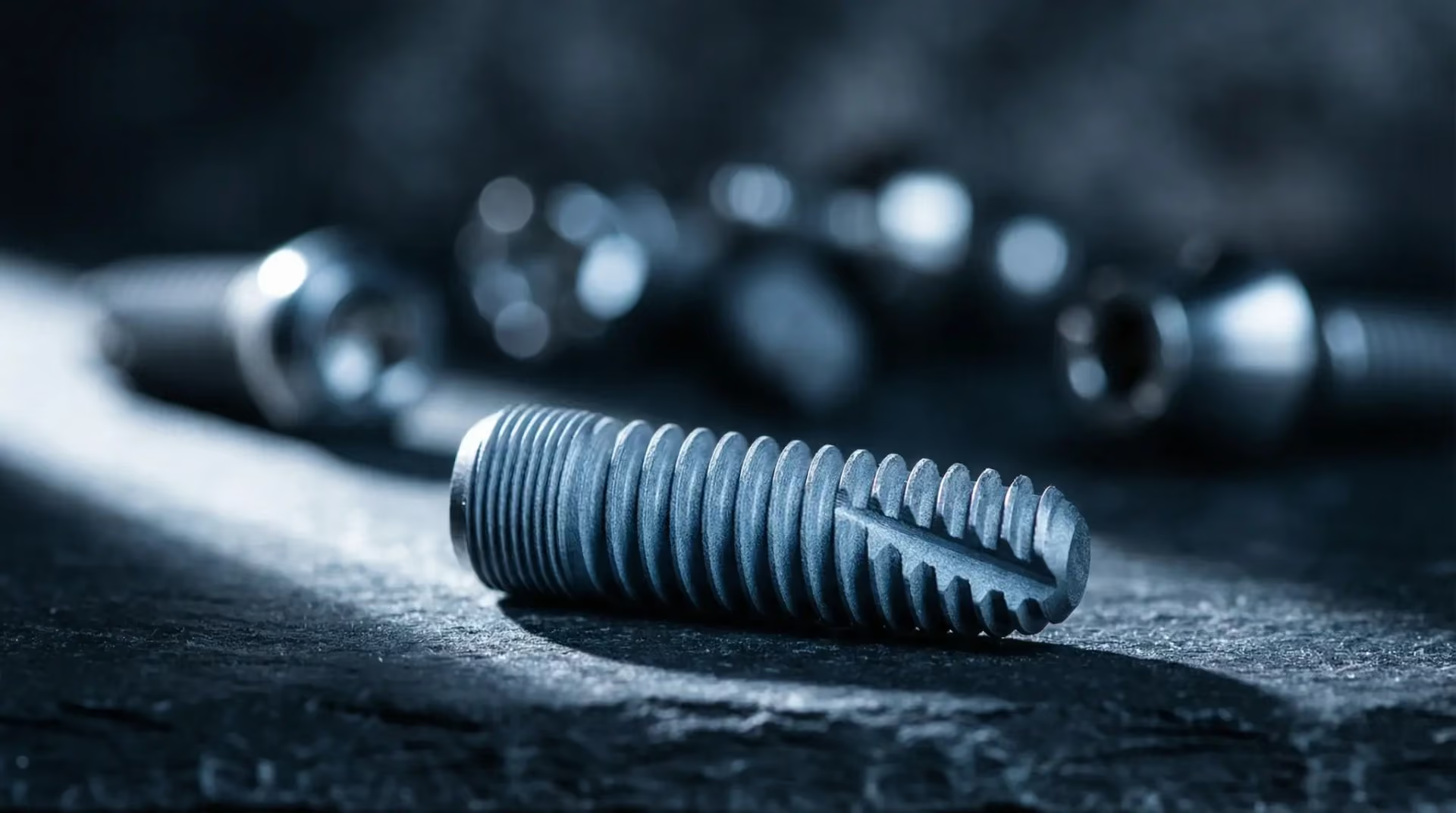
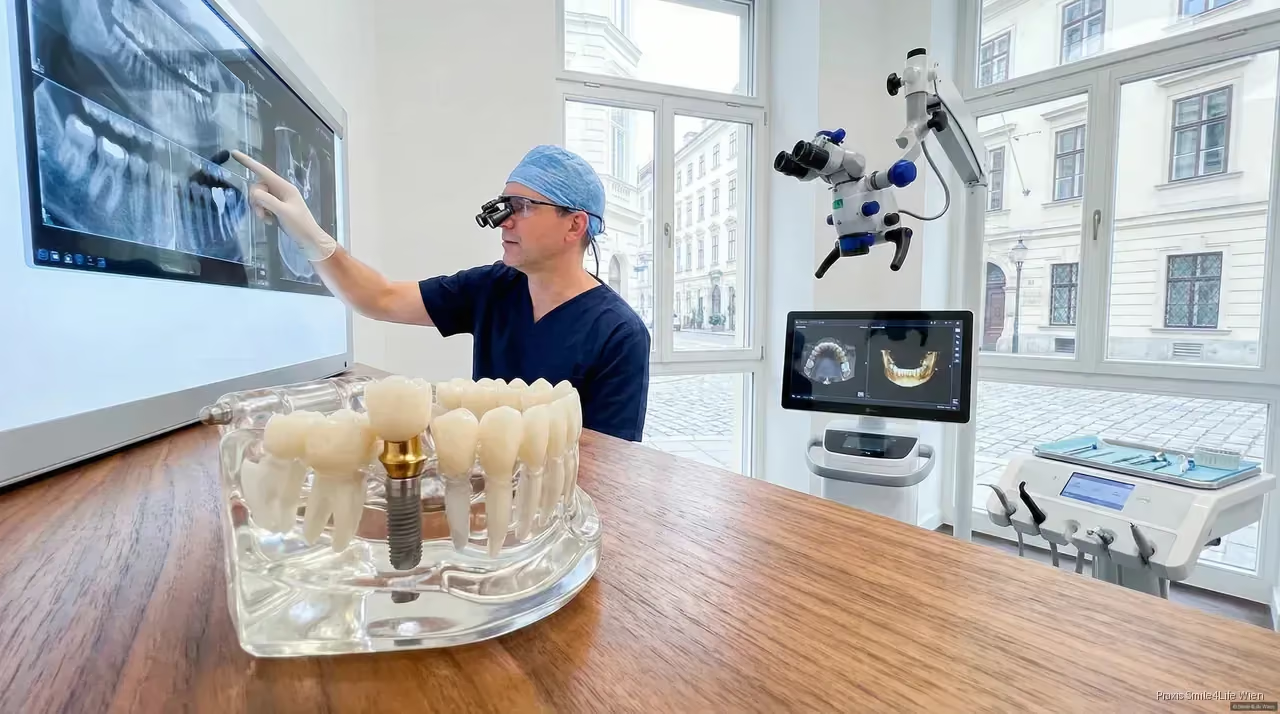
A dental implant is an artificial tooth root to which a crown or another type of dental restoration is attached. An examination of your teeth, gums, bone and bite establishes whether it suits your gap. Discuss your wishes and the alternatives; bring a list of your medication and any existing examination records or reports. X-rays are selected according to the question being investigated. We will clarify the next steps together.
What does treatment involve and how long does it take?
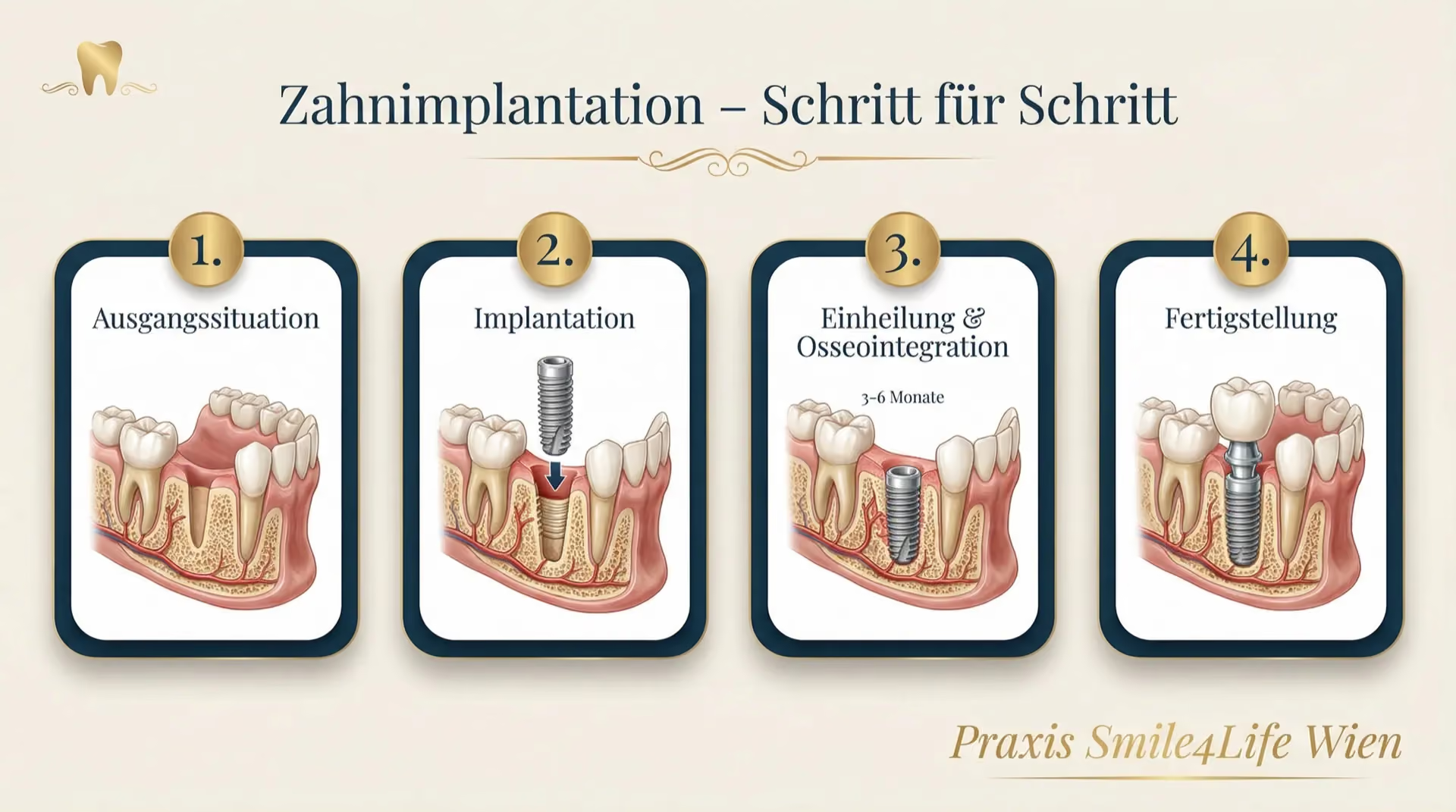
Planning, implant placement, healing and the final restoration require an individual timetable. Where the findings are suitable, an implant may be placed when the tooth is extracted; bone, soft tissue, signs of infection and stability are assessed together.*
What is included in the cost of dental implants?
The cost plan covers the entire restoration. In Austria, implants generally have to be paid for privately. ÖGK contributions are available only in exceptional medical circumstances — such as after tumour surgery in the mouth, for cleft lip and palate or severe jawbone loss — and only following approval by the Dental Service before treatment.*
Which risks, alternatives and care requirements matter?
Implant placement is a surgical procedure; inflammation can also occur later on. Care and check-ups remain important. Implant-supported single crowns and conventional bridges can function over the long term. Study findings vary according to the restoration and follow-up; neighbouring teeth and aftercare also matter when choosing. For a conventional bridge, neighbouring teeth are prepared; for an implant, they are not.*
A single gap, several missing teeth or an unstable dental restoration call for different solutions. Here you will find the key questions to help you decide.
Dental implants: which restoration suits your missing teeth?
A dental implant is an artificial tooth root in the jaw. A crown or another type of dental restoration can be attached to it. The appropriate restoration depends, among other things, on your remaining teeth, bone, gums and wishes.
Types of dental implants differ in their material, timing and the extent of the restoration: from a single-tooth implant to ceramic implants and immediate implants through to a fixed restoration for a toothless jaw with All-on-4. An examination is needed to establish which type suits you.
For a single gap, for example, we consider whether an implant or a bridge better suits the situation. Several missing teeth require a plan for the entire restoration. If a natural tooth can be preserved, we also discuss this option and the comparison with root canal treatment: a recent review found comparably high success rates and similar quality of life for retained, root-treated teeth and implants (Borda et al., 2025) — a reason to give tooth preservation serious consideration rather than treat it as a last resort.
Understand your options first
The consultation starts with your concerns and an examination. Existing medical conditions, medication and previous experiences with dental treatment are also taken into account. Bring your questions and any existing examination records or reports.
A general suitability checklist is not enough to make this decision. The page Requirements for dental implants – am I suitable? explains what is assessed before treatment and which alternatives are available.
From implant placement to replacement teeth
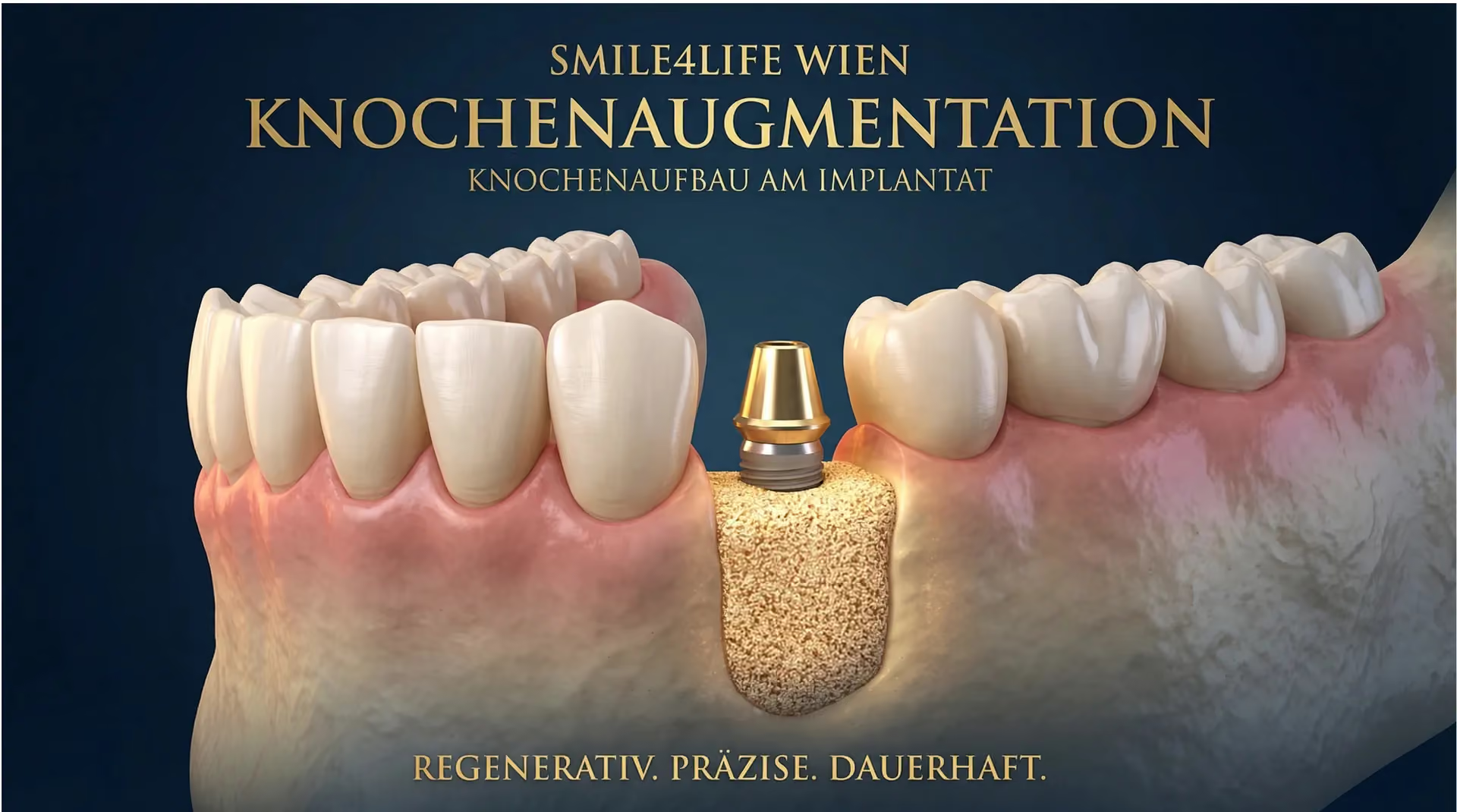
Depending on the findings, preparatory treatment such as bone augmentation may be necessary. After placement, the implant develops its biological anchorage during healing. The final crown or restoration is tailored to the gap and your bite.
A temporary restoration may be planned for the intervening period. Whether it is possible and how much load it can bear are planned separately. Having a visible replacement tooth quickly does not mean that healing is already complete. The treatment process explains the steps.
Compare costs with what is included
The price of an implant alone does not describe the completed restoration; the page Dental implant costs in Vienna explains which services should be included in a meaningful comparison. You will find indicative market prices on our prices page; we provide a binding figure only in your individual cost plan after the examination.
Which risks and limitations should you know about?
Implant placement is a surgical procedure. Possible complications include wound infections, for example. Inflammation around an implant can also damage the surrounding bone later on. Before treatment, we discuss which risks are particularly relevant to you and which alternatives are available. You can find out more about recognising and treating this condition under peri-implantitis.
Care is part of the plan from the outset
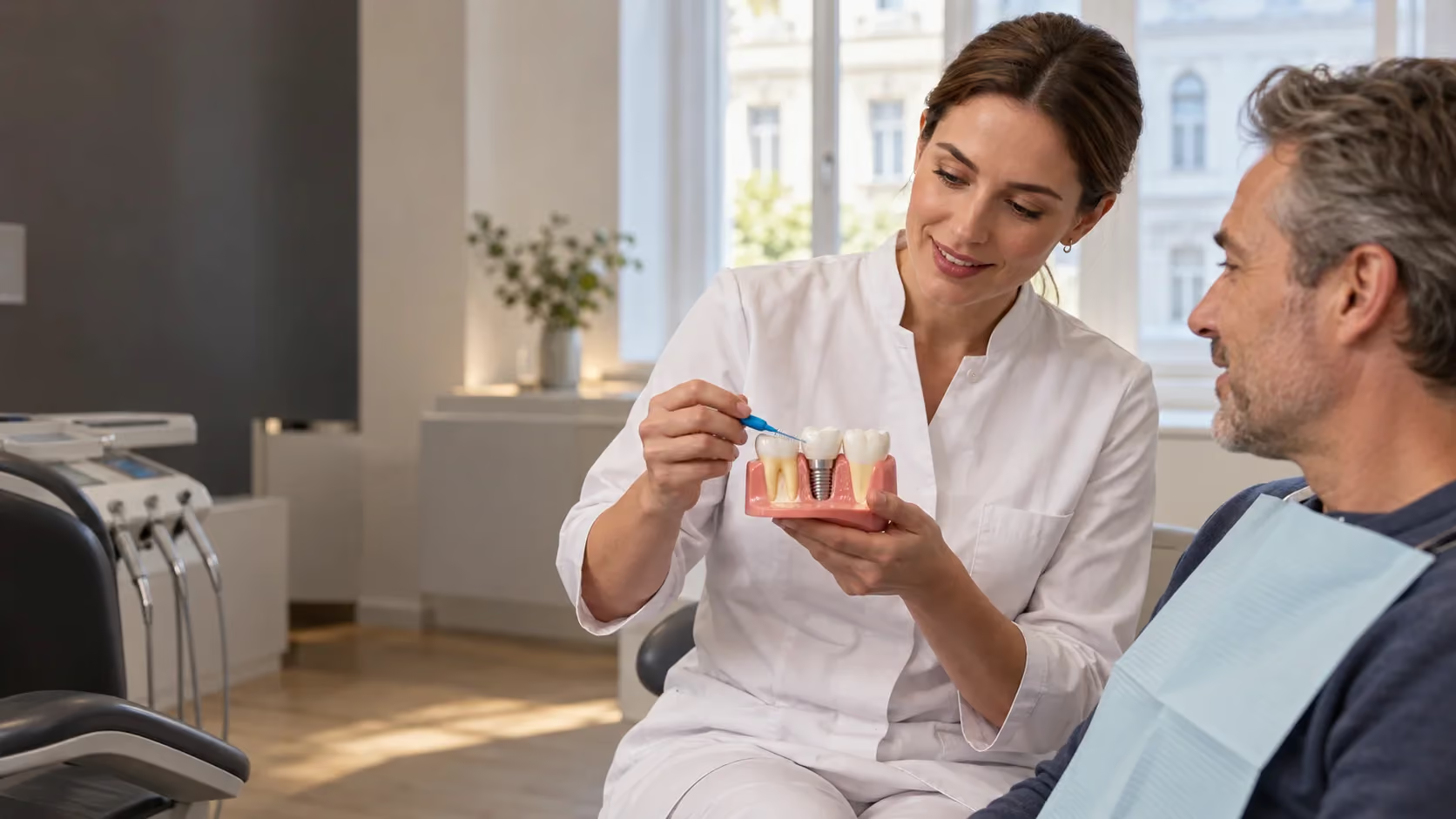
Implants also need clean junctions with the gums and check-ups at intervals based on your examination findings. The implant care page explains everyday cleaning. Longevity cannot be predicted with a single general figure.
What does implantology involve?
Implantology concerns anchoring replacement teeth with implants. It encompasses both surgical planning in the jawbone and the subsequent restoration. A titanium implant is not the same as a visible ceramic crown; the parts perform different functions. The YERIT guide Dental implants: structure, function and limitations complements this overview with more detail.
For patients, the main questions are how the restoration will function and how it can be cleaned. A natural tooth that can be preserved, a dental bridge and a denture are therefore also considered as alternatives, depending on the findings. The basics of dental implants explain their structure in more detail.
Your next step
Write down what bothers you most about your current situation and which questions remain unanswered. During the consultation, you can discuss the options, alternatives and likely steps together. For a single gap, you will find further guidance on the single-tooth implant page.
Sources and context
YOUR CONCERNS
What is on your mind?

One tooth is missing
Restore a single gap in a way that fits your neighbouring teeth and bite.
Several teeth are missing
Explore the options for the entire restoration together.
Your restoration feels unstable
Find out which restoration could provide more stability in everyday life.
SUITABILITY CHECK
Is this treatment right for you?
YOUR JOURNEY
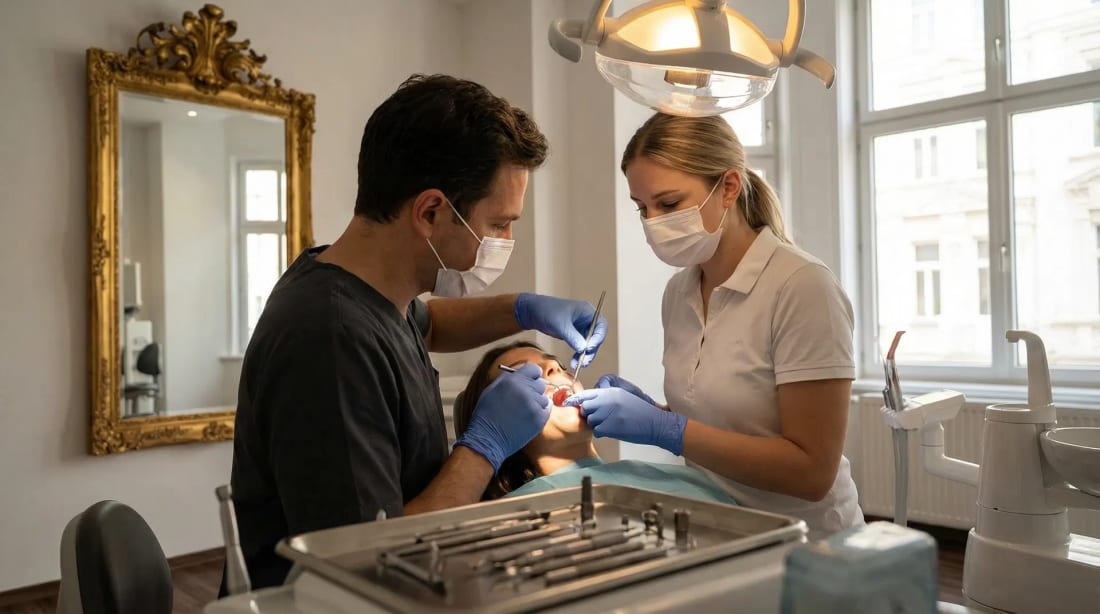
Your treatment process
Individual initial consultation
Getting to know your goals and your teeth
We will discuss your goals and examine which treatment is best suited for your teeth.


Individual treatment planning
Defining the next steps together
You will learn which steps are planned and which questions should be clarified in advance.
Precise execution
Guiding you through your treatment step by step
Your treatment follows your personal plan. Please ask questions and tell us about any discomfort at any time.
Aftercare and check-ups
Discuss care and follow-up appointments
Finally, we will discuss ongoing care and the follow-up appointments that are right for you.
In everyday life
The aim is a restoration that fits your bite and everyday life. Cleaning and aftercare are considered from the outset.
YOUR OPTIONS
TREATMENT OPTIONS COMPARED
Established
Dental bridge
No surgery is needed if the neighbouring teeth already require crowns.
Full jaw
All-on-4
Full-jaw restoration on four implants — temporary teeth are often possible on the day of surgery, if the bone allows.
We will discuss payment terms with you prior to treatment.
The indicative market prices in our price overview provide an initial guide. We will discuss which services are planned for you and the costs involved based on your examination findings and individual cost plan.
Advanced Dental Aesthetics & Implantology
Priv.Doz.Dr.Dr. K. Yerit
“Aesthetics is not a coincidence, but the result of precise planning and deep passion.”
Dental implants are an established option for restoring function and appearance after tooth loss — we will assess together whether they suit your situation.
View profile →Scientific references
Institute for Implantology and Digital Dentistry Vienna
German Association of Oral Implantology (DGI)
Austrian Society of Implantology
International Team for Implantology (ITI)
European Association for Osseointegration (EAO)
Yerit Practice – Dentist Vienna
Excellence
Why Smile4Life
Suited to your gap
The restoration is planned around your examination findings and concerns.
Consider neighbouring teeth
For a single gap, healthy neighbouring teeth often do not need to be prepared as supports for a bridge.
Consider bite and appearance together
The shape and function of the final crown are tailored to your situation.
Prepare for the intervening period
A possible temporary restoration is discussed before the procedure.
Plan for care
Easily accessible junctions help with daily cleaning.
Understand your decision
Alternatives, the extent of treatment and the next steps are considered together.
Frequently asked questions
Frequently asked questions
Do you have a specific question about your diagnosis? Book a consultation appointment directly →
Questions about your treatment?
Discuss what matters to you and what the next steps look like with us.
Book your appointment nowYour orientation
The right restoration starts with your examination findings.
Understanding what’s involved
The extent of treatment, appointments and aftercare are discussed based on your examination findings.
In everyday life
The aim is a restoration that fits your bite and everyday life. Cleaning and aftercare are considered from the outset.
Who this information is for
For people with a gap in their teeth who would like to weigh up their options after an individual examination.
Important limitations
Medical conditions, medication and inflammation may make preparation or alternatives necessary. An individual examination clarifies the next steps.
Our approach
A decision about implants should take account of preserving natural teeth, suitable alternatives and long-term care. Studies help to put the options in context, but do not replace your individual examination findings.
SCIENTIFIC STUDIES
A decision about implants should take account of preserving natural teeth, suitable alternatives and long-term care. Studies help to put the options in context, but do not replace your individual examination findings.
Pandey C et al. (2022). Contemporary Concepts in Osseointegration of Dental Implants: A Review
Healing of the implant into the bone (osseointegration) is the biological basis for success. Implant design, bone quality and loading instructions have a substantial influence on the healing process (BioMed Research International, 2022).
35747499
Lupi SM et al. (2026). Dental implant survival and marginal bone loss after a minimum of 20 years: systematic review and meta-analysis of prospective studies
This systematic review examines the survival of titanium implants over at least 20 years. The findings describe implant retention under different study conditions, not a personal guarantee, the lifespan of the crown or freedom from complications.
42173763
Prevention and treatment of peri-implant diseases—The EFP S3 level clinical practice guideline
Inflammation around implants requires its own diagnosis and treatment. Cleaning, risk control and aftercare are part of this. No procedure guarantees implant preservation or complete tissue regeneration. These outcomes must not be equated with treatment outcomes for natural teeth.
37271498
Romandini M et al. (2022). Minimal invasiveness at dental implant placement: A systematic review with meta-analyses on flapless fully guided surgery
The review of five randomised studies compared statically fully guided implant placement without raising a gum flap with conventional procedures. Less postoperative pain was reported, with low certainty of evidence; a reduction in swelling was not reliably demonstrated. Differences in accuracy and procedure duration relate to this specific technique and are not a promise for an individual procedure.
35906928
Borda MF et al. (2025). Comparative outcomes of endodontically treated teeth versus dental implant-supported prostheses: a systematic review
Dental implants and root canal treatments show comparably high success rates and similar patient quality-of-life and satisfaction scores (Acta Odontologica Scandinavica, 2025).
40552466
Guida L et al. (2022). Short versus Longer Implants in Sites without the Need for Bone Augmentation: A Systematic Review and Meta-Analysis of Randomized Controlled Trials
In suitable cases, short implants (up to 6mm) achieve success rates comparable to those of longer implants, without the need for bone augmentation (Materials, 2022).
35591482
Austrian Health Insurance Fund: Dentures and implants
Implants are not among the services covered by the ÖGK and must be paid for privately. In exceptional medical circumstances — such as cleft lip and palate, rehabilitation after tumour surgery in the oral cavity or extreme jawbone loss — contributions are available following approval by the Dental Service (gesundheitskasse.at, accessed 02.11.2026).
Pjetursson BE et al. (2012). Quality of reporting of clinical studies to assess and compare performance of implant-supported restorations
Systematic review over ten years: the lowest annual loss rates were found for implant-supported single crowns (1.12%) and conventional tooth-supported bridges (1.14%) (Journal of Clinical Periodontology, 2012).
22533954
Howe MS et al. (2019). Long-term (10-year) dental implant survival: A systematic review and sensitivity meta-analysis
Meta-analysis of 18 prospective studies: after ten years, 96.4% of implants were still functioning; for patients aged 65 and over, the figure was 91.5% in the sensitivity analysis (Journal of Dentistry, 2019).
30904559
Association of Dental Implantology: Timing of implant placement
The ADI distinguishes four timings: immediate placement in the same session as tooth extraction (Type I), early placement after 4 to 8 weeks of soft-tissue healing (Type II), after 12 to 16 weeks of partial bone healing (Type III), and late placement after complete healing (Type IV) (adi.org.uk, accessed 02.11.2026).
More topics in this area
Deepen your knowledge – find all information regarding the treatment process, costs, and results.



Kärntner Straße 9
100 meters from Stephansplatz, Innere Stadt.


Partnerships & Memberships & References