
Braces in Vienna: Fixed Braces, Removable Appliances and Aligners
Professional tooth straightening for children and adults, individually planned and informed by evidence
Duration follows findings
For children & adults
Statutory free braces may apply
Fixed braces & aligners
Braces Vienna
zahnspange-wien
4.9★
Doctify rating
25+
Years of experience
Personal
In-practice consultation
1010 Vienna
Kärntner Straße 9
At a glance
Which braces may be suitable for me?
Fixed braces, removable appliances and aligners address different tooth and bite misalignments. The first visit clarifies whether and when treatment is appropriate by examining teeth, bite and gums, with X-rays if needed. Children and teenagers are graded with IOTN, affecting Gratis-Zahnspange eligibility. The appropriate appliance follows assessment.
What should I do about gum inflammation with braces?
Clean thoroughly rather than stopping: plaque is usually responsible. Brush twice daily for at least two minutes, including brackets, and clean between teeth. For insured patients between their 10th and 18th birthdays receiving fixed orthodontics, ÖGK covers dental hygiene twice yearly, at least six months apart.*
Do braces hurt?
Teeth are often pressure-sensitive for a few days after fitting or adjustment. A meta-analysis found no short-term pain difference between adult aligner and fixed-brace patients. Have severe or persistent pain checked.*
How long does orthodontic treatment take?
Austria’s health portal describes main treatment as usually around three to four years and early childhood treatment as half a year to two years.* Your duration can only be assessed from findings; smaller corrections are often shorter.
A straighter smile at any age.
For children and adults
From a child’s first orthodontic assessment to wanting straighter teeth at 40, modern orthodontics offers different possibilities, from fixed braces to clear aligners. Suitability depends on the starting situation.
Individually planned
The suitable appliance for you or your child depends on misalignment type and severity, age and personal requirements. We assess this together during examination.

average improvement in tooth alignment (PAR reduction) with fixed braces
According to a meta-analysis of 20 randomised studies involving 1,470 patients (Papageorgiou et al., 2024, European Journal of Orthodontics).
Further detail
Braces in Vienna: tooth straightening across ages
An uneven smile need not remain unchanged. Braces planning begins with findings at our Vienna practice, establishing suitability for fixed braces, removable appliances or clear aligners.
A meta-analysis assessed changes in PAR, an index of misalignment, with fixed appliances. Included studies varied considerably; a group average is not a personal success probability (Papageorgiou et al., 2024).
Fixed, removable or aligners?
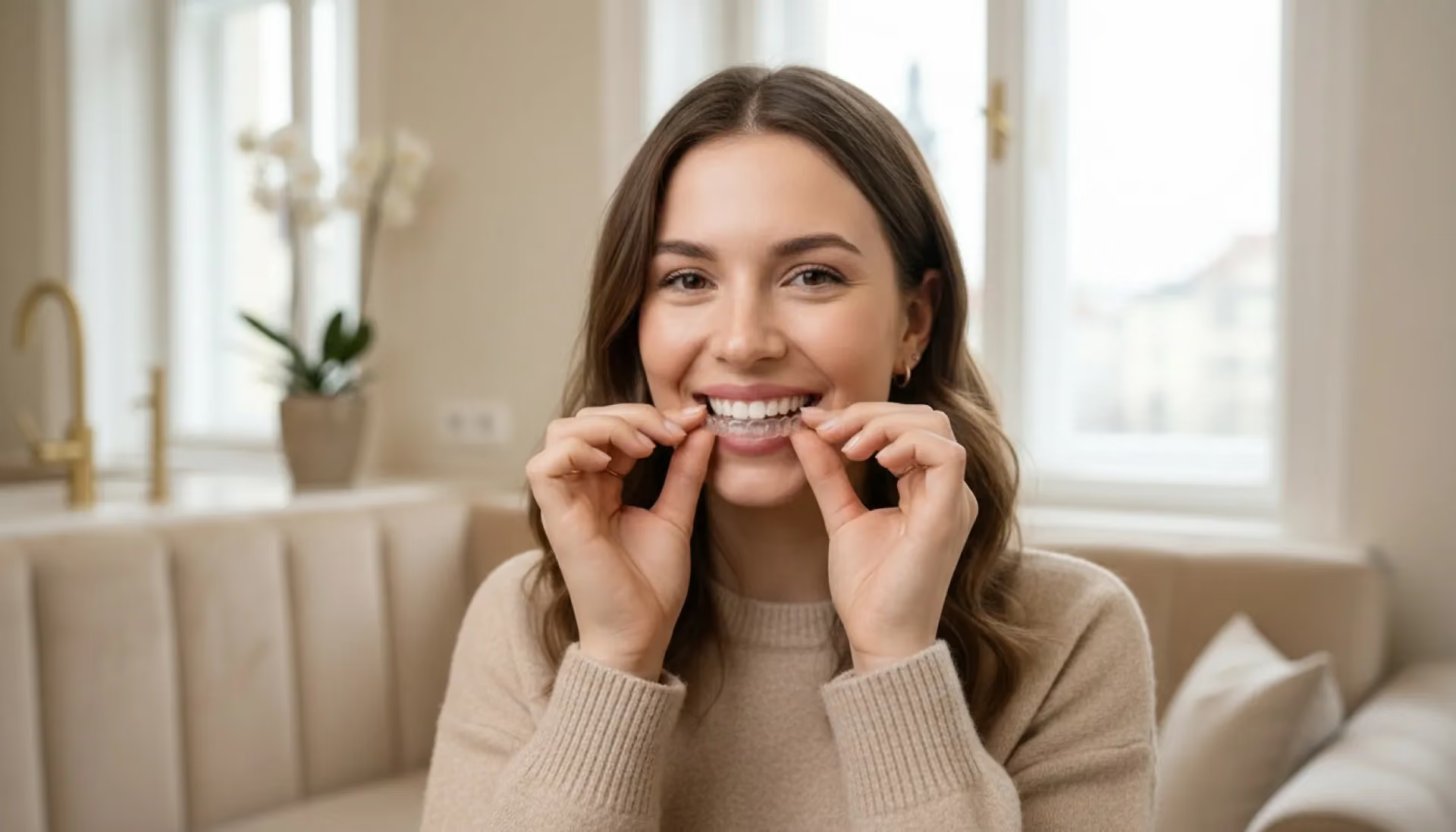
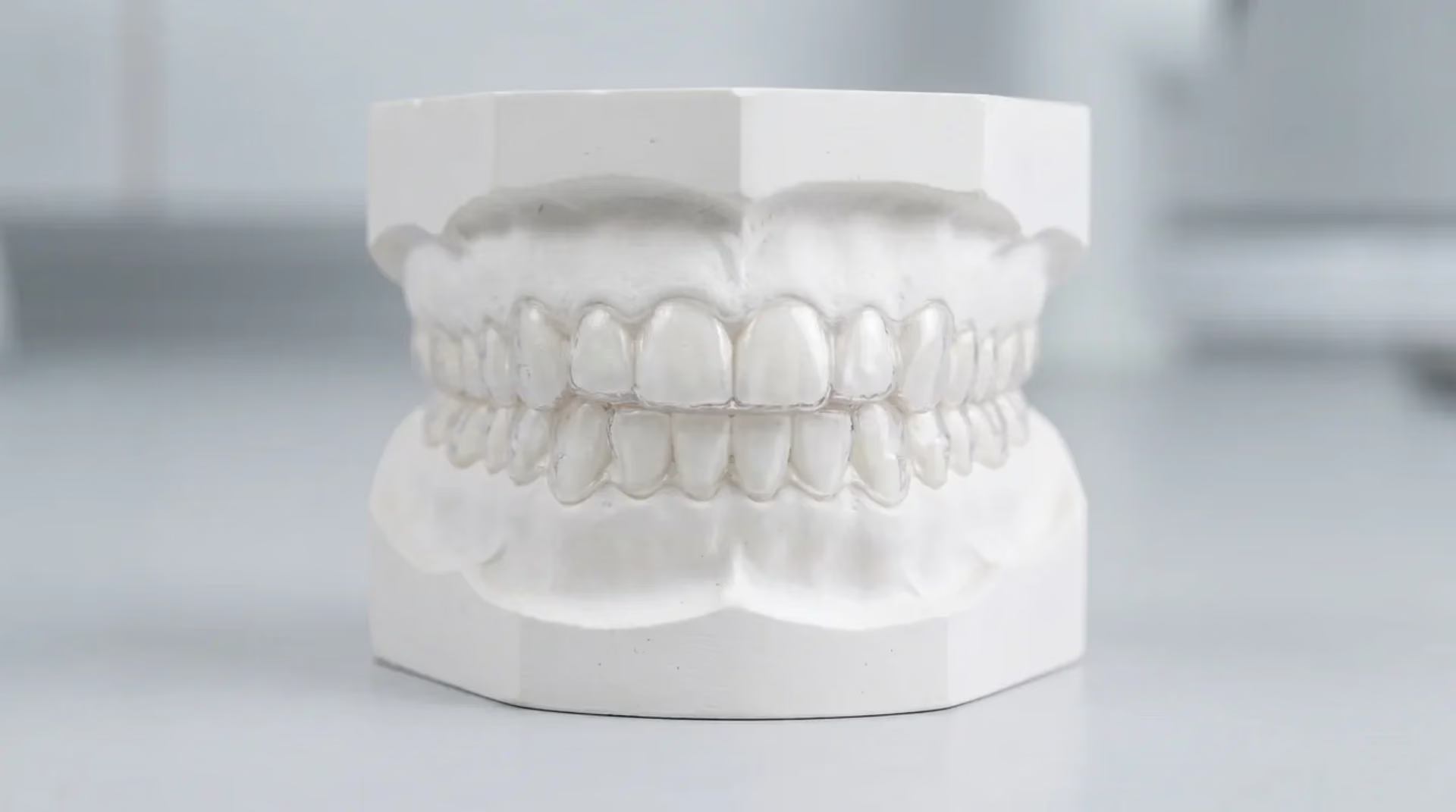
The three common approaches differ chiefly in suitability and daily requirements. Fixed braces with brackets cover a broad range of misalignments in children and adults. Removable appliances use jaw growth in children. Clear aligners such as Invisalign offer a discreet alternative for mild to moderate cases. A meta-analysis of 15 studies with 1,084 patients found no statistically significant differences in the assessed outcomes for non-extraction cases; this does not establish general equivalence. Fixed appliances performed better in more complex extraction cases (Alhafi et al., 2025).
Insurance benefits and the Gratis-Zahnspange
Braces are not exclusively private treatment in Austria. For children and teenagers with severe misalignment, IOTN 4 or 5, ÖGK may cover treatment under the Gratis-Zahnspange benefit. Our cost page explains eligibility, other contributions and private-practice arrangements. The YERIT braces guide describes types and how they work.
YOUR CONCERNS
What is on your mind?
Misaligned teeth
Crowded or displaced teeth can affect appearance, oral hygiene and chewing function.
Children & teenagers
The first orthodontic assessment may be appropriate earlier than parents expect and may help avoid more extensive later treatment.
Adults
Healthy gums and jawbone can permit correction at different adult ages; examination establishes suitability.
SUITABILITY CHECK
Is this treatment right for you?
YOUR JOURNEY
Your treatment process
Individual initial consultation
Getting to know your goals and your teeth
We will discuss your goals and examine which treatment is best suited for your teeth.


Individual treatment planning
Defining the next steps together
You will learn which steps are planned and which questions should be clarified in advance.
Precise execution
Guiding you through your treatment step by step
Your treatment follows your personal plan. Please ask questions and tell us about any discomfort at any time.

Aftercare and check-ups
Discuss care and follow-up appointments
Finally, we will discuss ongoing care and the follow-up appointments that are right for you.
In everyday life
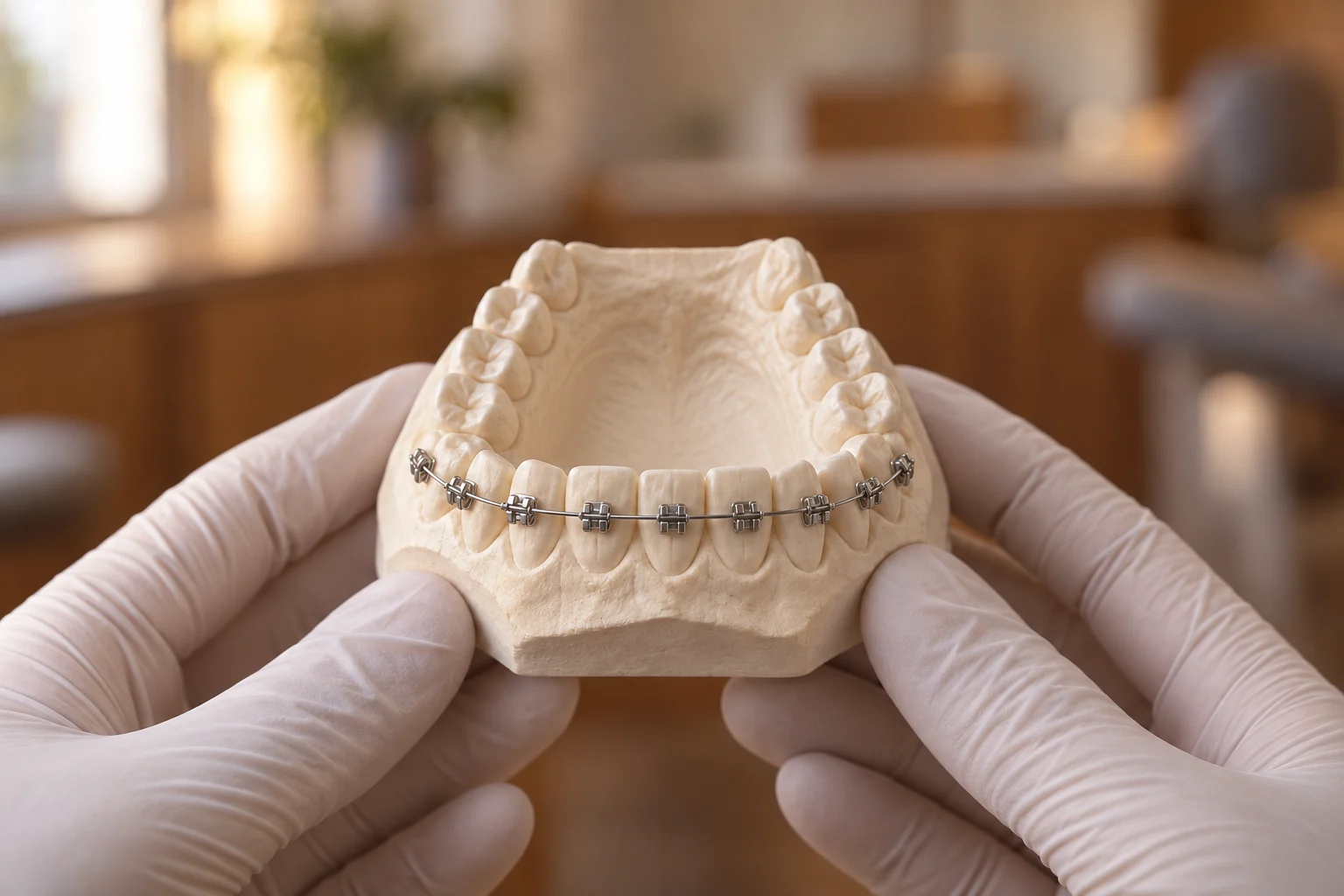
Adjustment matters in daily life. Fixed braces often feel less noticeable after a few days; aligners are removed for eating and cleaning. Regular checks monitor progress.
YOUR OPTIONS
TREATMENT OPTIONS COMPARED
We will discuss payment terms with you prior to treatment.
The indicative market prices in our price overview provide an initial guide. We will discuss which services are planned for you and the costs involved based on your examination findings and individual cost plan.
Advanced Dental Aesthetics & Implantology
Priv.Doz.Dr.Dr. K. Yerit
“Aesthetics is not a coincidence, but the result of precise planning and deep passion.”
Tooth alignment concerns more than appearance. It supports chewing function and can make long-term oral hygiene easier.
View profile →Scientific references
Institute for Implantology and Digital Dentistry Vienna
Deutsche Gesellschaft für Kieferorthopädie (DGKFO)
Österreichische Gesellschaft für Kieferorthopädie (ÖGKFO)
European Orthodontic Society (EOS)
Cochrane Oral Health
Yerit Practice – Dentist Vienna
Excellence
Why Smile4Life
Across age groups
From childhood assessment to adult correction, we support different stages of life.
Possible ÖGK contribution
ÖGK may contribute where treatment is medically necessary.
Digital planning
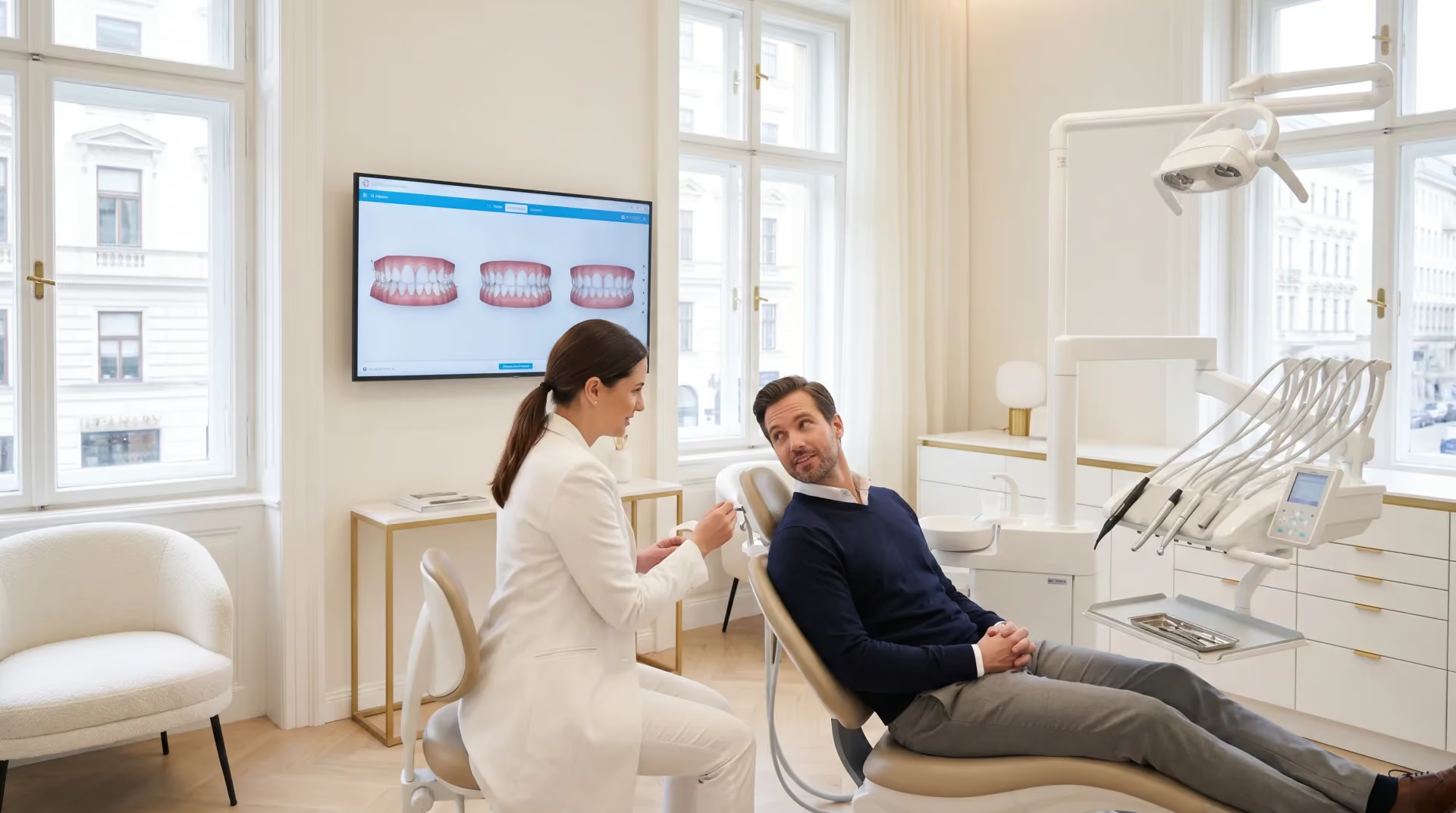
3D scanning and simulation support planning and illustrate the goal, not guarantee actual progress.
Different methods
Metal or ceramic brackets and clear aligners: findings determine suitability.
Long-term results
Long-term retention helps limit renewed movement. Agreed wear and regular checks remain important.
Experienced specialist
Priv.Doz.Dr.Dr. K. Yerit supports orthodontic treatment with interdisciplinary expertise.
Frequently asked questions
Frequently asked questions
Do you have a specific question about your diagnosis? Book a consultation appointment directly →
Questions about your treatment?
Discuss what matters to you and what the next steps look like with us.
Book your appointment nowYour orientation
Duration follows findings: main treatment usually takes three to four years according to Austria’s health portal, followed by retention to support the result.
Understanding what’s involved
Checks are regular during active treatment, with frequency following appliance and findings. Retainer checks continue afterwards.
In everyday life
Adjustment matters in daily life. Fixed braces often feel less noticeable after a few days; aligners are removed for eating and cleaning. Regular checks monitor progress.
Who this information is for
For children from their first orthodontic assessment once permanent incisors have erupted, teenagers and adults with visible misalignment, crowding or chewing problems. Examination establishes the suitable method.
Important limitations
Untreated severe periodontitis, uncontrolled diabetes or active bone disease require stabilising the underlying condition first. With insufficient cooperation, particularly for aligners, a fixed option may be more reliable.
Our approach
Fixed braces follow individual diagnosis rather than being our standard answer. Evidence supports their effectiveness: a meta-analysis of 20 randomised studies reported average PAR reduction of 82.6 percent, a treatment outcome measure rather than an individual success probability.
We select aligners or fixed braces according to the findings. Alhafi et al. (2025) found no statistically significant differences in assessed outcomes in simpler non-extraction cases, with advantages for fixed appliances in complex extraction cases. Uncertain evidence does not establish general equivalence. We recommend the appropriate method, not simply the most convenient-sounding one. Retention is discussed from the start because insufficient wear increases the risk of loss of the achieved position over time.
SCIENTIFIC STUDIES
Fixed braces follow individual diagnosis rather than being our standard answer. Evidence supports their effectiveness: a meta-analysis of 20 randomised studies reported average PAR reduction of 82.6 percent, a treatment outcome measure rather than an individual success probability.
We select aligners or fixed braces according to the findings. Alhafi et al. (2025) found no statistically significant differences in assessed outcomes in simpler non-extraction cases, with advantages for fixed appliances in complex extraction cases. Uncertain evidence does not establish general equivalence. We recommend the appropriate method, not simply the most convenient-sounding one. Retention is discussed from the start because insufficient wear increases the risk of loss of the achieved position over time.
Papageorgiou SN et al. (2024). Occlusal outcome of orthodontic treatment: a systematic review with meta-analyses of randomized trials
A meta-analysis of 20 randomised studies involving 1,470 patients estimates average PAR reduction (Peer Assessment Rating) with fixed braces at 82.6 percent (95% confidence interval 70.8 to 94.4). Variation between studies is very high; the average is not an expectation for an individual case.
39607678
Alhafi ZM et al. (2025). Quality and stability of orthodontic treatment outcomes with clear aligners versus fixed appliances
A meta-analysis of 15 studies with 1,084 patients found no statistically established difference in the quality and duration measures examined between aligners and fixed appliances for non-extraction treatment. Varying studies and short follow-up limit the conclusions; general equivalence is not proven. Extraction cases showed a quality advantage for fixed appliances.
41127933
Johal A et al. (2025). Oral Health-Related Quality of Life, Pain and Side Effects in Adults Undergoing Different Orthodontic Treatment Modalities
A systematic review and meta-analysis finds no difference in short-term pain between adult aligner and fixed-brace treatment. Aligners may nevertheless be associated with less impairment of oral health-related quality of life.
41464384
Al Shammary NH (2024). Enhancing Orthodontic Renewal and Retention Techniques: A Systematic Review
The review addresses quality of life and psychosocial aspects of orthodontic treatment and retention. It describes favourable psychological changes after treatment and possible appliance-related burdens during wear. It does not establish a universally optimal retainer type, wear duration or replacement interval.
38659711
Aye ST et al. (2023). The prevalence of the failure of fixed orthodontic bonded retainers: a systematic review and meta-analysis
A meta-analysis of 34 studies involving 3,484 participants estimates overall fixed-retainer failure at around 35 percent, increasing markedly with follow-up from around 24 percent short term to around 54 percent long term. The authors rate evidence quality as low; no meaningful difference between bonding methods was found.
37824794

Digitally planned, carefully carried out
Digital planning describes the intended tooth movements. Reviews check how the teeth actually respond; the plan is adjusted when necessary.
More topics in this area
Deepen your knowledge – find all information regarding the treatment process, costs, and results.


Kärntner Straße 9
100 meters from Stephansplatz, Innere Stadt.


Partnerships & Memberships & References