
Veneers in Vienna: changing tooth shape and colour
Would you like lighter teeth or a more even tooth shape? We discuss which options fit your teeth, findings and wishes.
Personal consultation
Individual planning
Weigh up the options
Decide in your own time
Veneers Vienna
veneers-vienna
At a glance
What are veneers and what can they change?
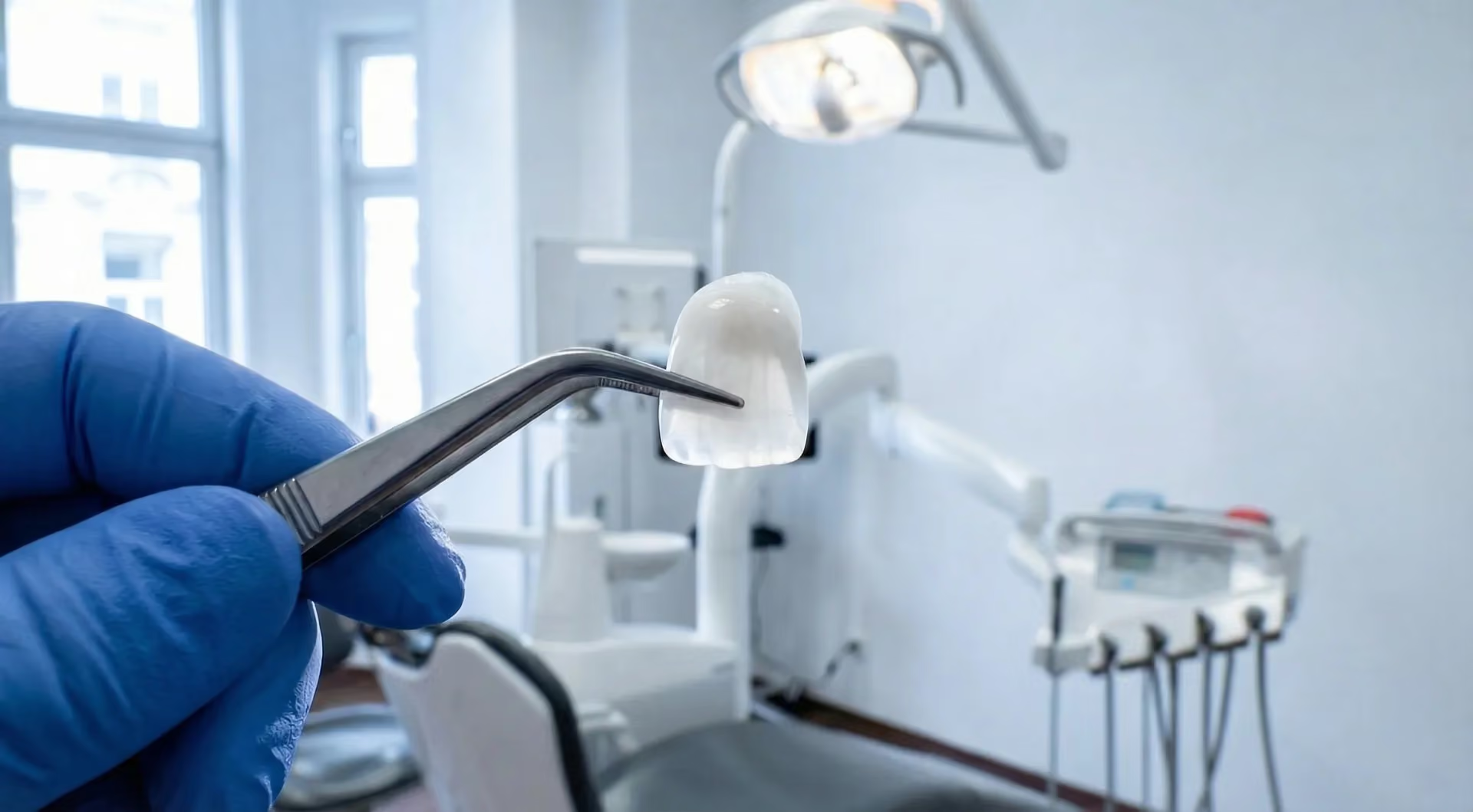
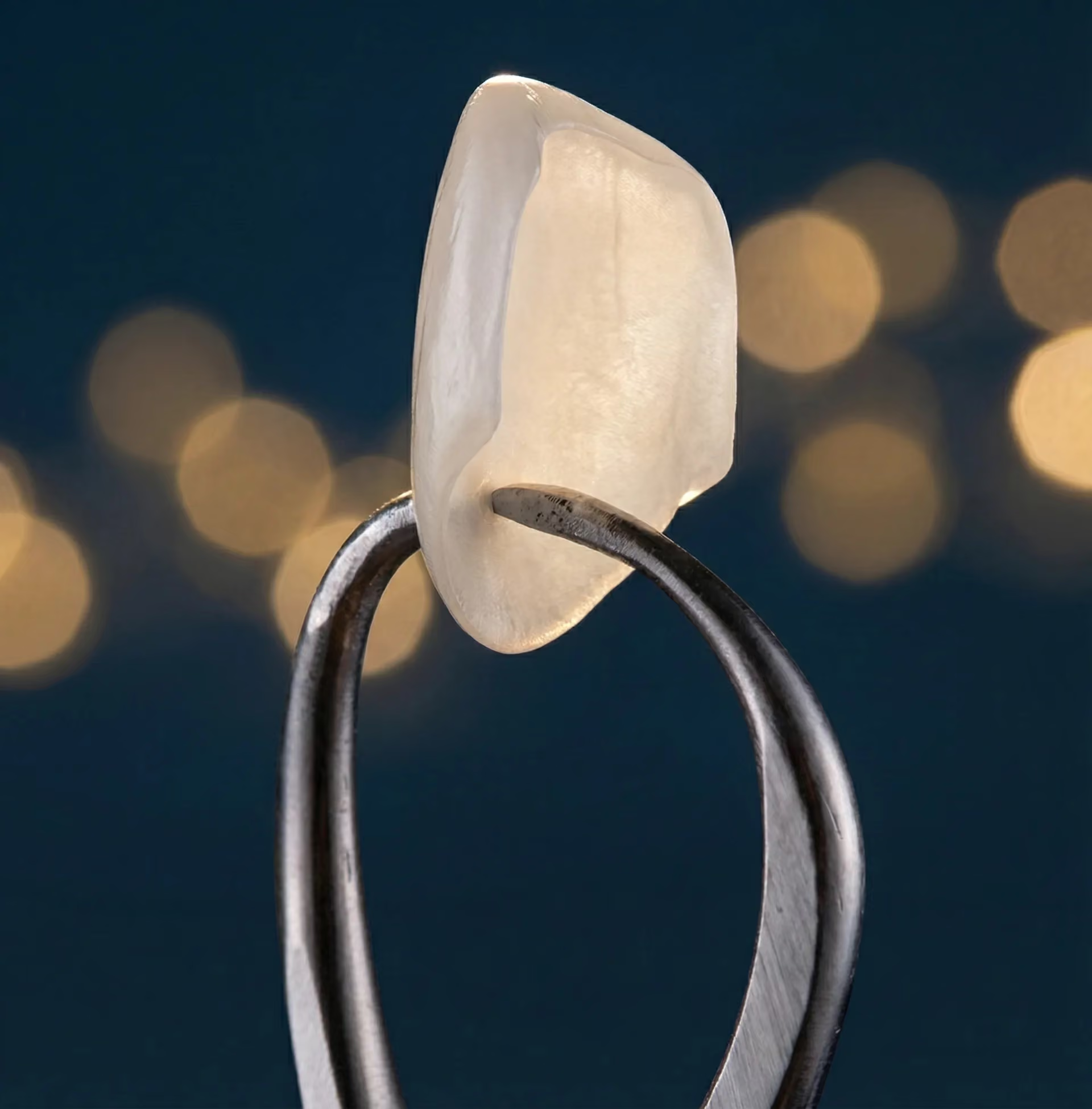
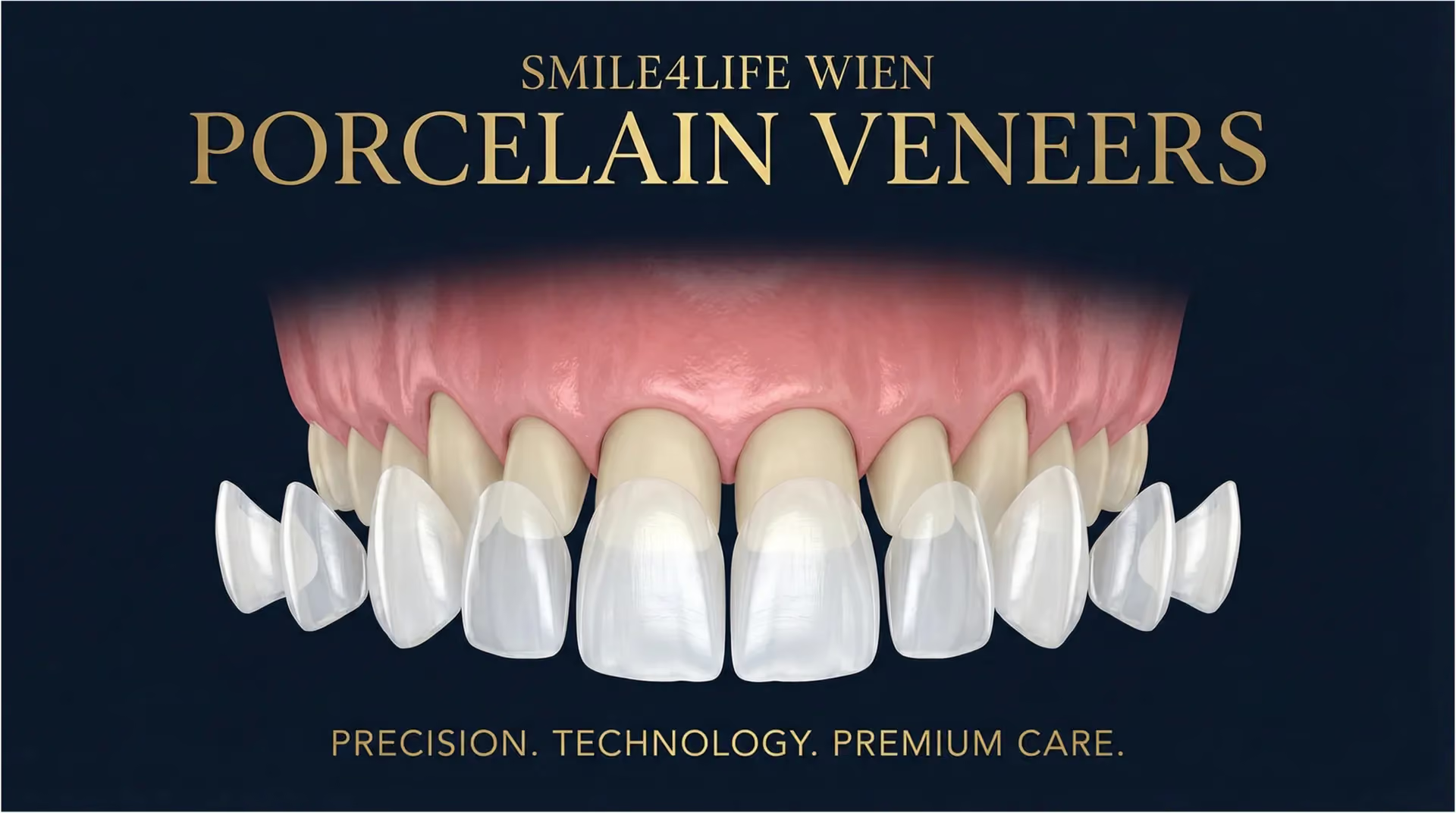
Veneers are thin facings on the visible front surfaces of existing teeth.
They may affect the visible shape or colour of individual teeth. The suitable option depends on your concern and examination.
Does a tooth need preparing?
There is no general answer. Planned shape, tooth position and available space need considering.
What do we clarify before the decision?
We discuss your wishes and examine teeth, gums and bite. Alternatives and possible preparation are included.
What suits your teeth
We carefully assess whether your teeth are suitable for veneers and how much preparation would be needed. We discuss this before you decide.
We coordinate shape and colour with you and the dental laboratory. Veneers should suit your teeth and face. The following sections explain the options, limitations and alternatives that matter for you.
Even a very thin veneer needs space. Before treatment, we clarify whether your teeth need preparation. Thickness alone does not answer this question.
Which veneers suit your teeth?
Would you like to close a small gap, restore a chipped corner or change tooth colour? At your veneers consultation in Vienna, we explore which options fit.
The veneers costs in Vienna page explains what affects price.
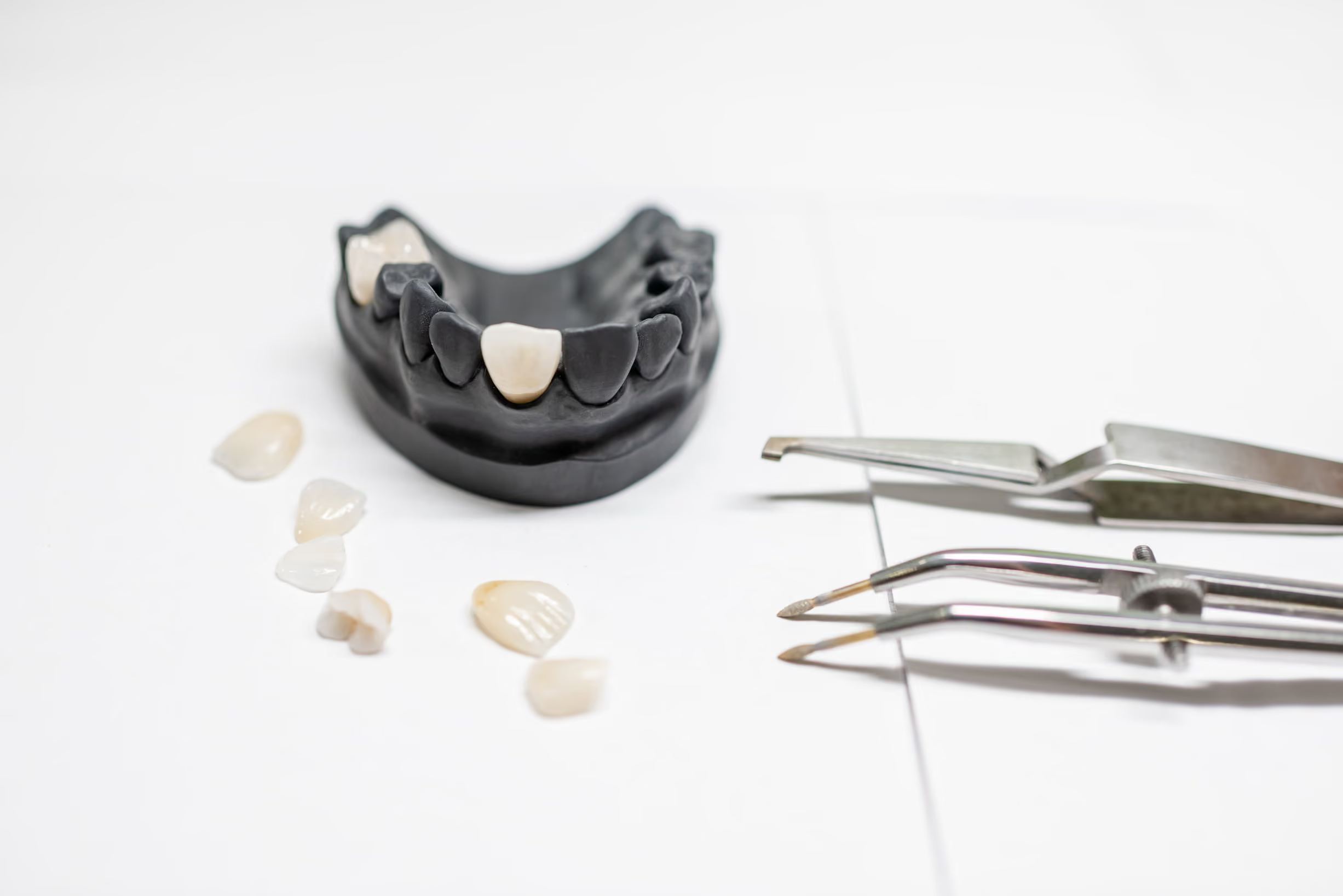
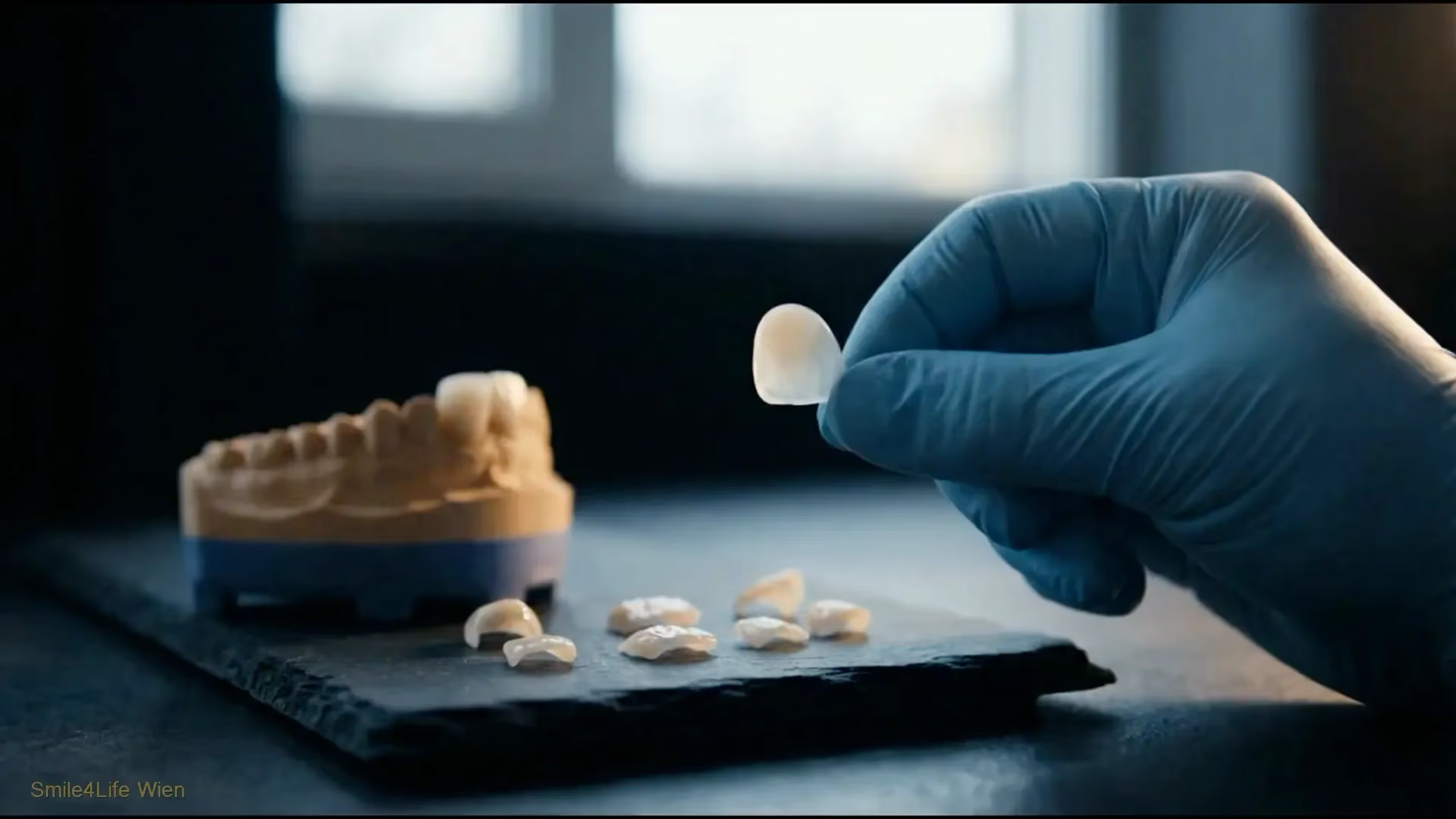
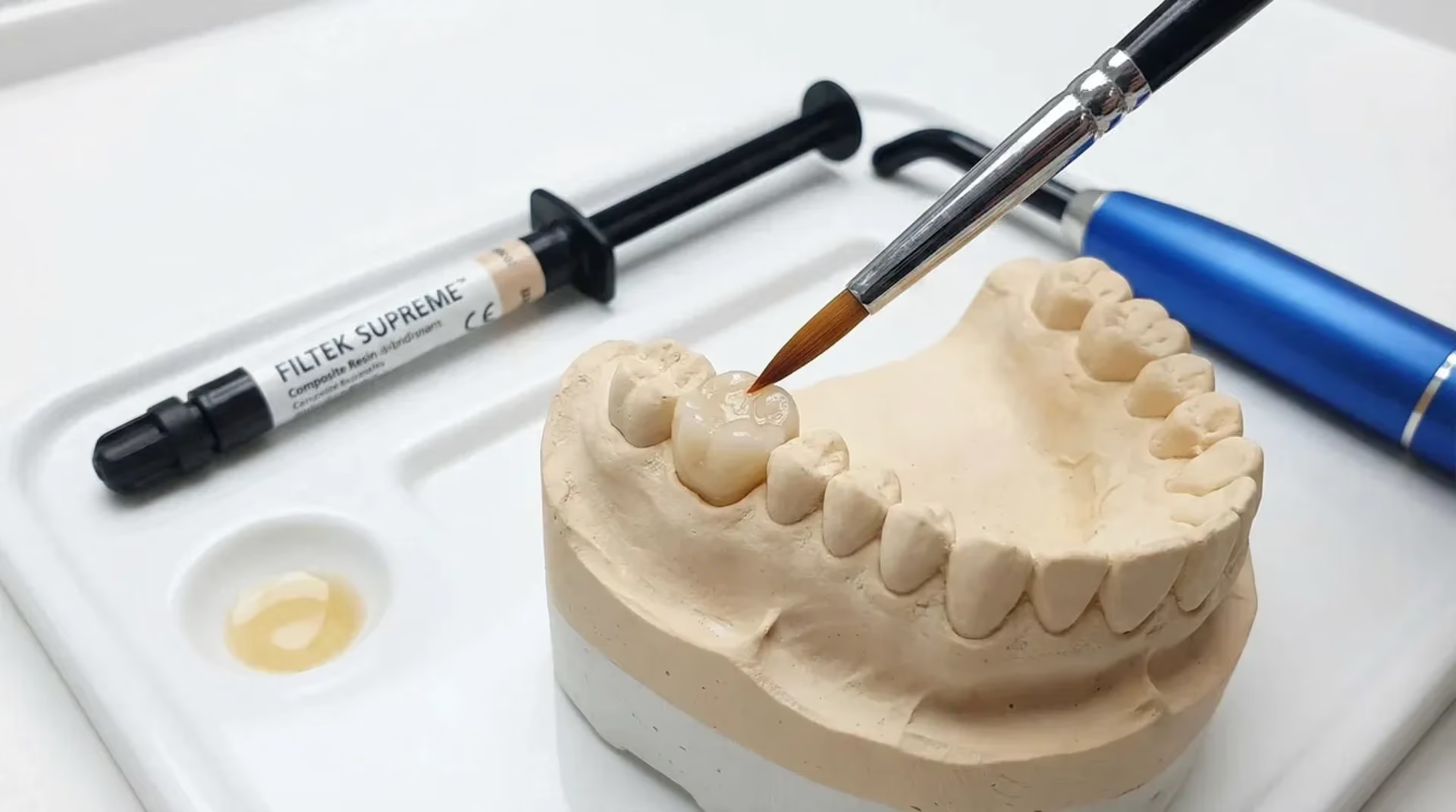
Veneers are thin facings attached to the visible front surfaces of existing teeth and may change their shape or colour. Ceramic veneers are individually made in a laboratory; composite may, depending on treatment, be built directly on the tooth. Manufacture, necessary preparation and possible refinements differ. Shape and colour are coordinated with your smile. Whether one or several teeth are treated depends on your wishes and examination.
For some teeth, non-prep veneers without tooth preparation may be an option. They need sufficient space so the teeth do not look too thick. Lumineers are a brand of particularly thin ceramic veneers. Here too, we assess the preparation you would need.
Veneers do not move teeth. Whitening or a small tooth-coloured composite build-up may be enough for your concern. Aligners may be more appropriate for crooked teeth. The comparison of treatment options explains what guides selection.
Your wishes become part of planning
What do you like about your teeth, and what would you change? We discuss this before treatment. We examine teeth and gums, check your bite and look for signs of grinding. Existing fillings, surface condition and disease are also considered in planning.
Veneers before and after: preview and outcome
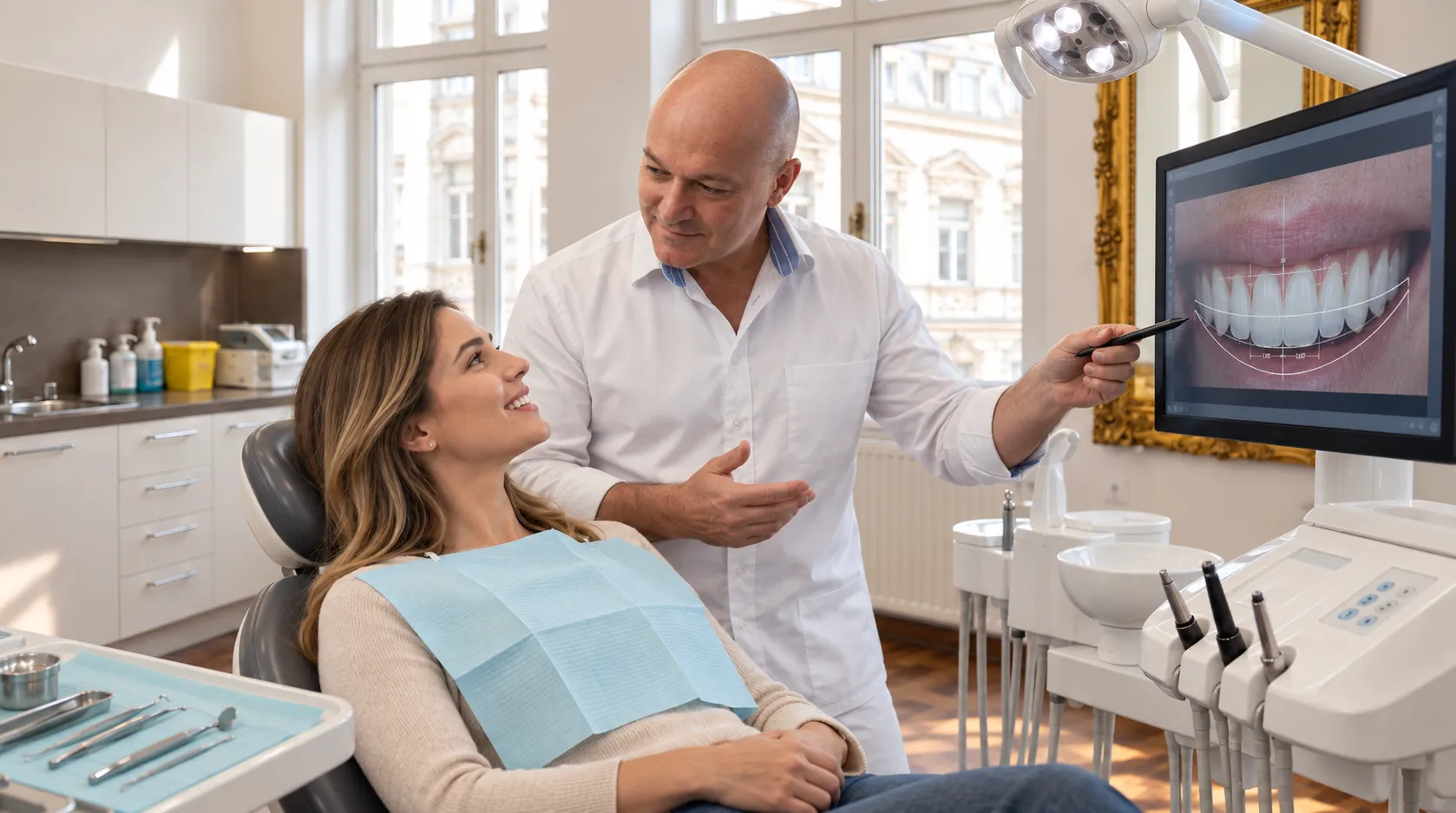
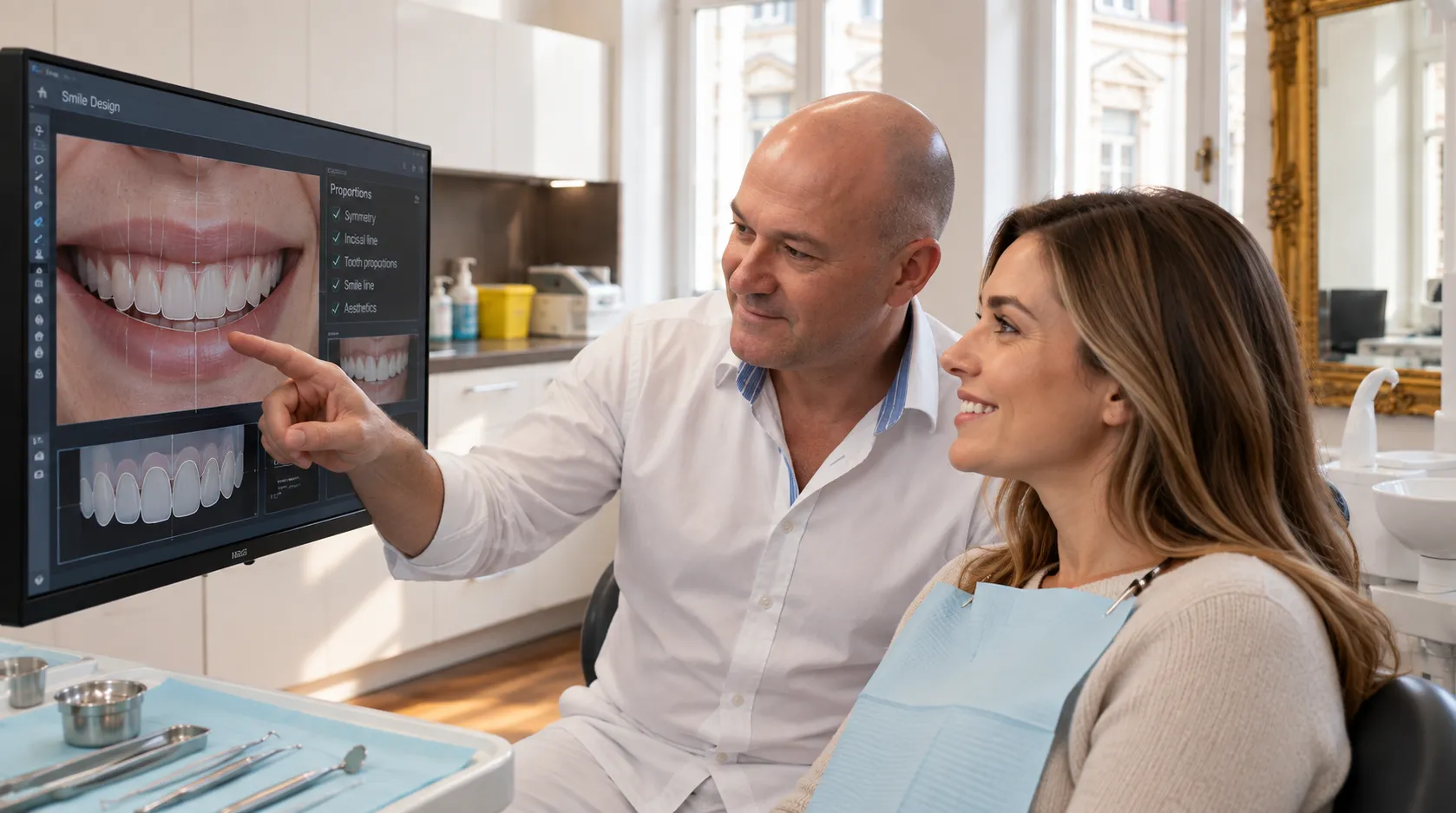
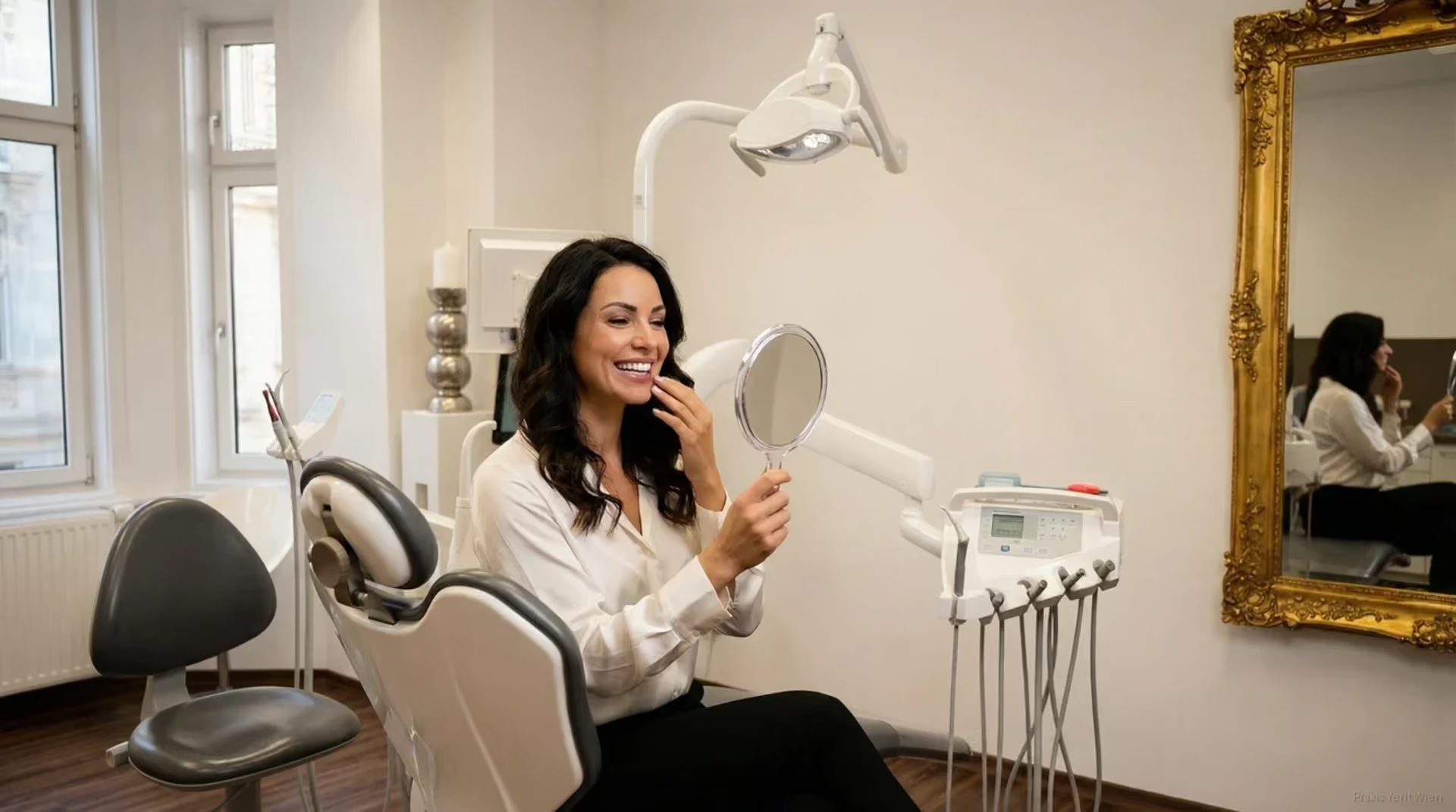
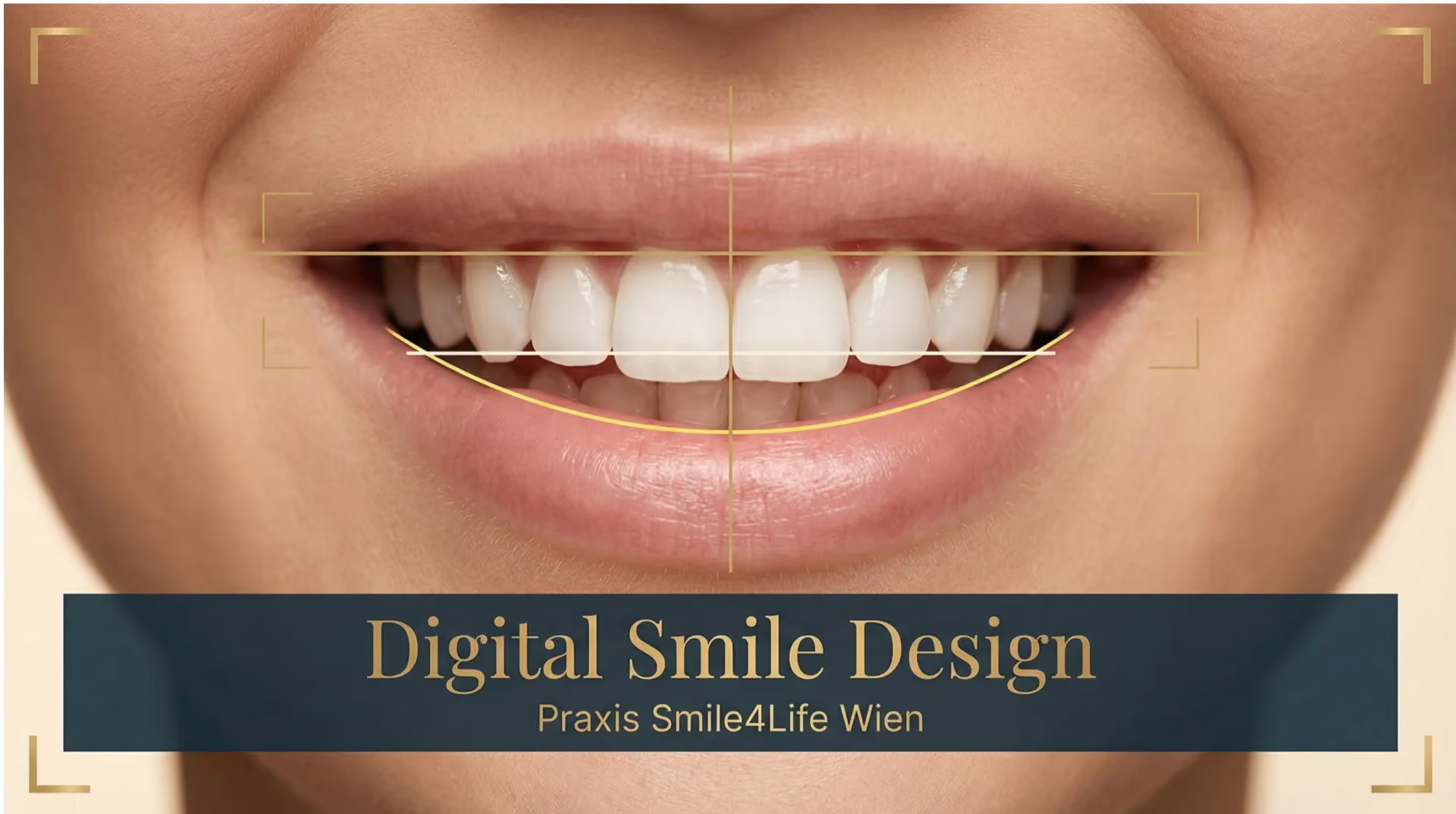
A digital preview helps you assess the planned shape. Too light, too long or too uniform? Tell us what you would like different. A preview supports planning and is not a promise of the final result. Read more about planning and trying in your veneers.
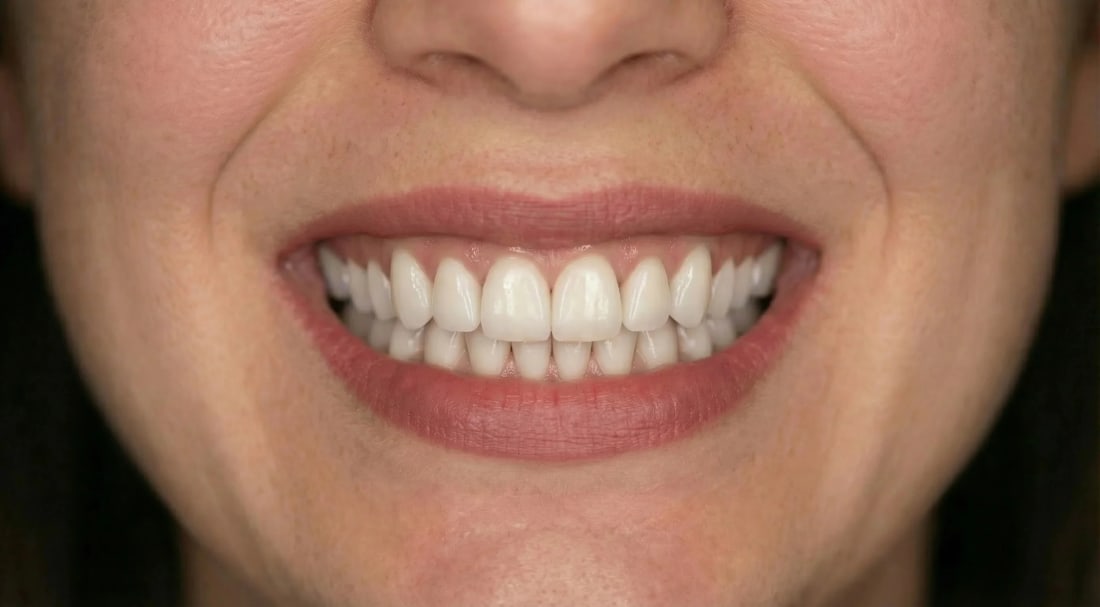
Individual images without context say little about the starting situation, treatment or timeframe. Lighting, angle, distance and shooting conditions may affect the impression of colour and shape. Another person’s outcome therefore cannot be transferred directly to your own teeth.
Where necessary, preparation of the teeth, laboratory manufacture and try-in follow. We check shape, colour and fit before bonding. The exact process and your appointments are agreed with you.
What you should know before deciding
We aim to preserve as much natural tooth structure as possible. Any structure removed does not grow back. We therefore clarify beforehand whether veneers suit you. Decay or inflamed gums need treatment first.
Ceramic remains colour-stable, but your natural teeth and gums may change. A veneer can also loosen or be damaged. Thorough care and regular checks and, where needed, protection against grinding therefore belong in planning. There is no fixed replacement date.
Would you like to understand the basics in more detail? The YERIT guide to veneers explains options, limitations and durability.
Veneers costs in Vienna: your personal plan
How many teeth are to be changed? Which material fits, and is another treatment needed first? These factors determine veneer costs. Planning and laboratory manufacture also matter. General price guidance is available on our prices page.
After examination you receive a written cost plan. This lets you decide calmly and clarify possible reimbursement with your insurer beforehand. Read what belongs in the plan under veneers costs and cost clarification.
We advise you at Kärntner Straße 9, 1010 Vienna. Bring your wishes and questions.
YOUR CONCERNS
What is on your mind?

Your tooth colour bothers you
If whitening does not achieve the desired result, veneers may be an option. We first clarify the cause of discolouration.
You would like a more suitable shape
Veneers can change length and shape. For worn teeth, we also assess the cause of wear.
A gap or chipped corner
A veneer may visually close a small gap or restore a corner. Whether this is appropriate depends on your teeth.
SUITABILITY CHECK
Is this treatment right for you?
YOUR JOURNEY
Your treatment process
Individual initial consultation
Getting to know your goals and your teeth
We will discuss your goals and examine which treatment is best suited for your teeth.
Individual treatment planning
Defining the next steps together
You will learn which steps are planned and which questions should be clarified in advance.
Precise execution
Guiding you through your treatment step by step
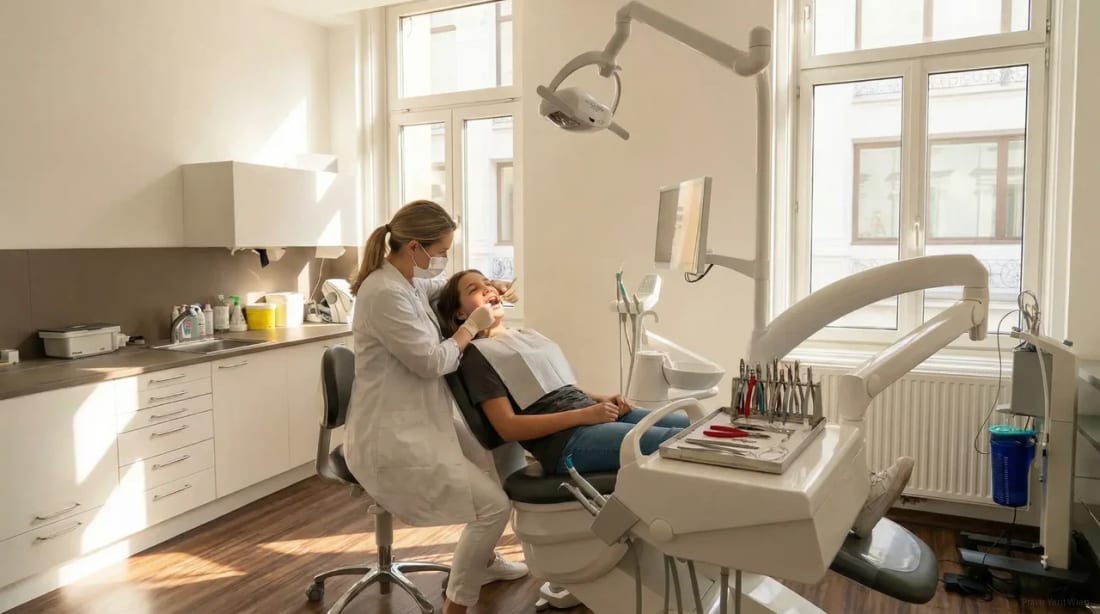
Your treatment follows your personal plan. Please ask questions and tell us about any discomfort at any time.
Aftercare and check-ups
Discuss care and follow-up appointments
Finally, we will discuss ongoing care and the follow-up appointments that are right for you.
In everyday life
Brush twice daily and clean between your teeth every day. Pay attention to veneer margins too. At check-ups we assess fit and gums. If you grind at night, we discuss suitable protection for your teeth.
YOUR OPTIONS
TREATMENT OPTIONS COMPARED
Directly on the tooth
Composite veneers
Tooth-coloured composite is shaped directly on the tooth. An option for smaller changes.
Without tooth preparation
No-Prep Veneers
Veneers are bonded to unprepared teeth. Sufficient space is needed for this.
Made from ceramic
Ceramic veneers
Veneers individually made in the laboratory. Shape and colour are agreed with you beforehand.
We will discuss payment terms with you prior to treatment.
The indicative market prices in our price overview provide an initial guide. We will discuss which services are planned for you and the costs involved based on your examination findings and individual cost plan.
Advanced Dental Aesthetics & Implantology
Priv.Doz.Dr.Dr. K. Yerit
We first assess whether veneers suit your teeth and how much healthy tooth structure can be preserved. We then discuss the options with you.
View profile →Scientific references
Institute for Implantology and Digital Dentistry Vienna
Österreichische Gesellschaft für Ästhetische Zahnheilkunde
European Academy of Esthetic Dentistry (EAED)
International Federation of Esthetic Dentistry (IFED)
American Academy of Esthetic Dentistry (AAED)
Yerit Practice – Dentist Vienna
Excellence
Why Smile4Life
Does treatment suit you?
We assess your teeth, gums and bite, then discuss whether veneers may be an option.
A clear process
Examination and planning, preparing teeth, trying in and attaching veneers. You learn beforehand which appointments are planned for you.
Put durability in context
Studies show ceramic veneers may remain in use for many years. A fixed lifespan for your teeth cannot be derived from this.
Individually made veneers
Together with the laboratory, we coordinate shape, colour and surface with your teeth.
Consider colour over time
Ceramic is colour-stable. Your natural teeth and veneer margins may nevertheless change over time.
See a preview beforehand
On screen and with an in-mouth preview, you can assess the planned shape and discuss your wishes.
Frequently asked questions
Frequently asked questions
Do you have a specific question about your diagnosis? Book a consultation appointment directly →
Questions about your treatment?
Discuss what matters to you and what the next steps look like with us.
Book your appointment nowYour orientation
Your smile should suit you. Together we discuss the change you would like.
Understanding what’s involved
We plan examination, preparation and try-in with you. The number of appointments depends on your teeth.
In everyday life
Brush twice daily and clean between your teeth every day. Pay attention to veneer margins too. At check-ups we assess fit and gums. If you grind at night, we discuss suitable protection for your teeth.
Who this information is for
A small gap, discolouration or a chipped corner: veneers may change these visible areas. We assess whether your teeth are stable and healthy enough. Gums and bite must also be suitable. A photograph alone is insufficient.
Important limitations
Decay or gum disease must be treated first. Severely damaged or markedly crooked teeth may also argue against veneers. Night-time grinding is clarified beforehand. At examination we discuss whether veneers suit you or another treatment is more appropriate.
Our approach
The studies below examine different materials, treatments and success criteria. Survival rates are not an individual durability prognosis and do not automatically mean a complication-free or unchanged result.
SCIENTIFIC STUDIES
The studies below examine different materials, treatments and success criteria. Survival rates are not an individual durability prognosis and do not automatically mean a complication-free or unchanged result.
Klein P et al. (2025). Survival and Complication Rates of Feldspathic, Leucite-Reinforced, Lithium Disilicate and Zirconia Ceramic Laminate Veneers: A Systematic Review and Meta-Analysis
The review of 29 studies reported pooled survival at 10.4 years of 96.1 % for feldspathic ceramic, 93.7 % for leucite-reinforced glass ceramic and 96.8 % for lithium disilicate. There was no statistically established survival difference between materials; this does not prove equivalence. Technical complications were 6.1 % for lithium disilicate and 41.5 % for feldspathic ceramic. Only shorter-term data were available for zirconia, with no long-term figures. Different studies and endpoints do not permit a personal longevity guarantee. (Klein et al., 2025; online 2024.)
39523553
Alqutaibi AY et al. (2024). Clinical survival and complication rate of ceramic veneers bonded to different substrates: A systematic review and meta-analysis
The review of six clinical studies showed that the condition of the tooth surface matters for bonding and subsequent outcomes. Continued use and a course without repair were assessed separately. Different observation periods and sometimes wide uncertainty ranges limit comparison; the figures are not an individual longevity forecast. Online 2024, print year 2025.
38604905
Gresnigt MMM et al. (2019). Randomized clinical trial on indirect resin composite and ceramic laminate veneers: Up to 10-year findings
The randomised study compared 48 veneers: 24 ceramic and 24 laboratory-made composite veneers. After up to ten years, survival rates of 100 % and 75 % respectively were reported. This small study concerns indirect composite, not composite built directly on the tooth, and is not a personal longevity promise.
31181242
Lim TW et al. (2023). Survival and Complication Rates of Resin Composite Laminate Veneers: A Systematic Review and Meta-Analysis
The review examined seven studies of composite veneers. In the randomised studies, pooled survival was 88 % over observation periods of 24 to 97 months. Common findings concerned the surface, colour and margins. This analysis does not include a direct comparison with ceramic veneers.
38035903
Komine F et al. (2024). Clinical performance of laminate veneers: A review of the literature
Feldspathic, leucite and lithium disilicate ceramics showed satisfactory survival rates when the surface was correctly etched with hydrofluoric acid and silanised (Journal of Prosthodontic Research, 2024).
38220160
Araujo E, Perdigão J (2021). Anterior Veneer Restorations – An Evidence-based Minimal-Intervention Perspective
The comparison of ceramic and composite for minimally invasive veneers showed that material choice depends on the individual clinical situation — both approaches have specific advantages and disadvantages (The Journal of Adhesive Dentistry, 2021).
33825424
Burke FJT, Lucarotti PSK (2008). Ten-year outcome of porcelain laminate veneers placed within the general dental services in England and Wales
In general dental service registry data from England and Wales covering 2562 veneers, 53 % of porcelain veneers remained without further intervention after ten years; this endpoint concerns further procedures on the treated tooth and is not equivalent to veneer loss. Different datasets do not allow a direct comparison of treatment quality (Journal of Dentistry, 2008).
18538912
Mazzetti T et al. (2022). 10-year practice-based evaluation of ceramic and direct composite veneers
The practice-based evaluation compared 1459 ceramic and direct composite veneers over ten years. Repairs and losses were assessed separately. The frequently quoted annual rates of 2.9/2.8 % for ceramic and 9.1/10 % for composite refer to failure to achieve success without intervention, not solely to veneer loss. Results from one practice are not an individual longevity forecast.
35379471
Panayong T et al. (2024). Long-Term Outcomes of Ceramic Veneer Restorations: A Comprehensive Analysis of Clinical and Patient-Reported Metrics
After 9 to 10 years, ceramic veneer survival was 89.3 %. Only 9.87 % were entirely free of problems; 79.4 % remained functional with findings such as material defects, secondary decay or gum problems, and 10.73 % were classified as failures (Journal of Esthetic and Restorative Dentistry, 2024).
39639467
Alenezi A et al. (2021). Long-Term Survival and Complication Rates of Porcelain Laminate Veneers in Clinical Studies: A Systematic Review
A systematic review of 25 studies with a total of 6,500 porcelain veneers estimated cumulative 10-year survival at 95.5 %; the estimate was based on follow-up data for 3,300 veneers. Fracture, debonding, secondary decay and a need for endodontic treatment were counted as reasons for failure. Fracture was the most common complication. “Survival” does not automatically mean that veneers are free of complications or damage. (Journal of Clinical Medicine, 2021; PMID 33807504.)
PMID: 33807504

Made to suit your teeth
The dental laboratory makes the ceramic veneers. Shape and colour are matched to your teeth during planning.
More topics in this area
Deepen your knowledge – find all information regarding the treatment process, costs, and results.

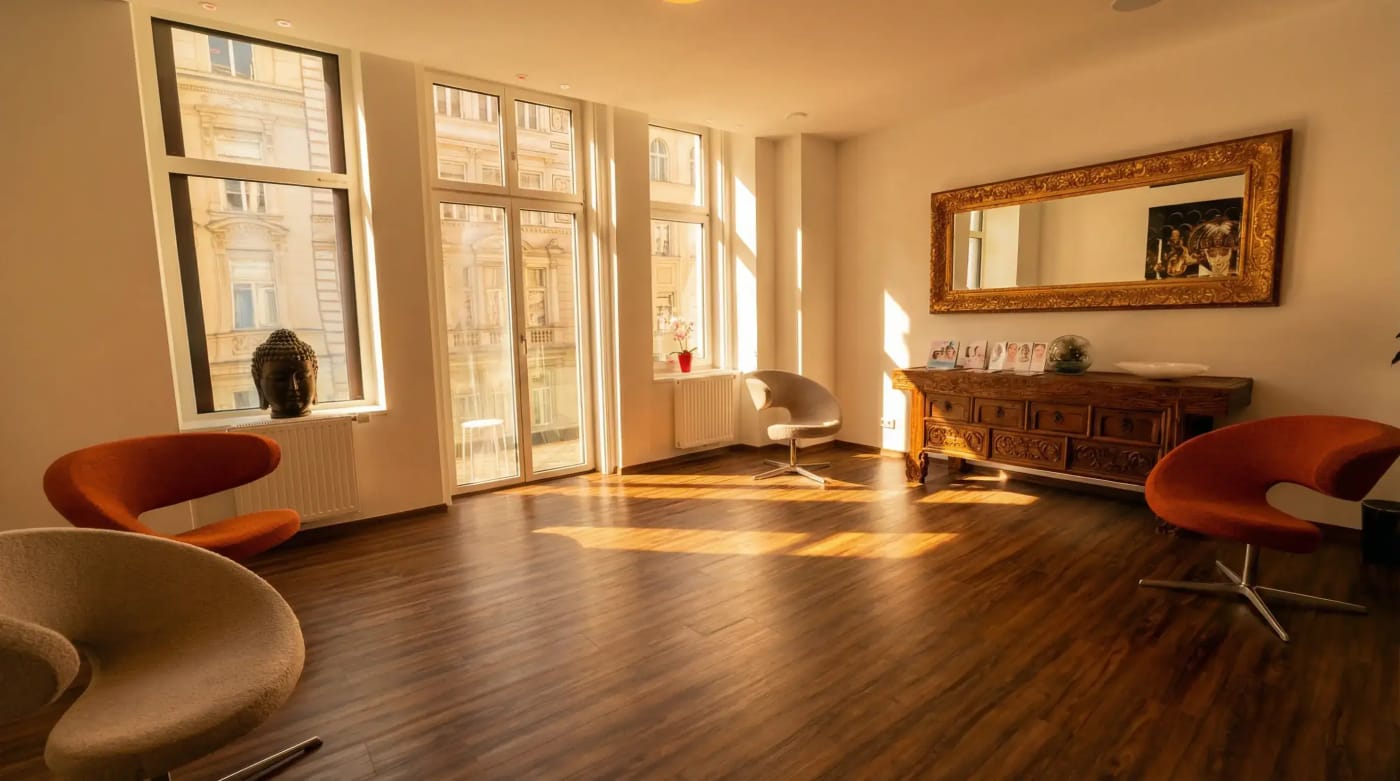
Kärntner Straße 9
100 meters from Stephansplatz, Innere Stadt.

Partnerships & Memberships & References