
Clear Aligners in Vienna
Would you like to straighten your teeth discreetly? We assess with you whether removable aligners suit your clinical findings and daily routine.
Individually planned
Removable trays
Regular reviews
Plan for retention
Clear Aligners Vienna
unsichtbare-zahnspange-wien
4.9★
Doctify rating
25+
Years of experience
Personal
In-practice consultation
1010 Vienna
Kärntner Straße 9
At a glance
What are clear aligners?
These are clear, removable plastic trays that move teeth gradually. They are discreet rather than invisible. Clear aligners are much less noticeable than metal brackets; tray edges and small plastic attachments may still be visible. According to the Austrian health portal, these attachments are bonded to teeth to support corrections in different directions.*
What are the disadvantages of clear aligners?
Success depends on your cooperation: the trays must be worn for 20 to 22 hours a day.* Some movements are difficult to predict; studies report that refinement trays are often needed. Pressure and a slight lisp may occur initially.
Are clear aligners suitable for everyone?
No. For treatment without tooth extraction, a meta-analysis of 15 studies found no statistically significant differences in the outcome measures studied; uncertain evidence does not establish general equivalence. Where teeth had to be extracted, fixed braces performed better.* Reliable wear is also essential.
How long does clear aligner treatment take?
It depends on the clinical findings. Depending on the starting point, the Austrian health portal describes 12 to 50 trays, changed about every two weeks: mathematically, around six months to just under two years.* Refinement trays and retention are additional.
One goal, different ways to reach it.
More than a brand
Wanting straighter teeth is understandable. Which treatment makes sense also depends on how your upper and lower teeth meet and how healthy your teeth and gums are. This is your introduction to aligner treatment at Smile4Life in Vienna.
The first step: a suitability assessment
Whether aligners are an option for you requires a personal examination. Tooth position, your bite, oral health and the movements needed all matter.
What clear aligners can achieve
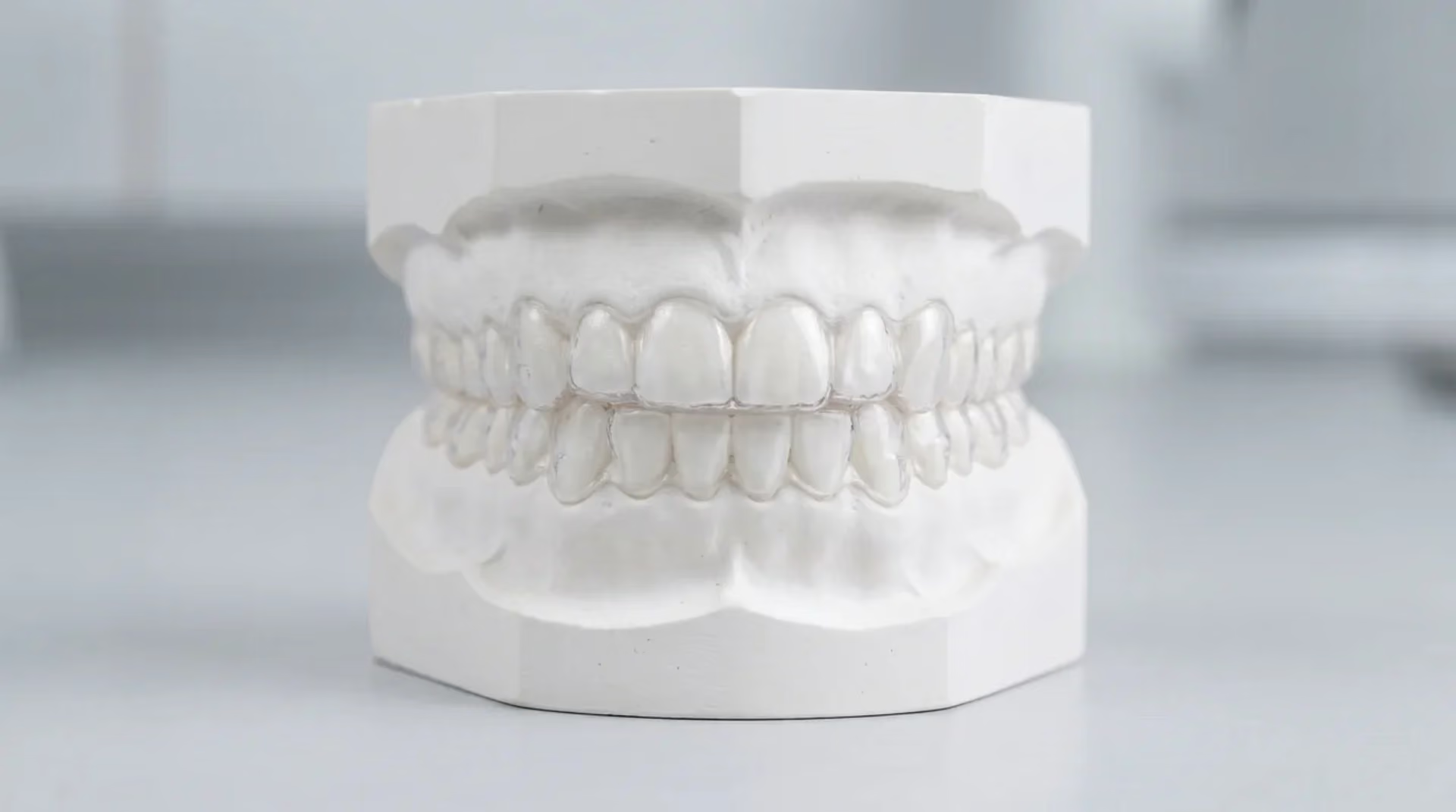
Aligner therapy is a form of orthodontic treatment. The term “invisible braces” often refers to aligners, such as Invisalign: a series of clear plastic trays made to fit your teeth. Each tray is part of a planned tooth movement. Removable does not mean that you can wear them only occasionally. They work while you wear them, so the agreed daily wear time is essential. The page on braces in Vienna explains the options available alongside aligners.
Aligners may be an option for crowded teeth or gaps, including for people seeking discreet braces for adults. Whether they can also correct your bite sufficiently needs to be examined. Suitability cannot reliably be determined from a photograph or scan alone. Factors include tooth position, gum health, existing restorations and the movements needed.
The trays are discreet but not completely invisible. Small tooth-coloured attachments or additional elastics may be part of the plan. They affect how treatment looks and feels in everyday life.
What to clarify before deciding
For straightforward treatment without tooth extraction, reviews show no clear differences between aligners and fixed braces for some outcome measures (Alhafi et al., 2025). The certainty of this evidence is limited. This does not promise that the two methods achieve the same result for every type of misalignment.
For demanding movements or more pronounced bite discrepancies, fixed braces or another approach may be more appropriate. It also matters whether you can manage regular removal, cleaning and reinsertion. The right method combines a realistic treatment goal with a routine you can maintain.
You can find a clinical explanation of the possibilities and limits in the YERIT guide to clear aligners.
Clear aligners or fixed braces?
Aligners can be removed for eating and cleaning, but require consistent wear. Fixed braces remain attached to the teeth and need careful cleaning; they may also require active cooperation. The appropriate method depends on your clinical findings and the movements needed.
You can find the full table and the limits of the evidence in the comparison of aligners and fixed braces.
From examination to retainer: your clear aligners in Vienna
Treatment starts with a suitability assessment. We discuss your wishes, examine your teeth, gums and bite, and clarify whether anything needs treatment first, such as decay or gum inflammation. X-rays are added when the clinical findings call for them.
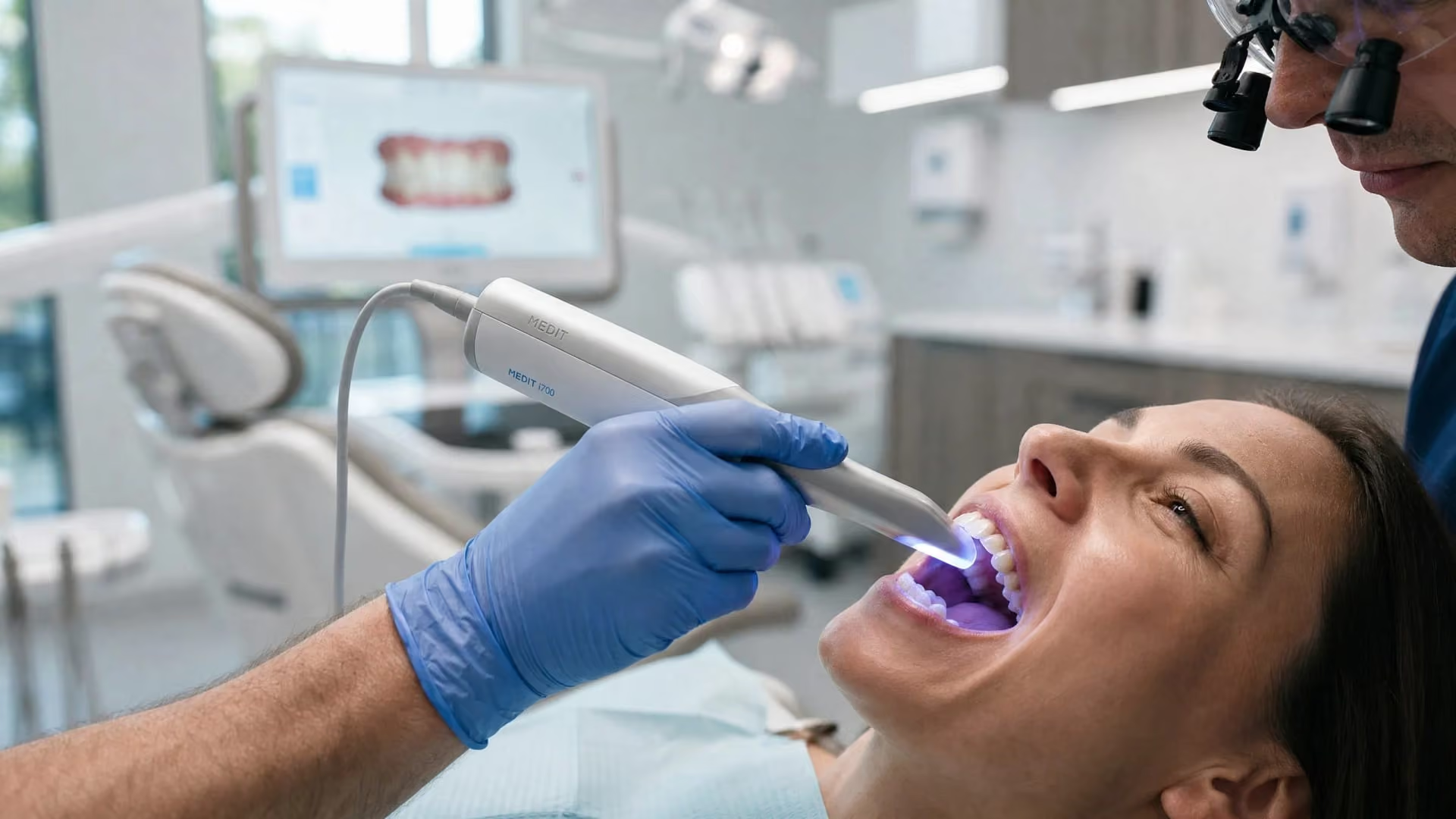
If aligners suit your clinical findings, an impression or digital scan follows. This forms the basis of the treatment plan: which teeth should move, how far they should move, whether attachments are needed and how many trays are likely to be required. A digital visualisation helps explain the plan. It replaces neither the examination nor checks on actual tooth movement.
During active treatment, you change trays as instructed. At review appointments, we check whether your teeth are following the plan. Additional trays or adjustments are sometimes necessary. The page on the aligner treatment process explains how the trays move your teeth.
After active correction, teeth need stabilisation, usually with a retainer. Its type and wear duration are determined individually; an unchanged result cannot be guaranteed.
Costs and your next step in Vienna
The work involved depends on your clinical findings and the agreed scope of care. Compare more than a starting price: consider diagnostics, reviews, possible additional trays and subsequent retention. Our page on clear aligner costs explains which questions matter before deciding. Market reference ranges are available on our prices page. We can only give you a binding figure in your personal cost plan after examination; your findings determine the care required.
Bring your main wishes and questions to the consultation: what would you like to change? What treatment have you had before? What can you reliably maintain in everyday life? This provides a basis for discussing whether aligners make sense for you and what the next steps could be.
YOUR CONCERNS
What is on your mind?
Crowded teeth or gaps
Whether aligners can correct your tooth position requires a personal examination.
Looking for discreet treatment
Clear trays are discreet. Attachments or additional aids may be visible.
Unsure which method to choose
We discuss the options that suit your clinical findings and everyday life.
SUITABILITY CHECK
Is this treatment right for you?
YOUR JOURNEY
Your treatment process
Individual initial consultation
Getting to know your goals and your teeth
We will discuss your goals and examine which treatment is best suited for your teeth.
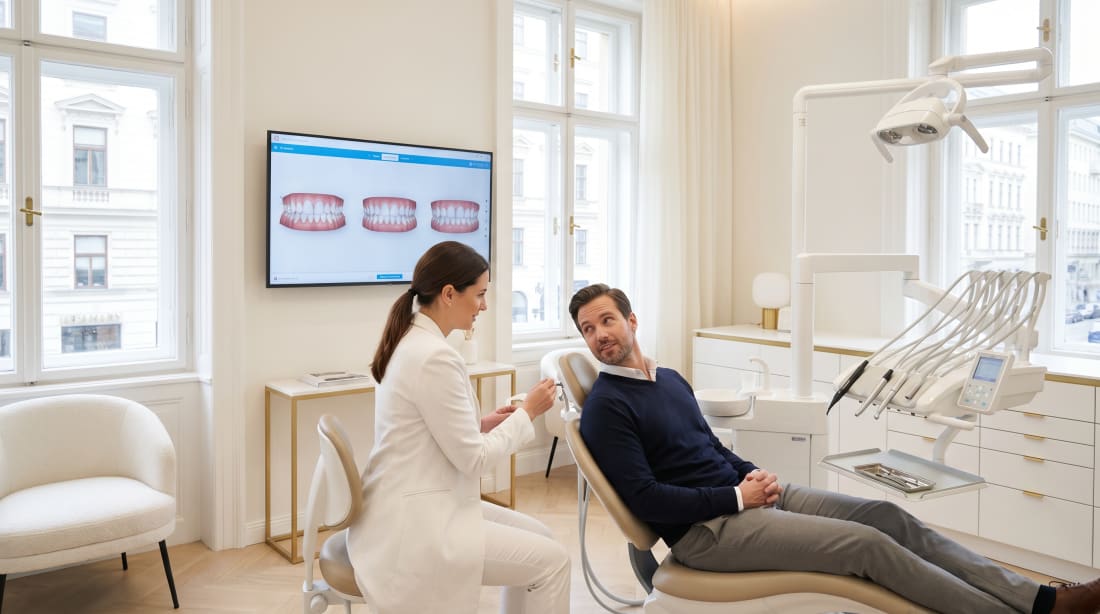

Individual treatment planning
Defining the next steps together
You will learn which steps are planned and which questions should be clarified in advance.
Precise execution
Guiding you through your treatment step by step
Your treatment follows your personal plan. Please ask questions and tell us about any discomfort at any time.
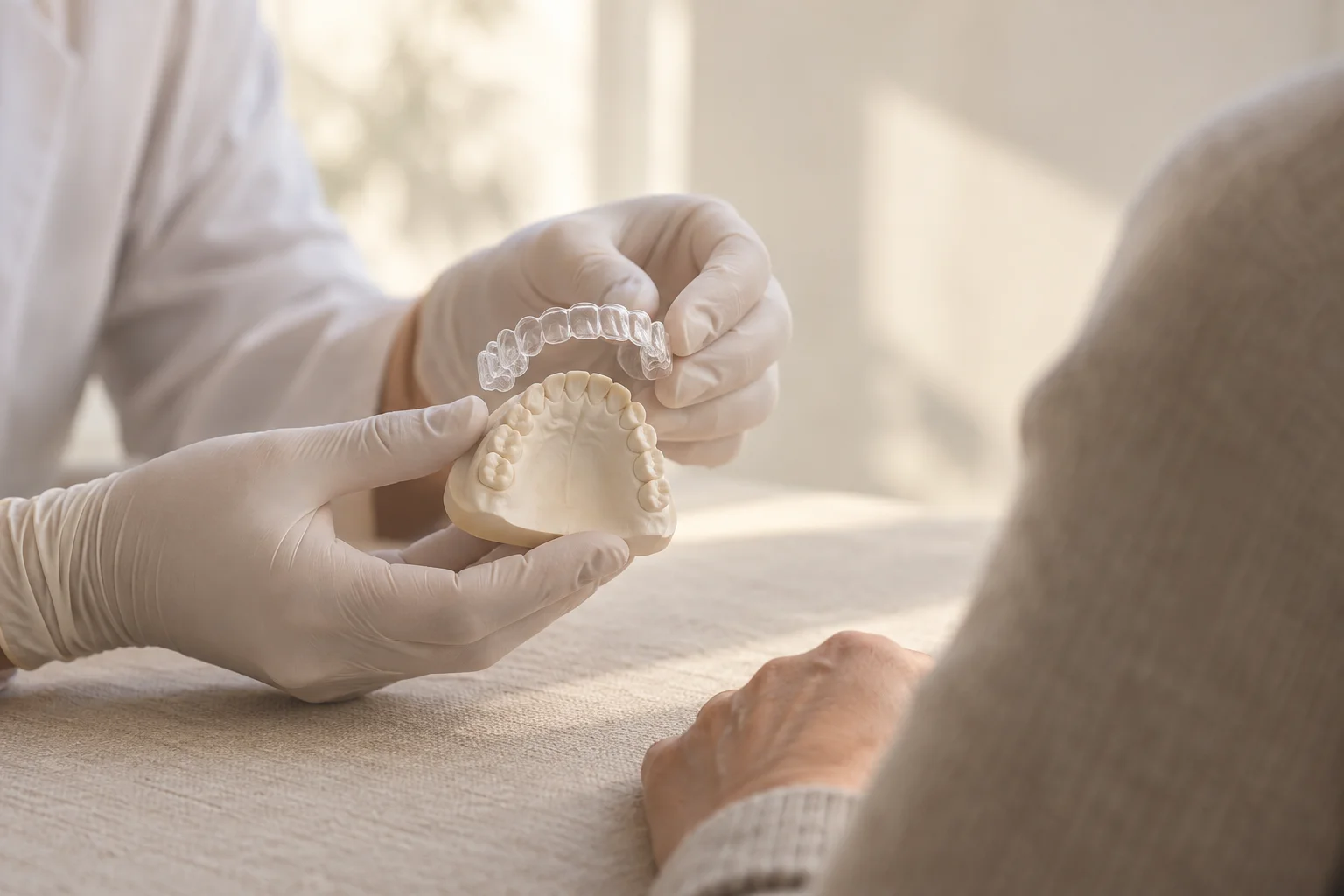
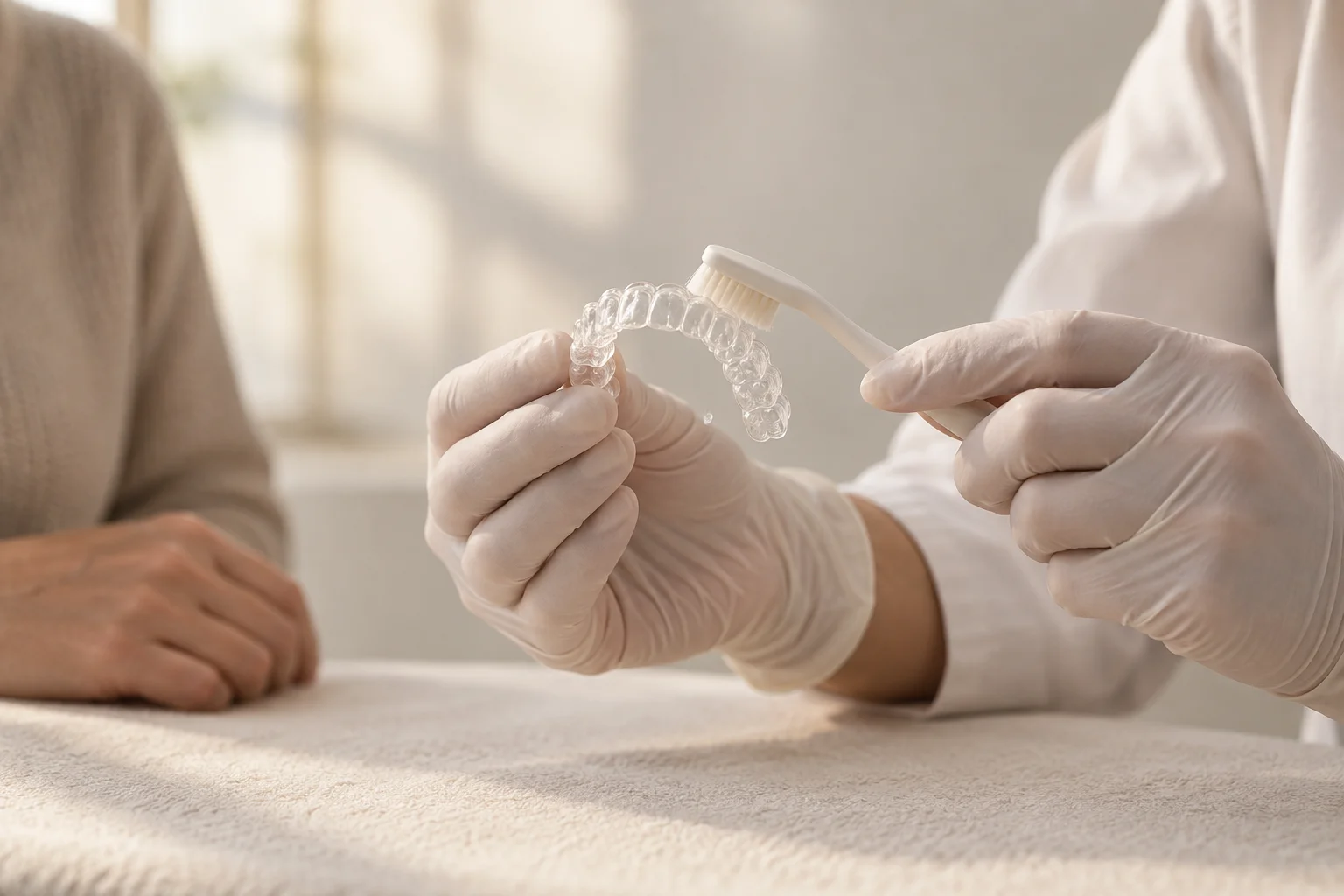
Aftercare and check-ups
Discuss care and follow-up appointments
Finally, we will discuss ongoing care and the follow-up appointments that are right for you.
In everyday life
Establish routines for meals and cleaning. This helps you fit tray removal around the agreed wear time.
YOUR OPTIONS
TREATMENT OPTIONS COMPARED
We will discuss payment terms with you prior to treatment.
The indicative market prices in our price overview provide an initial guide. We will discuss which services are planned for you and the costs involved based on your examination findings and individual cost plan.
Scientific references
Institute for Implantology and Digital Dentistry Vienna
Deutsche Gesellschaft für Kieferorthopädie (DGKFO)
Österreichische Gesellschaft für Kieferorthopädie (ÖGKFO)
European Orthodontic Society (EOS)
Align Technology Clinical Research
Yerit Practice – Dentist Vienna
Excellence
Why Smile4Life
Discreet
Clear trays are usually less noticeable than visible metal brackets.
Removable
The trays are removed for eating and cleaning as instructed.
Understand the plan
A digital visualisation can show the planned goal. It does not guarantee the result.
Plan your routine
Wear time and cleaning need established routines. Pressure and irritation are possible.
Review progress
Checks show whether tooth movement is following the plan or needs adjustment.
Discuss your questions
Talk through your wishes, possible alternatives and outstanding questions before deciding.
Frequently asked questions
Frequently asked questions
Do you have a specific question about your diagnosis? Book a consultation appointment directly →
Questions about your treatment?
Discuss what matters to you and what the next steps look like with us.
Book your appointment nowYour orientation
Treatment duration and retention are planned individually.
Understanding what’s involved
Daily wear, careful cleaning and agreed review appointments are part of treatment.
In everyday life
Establish routines for meals and cleaning. This helps you fit tray removal around the agreed wear time.
Who this information is for
For people who want discreet tooth correction and can maintain the daily wear time. Whether aligners can treat your clinical findings requires a personal examination.
Important limitations
Untreated dental or gum disease needs assessment first. For complex movements, pronounced jaw discrepancies or an unattainable wear schedule, other options need consideration.
Our approach
The appropriate treatment depends on your clinical findings and what is manageable in everyday life. Studies help provide context; they do not replace a personal examination or promise a particular result.
SCIENTIFIC STUDIES
The appropriate treatment depends on your clinical findings and what is manageable in everyday life. Studies help provide context; they do not replace a personal examination or promise a particular result.
Ke Y et al. (2019). A comparison of treatment effectiveness between clear aligner and fixed appliance therapies
The older review found differences in individual treatment objectives. Its heterogeneous studies do not support a general promise that aligners are faster or achieve a particular result.
30674307
Oikonomou E et al. (2021). Impact of Aligners and Fixed Appliances on Oral Health during Orthodontic Treatment
In the first weeks after treatment began, patients with aligners without additional attachments tended to show better oral health measures than those with fixed braces. However, the authors rated the certainty of this evidence as low to very low (Oral Health & Preventive Dentistry, 2021).
34874143
Negrutiu BM et al. (2025). Pain Perception and Dietary Impact in Fixed Orthodontic Appliances vs. Clear Aligners
Patients with fixed braces reported pain, need for painkillers and eating restrictions substantially more often than patients with clear aligners (Journal of Clinical Medicine, 2025).
40725752
Alhafi ZM et al. (2025). Quality and stability of orthodontic treatment outcomes with clear aligners versus fixed appliances
A meta-analysis of 15 studies with 1,084 patients found no statistically established difference in the quality and duration measures examined between aligners and fixed appliances for non-extraction treatment. Varying studies and short follow-up limit the conclusions; general equivalence is not proven. Extraction cases showed a quality advantage for fixed appliances.
41127933
Nemec M et al. (2026). Patients' needs, expectations & concerns regarding clear aligner treatment
A prospective cohort study of 82 Medical University of Vienna patients found that effectiveness comparable with fixed braces was the highest-ranked expectation among patients choosing clear aligner therapy (9.5 out of 10 points). They were scarcely willing to compromise on treatment duration or costs. A lasting result and prevention of future problems were also highly rated; discreet appearance mattered too, but ranked below expected effectiveness (Clinical Oral Investigations, 2026).
42209717
Gesundheitsportal Österreich: Zahnspangen und Zahnschienen
Austria’s health portal describes, among other things, twelve to 50 aligners, changes around every two weeks and 0.15 to 0.25 mm of movement per aligner. These general figures do not establish a fixed series length or movement promise for every current system and clinical situation; the individual treatment plan takes priority (gesundheit.gv.at, accessed 03.11.2026)
More topics in this area
Deepen your knowledge – find all information regarding the treatment process, costs, and results.

Kärntner Straße 9
100 meters from Stephansplatz, Innere Stadt.


Partnerships & Memberships & References