Overview
Invisalign or fixed braces?
Both methods correct tooth misalignment but differ considerably in appearance, handling and applications. Ke et al. (2019) compared aligner and conventional brace outcomes, providing important findings on accuracy and the limits of both methods.
Aligners and fixed braces in daily life
| Criterion | Aligners | Fixed braces |
|---|---|---|
| Visibility | Transparent; attachments and elastics may be noticeable. | Brackets and wires are usually visible; less conspicuous options exist. |
| Your involvement | Daily wear and aligner changes as instructed. | Careful cleaning and additional elastics where needed. |
| Eating and cleaning | Remove for eating; clean teeth and aligners. | Cleaning around brackets and wire needs attention. |
| Discomfort | Pressure, sensitive teeth and irritated mucosa are possible. | Pressure, sensitive teeth and irritation from the appliance are possible. |
| Treatment goal | Suitability depends on findings and required movements. | May provide more control for demanding movements. |
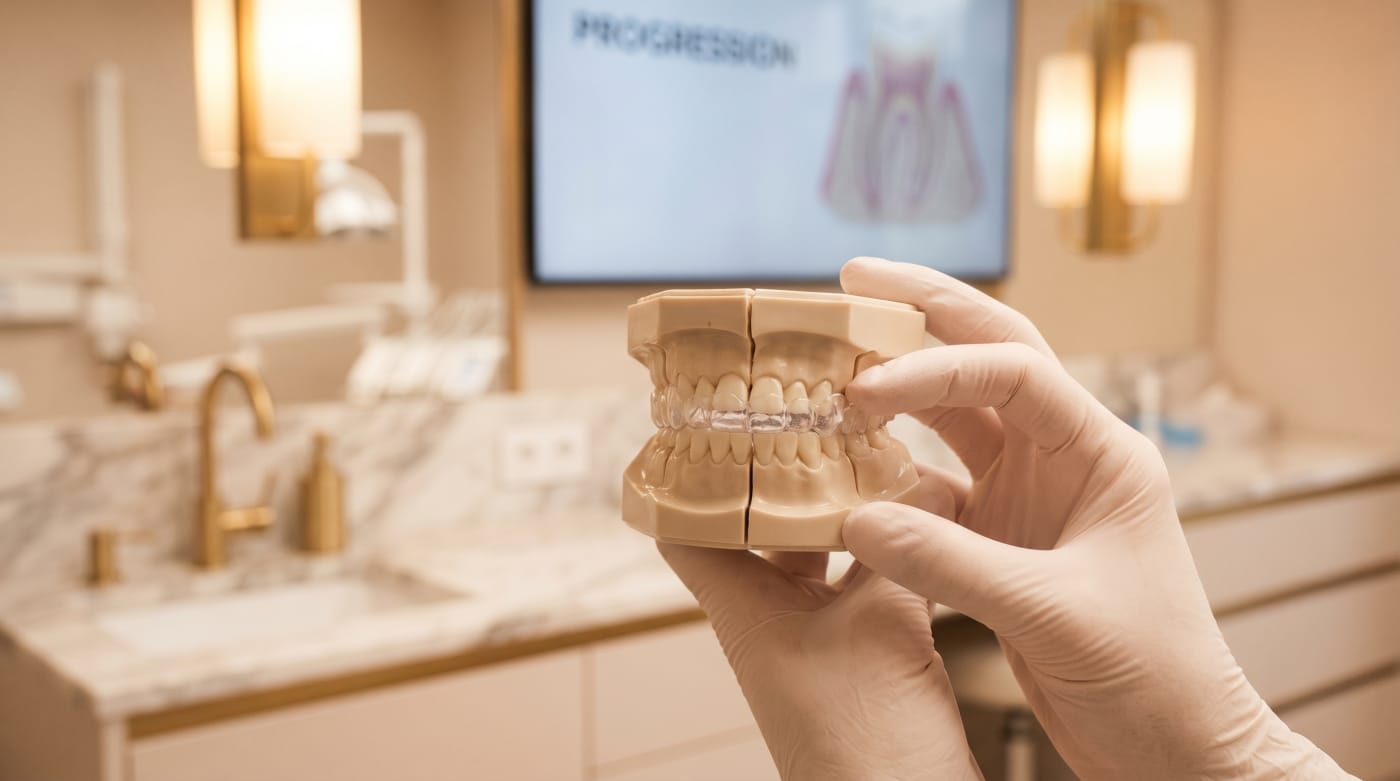
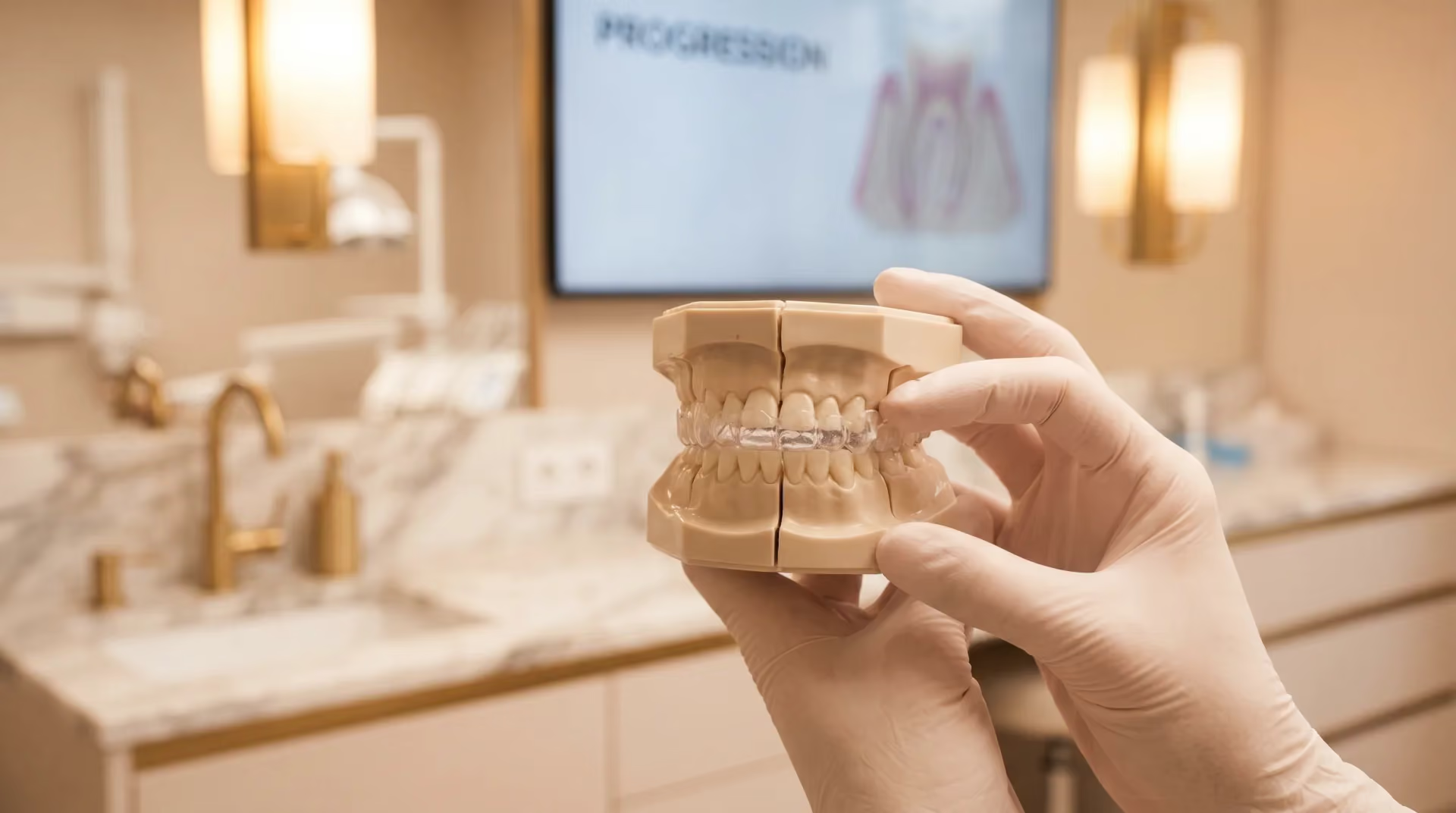
Invisalign is an aligner system. Both approaches require professional planning and checks. Removability makes teeth easier to access when brushing but does not automatically prevent decay or gum problems. Neither method can promise freedom from pain. Have severe or persistent discomfort assessed at your treating practice.
What the evidence shows
Ke et al. (2019) showed that aligner systems such as Invisalign braces can achieve outcomes comparable to fixed braces for suitable indications, but have limits for certain tooth movements, such as rotations or extrusion, that occur less often with fixed braces. Method selection should therefore be based on individual orthodontic diagnosis.
When each method may be appropriate
Invisalign is usually suitable for
Mild to moderate misalignment, a strong preference for a discreet option in everyday life and reliable responsibility for wear.
Fixed braces are usually suitable for
Demanding tooth movements or when a continuously acting appliance is appropriate. Marked jaw discrepancies may require more extensive or combined planning; fixed braces alone are not a universal solution. The YERIT guide Braces overview explains the options in greater detail.
Before recommending a method, we clarify the tooth movements and contacts required for your goal, whether space needs creating and which daily requirements you can manage. For non-extraction treatment, the review found no statistically established differences in the outcomes examined. Heterogeneous and partly uncertain evidence does not prove general equivalence. For extraction treatment, fixed appliances showed advantages in certain outcomes (Alhafi et al., 2025). A historical study in 2009 of 37 people using an earlier Invisalign generation found that extrusion of front teeth achieved an average of 29.6 percent of planned movement (Kravitz et al., 2009). This is not a prediction of your present-day result. A later scoping review describes varying limits to achieving the plan according to movement and study (Muro et al., 2023).
Four questions for your consultation
- Which tooth movements are required for my goal?
- What are the advantages and disadvantages of both methods for my findings?
- Can I reliably meet the wear and cleaning requirements in everyday life?
- What happens if treatment departs from the plan?
Discuss the appropriate method
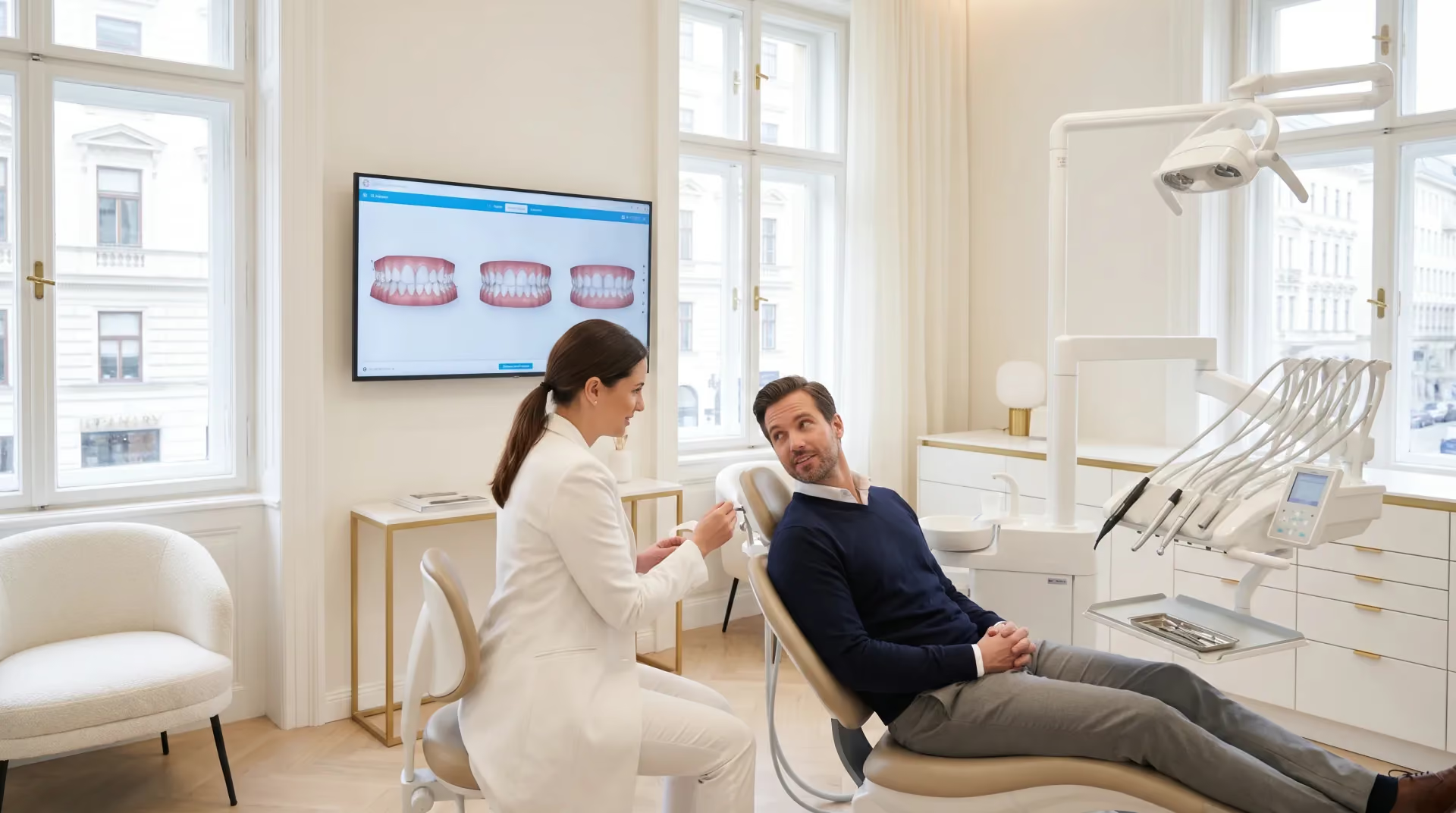
We clarify which method suits your individual situation in a personal consultation.
Book an appointment now