Smile4LifeADVANCED DENTAL AESTHETICS & IMPLANTOLOGY

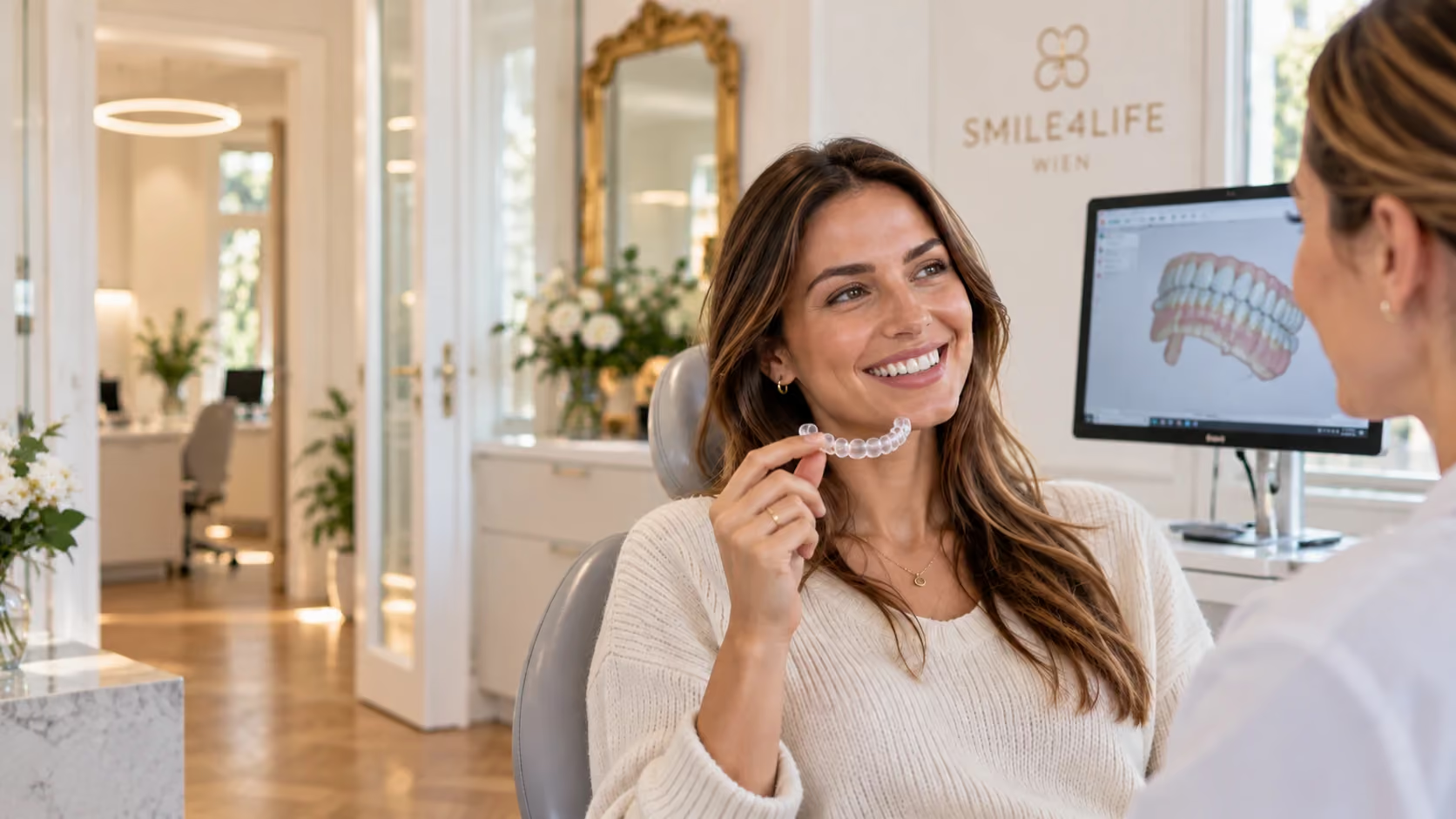
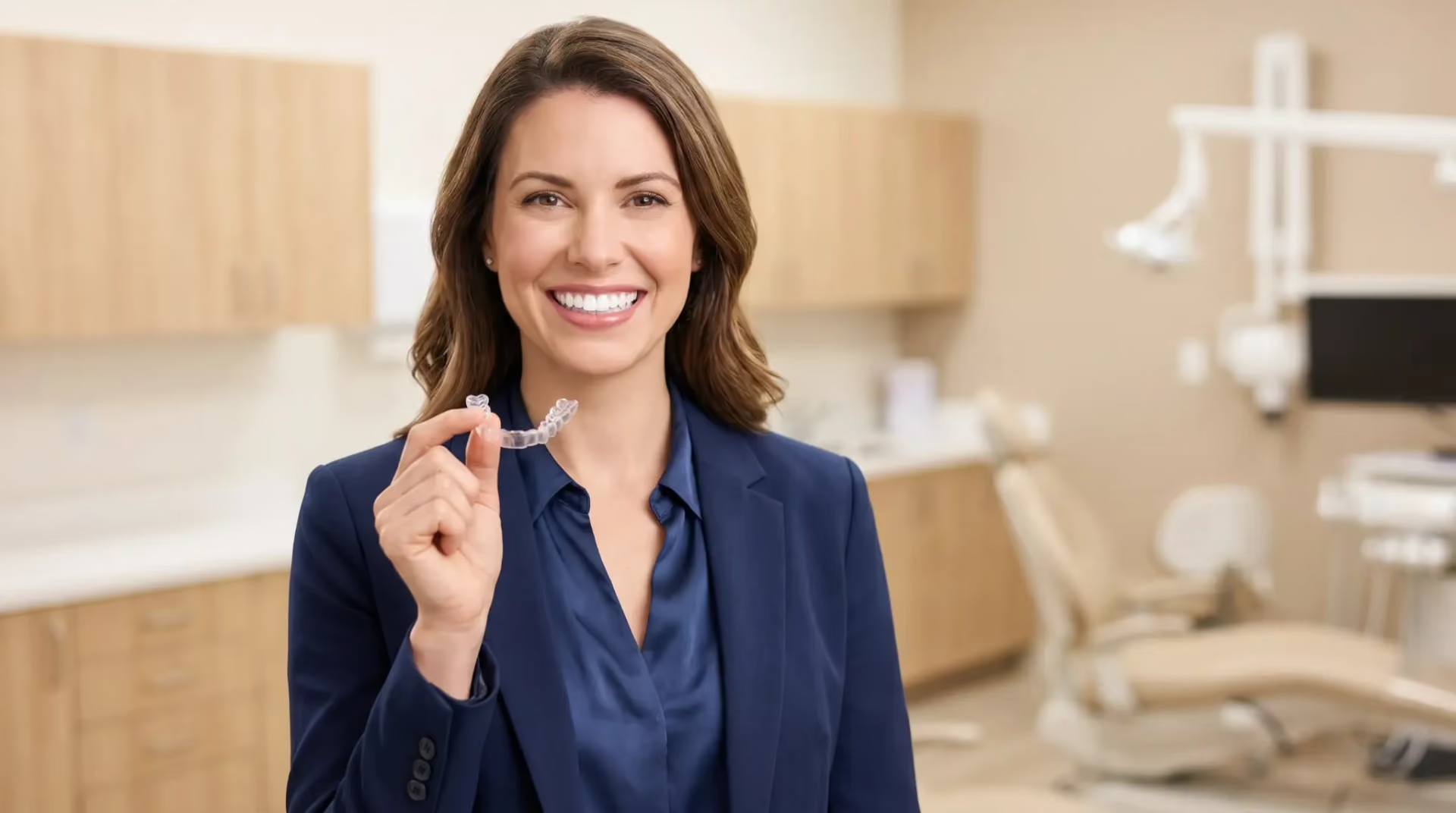
A smiling woman holds a transparent aligner.
Kieferorthopädie

Invisalign Before and After: What the Evidence Shows

Realistic, evidence-based expectations rather than unsupported promises

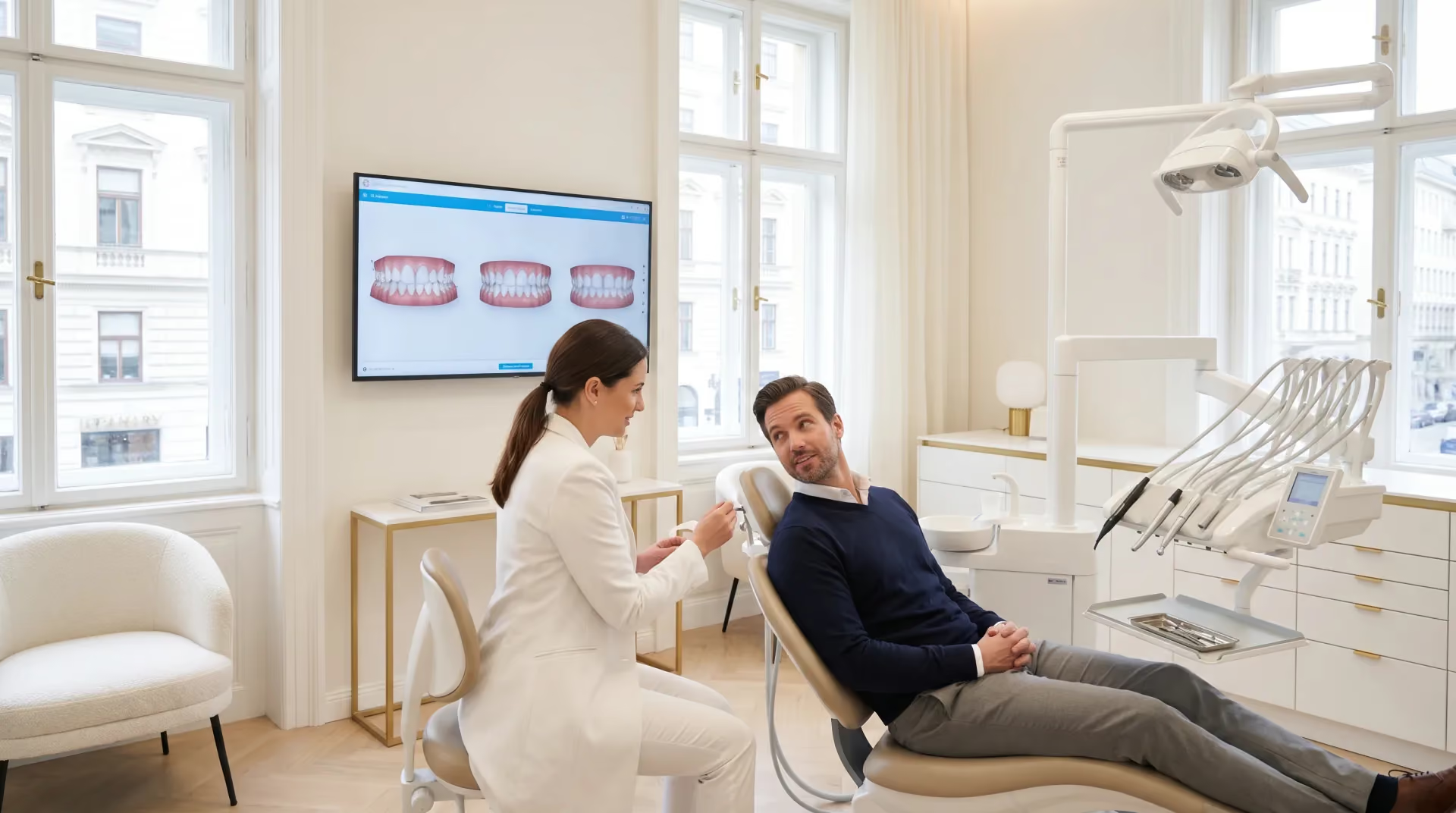
Individual ClinCheck simulation

Honest context

Retention for stability

Regular checks

Discuss results personally

Invisalign Results Vienna

invisalign-ergebnisse-wien

4.9★

Doctify rating

25+

Years of experience

Personal

In-practice consultation

1010 Vienna

Kärntner Straße 9

  • Does Invisalign work?

    Yes, for suitable misalignment. In adolescents with mild misalignment, a comparative study found aligner outcomes at least comparable to fixed braces. Difficult movements are less precise; attachments or refinement aligners can help.*

    Invisalign or fixed braces →

  • When can you see the first changes with Invisalign?

    This varies, often after a few weeks. Each aligner moves teeth only 0.15 to 0.25 mm and is worn for around two weeks; if back teeth or space are corrected first, changes at the front appear later.*

    The procedure in six steps →

  • How stable is the result after Invisalign?

    A retainer supports stability after active treatment. Its form, wear plan and checks are agreed individually; a permanently unchanged result cannot be guaranteed. Retainer checks are part of follow-up.*

    Retainer overview →

  • Does Invisalign change your face?

    The surrounding bone also adapts as teeth move. Changes to the smile and lip support are possible but cannot be predicted generally. In adults, aligners alone do not reliably correct marked skeletal jaw discrepancies. Austria’s health portal states that severe adult jaw discrepancies are often treated with braces combined with surgery.*

    Oral and maxillofacial surgery →

Guide prices & costs →

Focus on results

What do Invisalign before-and-after comparisons really show?

Instead of individual before-and-after photographs, we offer an honest, evidence-based explanation of expected outcomes with Invisalign.

“A responsible discussion of expected results is based on diagnosis and evidence, not individual photographs that rarely show the whole picture.”

— Priv.Doz.Dr.Dr. K. Yerit

Scientific evidence on treatment outcomes

Muro et al. (2023) reviewed 33 studies and confirmed the clinical effectiveness of Invisalign for suitable indications, while noting that predictability is overestimated and the planned result differs from the findings at treatment completion. In a historical study using an earlier system generation, Kravitz et al. (2009) compared planned and achieved movement in 37 people and 401 front teeth, finding average accuracy of 41 percent; extrusion was the least accurate movement (29.6 percent). Saif et al. (2026) studied 40 adults with mild to moderate crowding and found an average of 50.3 percent of planned movement after the first aligner series without refinements, with significant differences in all four movement types examined. This is neither a general treatment success rate nor a direct comparison of progress over time with the older study. Newer work, including Negrutiu et al. (2025) and Nemec et al. (2026), provides further findings on treatment progress and patient expectations.

Realistic expectations

What Invisalign can achieve

  • Correction of mild to moderate misalignment
  • Discreet, practical tooth straightening in everyday life
  • Individual planning with a 3D scan and ClinCheck
  • Plannable outcomes for suitable indications, sometimes with refinement aligners

What Invisalign cannot guarantee

  • Exact 1:1 implementation of every simulation detail, particularly rotations
  • Success without sufficient daily wear
  • Correction of severe skeletal discrepancies
  • Lasting stability without a consistent retention phase

Retention: the key to maintaining the result

As with any orthodontic treatment, teeth can move back without consistent retention. Active aligner treatment is therefore followed by a retention phase with retainers to stabilise the achieved position long term. The YERIT guide Invisalign overview explains the method in more detail.

Discuss results personally

In an individual consultation, find out which result is realistic for your specific situation.

Book an appointment now
Planning does not end with the final aligner. A retainer helps limit renewed tooth movement. Its design, long-term wear schedule, cleaning and checks are agreed individually; permanently unchanged teeth cannot be guaranteed.

Initial changes often appear after a few weeks; a retainer then supports stability. The long-term wear plan and check-ups remain important.

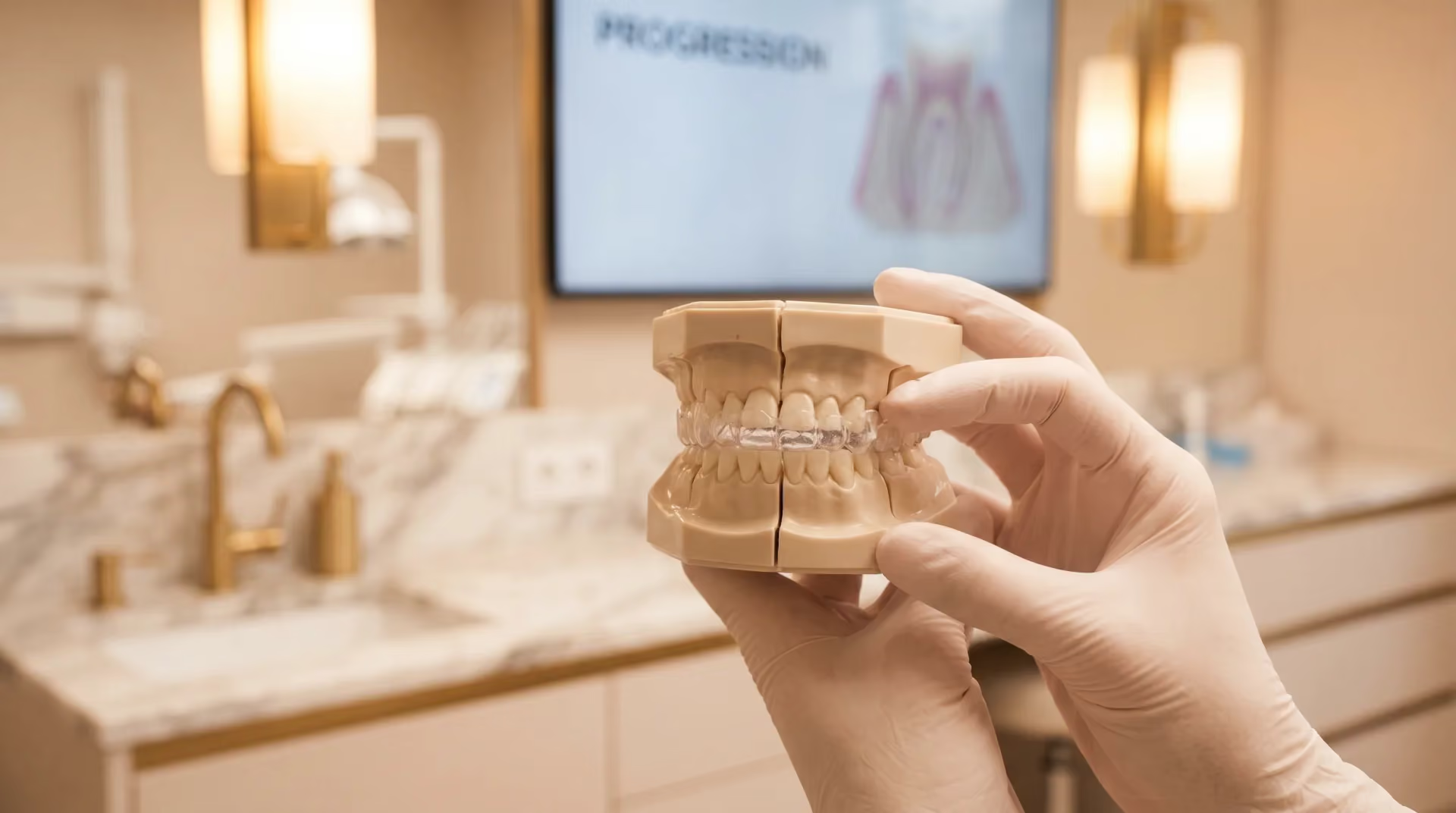
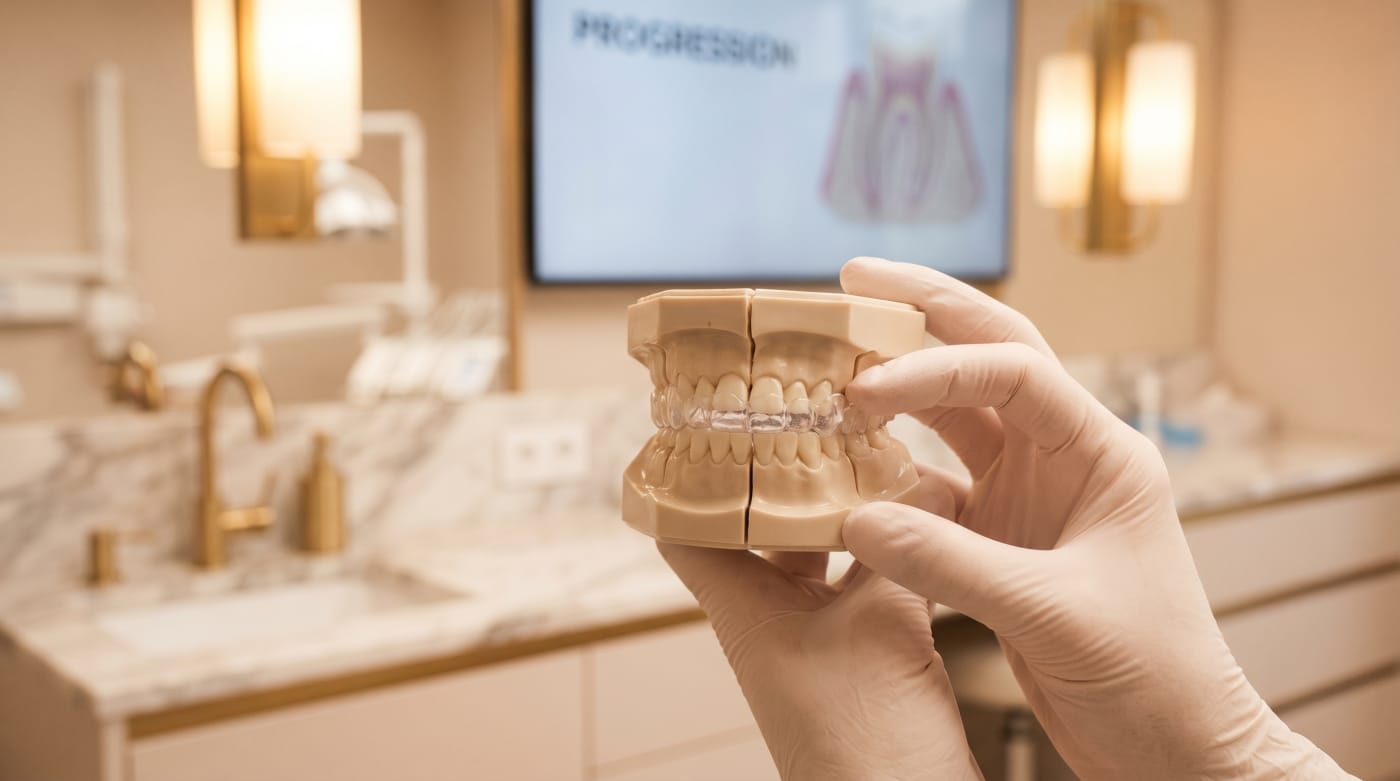
Hands holding a dental model.
20–22

Hours a day

Around 20 to 22 hours of daily wear is common guidance; your individual plan is what matters. Your cooperation is important, as are the findings, planning, technique and biological response. Actual progress is assessed at check-ups.

YOUR OPTIONS

TREATMENT OPTIONS COMPARED

We will discuss payment terms with you prior to treatment.

Advanced Dental Aesthetics & Implantology

Priv.Doz.Dr.Dr. K. Yerit

“Aesthetics is not a coincidence, but the result of precise planning and deep passion.”

A responsible discussion of expected results is based on diagnosis and evidence, not individual photographs that rarely show the whole picture.

View profile →

Scientific references

Institute for Implantology and Digital Dentistry Vienna

Deutsche Gesellschaft für Kieferorthopädie (DGKFO)

Österreichische Gesellschaft für Kieferorthopädie (ÖGKFO)

Align Technology Clinical Research

European Orthodontic Society (EOS)

Yerit Practice – Dentist Vienna

Frequently asked questions

Frequently asked questions

How reliable is ClinCheck compared with the actual result?
Which types of misalignment suit Invisalign?
Do you show real patient before-and-after photographs?
What happens if aligners are not worn enough?
What happens if the result does not match the plan?

Do you have a specific question about your diagnosis? Book a consultation appointment directly →

Questions about your treatment?

Discuss what matters to you and what the next steps look like with us.

Book your appointment now

SCIENTIFIC STUDIES

Evidence-based medicine

The sources help to classify the possibilities and limitations of the treatment. Their results are not a guarantee for any individual case.

Ke Y et al. (2019). A comparison of treatment effectiveness between clear aligner and fixed appliance therapies

The older review found differences in individual treatment objectives. Its heterogeneous studies do not support a general promise that aligners are faster or achieve a particular result.

30674307

Borda AF et al. (2020). Outcome assessment of orthodontic clear aligner vs fixed appliance treatment in a teenage population

A retrospective private-practice evaluation compared groups of 26 adolescents with mild malocclusions treated with aligners or fixed appliances. The aligner group showed better scores on the outcome index studied, fewer review and emergency appointments and shorter treatment duration. This small, non-randomised sample does not establish general equivalence or superiority for all adolescents.

33378505

Oikonomou E et al. (2021). Impact of Aligners and Fixed Appliances on Oral Health during Orthodontic Treatment

In the first weeks after treatment began, patients with aligners without additional attachments tended to show better oral health measures than those with fixed braces. However, the authors rated the certainty of this evidence as low to very low (Oral Health & Preventive Dentistry, 2021).

34874143

Muro MP et al. (2023). Effectiveness and predictability of treatment with clear orthodontic aligners: A scoping review

The review described differences between planned and achieved tooth movement. Certain movements are less predictable. A simulation therefore does not guarantee a result.

37086643

Negrutiu BM et al. (2025). Pain Perception and Dietary Impact in Fixed Orthodontic Appliances vs. Clear Aligners

Patients with fixed braces reported pain, need for painkillers and eating restrictions substantially more often than patients with clear aligners (Journal of Clinical Medicine, 2025).

40725752

Nemec M et al. (2026). Patients' needs, expectations & concerns regarding clear aligner treatment

A prospective cohort study of 82 Medical University of Vienna patients found that effectiveness comparable with fixed braces was the highest-ranked expectation among patients choosing clear aligner therapy (9.5 out of 10 points). They were scarcely willing to compromise on treatment duration or costs. A lasting result and prevention of future problems were also highly rated; discreet appearance mattered too, but ranked below expected effectiveness (Clinical Oral Investigations, 2026).

42209717

Kravitz ND et al. (2009). How well does Invisalign work? A prospective clinical study evaluating the efficacy of tooth movement with Invisalign

A prospective study of 37 patients compared planned Invisalign movements with those achieved in 401 front teeth. Mean accuracy was 41 percent, highest for narrowing the dental arch (47.1 percent) and lowest for extrusion of a tooth (29.6 percent) (American Journal of Orthodontics and Dentofacial Orthopedics, 2009).

19121497

Saif BS et al. (2026). A 3D comparison of planned versus achieved anterior tooth position in clear aligner treatment

A 3D study of 40 adults with mild to moderate crowding found significant differences between planned and achieved front-tooth positions for all four movement types examined after the first aligner series. Mean accuracy was 50.3 percent (Scientific Reports, 2026).

41781476

Gesundheitsportal Österreich: Zahnspangen und Zahnschienen

Austria’s health portal describes, among other things, twelve to 50 aligners, changes around every two weeks and 0.15 to 0.25 mm of movement per aligner. These general figures do not establish a fixed series length or movement promise for every current system and clinical situation; the individual treatment plan takes priority (gesundheit.gv.at, accessed 03.11.2026)

Gesundheitsportal Österreich: Zahn- und Kieferfehlstellungen

The maintenance or retention phase aims to limit renewed tooth movement. Its course and wear duration depend on the misalignment and personal plan; permanently unchanged teeth cannot be guaranteed.

Research findings help inform treatment decisions; they do not guarantee an individual outcome. We discuss suitable options with you based on your clinical findings and the planned treatment.

Evidence-based dentistry

ESCD
DGÄZ
AACD
AAED
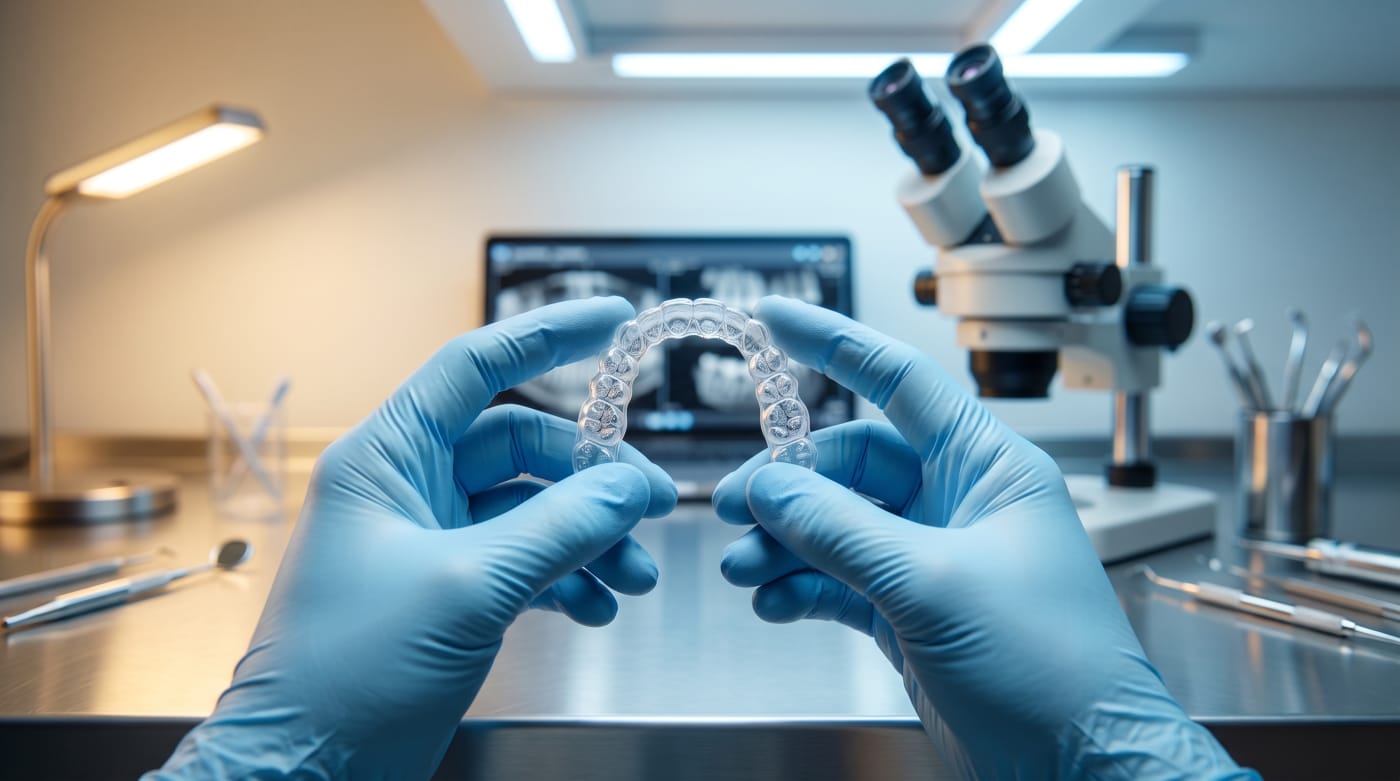
Gloved hands holding a transparent dental aligner in front of a microscope.

Clear aligners for your treatment plan

A simulation of the entire treatment is created from the 3D scan of your teeth. The aligner series is manufactured only once the target position has been established.

Bright waiting area with large windows, chairs and a gold-framed wall mirror.

Kärntner Straße 9

100 meters from Stephansplatz, Innere Stadt.

Personal Consultation

Priv.Doz.Dr.Dr. K. Yerit

During a personal consultation, we will discuss your goals and the appropriate treatment options. The information on this page does not replace such an examination.

Partnerships & Memberships & References