
Oral and Jaw Surgery Vienna: procedures on teeth and the jaw
Has surgery been recommended or something found on an X-ray? Find guidance about your concern and the next steps. Arrange a consultation.
Understand your concern
Explore your options
Prepare your questions
Find appropriate treatment
Oral and Jaw Surgery Vienna
mund-kieferchirurgie-wien
4.9★
Doctify rating
25+
Years of experience
Personal
In-practice consultation
1010 Vienna
Kärntner Straße 9
At a glance
What does oral and jaw surgery cover?
Treatment areas include wisdom tooth removal, tooth extraction, root-end surgery and jaw cysts. Whether a treatment can take place in the practice or requires a clinic depends on the findings and procedure.
The wider specialty of oral and maxillofacial surgery also includes surgery for tumours, congenital abnormalities and severe facial injuries. Whether care is possible at Smile4Life or requires a specialist clinic is assessed individually. In Austria, the specialty requires degrees in human medicine and dentistry, followed by at least 48 months of specialist training.*
Can I see an oral surgeon without a referral?
You can arrange a consultation at Smile4Life directly. Smile4Life is a private non-contract practice. Whether a referral or specific previous reports are needed depends on the treatment and provider. Hospital outpatient clinics and particular investigations have their own access rules.*
What should I bring to the first appointment?
Bring a referral if you have one, existing X-rays and reports — older images can also help comparison — an up-to-date medication list, particularly blood thinners, and details of known allergies. Write down your questions beforehand.
How long will I be out of action after jaw surgery?
It depends on the procedure. According to the Austrian health portal, pain and swelling after tooth removal subside after a few days; cooling immediately afterwards helps reduce them. Larger jaw operations need longer. Your doctor assesses your fitness for work.
Understand first, then decide.
Your concern is the starting point
You may have a wisdom tooth problem, an unusual X-ray finding or a tooth that has been recommended for removal. This overview helps you find the relevant treatment page and important questions for your consultation.
Prepare for your decision
A clinical finding alone does not determine every treatment step. It matters why surgery is recommended, which alternatives exist and what waiting would mean. Bring existing reports and your questions.

Wisdom teeth — each assessed individually
Not everyone has all four, and not every wisdom tooth needs removal. We assess each tooth individually according to its position, proximity to the lower jaw nerve and clinical findings.
Oral and jaw surgery in Vienna: which treatment fits?
Oral and jaw surgery covers several areas, from wisdom tooth removal to bone grafting. The pages below explain the relevant decisions and procedures. Examination remains important before a concern becomes a personal treatment plan.
- Wisdom teeth: when the position of a tooth, symptoms or a recommendation for removal needs clarification.
- Tooth extraction: when removal is being discussed, including difficult positions or damaged teeth.
- Root-end surgery: when the question is whether inflammation at a root tip can be treated surgically. The possibility of repeat root canal treatment also belongs in the discussion.
- Jaw cyst: to understand a finding and the next investigations.
- Dental implants and bone grafting: when missing teeth need replacing and the available bone is assessed.
- Gummy smile: when a lot of gum shows on smiling and the cause needs assessment.
Surgical exposure of a tooth during orthodontic treatment requires joint planning with orthodontics. This does not mean that every such procedure is offered in the same practice.
Dentist, oral surgery or a maxillofacial clinic?
Oral surgery means surgical treatment within the mouth. Oral and maxillofacial surgery extends further to diseases and injuries of the face. These terms alone do not establish which services an individual practice offers. YERIT provides general background in its guide to oral and jaw surgery.
Your clinical findings, the extent of the procedure and your general health guide the choice of treatment setting. Ask whether outpatient treatment is possible or a specialist clinic is needed. The University Department of Oral and Maxillofacial Surgery in Vienna provides information about its outpatient and inpatient departments.
Do I need a referral?
Ask the relevant provider which documents and appointment process are required. The University Clinic of Dentistry Vienna, for example, describes access through its general outpatient service or a written dental referral. This is not a universal requirement for every consultation.
For an acute concern, our page on dental emergencies offers further guidance. Breathing difficulty or pronounced swallowing problems require immediate medical help; do not wait for a routine consultation.
What should be clarified before surgery
Bring existing reports, X-rays and your medication list. Explain when symptoms began, what treatment you have already had and what matters most to you.
Examination and imaging
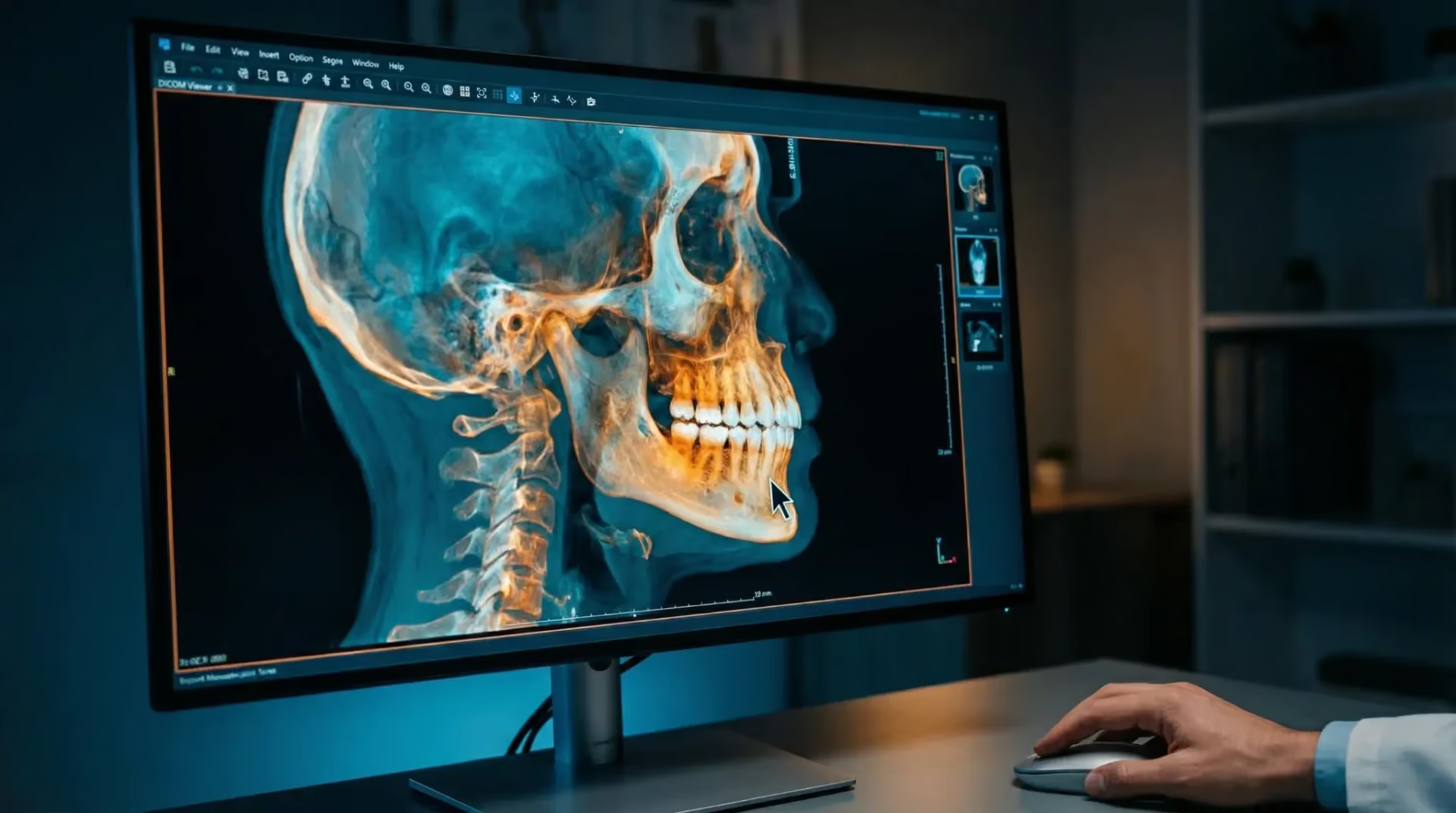
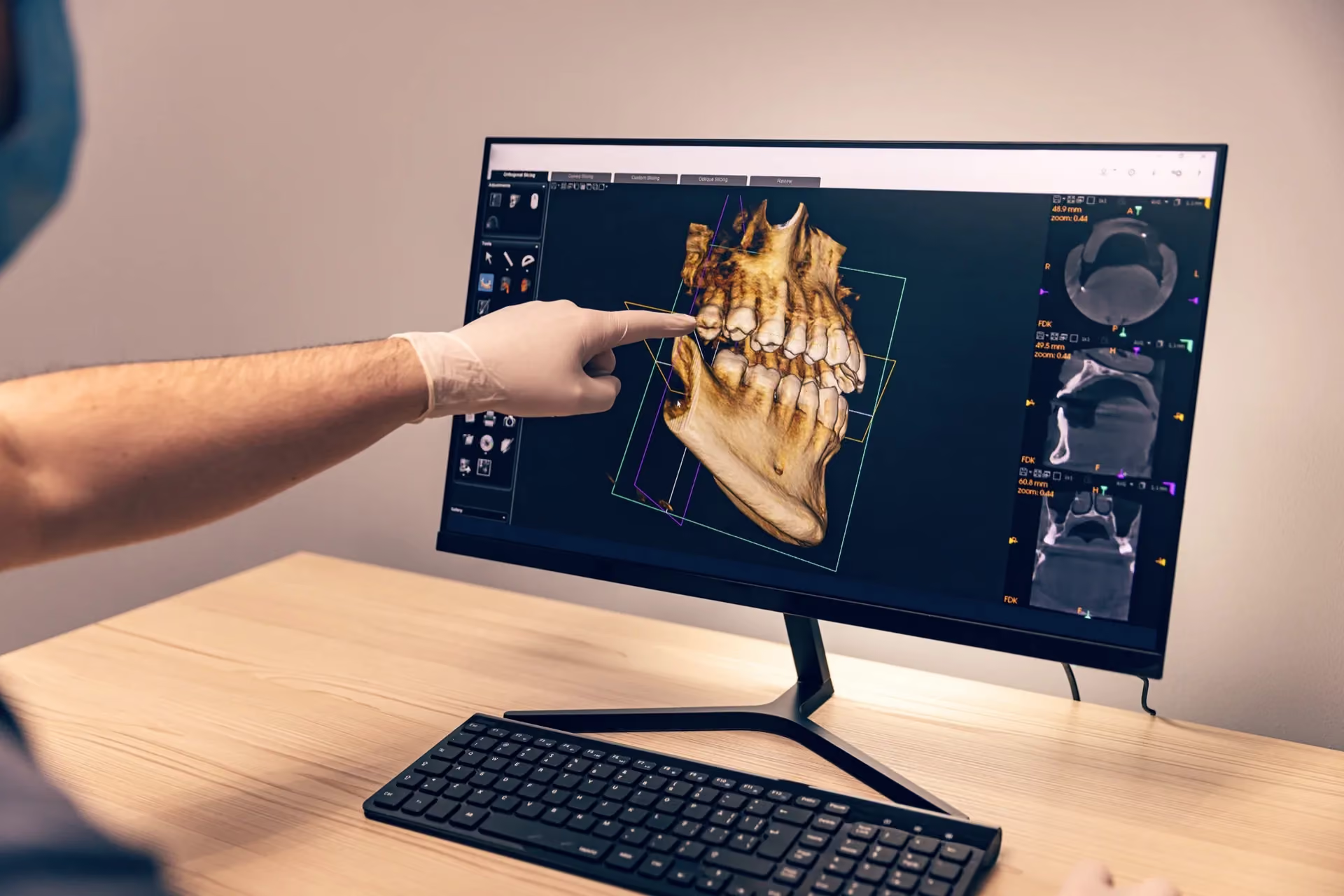
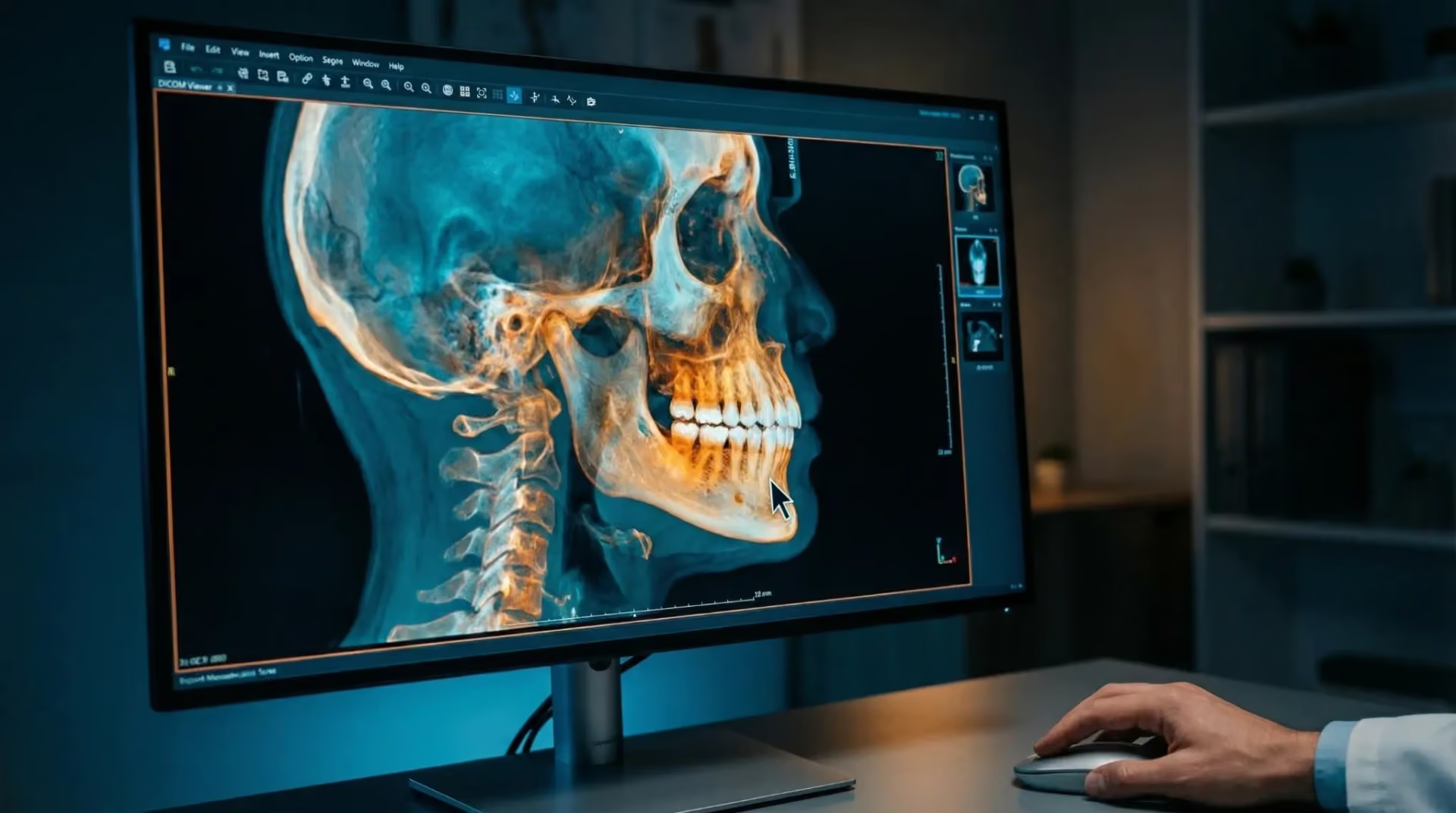
Imaging should answer a specific question. Three-dimensional imaging is not routinely recommended for lower wisdom teeth: although studies show better identification of possible exposure of the lower jaw nerve during removal than with a conventional panoramic image, the image itself does not prevent nerve injury (Reia et al., 2021). It may be considered when conventional images cannot adequately answer an important question. See CBCT and 3D X-rays for more information.
Decisions, anaesthesia and aftercare
Ask about the expected benefit, risks and possible alternatives. For lower wisdom teeth very close to the lower jaw nerve, coronectomy is sometimes an alternative to complete removal. A small root portion is deliberately left in the jaw, which current evidence suggests substantially reduces the risk of nerve injury, although there remains a chance of needing further surgery later (Kang et al., 2025; Peixoto et al., 2024).
Preventive antibiotics are not recommended routinely either: possible benefits must be weighed individually against adverse effects and antibiotic resistance (Camps-Font et al., 2024). Some practices also offer platelet-rich fibrin from the patient’s own blood (PRF) to support healing; the evidence is inconsistent and does not establish a general benefit (Ye et al., 2024; Ramos et al., 2022). The consequences of waiting also belong in the discussion.
If you are anxious about treatment, ask early about support and the anaesthesia options available to you. Smile4Life does not provide conscious sedation, nitrous oxide sedation or general anaesthesia in its own practice. If you are considering one of these, clarify suitability, the responsible team and the treatment location with the provider.
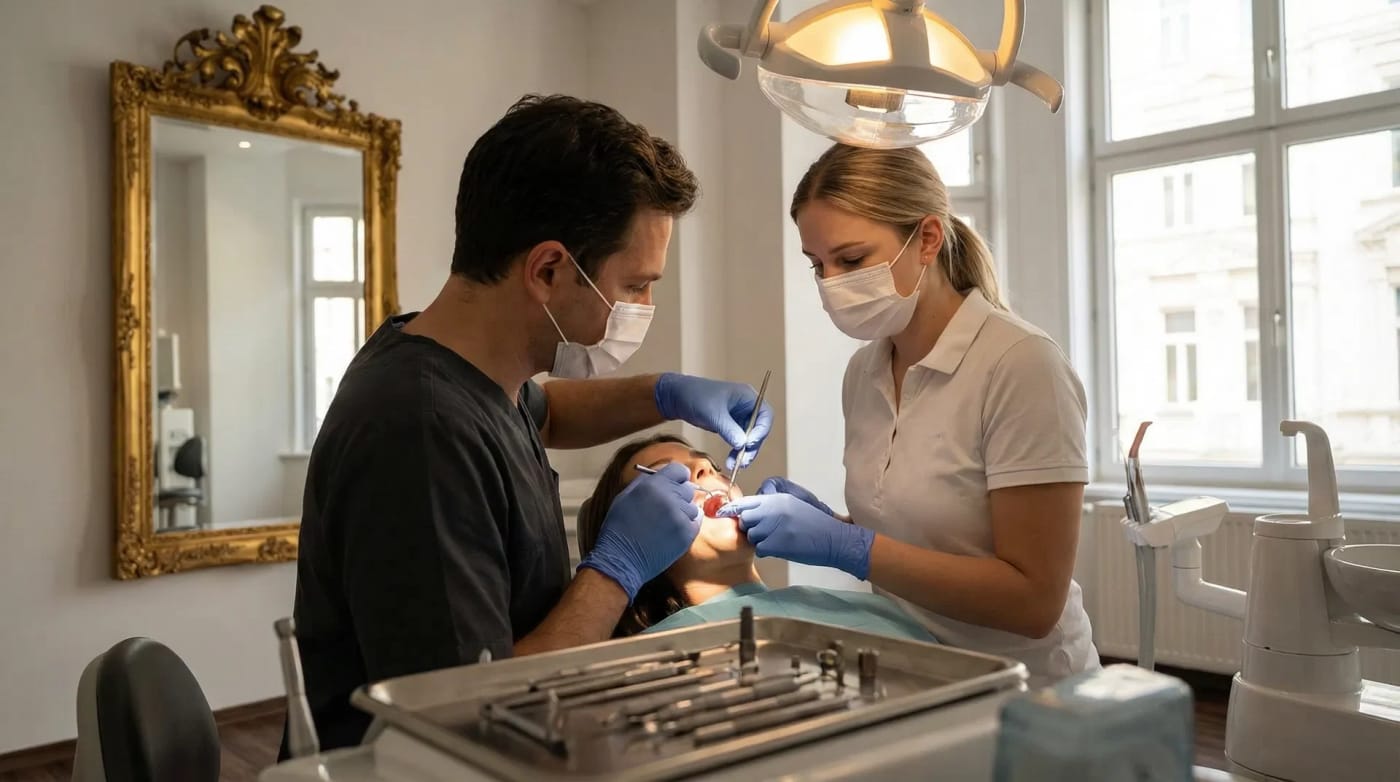
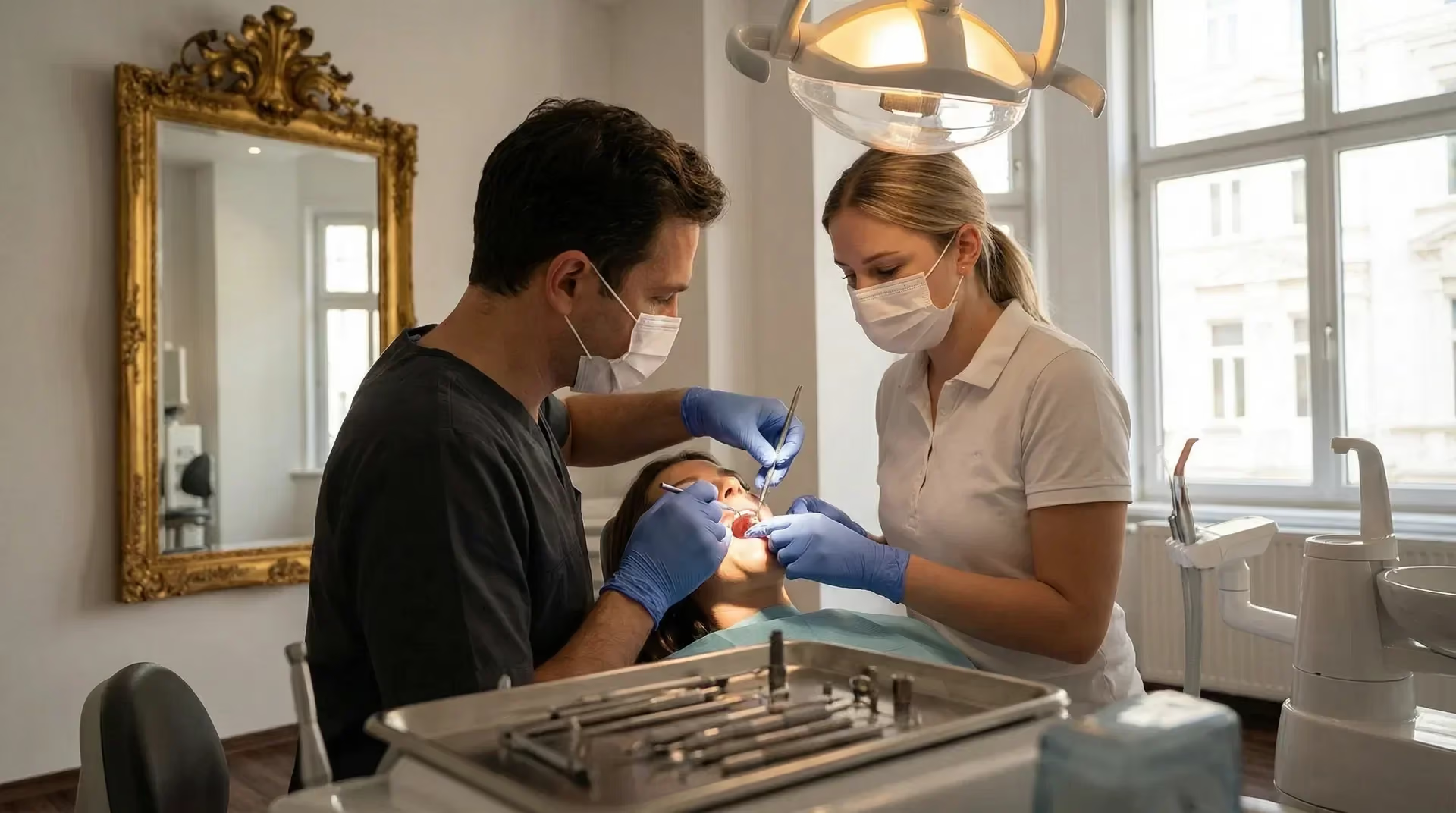
Before treatment, you should know how to prepare, what aftercare involves and whom to contact if problems arise. Procedure duration and recovery depend on the specific treatment. Advice for daily life is also available on the relevant detail page.
Oral surgery costs in Vienna
The work involved depends on your clinical findings, the planned procedure and necessary investigations, among other factors. Our prices page provides average market prices as non-binding guidance. They do not replace a personal cost plan following examination.
Before deciding, clarify which services the plan includes and whether further appointments or additional measures are expected. If you wish to check reimbursement, submit the specific treatment plan to your insurer.
You can find Priv.Doz.Dr.Dr. K. Yerit’s professional background in his doctor profile. Would you like to discuss your concern? Arrange a consultation at Smile4Life.
YOUR CONCERNS
What is on your mind?
Surgery has been recommended
You would like to understand the recommendation or seek another assessment. Existing reports, X-rays and a list of questions are helpful.
Concern about a nerve
For lower wisdom teeth, the relationship to the lower jaw nerve may matter. The imaging needed is decided individually; a 3D image is not automatically required.
An incidental finding
An X-ray has shown a change even though you have no symptoms. Have its meaning assessed and clarify whether review, further investigation or treatment is needed.
SUITABILITY CHECK
Is this treatment right for you?
YOUR JOURNEY
Your treatment process
Individual initial consultation
Getting to know your goals and your teeth
We will discuss your goals and examine which treatment is best suited for your teeth.
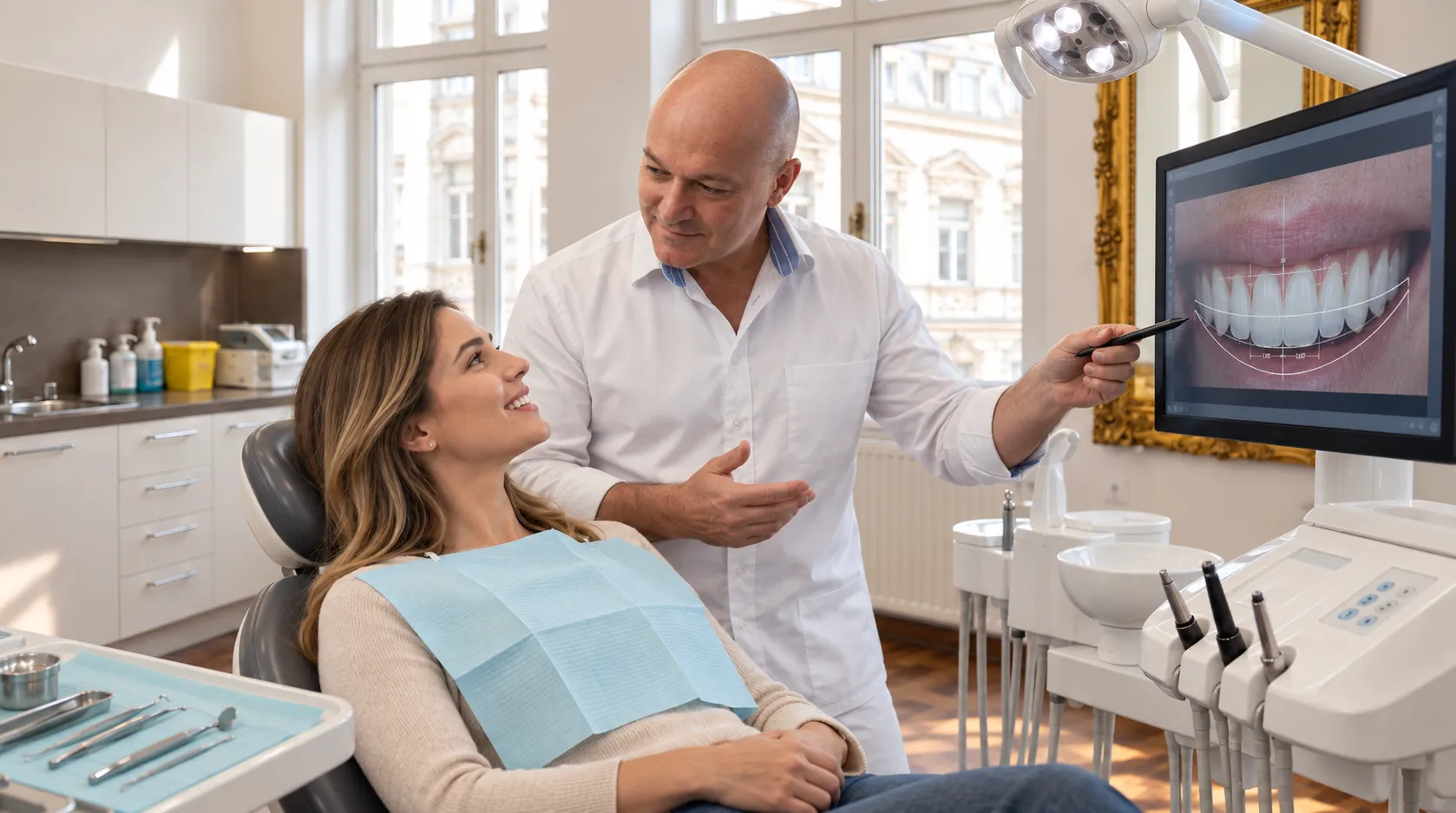

Individual treatment planning
Defining the next steps together
You will learn which steps are planned and which questions should be clarified in advance.
Precise execution
Guiding you through your treatment step by step
Your treatment follows your personal plan. Please ask questions and tell us about any discomfort at any time.
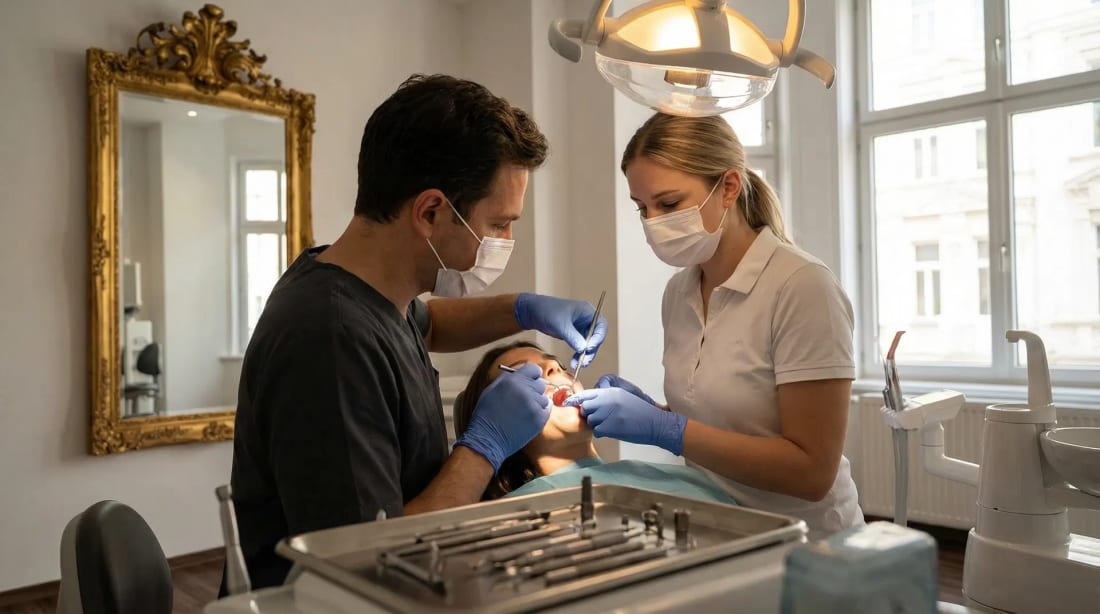

Aftercare and check-ups
Discuss care and follow-up appointments
Finally, we will discuss ongoing care and the follow-up appointments that are right for you.
In everyday life
Before surgery, clarify how much rest your treatment and occupation require and whether you need someone to accompany you. Obtain instructions on eating, oral care, exercise and follow-up appointments. Contact the treating provider if symptoms increase or worry you. There is no fixed recovery time for all oral surgery.
YOUR OPTIONS
TREATMENT OPTIONS COMPARED
We will discuss payment terms with you prior to treatment.
The indicative market prices in our price overview provide an initial guide. We will discuss which services are planned for you and the costs involved based on your examination findings and individual cost plan.
Advanced Dental Aesthetics & Implantology
Priv.Doz.Dr.Dr. K. Yerit
“Aesthetics is not a coincidence, but the result of precise planning and deep passion.”
One of the important benefits of surgical assessment is recognising early when surgery is not needed.
View profile →Scientific references
Institute for Implantology and Digital Dentistry Vienna
Medizinische Universität Wien
Österreichische Gesellschaft für Mund-, Kiefer- und Gesichtschirurgie (ÖGMKG)
European Association for Cranio-Maxillo-Facial Surgery (EACMFS)
Österreichische Ärztekammer
Yerit Practice – Dentist Vienna
Excellence
Why Smile4Life
Understand the finding
Ask exactly what is to be treated and why. A clear explanation helps you assess the recommendation.
Consider alternatives
Depending on the findings, surgery, another treatment or monitoring may be options. Ask which possibilities apply to your case.
Plan for daily life
Discuss anaesthesia, an accompanying person, possible time off and follow-up appointments beforehand so that you can prepare.
Frequently asked questions
Frequently asked questions
Do you have a specific question about your diagnosis? Book a consultation appointment directly →
Questions about your treatment?
Discuss what matters to you and what the next steps look like with us.
Book your appointment nowYour orientation
Would you like to understand your clinical findings? Bring your questions to the consultation.
Understanding what’s involved
Examination, treatment and reviews depend on your findings. Clarify subsequent appointments before surgery.
In everyday life
Before surgery, clarify how much rest your treatment and occupation require and whether you need someone to accompany you. Obtain instructions on eating, oral care, exercise and follow-up appointments. Contact the treating provider if symptoms increase or worry you. There is no fixed recovery time for all oral surgery.
Who this information is for
This overview is for people discussing surgery on teeth, gums or the jaw, such as wisdom teeth, difficult tooth removal, an unusual finding or preparation for an implant. Which treatment fits and where it can take place can only be decided after examination and discussion of the findings.
Important limitations
Tell the treating team about illnesses, allergies, previous treatments and all medication. Blood thinners, osteoporosis medication and previous head or neck radiotherapy are particularly important. Do not stop medication yourself. Discuss whether further assessment or coordination with your treating doctor is needed.
Our approach
The linked studies mainly concern lower wisdom teeth. Their results cannot be applied to every surgical procedure. An imaging study also answers a different question from a study of postoperative healing. No general promises of safety or healing are therefore derived from them.
SCIENTIFIC STUDIES
The linked studies mainly concern lower wisdom teeth. Their results cannot be applied to every surgical procedure. An imaging study also answers a different question from a study of postoperative healing. No general promises of safety or healing are therefore derived from them.
Kang FW et al. (2025). Coronectomy in lower third molar surgery: a systematic review and meta-analysis
The review examines coronectomy for lower wisdom teeth, deliberately leaving part of the tooth in the jaw. Included observational studies suggest lower risk of lower jaw nerve injury than complete removal. Follow-up and possible later procedures belong in the decision. These findings are not a general safety promise for surgery.
39956152
Peixoto AO et al. (2024; online 2023). Benefits of coronectomy in lower third molar surgery: a systematic review and meta-analysis
This review concerns lower wisdom teeth at increased risk to the lower jaw nerve. Coronectomy was associated with fewer nerve injuries but more subsequent procedures. Results come from observational studies. Patient numbers from different reviews must not be added without checking possible overlap.
37925166
Camps-Font O et al. (2024). Antibiotic prophylaxis in the prevention of dry socket and surgical site infection after lower third molar extraction
The network meta-analysis examines preventive antibiotics after lower wisdom tooth extraction. Potential benefit must be weighed against adverse effects and resistance. It supports neither antibiotics for every procedure nor universal avoidance. The treating provider makes the individual decision according to the procedure and health situation.
37612199
Ye L et al. (2024). Effect of platelet-rich fibrin on the recovery after third molar surgery
The meta-analysis evaluates PRF after surgical removal of lower wisdom teeth. It reports benefits for some symptoms and healing measures; benefit for soft-tissue healing remains unclear. The studied sockets received PRF or conventional care. This establishes neither a general advantage over antibiotics nor benefit for every surgical procedure.
39003218
Ramos EU et al. (2022). Do the new protocols of platelet-rich fibrin centrifugation allow better control of postoperative complications after surgery of impacted lower third molar?
The review examines different PRF protocols after removal of impacted lower wisdom teeth. This narrow question does not provide a general recommendation for autologous blood products in all surgical procedures. The additional benefit expected in an individual case should be discussed before use.
35439437
Reia VCB et al. (2021). Diagnostic accuracy of CBCT compared to panoramic radiography in predicting IAN exposure – Einordnung MKG-Hub
This meta-analysis of three studies compares CBCT and panoramic imaging for predicting exposure of the lower jaw nerve during removal of a lower wisdom tooth. CBCT performed better for this diagnostic question. The analysis did not establish whether CBCT prevents nerve injuries. Three-dimensional imaging is therefore not automatically required before every procedure.
34275000
Öffentliches Gesundheitsportal Österreichs: Überweisung, Zuweisung und Einweisung
A specialist can also be consulted using the e-card without a referral; X-rays or computed tomography almost always require a specific referral. Referrals are valid for three months from their issue date (gesundheit.gv.at, accessed 03.11.2026).
Österreichische Gesellschaft für Mund-, Kiefer- und Gesichtschirurgie: Für Patient:innen
Oral and maxillofacial surgeons treat conditions ranging from wisdom tooth removal to complex surgery for tumours, congenital abnormalities and severe facial injuries. Degrees in medicine and dentistry are followed by at least 48 months of specialist training (oegmkg.at, accessed 03.11.2026).
Imaging before the incision
For lower wisdom teeth, examination and suitable imaging help assess the position, roots and relationship to the lower jaw nerve. Additional CBCT is not routinely needed. Whether complete removal or, in selected situations, coronectomy is appropriate is decided individually.

Kärntner Straße 9
100 meters from Stephansplatz, Innere Stadt.

Partnerships & Memberships & References