
Oral Hygiene Vienna: professional cleaning adapted to your findings
Remove tartar, deposits and staining, adapt your home care and find a schedule that suits your teeth — at Smile4Life near Stephansplatz.
Remove tartar and biofilm
Adapt home care
Intervals based on findings
Appointments in 1010 Vienna
Preventive Dental Care Vienna
mundhygiene-zahnreinigung-wien
4.9★
Doctify rating
25+
Years of experience
Personal
In-practice consultation
1010 Vienna
Kärntner Straße 9
At a glance
What happens during professional cleaning?
After your teeth and gums are checked, soft and hard deposits and staining are removed, including between teeth and at the gum margin. The teeth are then polished, usually treated with fluoride, and you receive care advice.
How often does the ÖGK cover professional cleaning?
Usually not for adults: it is a private service. Children and adolescents from 10 to 18 receive one cleaning per treatment year using the e-card, or two with fixed braces, at least six months apart.*
How often should I have professional cleaning?
For most adults, once or twice a year; with gum problems, implants or fixed braces, more frequent care may be needed. We determine the appropriate interval from your clinical findings.*
What is good oral hygiene at home?
Brush twice a day for two minutes with fluoride toothpaste, without excessive pressure, and clean between the teeth once a day using floss or interdental brushes.*
Oral hygiene in Vienna: what this appointment involves
Rough areas behind the lower front teeth, gums that bleed when brushing, or staining from coffee and tea — people seek professional cleaning in Vienna for different reasons. They share one thing: tartar and firmly attached deposits can no longer be removed at home. Removing them requires instruments, time and a view of the whole mouth.
This page explains what professional cleaning at Smile4Life includes, whom it can help, how often it is needed and what the ÖGK covers. Separate pages explain the procedure, duration and costs in detail; this is the overview.
What professional oral hygiene at Smile4Life includes
Professional oral hygiene — called professional dental cleaning, or PZR, in Germany — removes deposits that toothbrushes and floss can no longer reach. This includes hard tartar at and just below the gum margin, soft bacterial deposits — biofilm — between the teeth, and surface staining. Polishing follows, leaving smooth surfaces to which new deposits attach less readily. You also receive advice for the hard-to-reach areas that cause difficulty at home.
Why is brushing not enough? Plaque mineralises within a few days. Soft deposits become hard tartar, which no brush can remove: it needs mechanical removal with ultrasound or hand instruments. Home care and professional cleaning therefore work together: you keep deposits to a minimum, and we remove what has nevertheless become firmly attached. The short answer Why can I not remove tartar myself? explains this; the knowledge page oral hygiene on yerit.at explains the clinical background and how plaque and tartar develop.
Why deposits are more than a cosmetic concern
Dental plaque is a biofilm: a dense bacterial layer that lives on tooth surfaces and feeds on what we eat. Left undisturbed, it irritates the gums. Gum inflammation, called gingivitis, may cause bleeding. Not every case of gingivitis develops into periodontitis. In susceptible people, however, inflammation can damage the tissues supporting the teeth and lead to bone loss. Repeated gum bleeding should be examined; cleaning and reviews adapted to need help with prevention.
Gingivitis and periodontitis differ in one respect: inflammation is reversible while the bone remains unaffected. Consistent daily oral hygiene is central. Professional cleaning can complement it, but where periodontitis has been diagnosed, it replaces neither targeted treatment nor supportive follow-up. Decay follows a similar pattern: it starts where persistent deposits remain undisturbed, often between teeth and at the gum margin. Habits play an important part in maintaining healthy teeth.
Who can benefit from professional cleaning — and when is it not the first step?
Regular professional cleaning can be useful for most adults with natural teeth. This is particularly relevant when tartar forms quickly, gums bleed when brushing, bridges or fixed braces make cleaning difficult, or you smoke. Implants need the same careful attention as natural teeth; the surrounding tissue can also become inflamed, sometimes without being noticed promptly. Gums often become more sensitive during pregnancy. Cleaning is possible, but please tell us beforehand. Even with good home care, hard deposits can develop, often behind the lower front teeth.
Cleaning is not the first step when gums repeatedly bleed or recede, or teeth become loose. Examination comes first: measuring gum pockets, X-rays and clinical assessment. European S3 guidance describes staged treatment for periodontitis (Sanz et al. 2020); routine cleaning alone is not sufficient. Our page on periodontitis treatment in Vienna explains the next steps. We discuss whether cleaning can prevent this condition in this answer.
Professional dental cleaning in Vienna: your appointment
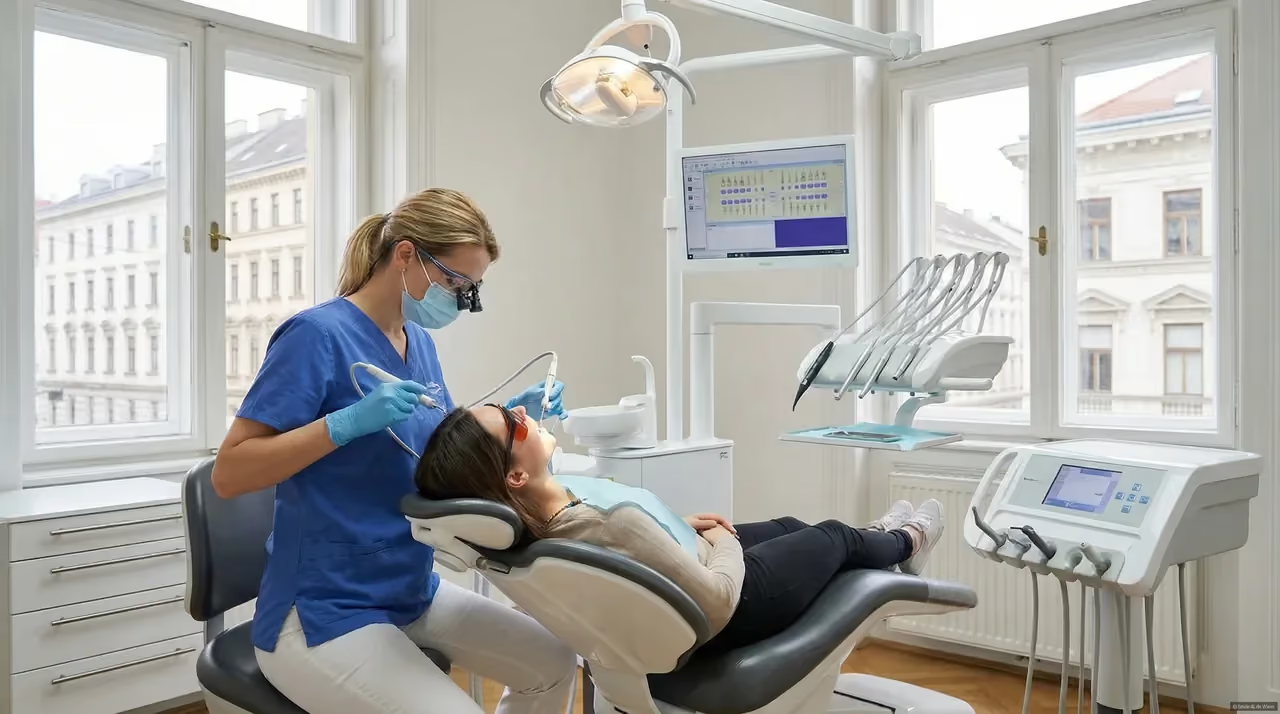
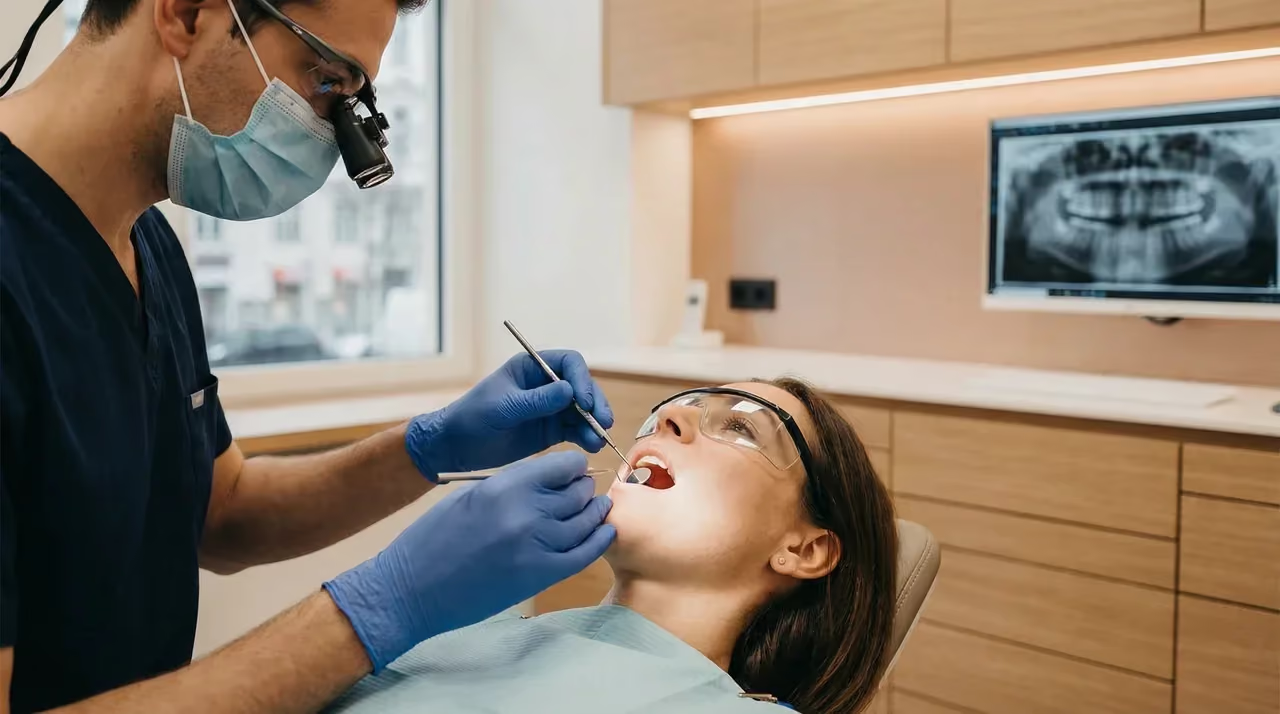
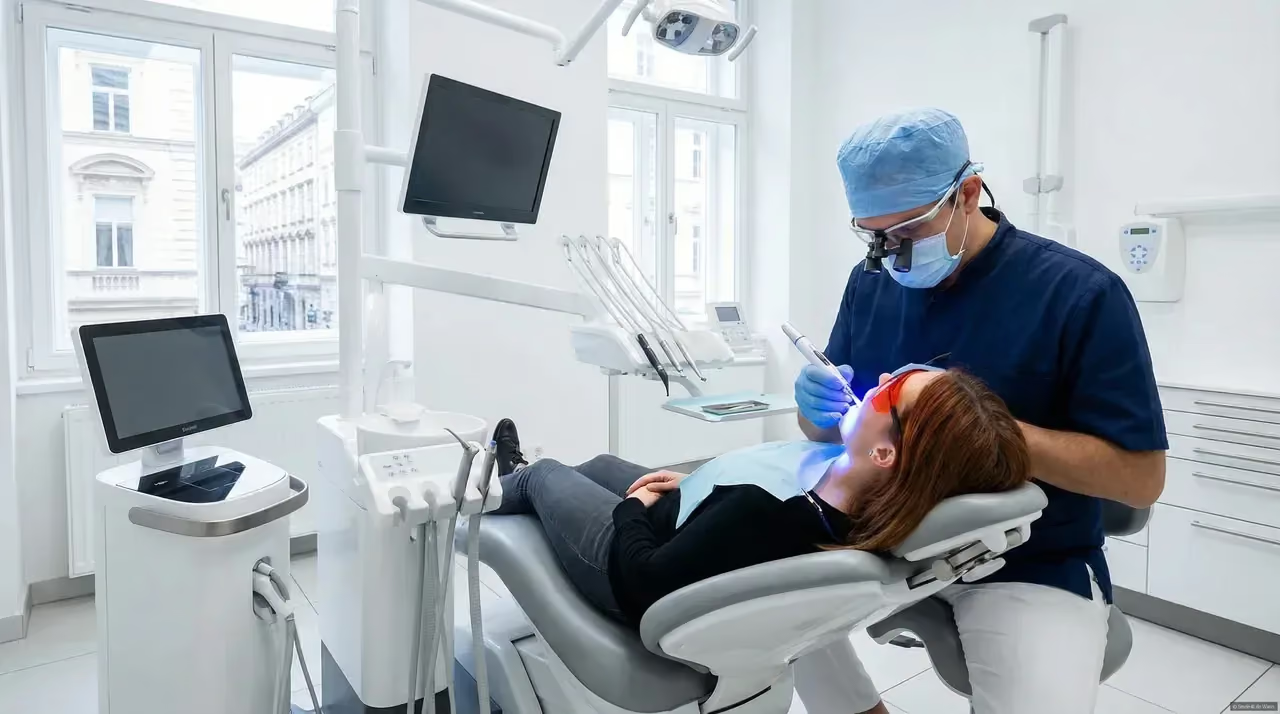
We begin by looking at your teeth, gums and deposits, and asking about sensitivity, medication and your home care. This determines the steps required; not every method is appropriate for everyone.
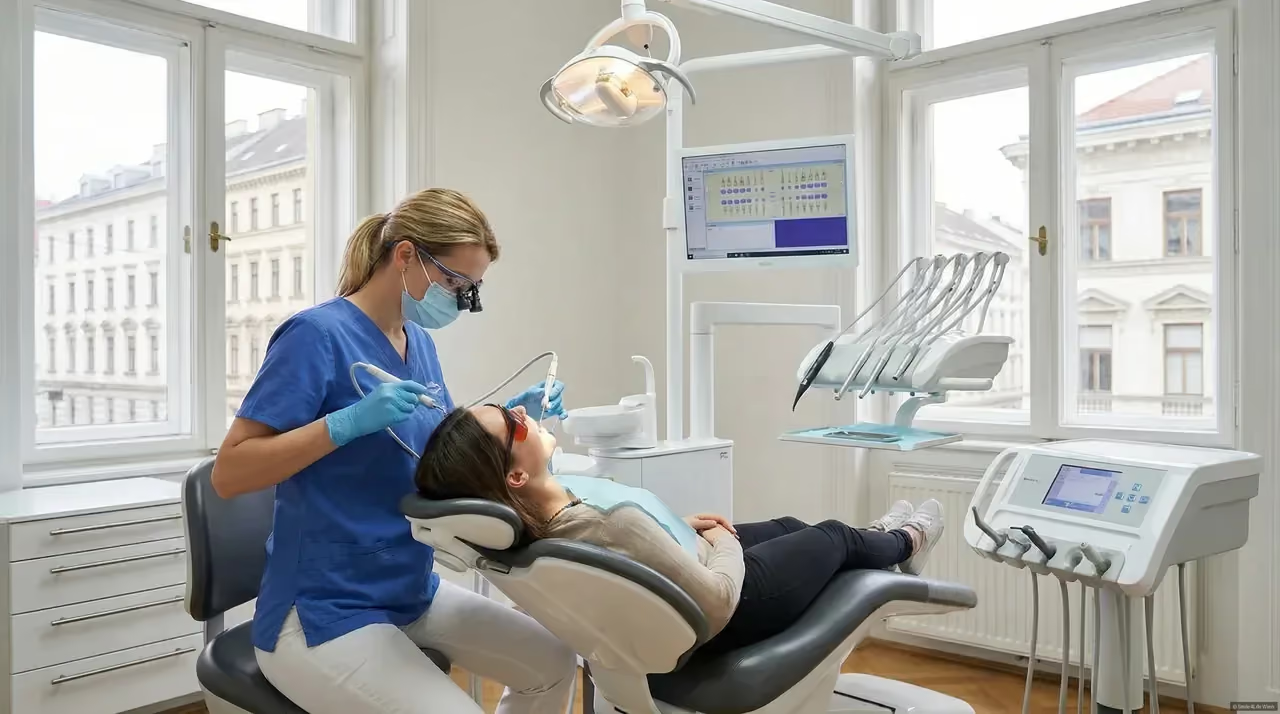
- Removing hard deposits: using ultrasound and hand instruments on tooth surfaces and at the gum margin.
- Removing plaque and staining: using an air-polishing device (Airflow, air-polishing). In maintenance care, erythritol powder performs comparably to hand and ultrasonic instrumentation and is perceived as more comfortable (Abdulbaqi et al. 2022).
- Polishing: smoothing tooth surfaces to make bacterial attachment more difficult.
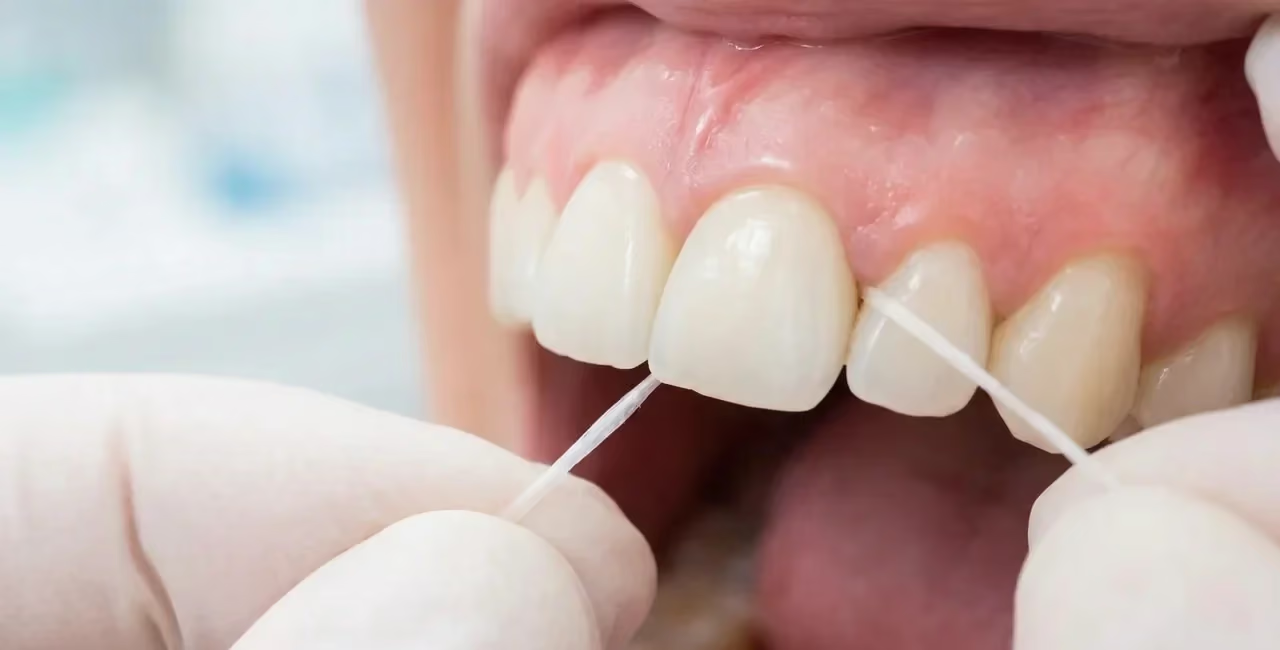
- Advice: how to use floss, interdental brushes or powered interdental cleaners, depending on what suits the spaces between your teeth. Used alongside brushing, powered interdental cleaners measurably reduce bleeding between teeth (Edlund et al. 2023).
The ÖGK allows around 30 to 45 minutes for professional cleaning; with substantial tartar or sensitive gums, our appointments tend to take 45 to 60 minutes, depending on findings. As is usual in Austria, trained preventive dental assistants carry out cleaning; the dentist assesses the clinical findings beforehand. Whether cleaning hurts depends on gum condition; see the short answer and what we can do for sensitive tooth necks. The page on professional dental cleaning in Vienna describes the appointment step by step; oral hygiene Vienna — duration, appointments and care covers duration, preparation and care afterwards.
Preventive dental care in Vienna: how often does cleaning make sense?
The ÖGK gives once or twice a year as general guidance. Research is more cautious. A Cochrane review involving 1711 adults without severe periodontitis found little difference in gingivitis over two to three years between cleaning every six months, annually or without scheduled cleaning; six-monthly cleaning only reduced tartar slightly (Lamont et al. 2018). A fixed six-month interval is therefore not mandatory for healthy people who clean well.
With gum inflammation, the situation differs. Professional deposit removal works particularly alongside guided home care: the instruction provides the foundation and cleaning adds to it (Farina et al. 2026). After treatment for periodontitis, a separate maintenance programme with shorter intervals applies (Sanz et al. 2020).
We therefore set intervals according to findings: how quickly hard deposits form, whether gums bleed, and factors such as implants, braces or smoking. Regular cleaning may mean every three months for one person and annually for another. You receive the reason, rather than just the appointment. The short answer How often should I attend preventive care? summarises this.
What professional cleaning can and cannot do
After cleaning, teeth feel smooth, external staining is usually removed, and gums often settle over the following days. It does not promise an advertising-style radiant smile: cleaning does not change natural tooth colour. Lighter teeth require whitening, which is a separate decision.
Professional oral hygiene is one part of preventive dentistry. It removes deposits but cannot reliably prevent decay or gum inflammation. Its additional benefit and appropriate frequency depend on your findings and care between appointments. It is neither periodontitis treatment nor a dental examination: decay beneath a filling, a gum pocket or a cracked tooth require assessment by the dentist, X-rays and clinical findings. Our appointment therefore includes both cleaning and attention to what cleaning alone cannot identify.
Sensitivity after the appointment is common and usually settles within days. Tell us beforehand about exposed tooth necks so that we can work more gently or use local anaesthesia.
Care at home: what matters between appointments
Dental cleaning takes up one or two appointments of around an hour each year; on the other days, your daily care matters. Our appointment therefore ends with a discussion of what could change at home, rather than with polishing alone. Usually, three things matter.
- Between the teeth. Many inflammatory problems begin here, where a toothbrush cannot reach. Floss, correctly sized interdental brushes or a powered interdental cleaner — we show you what suits your teeth, and you try it in the chair.
- Technique before equipment. An electric toothbrush is convenient but not essential: a review in older adults found no clear advantage over a manual toothbrush (Saroya et al. 2024). What matters is reaching every surface twice a day, starting at the gum margin.
- Diet and habits. Sugary food and drinks throughout the day, smoking and medication-related dry mouth can favour deposits. You do not need to change everything at once; we discuss what could make the greatest difference.
Antiseptic mouth rinses can complement mechanical cleaning when gums are inflamed. They are not intended for everyone indefinitely and replace neither toothbrushes nor floss (Figuero et al. 2020). We decide together what suits your situation.
What does professional cleaning cost in Vienna — and what does the ÖGK cover?
For adults in Austria, professional oral hygiene is generally a private service and is not reimbursed by the ÖGK. Different rules apply to children and adolescents: from their 10th to their 18th birthday, the ÖGK covers one cleaning per treatment year using the e-card, or two with fixed braces, at least six months apart. Reimbursement is possible with private non-contract dentists (Austrian Health Insurance Fund). The short version: Does health insurance cover professional cleaning?
Professional cleaning on the Vienna market usually costs between 100 and 300 euros. These are market reference ranges: Art. 3 lit. e WR-ÖZÄK prohibits public advertising of a practice’s own private dental prices unless disclosure is legally required. We discuss your personal cost plan after assessment and before treatment. Scope, time and additional steps depend on your findings. The page on preventive care costs in Vienna explains the factors affecting price and supplementary insurance; reference ranges for all services are on the prices page.
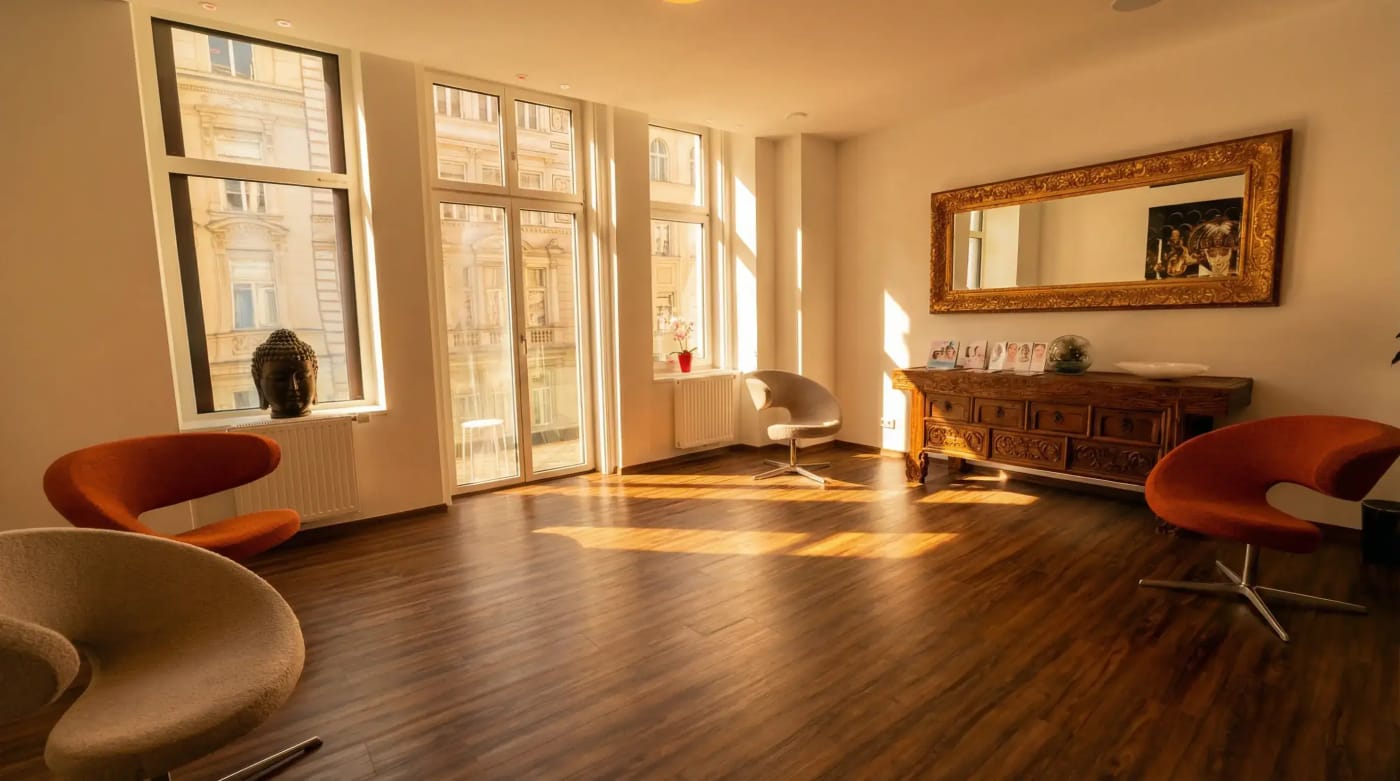
Oral hygiene in 1010 Vienna: the practice in Kärntner Straße
You will find us at Kärntner Straße 9, 1010 Vienna, a hundred metres from Stephansplatz and the U1 and U3. Arrange your appointment online or by phone on +43 1 410 13 52. For your first appointment, bring a medication list and any current reports. Please tell us beforehand about blood thinners, heart conditions or pregnancy. Are you looking for a dentist in Vienna who considers prevention alongside other care, from fillings to implants? We can discuss these needs together; YERIT provides further dental knowledge online.
Before each cleaning, Priv.Doz.Dr.Dr. K. Yerit examines your teeth and gums, helping to identify periodontitis rather than treating the visit as routine cleaning alone. If cleaning is a first step towards other dental care, such as an implant or braces, we include that in planning.
YOUR CONCERNS
What is on your mind?

Tartar and rough areas
Rough behind the front teeth or hard at the gum margin? It is often tartar, which needs professional removal.
Gums bleed when brushing
Repeated bleeding calls for examination, rather than cleaning alone.
Staining from coffee, tea or tobacco
Air-polishing and polishing can remove external staining; the underlying tooth colour remains.
SUITABILITY CHECK
Is this treatment right for you?
YOUR JOURNEY
Your treatment process
Individual initial consultation
Getting to know your goals and your teeth
We will discuss your goals and examine which treatment is best suited for your teeth.
Individual treatment planning
Defining the next steps together
You will learn which steps are planned and which questions should be clarified in advance.
Precise execution
Guiding you through your treatment step by step
Your treatment follows your personal plan. Please ask questions and tell us about any discomfort at any time.
Aftercare and check-ups
Discuss care and follow-up appointments
Finally, we will discuss ongoing care and the follow-up appointments that are right for you.
In everyday life
Home care continues after professional cleaning. Advice on eating and drinking depends on the products used and any local anaesthesia; have this explained before leaving the practice.
YOUR OPTIONS
TREATMENT OPTIONS COMPARED
We will discuss payment terms with you prior to treatment.
The indicative market prices in our price overview provide an initial guide. We will discuss which services are planned for you and the costs involved based on your examination findings and individual cost plan.
Advanced Dental Aesthetics & Implantology
Priv.Doz.Dr.Dr. K. Yerit
“Aesthetics is not a coincidence, but the result of precise planning and deep passion.”
Regular preventive care can support long-term oral health — it complements home care where cleaning at home reaches its limits.
View profile →Scientific references
Institute for Implantology and Digital Dentistry Vienna
Österreichische Gesundheitskasse (ÖGK)
Österreichische Gesellschaft für Parodontologie
European Federation of Periodontology (EFP)
Cochrane Oral Health
Yerit Practice – Dentist Vienna
Excellence
Why Smile4Life
Target deposits
Instruments are selected to suit the surface and clinical findings.
Make care manageable
Ask about the right technique for areas you find difficult to reach.
Know the next step
Clarify the scope, time and costs before treatment.
Frequently asked questions
Frequently asked questions
Do you have a specific question about your diagnosis? Book a consultation appointment directly →
Questions about your treatment?
Discuss what matters to you and what the next steps look like with us.
Book your appointment nowYour orientation
A schedule that suits your teeth rather than a fixed calendar.
Understanding what’s involved
The time required and further appointments depend on your findings and the planned steps.
In everyday life
Home care continues after professional cleaning. Advice on eating and drinking depends on the products used and any local anaesthesia; have this explained before leaving the practice.
Who this information is for
For people who want tartar or external staining removed and help adapting daily care. Individual need is assessed from the clinical findings.
Important limitations
Repeated gum bleeding, swelling or pain requires examination. Routine cleaning alone may not be the appropriate treatment.
Our approach
Your individual need guides the decision. Professional cleaning complements your own care. Benefits, limits and possible further treatment should be explained clearly. A general promise of success or protection does not replace this assessment.
SCIENTIFIC STUDIES
Your individual need guides the decision. Professional cleaning complements your own care. Benefits, limits and possible further treatment should be explained clearly. A general promise of success or protection does not replace this assessment.
Farina R et al. (2026). Clinical Efficacy of Interventions Based on Professional Mechanical Plaque Removal in the Treatment of Dental Biofilm-Induced Gingivitis
The review examines adults with biofilm-induced gingivitis over 2–6 weeks. Evidence on additional benefit from professional deposit removal alongside care instruction has low certainty. It provides no general prevention or interval guarantee.
41531192
Abdulbaqi HR et al. (2022). Efficacy of erythritol powder air-polishing in active and supportive periodontal therapy
The review concerns erythritol air-polishing in active and supportive periodontal therapy. It does not establish one standard process or superiority for every routine dental cleaning.
34318577
Saroya KK et al. (2024). Powered versus manual toothbrushes for plaque removal and gingival health amongst 55 and older individuals
The review concerns people aged 55 and over. Included studies showed no clear advantage of electric over manual toothbrushes for the measures assessed. This does not establish general equivalence across all age groups.
38348549
Lamont T et al. (2018). Routine scale and polish for periodontal health in adults
Cochrane review of two randomised trials involving 1711 adults without severe periodontitis: over two to three years, scheduled scaling and polishing every six or twelve months showed little difference in gingivitis, probing depth and oral health-related quality of life compared with no scheduled cleaning. Regular cleaning reduced tartar slightly; its clinical importance is unclear (Cochrane Database of Systematic Reviews, 2018).
30590875
Österreichische Gesundheitskasse: Mundhygiene
The ÖGK describes professional cleaning as taking around 30 to 45 minutes depending on dental status, recommended once or twice yearly. Children and adolescents from their 10th birthday until their 18th birthday receive cleaning once per treatment year using the e-card, or twice with fixed braces, at least six months apart. Reimbursement at a private non-contract dentist is possible (oegk.at, accessed 08.09.2026).
Öffentliches Gesundheitsportal Österreichs: Zahngesundheit
Austria’s public health portal recommends brushing twice daily for two minutes with fluoride toothpaste and daily interdental cleaning using floss or interdental brushes. Professional cleaning takes around 30 to 45 minutes depending on dental status and does not replace home care (gesundheit.gv.at, accessed 08.09.2026).
More topics in this area
Deepen your knowledge – find all information regarding the treatment process, costs, and results.
Kärntner Straße 9
100 meters from Stephansplatz, Innere Stadt.
Partnerships & Memberships & References