Gum Inflammation in Vienna: Clarifying the Cause
Are your gums bleeding or swollen? Examination establishes the cause and which care or treatment is appropriate.
Understand your findings
Understand treatment
Discuss daily care
Clarify next steps
Gum Inflammation Vienna
zahnfleischentzuendung-wien
4.9★
Doctify rating
25+
Years of experience
Personal
In-practice consultation
1010 Vienna
Kärntner Straße 9
At a glance
What helps with gum inflammation?
Gum inflammation, also called gingivitis, affects the gums. With plaque-induced inflammation, consistent plaque removal helps: brush for at least two minutes twice daily and clean between teeth with floss or interdental brushes. Mild bleeding is not a reason to stop. Tartar cannot be removed at home.*
How long does gingivitis take to heal?
Daily cleaning is the foundation for plaque-induced gingivitis. Professional deposit removal can supplement it. Studies over two to six weeks provide low-certainty evidence, not a fixed healing deadline.*
What does the dentist do for gum inflammation?
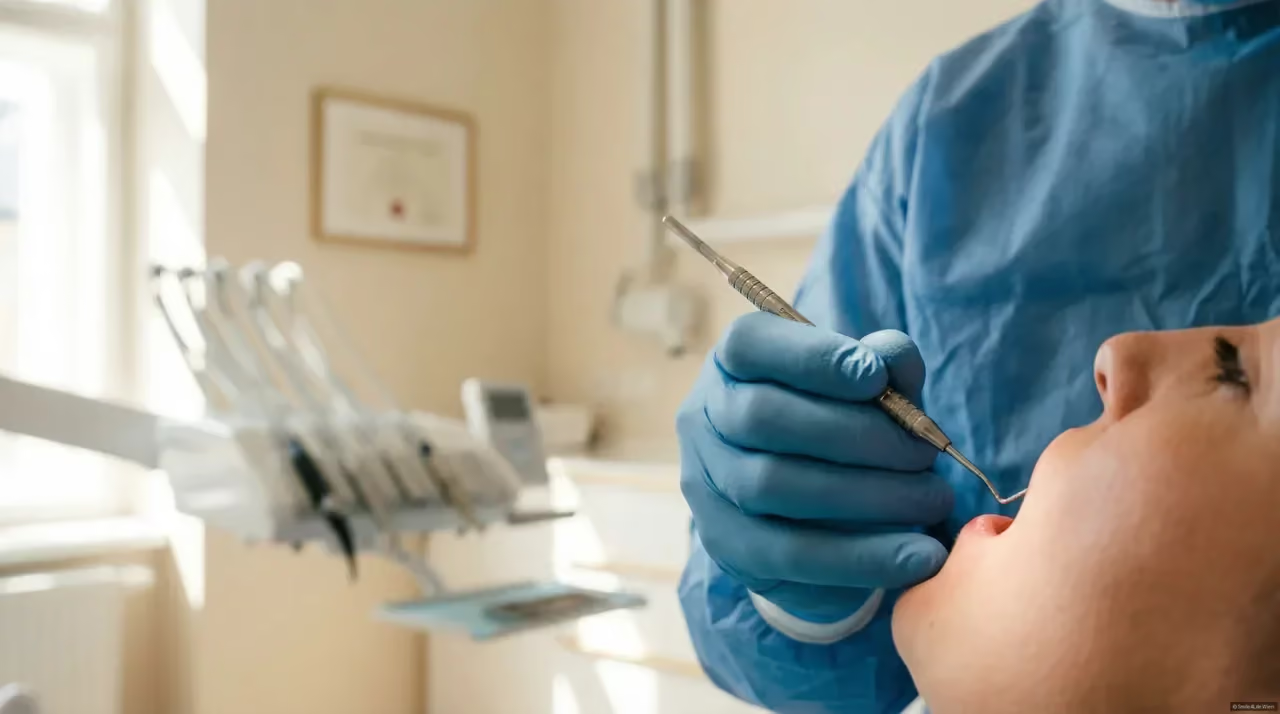
First, we check whether only the gums or the supporting tissues are affected. The dentist then removes deposits and tartar; deep pockets also require thorough root-surface cleaning.*
Can gum inflammation heal on its own?
Waiting alone is not enough; deposits need removing. Early inflammation can disappear completely with appropriate care while bone and connective tissue remain unaffected. Progression can lead to periodontitis.*
Gum inflammation: understanding the symptoms
Redness, swelling, sensitivity and bleeding during brushing may indicate gum inflammation. Bacterial deposits are often involved. Individual symptoms are not enough to diagnose yourself; injury or other changes can also play a part.
Repeated bleeding or persistent swelling warrants a dental check. Severe pain, increasing swelling or fever requires prompt assessment.
What examination clarifies
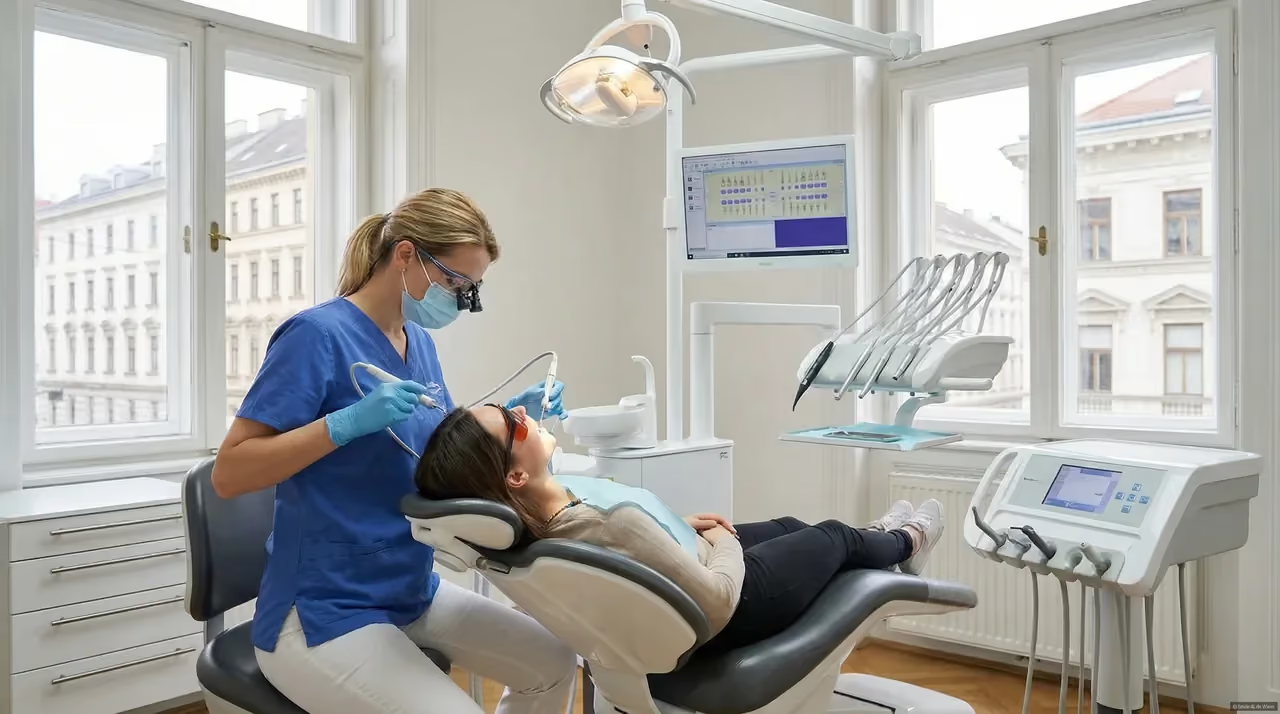
The gums, teeth and sites where deposits collect are examined. Pocket measurements and other assessments are added where needed. A key question is whether inflammation affects only the gums or tooth support as well.
Gingivitis does not cause additional loss of the supporting tissues through this inflammation. Periodontitis already involves loss of supporting tissue. Someone with previous periodontitis can still develop gingivitis again and continues to need appropriate maintenance.
How gingivitis is treated
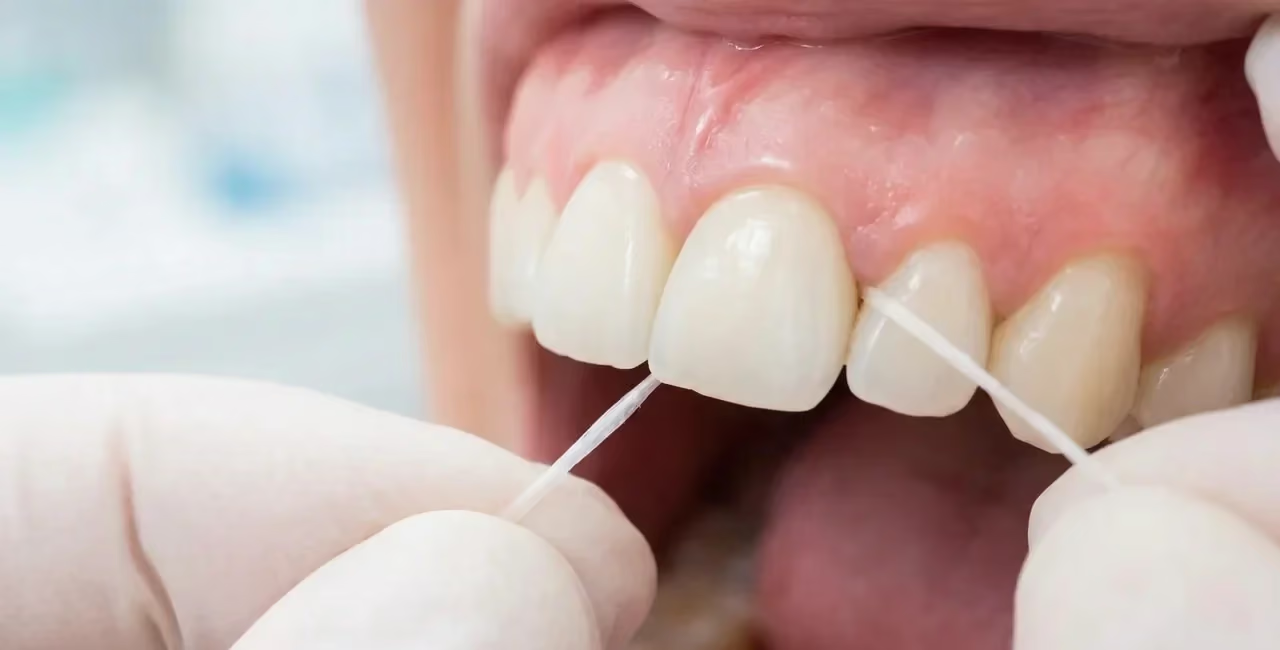
For plaque-induced gingivitis, removing soft and hard deposits and effective daily cleaning are central. Brushing alone cannot remove tartar. Ask for suitable aids and a gentle interdental technique to be demonstrated.
Do not continually avoid cleaning bleeding areas. Hard scrubbing can cause further irritation. Mouth rinses may supplement care when specifically recommended; they do not replace cleaning. No guaranteed healing time can be given remotely.
If inflammation returns
Persistent symptoms despite adapted care require reassessment. Hormonal changes, certain medicines and other diseases can affect gums. Do not change prescribed medication yourself; discuss possible associations.
Not every case of gingivitis becomes periodontitis, but persistent inflammation should still be treated. Read about periodontitis and its treatment; YERIT’s gingivitis guide also explains the difference. General prevention belongs within oral hygiene.
Sources and context
Trombelli and colleagues (2018): Definition of plaque-induced gingivitis
Plaque-induced gum inflammation can resolve.
Context: The foundational definition from 2018 does not imply restoration of bone already lost.
Austrian health portal: Gum inflammation
Thorough daily care and professional tartar removal complement one another.
Context: General patient information last updated in 2022; not a personal diagnosis or fixed healing deadline.
Papapanou and colleagues (2018): Classification of periodontitis
Stage and grade describe severity, treatment complexity and progression.
Context: The foundational classification consensus predates 2019. Symptoms alone do not permit classification.
Thorough, gentle cleaning supports treatment. Have new or worsening symptoms assessed.
YOUR OPTIONS
TREATMENT OPTIONS COMPARED
We will discuss payment terms with you prior to treatment.
The indicative market prices in our price overview provide an initial guide. We will discuss which services are planned for you and the costs involved based on your examination findings and individual cost plan.
Advanced Dental Aesthetics & Implantology
Priv.Doz.Dr.Dr. K. Yerit
“Aesthetics is not a coincidence, but the result of precise planning and deep passion.”
Plaque-induced gum inflammation can resolve. Examination clarifies whether only the gums are affected.
View profile →Scientific references
Institute for Implantology and Digital Dentistry Vienna
Österreichische Gesellschaft für Parodontologie
European Federation of Periodontology (EFP)
Deutsche Gesellschaft für Parodontologie (DG PARO)
American Academy of Periodontology (AAP)
Yerit Practice – Dentist Vienna
Frequently asked questions
Frequently asked questions
Do you have a specific question about your diagnosis? Book a consultation appointment directly →
Questions about your treatment?
Discuss what matters to you and what the next steps look like with us.
Book your appointment nowYour orientation
Understand the findings and plan appropriate next steps.
Understanding what’s involved
The extent of care and appointments depend on your individual situation.
In everyday life
Thorough, gentle cleaning supports treatment. Have new or worsening symptoms assessed.
Who this information is for
Important limitations
Our approach
SCIENTIFIC STUDIES
Galarraga-Vinueza ME et al. (2025). Prevalence, incidence, systemic, behavioral, and patient-related risk factors for peri-implant diseases
A current systematic review and meta-analysis of 102 studies involving more than 13,000 patients reports person-level prevalence of peri-implant mucositis of 46% and peri-implantitis of 21%. Previous periodontitis, smoking and diabetes were observed risk indicators. This does not establish cause and effect.
40489307
Suvan J et al. (2020). Subgingival instrumentation for treatment of periodontitis. A systematic review
This systematic review informing the EFP S3 guideline evaluates randomised trials of subgingival instrumentation. Probing depth decreased by an average of 1.4 mm (95% confidence interval 1.0 to 1.7) after six to eight months, and 74 percent of pockets closed (95% CI 64 to 85). Hand or powered instruments, quadrant-based treatment or a single course showed no significant difference (Journal of Clinical Periodontology, 2020).
31889320
Trombelli L et al. (2018). Plaque-induced gingivitis: Case definition and diagnostic considerations
The consensus paper from the 2017 World Workshop on periodontal classification defines clinical gingivitis as a common, clearly distinguishable condition that is fully reversible with consistent treatment.
29926936
Farina R et al. (2026). Clinical Efficacy of Interventions Based on Professional Mechanical Plaque Removal in the Treatment of Dental Biofilm-Induced Gingivitis
The review examines adults with biofilm-induced gingivitis over 2–6 weeks. Evidence on additional benefit from professional deposit removal alongside care instruction has low certainty. It provides no general prevention or interval guarantee.
41531192
More topics in this area
Deepen your knowledge – find all information regarding the treatment process, costs, and results.
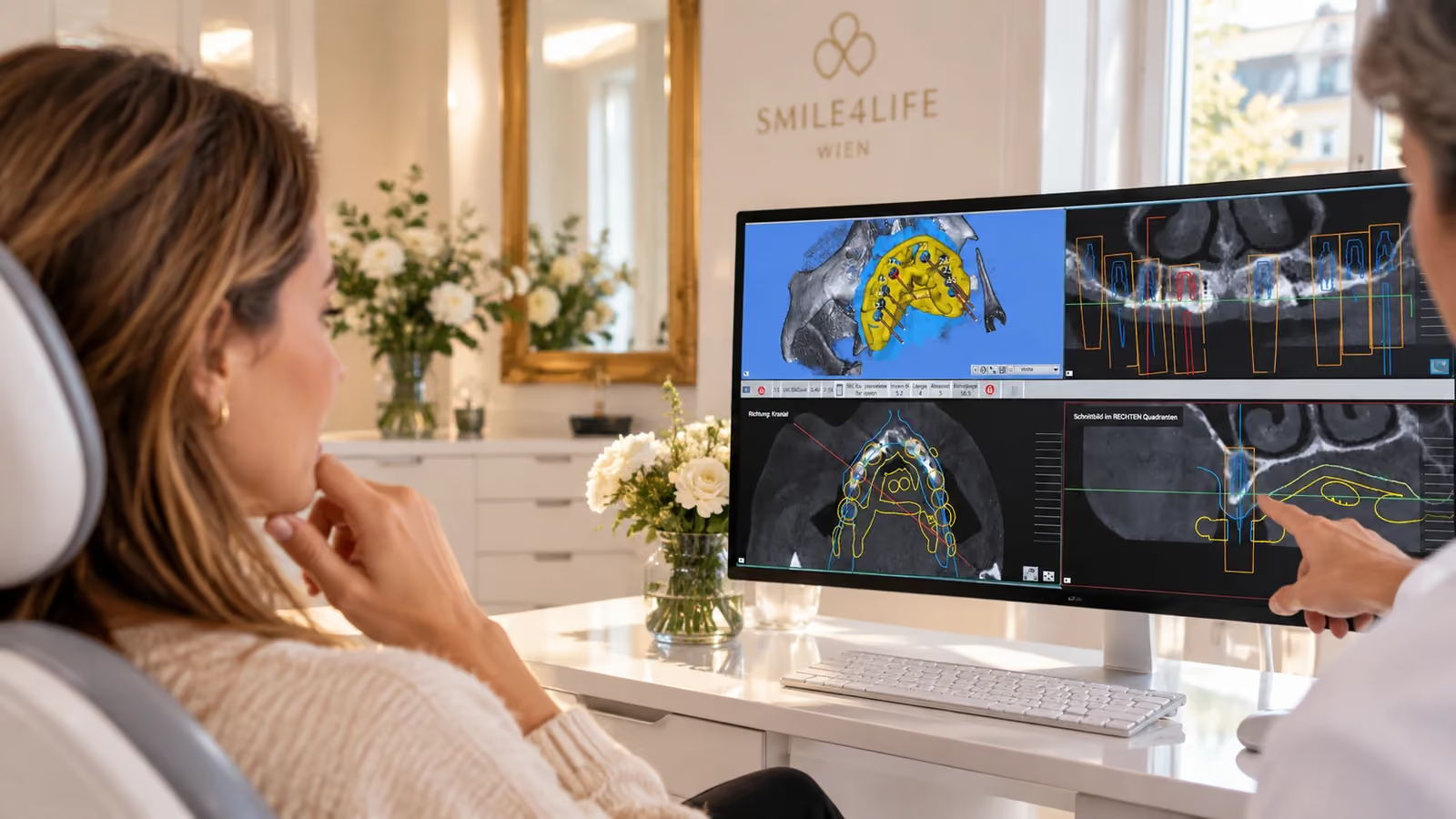


Kärntner Straße 9
100 meters from Stephansplatz, Innere Stadt.


Partnerships & Memberships & References