
Root canal treatment in Vienna: options and limits of tooth preservation
When a tooth is inflamed inside, root canal treatment may help preserve it. We discuss which approach suits your findings.
Preserve your natural tooth
Understand the findings
Plan treatment together
Consider aftercare
Root Canal Treatment Vienna
wurzelbehandlung-wien
4.9★
Doctify rating
25+
Years of experience
Personal
In-practice consultation
1010 Vienna
Kärntner Straße 9
At a glance
What is root canal treatment and when is it possible?
Root canal treatment removes diseased or dead pulp and cleans, disinfects and fills the canals. The aim is to preserve the tooth. This is not appropriate if a well-sealed, load-bearing restoration is no longer possible afterwards — for example, too little healthy structure remains, a deep crack passes through the tooth or supporting tissues are badly damaged. We then discuss other approaches with you.
How long does healing after root canal treatment take?
Symptoms usually ease after a few days; inflammation in bone heals much more slowly. Follow-up X-rays show whether it heals: in a randomised study of 120 non-vital front teeth with apical periodontitis, radiographic success after twelve months was 73 to 78 per cent depending on method. This is a study result for those teeth, not a general success rate.*
Preserve or extract a tooth — how is the decision made?
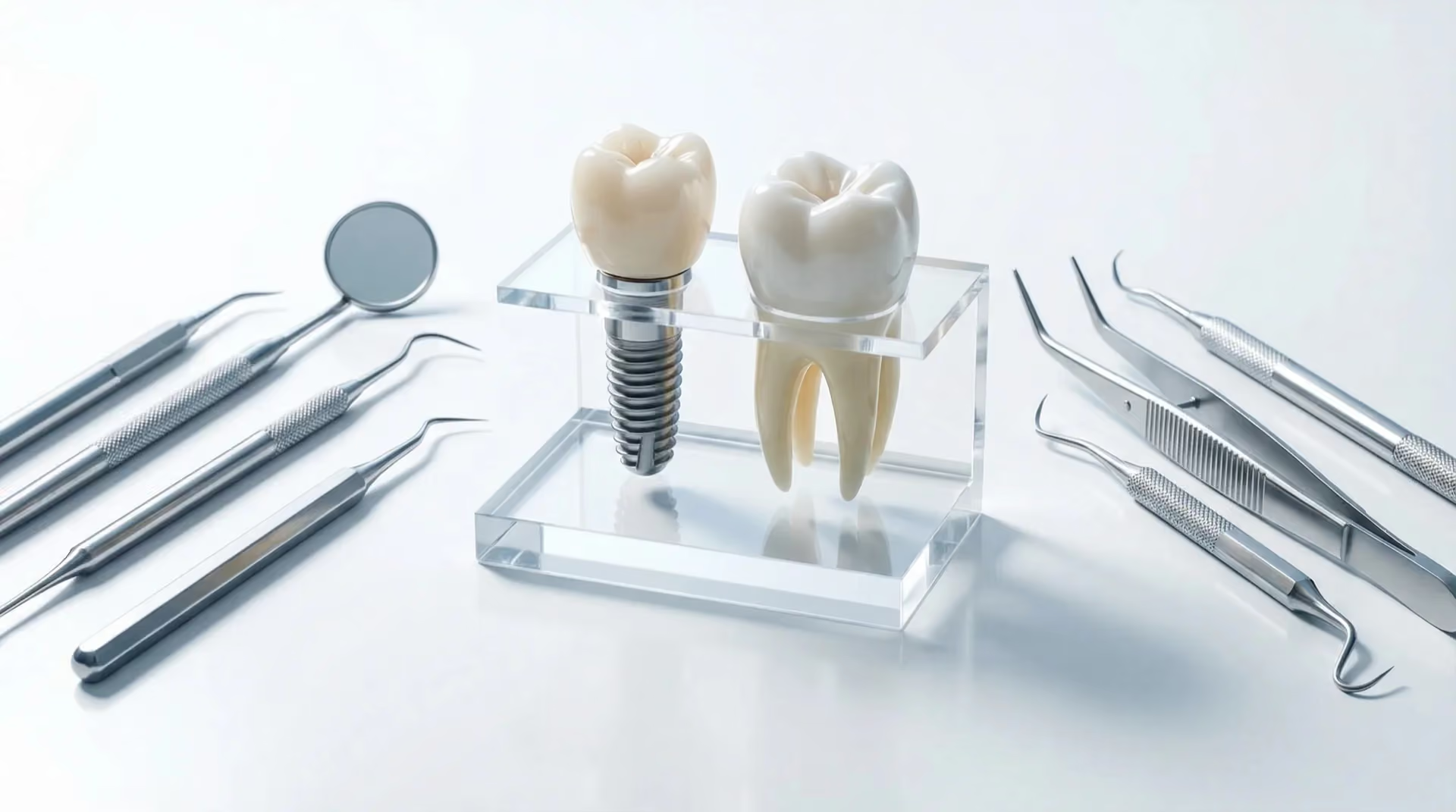
From the findings: how much healthy structure remains, is the root accessible and can the tooth then be sealed with a filling or crown? The findings determine whether preservation is appropriate. A 2007 review of 143 studies has limited value because starting situations and success criteria differed; direct comparisons were rare. It does not establish general equivalence between root canal treatment and implants.* After extraction, the gap usually needs replacement teeth.
Do I need a crown after root canal treatment?
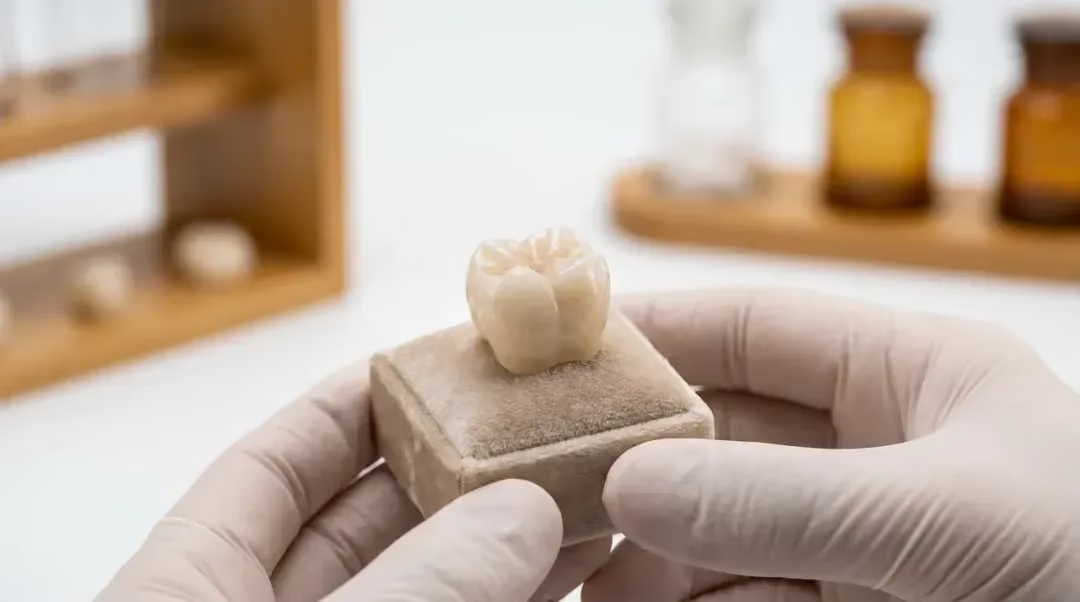
Not always. Remaining structure is decisive: severely weakened back teeth often need a crown or partial crown protecting the cusps, while a well-preserved tooth may need only a well-sealed filling. Prompt definitive closure is important.
Root canal treatment: what happens inside the tooth?
Root canal treatment is part of endodontics, the field concerned with the tooth’s interior and tissues around the root. Nerves and blood vessels inside form the dental pulp. Deep decay, a crack or injury can damage it. If it can no longer heal or has died, root canal treatment may be an option.
The affected tissue is removed from the root canal system. Canals are cleaned, disinfected and filled. The tooth then needs a well-sealed closure and a restoration suited to its loading. The aim is to preserve your natural tooth. Only examination establishes whether that is reasonably achievable.

When is root canal treatment appropriate?
Severe or persistent toothache may prompt examination. However, a painless tooth may also need treatment. Symptoms alone therefore do not reliably indicate what is happening inside.
The dentist clarifies the findings, including tooth examination, suitable tests and X-rays as needed. Remaining healthy tooth structure and whether a load-bearing restoration is possible afterwards also matter. Not every pulp irritation requires the same treatment. Before deciding, discuss the options for your findings. The YERIT guide Root canal treatment: basics and tooth preservation explains the foundations and options.
Cleaning and filling the root canals
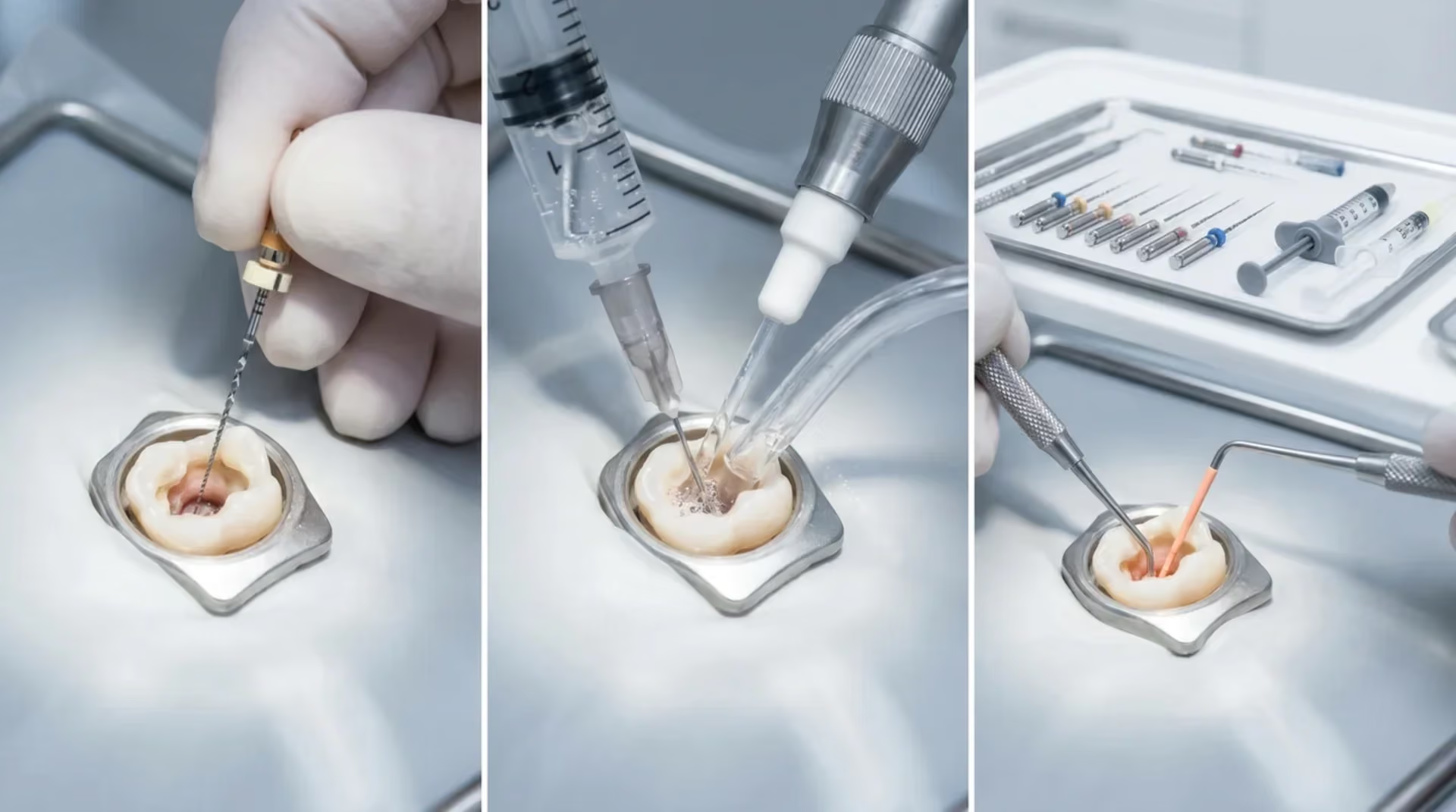
Local anaesthesia is used as needed. If you are very tense about treatment, raise this beforehand. Smile4Life does not offer nitrous oxide sedation at its own practice. Discuss suitable support with the team beforehand. A rubber dam isolates the tooth during work. Through access in the crown, the root canals are located, cleaned and disinfected. They are then filled and the tooth closed.
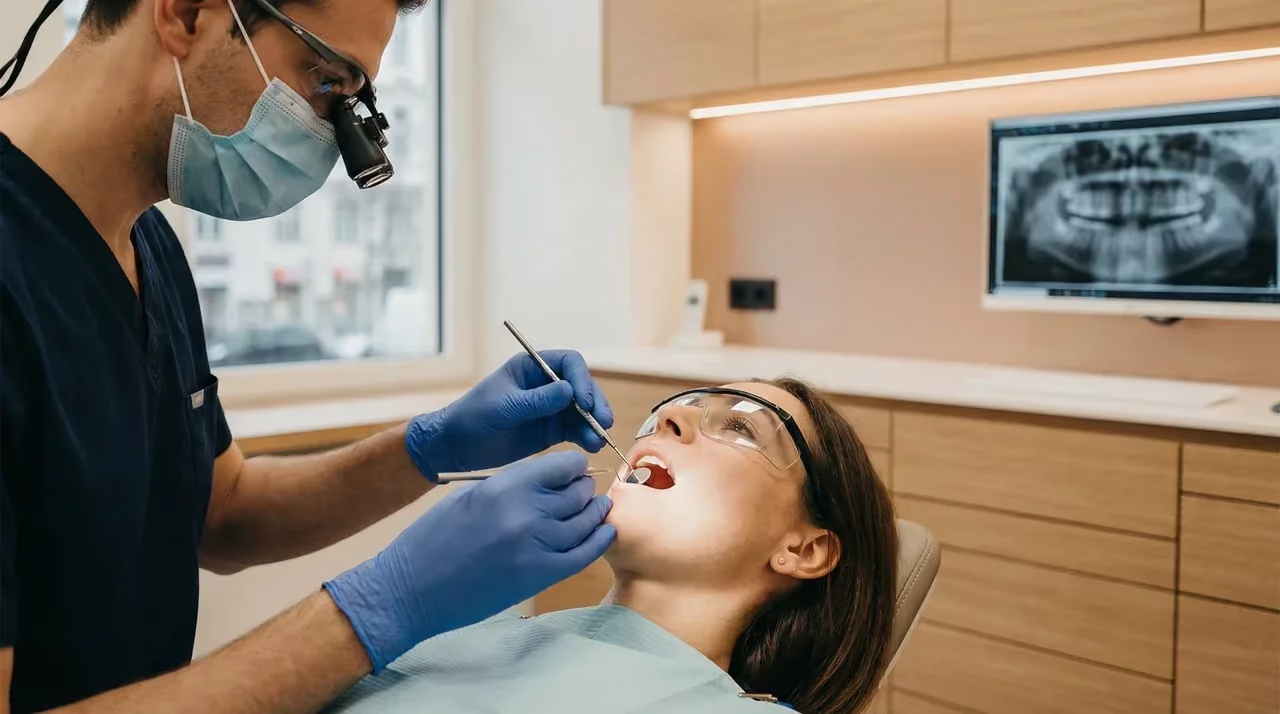
At Smile4Life, root canal treatment is performed manually using magnifying loupes. An operating microscope is not used at our practice. Magnification and good visibility may support work in a narrow or difficult-to-see canal system. A microscope alone does not guarantee success. Nor is a particularly small access automatically better: it must enable necessary cleaning while preserving tooth structure.
Whether one or several appointments are appropriate depends on the findings and treatment progress. A medicated dressing between visits is not always required. Our root canal treatment process explains each step and the subsequent restoration.
Root canal treatment: prospects and limits of preservation
Many treated teeth can be retained. An individual prognosis, however, requires specific findings. Root-tip inflammation, canal anatomy, previous treatment and the subsequent restoration may affect the outcome.
A systematic review by Burns and colleagues from 2022 examined healing after initial root canal treatment. Reported outcomes depend on whether a radiographic change had disappeared completely or become smaller. Studies differed and were often of limited quality; they provide neither an individual prognosis nor a measure of tooth survival time.
Even after careful treatment, symptoms or inflammation may persist or recur later. The cause is assessed first. Depending on the situation, repeat canal treatment, or retreatment, root-end surgery or other approaches may be options. Our knowledge guide explains root-end surgery.
Root canal treatment in Vienna: what matters before deciding?
Clarify which treatment is recommended, the alternatives and the restoration needed afterwards. Not every root-treated tooth automatically needs a crown. Remaining structure and chewing load are among the decisive factors.
Ask about expected work and cost breakdown too. Our page on costs and reimbursement can help. If symptoms mainly brought you here, pain after root canal treatment provides aftercare advice and when to seek urgent help. For facial swelling with breathing or swallowing difficulty, call emergency services immediately on 144. For severe acute dental symptoms without those warning signs, contact a dental practice or an available emergency service without delay.
YOUR CONCERNS
What is on your mind?
Have toothache assessed
Persistent or severe symptoms need examination. The findings show which treatment is appropriate.
Understand an abnormal tooth finding
A painless tooth may also need treatment. Tests and imaging help put the findings in context.
Plan tooth preservation
Whether a tooth can be retained also depends on its later well-sealed, stable restoration.
SUITABILITY CHECK
Is this treatment right for you?
YOUR JOURNEY
Your treatment process
Individual initial consultation
Getting to know your goals and your teeth
We will discuss your goals and examine which treatment is best suited for your teeth.


Individual treatment planning
Defining the next steps together
You will learn which steps are planned and which questions should be clarified in advance.
Precise execution
Guiding you through your treatment step by step
Your treatment follows your personal plan. Please ask questions and tell us about any discomfort at any time.


Aftercare and check-ups
Discuss care and follow-up appointments
Finally, we will discuss ongoing care and the follow-up appointments that are right for you.
In everyday life
A treated, well-restored tooth may continue to serve for daily chewing. Whether this is possible long term also depends on the tooth and surrounding tissues.
YOUR OPTIONS
TREATMENT OPTIONS COMPARED
We will discuss payment terms with you prior to treatment.
The indicative market prices in our price overview provide an initial guide. We will discuss which services are planned for you and the costs involved based on your examination findings and individual cost plan.
Advanced Dental Aesthetics & Implantology
Priv.Doz.Dr.Dr. K. Yerit
“Aesthetics is not a coincidence, but the result of precise planning and deep passion.”
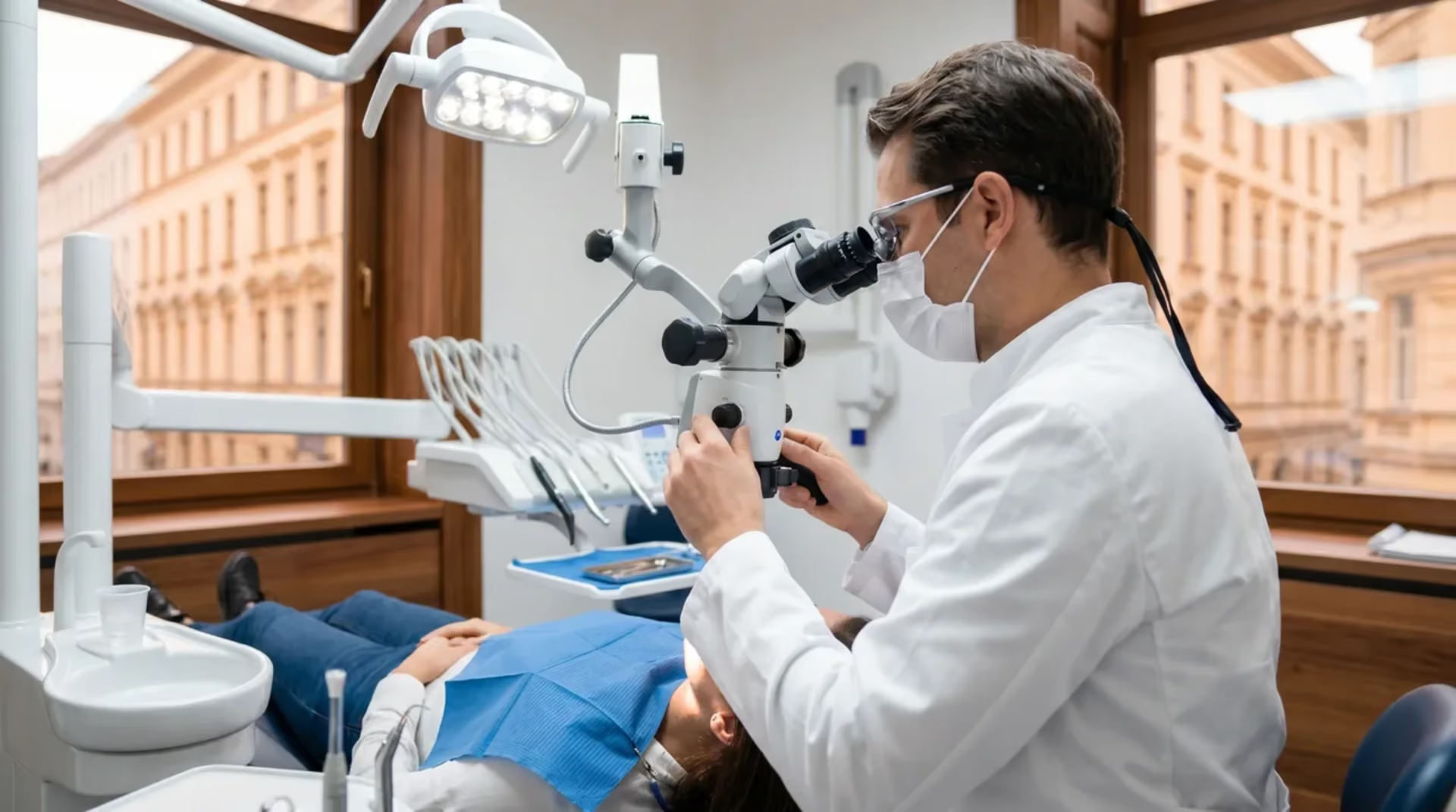
Careful root canal treatment may preserve a diseased tooth — magnification and good visibility support work in the narrow canal system.
View profile →Scientific references
Institute for Implantology and Digital Dentistry Vienna
Österreichische Gesellschaft für Endodontologie (ÖGEndo)
European Society of Endodontology (ESE)
Deutsche Gesellschaft für Zahnerhaltung (DGZ)
American Association of Endodontists (AAE)
Yerit Practice – Dentist Vienna
Excellence
Why Smile4Life
Findings before a decision
Condition, symptoms and restorability are considered together.
Preserve your natural tooth
Treatment aims to keep the natural tooth functional where the findings support this.
Enable cleaning
Appropriate access enables work in the canal system.
Consider tooth structure
Healthy tooth structure should be retained as far as possible.
Plan the restoration too
A well-sealed closure and later load-bearing ability belong in planning.
Monitor progress
Follow-up checks help assess healing and symptoms.
Frequently asked questions
Frequently asked questions
Do you have a specific question about your diagnosis? Book a consultation appointment directly →
Questions about your treatment?
Discuss what matters to you and what the next steps look like with us.
Book your appointment nowYour orientation
A decision for your tooth, suited to your findings.
Understanding what’s involved
The work involved depends on the tooth, its root canals and possible previous treatment.
In everyday life
A treated, well-restored tooth may continue to serve for daily chewing. Whether this is possible long term also depends on the tooth and surrounding tissues.
Who this information is for
For teeth whose pulp is severely inflamed or dead and which can subsequently be restored with sufficient stability and a good seal. Examination establishes whether root canal treatment is necessary and appropriate.
Important limitations
Root canal treatment is not always the appropriate approach. For a tooth that can no longer be restored, certain deep cracks or severely damaged supporting tissues, other options need discussing.
Our approach
We want you to understand the findings, options and limitations. A treatment recommendation is guided by your tooth and your questions.
SCIENTIFIC STUDIES
We want you to understand the findings, options and limitations. A treatment recommendation is guided by your tooth and your questions.
Burns LE et al. (2022). Outcomes of primary root canal therapy: An updated systematic review
The 2022 systematic review reported 82.0 percent success after initial root canal treatment using strict healing criteria and 92.6 percent using less strict criteria. The varied studies, often limited in quality, do not allow an individual prognosis or a statement about lifelong longevity.
35334111
de-Figueiredo FED et al. (2020). Apical periodontitis healing and postoperative pain following endodontic treatment
A randomised study of 120 non-vital front teeth with apical periodontitis compared a reciprocating single-file technique with manual preparation. Acute flare-ups occurred in approximately 3 percent; radiographically assessed healing after twelve months was 73 to 78 percent depending on the protocol. These are findings from this study population, not a general success rate.
32012166
Ballester B et al. (2021). Current strategies for conservative endodontic access cavity preparation
The review assessed conservative access cavities mainly through laboratory studies. Indications of better fracture resistance depended, among other things, on preserved marginal ridges. Because of low-level evidence, these findings do not establish a general clinical advantage for making the access cavity as small as possible.
34623506
Multari S et al. (2024). Endodontic Treatment of Chronic Apical Periodontitis Ameliorates Systemic Inflammation
In 27 patients with chronic apical periodontitis, root canal treatment demonstrably reduced pro-inflammatory cytokines (IL-1, IL-6, IL-8) in the blood and significantly improved the insulin responsiveness of cells in a laboratory experiment.
38821264
Huynh R et al. (2023). Evaluating the stress of root canal treatment in patients and dentists
A systematic review found that patients experience root canal treatment as more psychologically stressful than other routine dental treatments. Careful, understandable information before treatment is recommended as an important factor in reducing this burden.
37357152
Torabinejad M et al. (2007). Outcomes of root canal treatment and restoration, implant-supported single crowns, fixed partial dentures, and extraction without replacement
A 2007 review of 143 heterogeneous studies found similar long-term survival rates for root-treated restored teeth and implant-supported single crowns. Direct comparisons were very rare; different success criteria and observation periods limit comparison. The analysis does not establish general equivalence or economic superiority of either procedure; economic data were largely absent.
17936128
More topics in this area
Deepen your knowledge – find all information regarding the treatment process, costs, and results.

Kärntner Straße 9
100 meters from Stephansplatz, Innere Stadt.

Partnerships & Memberships & References




