
Teeth Whitening in Vienna: Lighten Your Natural Teeth
For a brighter smile: explore professional whitening options and clarify which approach suits you.
Clarify findings first
Choose a suitable method
Individual results
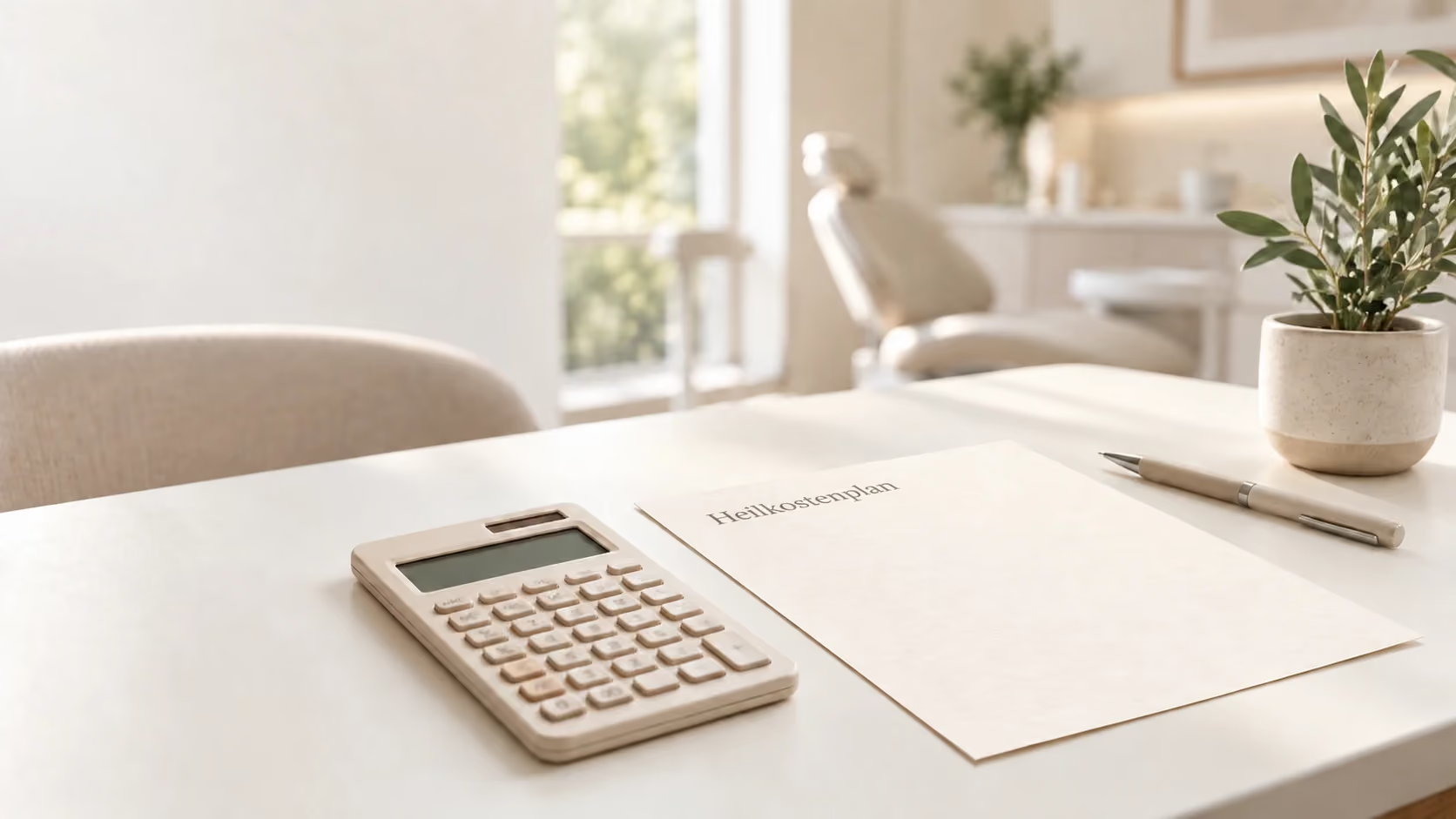
Cost plan after examination
Teeth Whitening & Bleaching Vienna
bleaching-zahnaufhellung-wien
4.9★
Doctify rating
25+
Years of experience
Personal
In-practice consultation
1010 Vienna
Kärntner Straße 9
At a glance
What is teeth whitening, and who may be suitable?
Bleaching uses an agent to lighten natural tooth structure. Teeth, gums and existing restorations are examined first; fillings, crowns and veneers do not whiten with them. Results are not permanent: depending on method, oral care and coloured drinks or tobacco, whitening remains visible for several months to around two years.* Refreshing should follow a dental check.
What are the disadvantages of whitening?
Temporary sensitivity or gum irritation are possible. Fillings, crowns and veneers do not whiten, which can reveal colour differences.*
Is whitening harmful to teeth?
With dental supervision and healthy teeth, bleaching is considered well tolerated; excessive frequency or strength can cause harm.* Exposed tooth necks or leaking fillings should be treated first.
Can discoloured root-treated teeth also become lighter?
Internal bleaching may be suitable for an appropriately root-treated tooth. First, the cause of discolouration, tooth structure and root filling are checked. A non-vital tooth is not automatically adequately root-treated.
Teeth whitening changes the colour of your natural teeth.
Clarify the cause first
Not every stain needs bleaching. Examination shows whether surface deposits, natural tooth colour or a single treated tooth are the main concern.
Discuss the desired result
How much lighter teeth can become depends on the starting situation. Crowns, fillings and your desired overall appearance therefore belong in planning from the outset.
How does professional teeth whitening at the dentist work?
We start with your wishes: should the entire dental arch become lighter, or does one dark tooth stand out? Initial colour, existing fillings and crowns, and the health of teeth and gums all matter. Examination also helps distinguish surface deposits from a colour change within a tooth.
For surface stains, professional cleaning may already make the desired difference. Bleaching instead uses a whitening agent to act on pigments within natural teeth. Neither cleaning nor whitening replaces daily oral hygiene, decay treatment or restoration of a damaged tooth. The basics of teeth whitening explain this distinction.
Bleaching chemically whitens natural teeth. Common agents are hydrogen peroxide and carbamide peroxide, which can release hydrogen peroxide. They alter colour-producing compounds in enamel and dentine. Whitening does not apply a white layer or deliberately change tooth shape. The achievable shade depends on your teeth and the type of discolouration. Professional whitening is therefore tailored to tooth condition, not planned from a desired photograph alone. A sudden colour change, one dark tooth or accompanying symptoms requires investigation of the cause first.
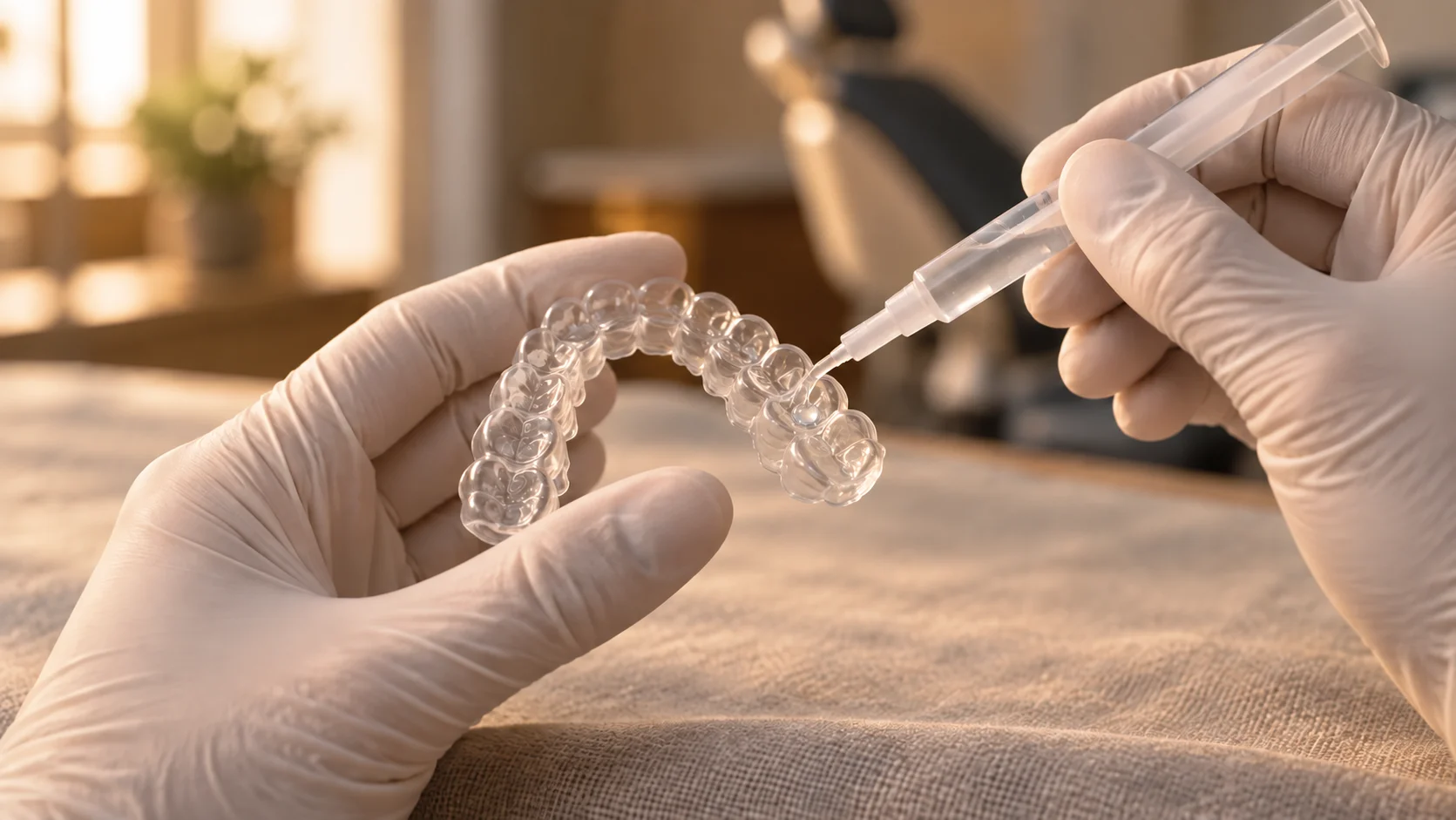
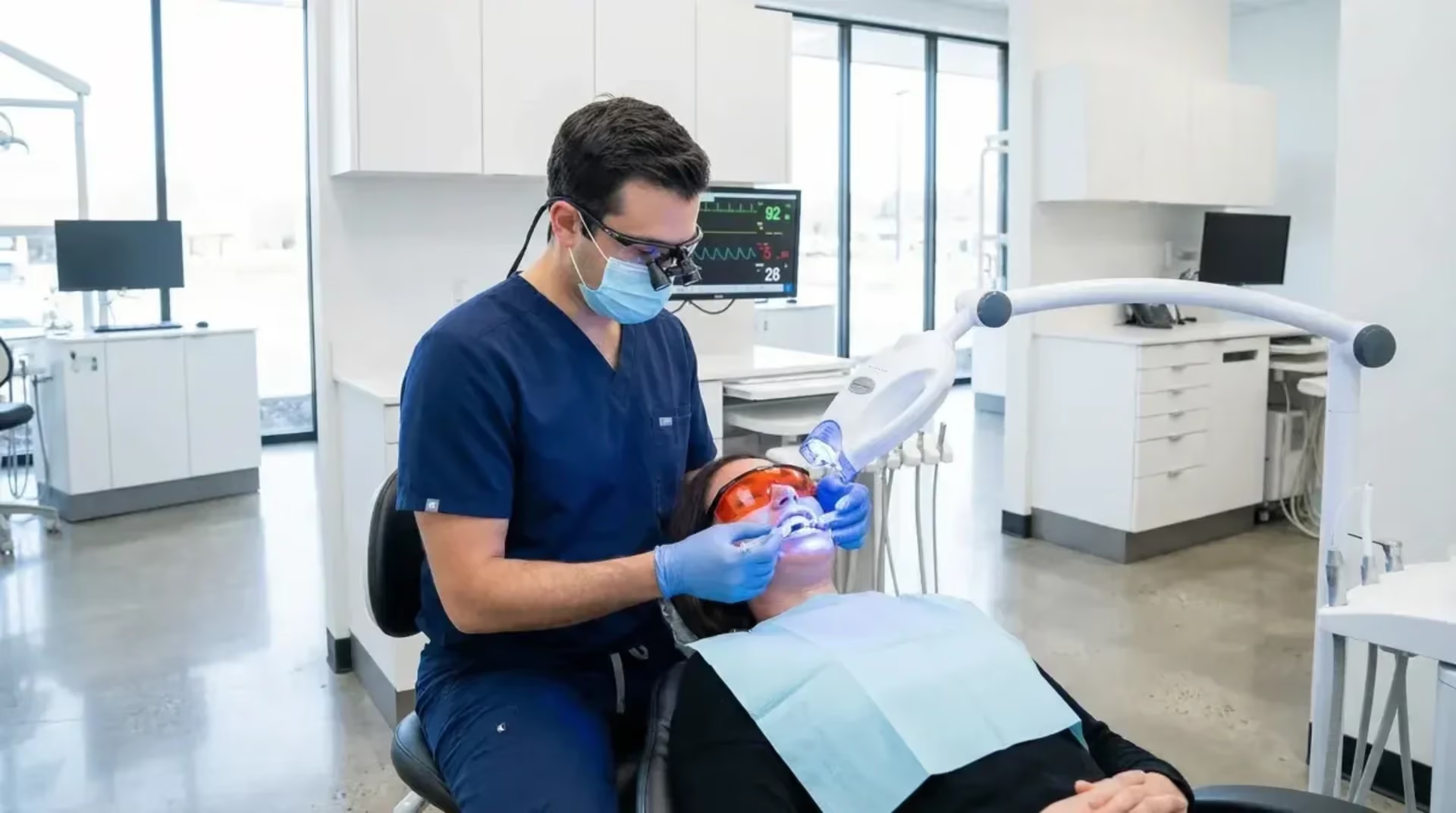
In-office bleaching applies gel at the practice with gum protection. Dentist-supervised home bleaching uses a suitable tray at home according to the agreed schedule. Concentration, application time and checks belong to the specific method; instructions cannot be taken from an arbitrary internet product.
A dark tooth after root canal treatment needs separate assessment. Suitability for internal bleaching depends, among other things, on the condition of the tooth and root filling. These three pathways are therefore not interchangeable for every situation.
Before whitening, we record your initial tooth colour. This provides the comparison for later changes; without it, the amount of whitening can only be estimated.
A check follows treatment. We compare colour with the starting shade and discuss any sensitivity. Later refreshing is planned only when colour has actually darkened again.
For context: Austria’s health portal; Li 2024; Kahler 2022.
Which whitening method suits your daily life?
Practice-based treatment may appeal if you prefer an application on site. A tray requires reliable use at home as instructed. Sensitivity, the teeth involved and your desired shade also matter.
Studies do not support a simple ranking such as “in-office always whitens more” or “home is always gentler”. A recent review found lower average sensitivity intensity with trays, but no clear difference in whether sensitivity occurred at all. Colour outcomes also depend on the measurement and procedure studied. The comparison of home and in-office bleaching explains the decision points.
Bleaching does not deliberately give crowns, veneers or fillings a matching new base shade. As neighbouring natural teeth lighten, a difference may become more noticeable. This does not automatically mean replacing an intact restoration. Discuss the desired overall appearance beforehand.
A particular white shade and fixed durability are not achievable for everyone. Colour can darken again over time. Agree any refreshing with your dentist rather than independently applying treatment more frequently or for longer.
For context: de Geus 2025; Aidos 2024; Austria’s health portal.
Risks, costs and your next step
Teeth may become sensitive to cold during or after bleaching; gel may also irritate gums. Pause further applications and seek dental assessment for severe or persistent symptoms. More gel or longer exposure is not a sensible way to speed up the result.
Also mention exposed tooth necks, previous symptoms and known intolerances. Dental supervision helps incorporate these details into planning. Suitable products, concentrations and application times belong in your personal treatment plan.
A special EU product rule applies to cosmetic whitening products containing or releasing more than 0.1 and up to 6 percent hydrogen peroxide: they may only be supplied to dentists. The first use of each cycle must be by a dentist or under direct supervision with equivalent safety; the product can then be supplied for the rest of the cycle. These products must not be used in people under 18. This does not answer every question about treating discoloured children’s teeth. The applicable source is the EU Cosmetics Regulation, Annex III No. 12.
The price page lists average Vienna market prices as guidance only. Personal requirements are clarified after examination in an individual cost plan. The teeth whitening costs in Vienna page explains services and possible additional steps to discuss.
Three details help prepare for consultation: what concerns you about the colour? How long has it changed? Is there any sensitivity, or are there visible fillings and crowns? These help match your wishes with your teeth’s possibilities.
To understand causes first, read the YERIT guide to causes of tooth discolouration. Information about home remedies and whitening products helps distinguish them from professional bleaching.
For context: Li 2024.
How does bleaching affect tooth structure, and who is suitable?
Bleaching uses an agent that releases oxygen as it breaks down: the radical penetrates the tooth surface and splits colour-producing molecules. No tooth structure is removed, although temporary sensitivity is possible. The agent is applied specifically to natural teeth, not broadly across the mouth. The result is temporary; duration cannot generally be predicted. Two clinical studies of particular home and in-office protocols found no detectable difference in measured whitening from coffee, or coffee and tea, during treatment (Chen et al., 2020; Rezende et al., 2013). This applies to the studied procedures and observation periods, not long-term colour stability or every product. Whitening toothpastes and other over-the-counter products differ in ingredients and effects. A toothpaste removing external deposits is not equivalent to chemical whitening of internal tooth colour. International product studies also do not establish that every tested formulation is freely available in Austria. Examination establishes suitability beforehand. Decay, leaking restorations, symptoms and inflamed gums must be assessed and treated first where needed.
At our practice, an activation lamp, if used, is employed only under dental supervision, never outside the practice or by a provider without dental training. We check medication before application. Self-treatment cannot replace this assessment: a healthy dentition maintained by regular preventive care is the basis for whitening, rather than a cosmetic service without findings. For intrinsic, deep discolouration, non-prep veneers may also be an alternative to assess together. An aesthetically suitable result means a shade fitting your individual situation, rather than a standard white for everyone.
Which discolouration responds to whitening?
How can yellow teeth be whitened?
A yellowish shade often comes from dentine beneath enamel, which shows through more darkly with age. Such discolouration responds comparatively well to external whitening. Grey or banded teeth associated with tetracycline during tooth development are more difficult. A review of tray treatment reported 86 percent whitening compared with 98 percent for non-tetracycline discolouration, and only with substantially longer treatment. These figures come from an older assessment of one particular method and are not a promise for your tooth. The type of discolouration, rather than the desired shade, determines the work and achievable result.
What should you observe after whitening?
A common recommendation is to avoid coloured foods and drinks for several days: coffee, red wine or berries. A blanket claim that teeth remain “open” for 24 to 48 hours after every bleaching does not explain aftercare accurately. A 2024 systematic review with meta-analysis examined the white-diet recommendation using five clinical studies and twelve laboratory experiments. Clinical data found no established colour benefit at the studied weekly tray-treatment time points, one month after completion or one month after an in-office application. The authors considered dietary restrictions during and after bleaching unnecessary. Other points matter afterwards: mention sensitivity rather than waiting it out, attend the agreed check and do not independently bring forward refreshing.
For context: Hardan 2024; Leonard 2000.
YOUR CONCERNS
What is on your mind?
Several teeth look darker
First clarify the type of discolouration and achievable shade.
One tooth stands out
Targeted internal whitening may be suitable after root canal treatment.
Visible restorations
Include crowns and fillings in the desired overall appearance beforehand.
SUITABILITY CHECK
Is this treatment right for you?
YOUR JOURNEY
Your treatment process
Individual initial consultation
Getting to know your goals and your teeth
We will discuss your goals and examine which treatment is best suited for your teeth.
Individual treatment planning
Defining the next steps together
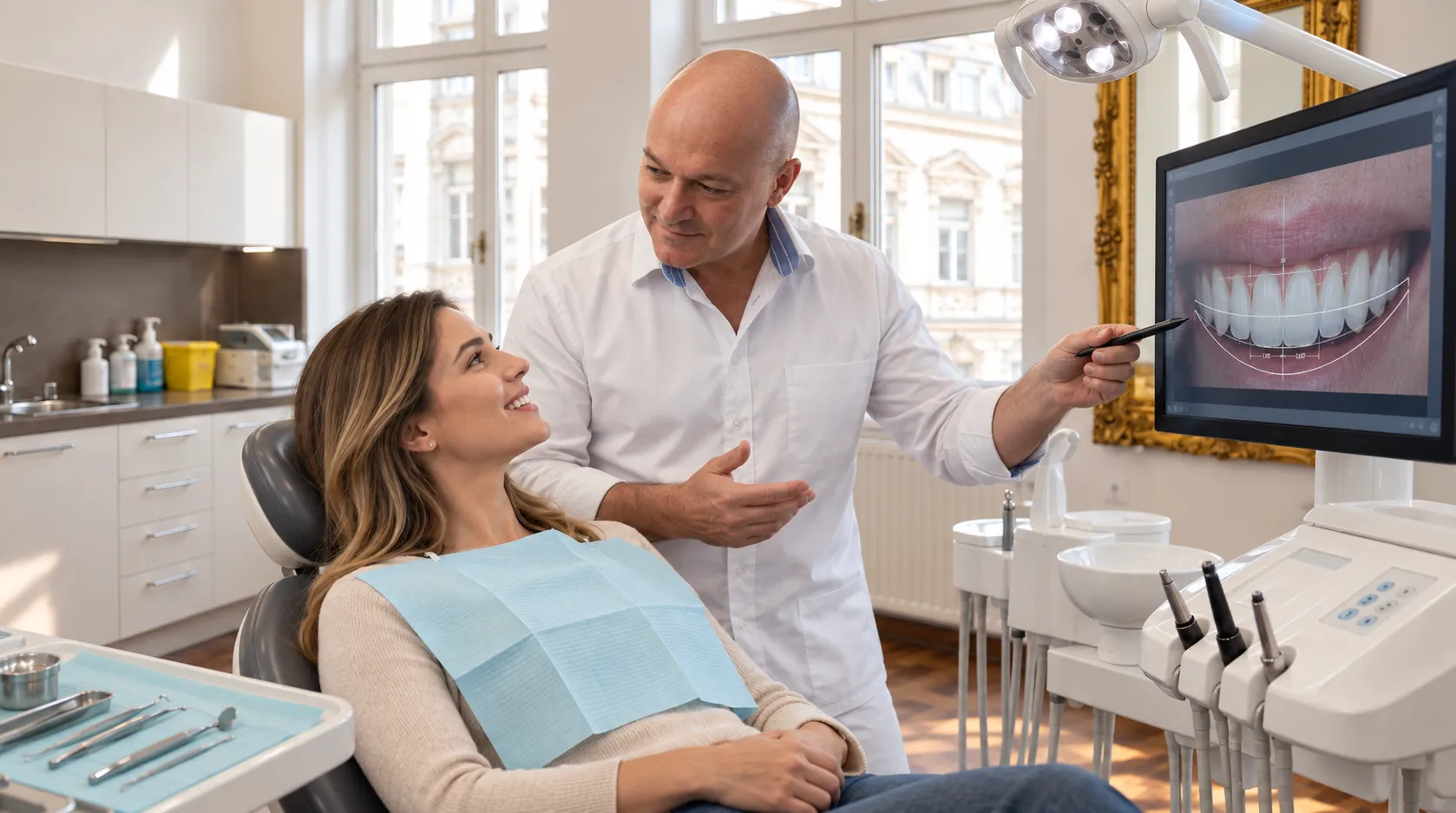
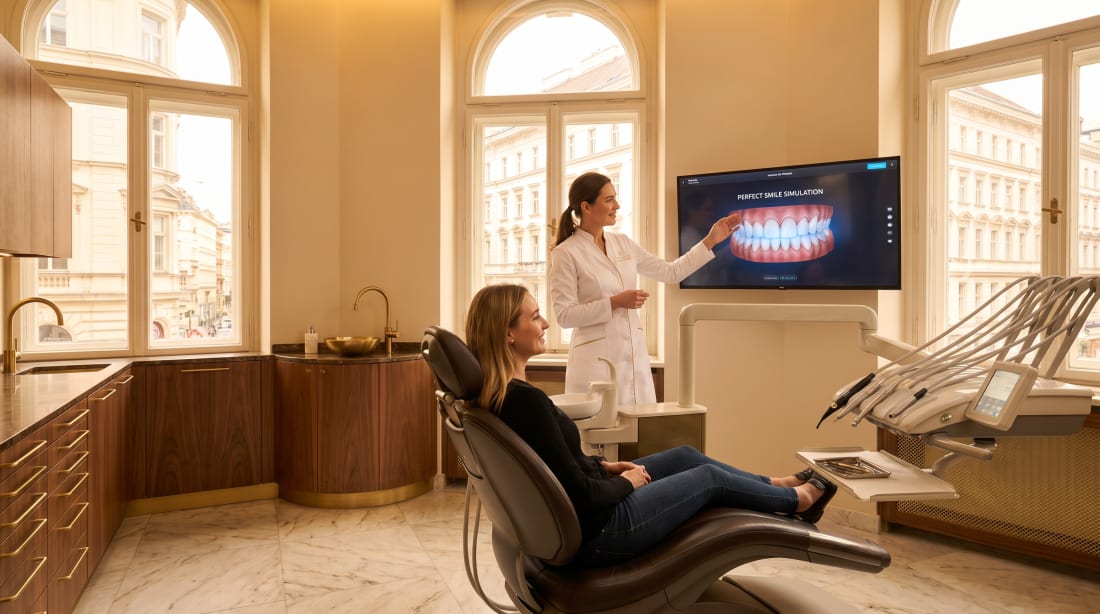
You will learn which steps are planned and which questions should be clarified in advance.
Precise execution
Guiding you through your treatment step by step
Your treatment follows your personal plan. Please ask questions and tell us about any discomfort at any time.
Aftercare and check-ups
Discuss care and follow-up appointments
Finally, we will discuss ongoing care and the follow-up appointments that are right for you.
In everyday life
Application and aftercare follow the chosen method. Pause for severe or persistent symptoms and have the cause assessed by a dentist.
YOUR OPTIONS
TREATMENT OPTIONS COMPARED
We will discuss payment terms with you prior to treatment.
The indicative market prices in our price overview provide an initial guide. We will discuss which services are planned for you and the costs involved based on your examination findings and individual cost plan.
Advanced Dental Aesthetics & Implantology
Priv.Doz.Dr.Dr. K. Yerit
“Aesthetics is not a coincidence, but the result of precise planning and deep passion.”
A bright smile begins with an honest assessment of which method suits your teeth. Treatment follows afterwards.
View profile →Scientific references
Institute for Implantology and Digital Dentistry Vienna
American Dental Association (ADA)
Deutsche Gesellschaft für Zahnerhaltung (DGZ)
Österreichische Gesellschaft für Ästhetische Zahnheilkunde
European Academy of Esthetic Dentistry (EAED)
Yerit Practice – Dentist Vienna
Excellence
Why Smile4Life
Discuss your shade goal
Compare initial colour and wishes before whitening.
Compare the options
Distinguish practice-based application from supervised home bleaching.
Consider restorations
Include visible crowns and fillings in your decision.
Frequently asked questions
Frequently asked questions
Do you have a specific question about your diagnosis? Book a consultation appointment directly →
Questions about your treatment?
Discuss what matters to you and what the next steps look like with us.
Book your appointment nowYour orientation
Understand your options for a lighter shade.
Understanding what’s involved
Clarify treatment scope and appointments from personal findings.
In everyday life
Application and aftercare follow the chosen method. Pause for severe or persistent symptoms and have the cause assessed by a dentist.
Who this information is for
For adults wanting lighter natural teeth. Suitability is assessed from tooth condition, discolouration and existing restorations.
Important limitations
Clarify dental problems requiring treatment and existing symptoms first. Crowns, veneers and fillings do not acquire a matching new base shade through bleaching.
Our approach
Method selection should consider shade wishes, findings and possible sensitivity. Reviews do not establish that one method is better for everyone.
SCIENTIFIC STUDIES
Method selection should consider shade wishes, findings and possible sensitivity. Reviews do not establish that one method is better for everyone.
Aidos M et al. (2024). Comparison of in-office and at-home bleaching techniques: An umbrella review
A review of 28 systematic reviews, nine analysed quantitatively, found no statistically established difference in colour or sensitivity between the in-office and home methods compared. The quality and protocols of the included reviews vary. Non-significance does not prove equivalence. Sensitivity is possible with both methods, but does not necessarily occur in every person.
38371984
de Geus JL et al. (2025). At-home vs In-office Bleaching: An Updated Systematic Review and Meta-analysis
The updated review found lower sensitivity intensity with home whitening, but no clear difference in its occurrence. Shade scales and instrumental colour measurement produced different comparative results. The qualitative review included 32 studies. The certainty of evidence was low. No general promise of individual suitability, equivalence or freedom from pain follows.
40485133
Jiang NW et al. (2024). Correlation between patient satisfaction and color changes after tooth bleaching
In a study involving 63 people, satisfaction after the whitening procedure studied was associated with the measured colour change. The regression model used derived thresholds in the ΔE00 measure that differed by tooth type. These are sample- and model-specific findings for a particular protocol, not a generally applicable minimum whitening level or satisfaction guarantee. ΔE00 should not be treated as interchangeable with other colour-difference measures without clarification.
38303586
Bersezio C et al. (2024). Comparative efficacy of In-office and walking bleach techniques in whitening of non-vital teeth
In 50 non-vital front teeth, both in-office and walking bleach methods improved colour. The in-office method studied showed advantages on the whiteness index at certain measurement points. Specific procedures on non-vital teeth were investigated, with follow-up of up to one month. This does not establish long-term superiority, applicability to every vital dentition or a commitment to a local treatment protocol.
39704843
Cabral AEA et al. (2024). Effectiveness of desensitizing toothpastes in reducing tooth sensitivity after tooth bleaching
Five studies involving 387 people investigated desensitising toothpastes after whitening. The reported reduction in sensitivity differed between the home and in-office protocols studied. This is not a universal effect of every desensitising toothpaste. The protocol groups differed in several features; the findings do not establish an isolated concentration rule or individual instructions for use.
39078468
Nunes GP et al. (2025). Protective role of calcium-based agents in dental bleaching gels
The review included 50 laboratory studies and six clinical studies. In the systems investigated, calcium-based additives showed smaller changes to dental hard tissue and less clinical sensitivity, with comparable whitening. Laboratory findings on dental hard tissue and clinical symptoms are different outcomes. Further clinical studies of formulations and protocols are called for. This is neither a blanket protection guarantee nor a statement about a specific practice product.
40072631
Hardan L et al. (2024). Is a White Diet Necessary for Tooth Bleaching Procedures? A Systematic Review and Meta-Analysis
The review included five clinical and twelve laboratory studies. The clinical analysis found no established colour advantage from a white diet. Clinical data and laboratory experiments should be weighed separately. This does not provide general guidance on aftercare following other dental procedures.
38668030
Rezende M et al. (2016). Combined Bleaching Technique Using Low and High Hydrogen Peroxide In-Office Bleaching Gel
Two combined whitening protocols were compared in 30 participants. Both produced an average improvement of three units on the shade scale used, stable over twelve months; the higher-concentration in-office protocol caused more frequent or more intense sensitivity. This was a small study with a subsequent tray phase. It does not establish a general effect of in-office whitening alone and is not an Austrian application guideline.
26919081
Li K et al. (2024). Tooth whitening: current status and prospects
Whitening changes pigments through chemical reactions. Possible side effects include tooth sensitivity and irritation of the gums or oral mucosa. This is a narrative review, not proof of general harmlessness or a fixed result for every person.
38565694
Bundeszahnärztekammer: Bleaching (Zahnaufhellung)
Coffee, tea, red wine, tobacco and other staining foods shorten the whitening effect. With avoidance of these and careful oral hygiene, the effects of modern whitening methods may last several months or even up to two years (bzaek.de, accessed 02.11.2026).
Öffentliches Gesundheitsportal Österreichs: Zahnverfärbungen
Composite fillings and porcelain crowns are not whitened by bleaching. Temporary sensitivity and gum irritation may occur afterwards; overly frequent and intensive whitening can damage teeth, so it should take place only with dental guidance and supervision (gesundheit.gv.at, accessed 02.11.2026).
More topics in this area
Deepen your knowledge – find all information regarding the treatment process, costs, and results.
Kärntner Straße 9
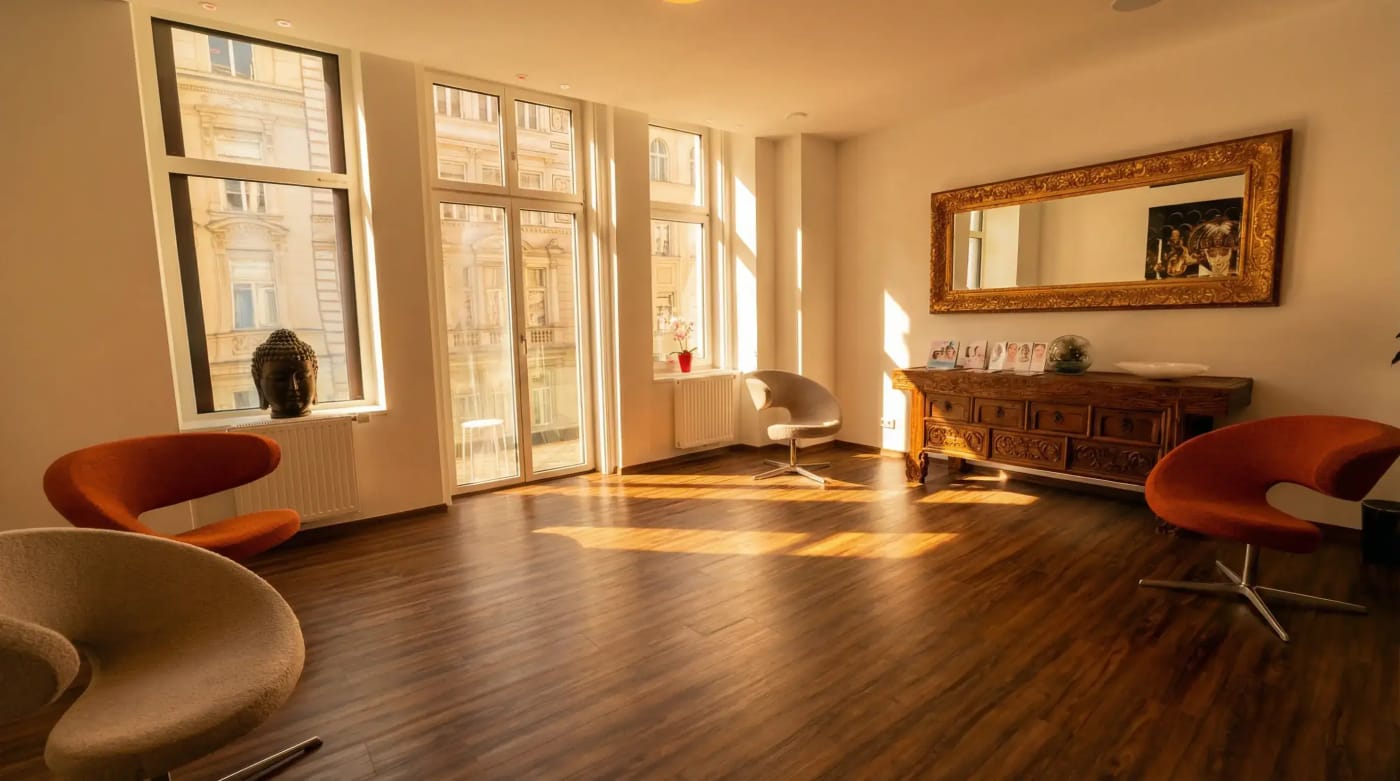
100 meters from Stephansplatz, Innere Stadt.

Partnerships & Memberships & References




