
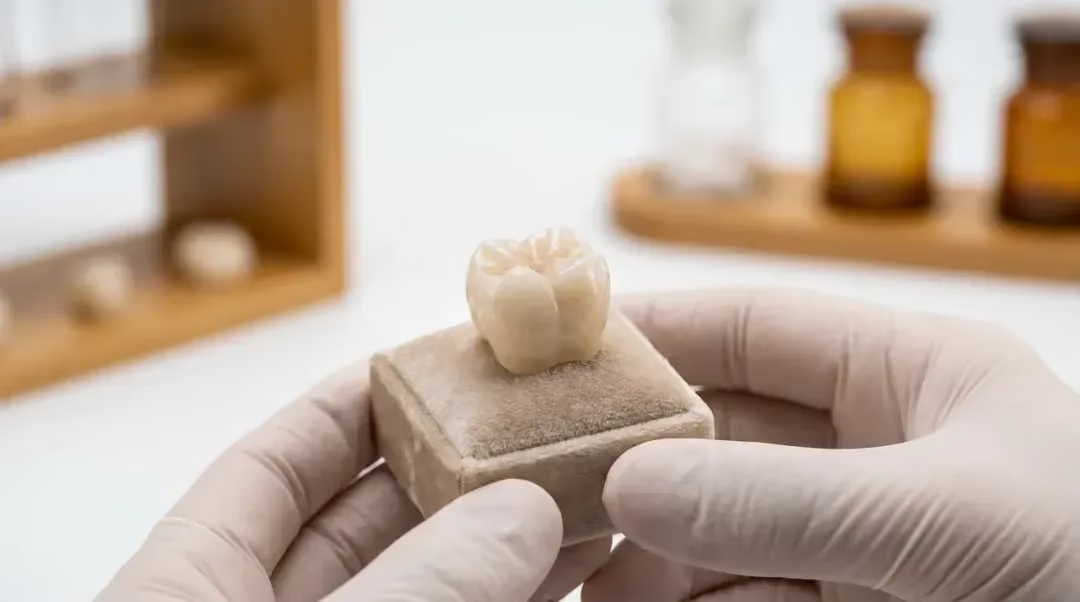
Dental crown in Vienna: restoring a weakened tooth
If a tooth is badly damaged, a crown can restore support and shape. Find out which restoration may suit your tooth.
Preserve your natural tooth
Compare the options
Plan from the findings
Consider care
Dental Crowns Vienna
zahnkrone-wien
4.9★
Doctify rating
25+
Years of experience
Personal
In-practice consultation
1010 Vienna
Kärntner Straße 9
At a glance
What are the advantages and disadvantages of a dental crown?
It protects a severely weakened tooth and restores shape and chewing function. This requires healthy structure to be removed around the tooth, and decay can still develop at the crown margin. Whether a partial crown or onlay is sufficient should be assessed first.
How many years does a dental crown last?
There is no fixed number, but study figures are high: after five years, 90.4 to 98.5 per cent of single crowns remained in function, depending on material.* Crowns on root-treated teeth performed slightly less well than those on vital teeth.
How painful is a dental crown?
Tooth preparation is performed under local anaesthesia; you mainly feel pressure. Afterwards the tooth may be sensitive to cold for a few days. Pain when biting or persistent sensitivity should be checked promptly by a dentist. Examination establishes the cause and next steps.
Is a dental crown better than an implant?
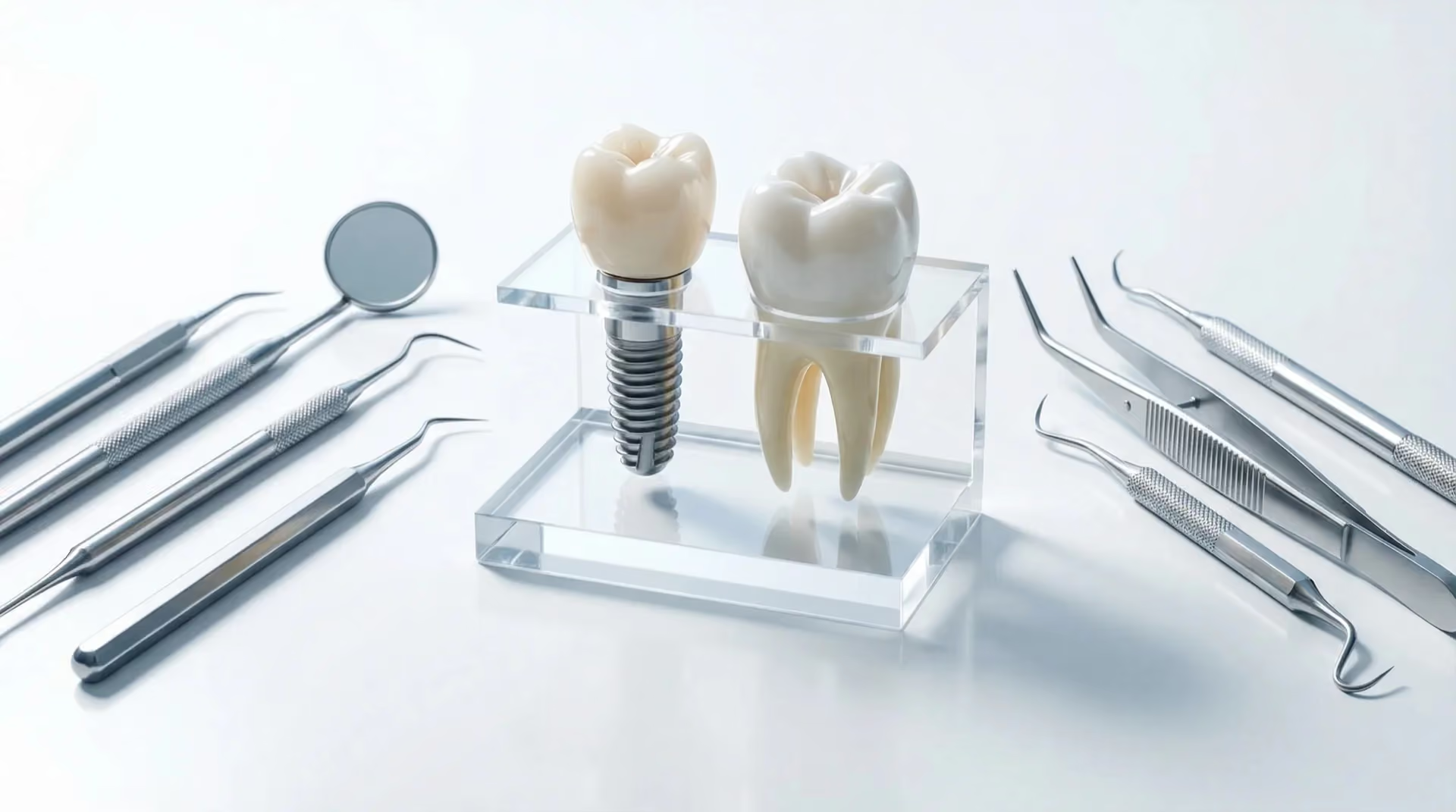
They address different needs: a crown preserves an existing tooth; an implant replaces a lost root and itself supports a crown. A tooth that can be preserved therefore does not need extracting for an implant; the comparison is tooth preservation versus replacement.
What your tooth needs now
Preserve what can still provide support
A crown can restore a weakened tooth. We first assess whether a filling or partial crown would be sufficient.
Find the right shape
Your tooth’s condition, bite and wishes guide the choice. Material and extent are then tailored accordingly.
When a dental crown may be appropriate
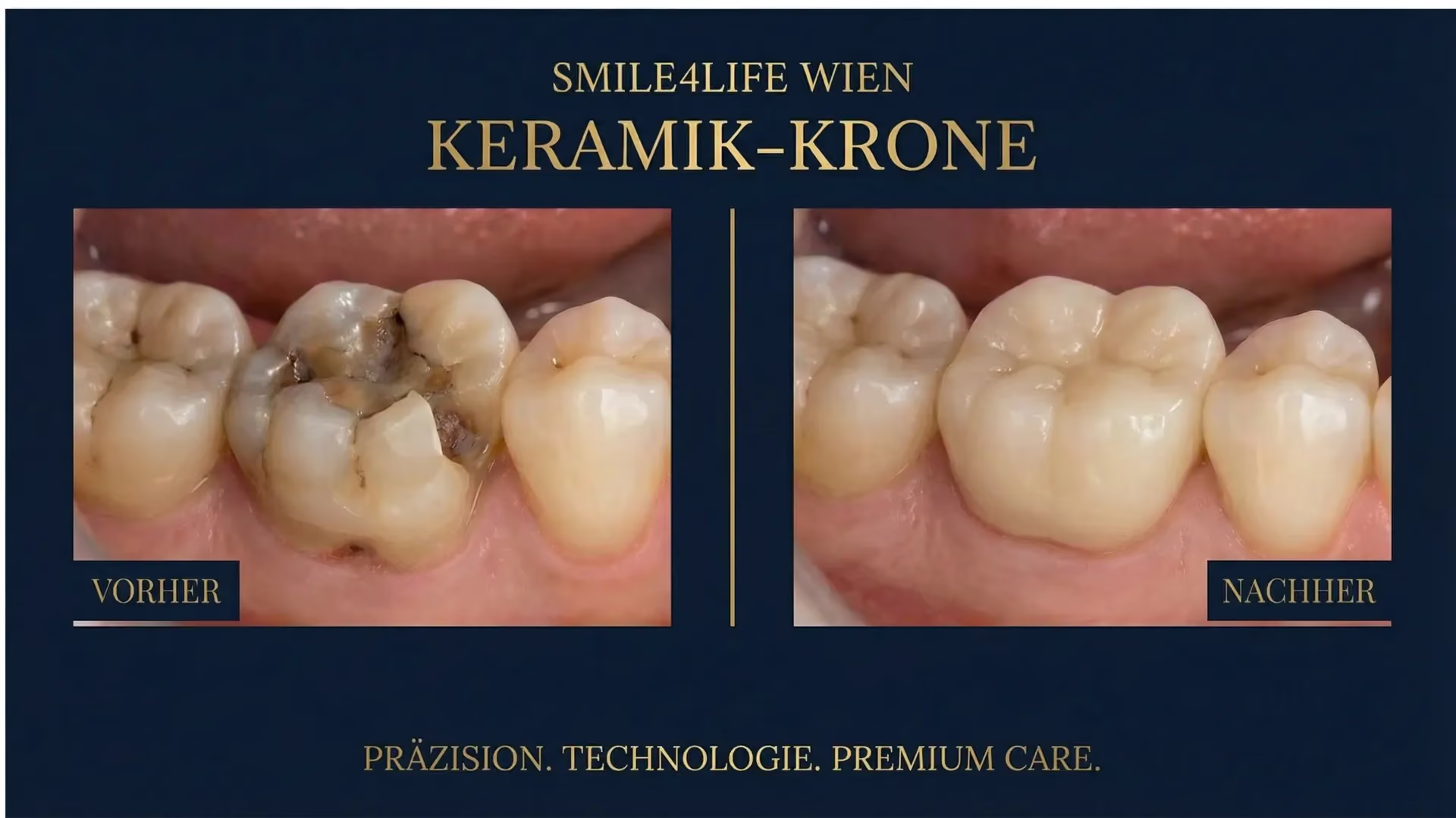
A large filling, fracture or extensive decay may weaken a tooth. A crown may be considered when a smaller restoration cannot sufficiently stabilise the remaining tooth. The tooth, including its root, must be worth preserving. A crown surrounds the prepared tooth; it does not replace a missing root.
Not every large filling and not every root-treated tooth needs a full crown. Factors include remaining tooth walls, cracks, chewing forces and the condition of the gums and supporting tissues. Discolouration alone does not justify extensive preparation. Whether a more conservative solution is possible therefore belongs at the start of planning. The comparison of inlays, onlays and crowns helps with this question. For the next steps, explore material selection, the treatment process and cost planning in more detail.
Material and shape must suit your tooth
All-ceramic is an umbrella term that includes glass-ceramic and zirconia ceramic, for example. A metal-ceramic crown instead has a metal framework with tooth-coloured veneering. Material and design are selected to suit the tooth, available space, tooth colour and bite. A general ranking does not do justice to this decision.
A systematic review from 2026 reports high five-year survival values for different groups of tooth-supported single crowns. This means the restoration remains in function; repairs or other symptoms are not excluded. These results do not promise durability for your tooth. Study on PubMed. The material-selection page explains whether a ceramic or zirconia crown suits your tooth.
From examination to a suitable restoration
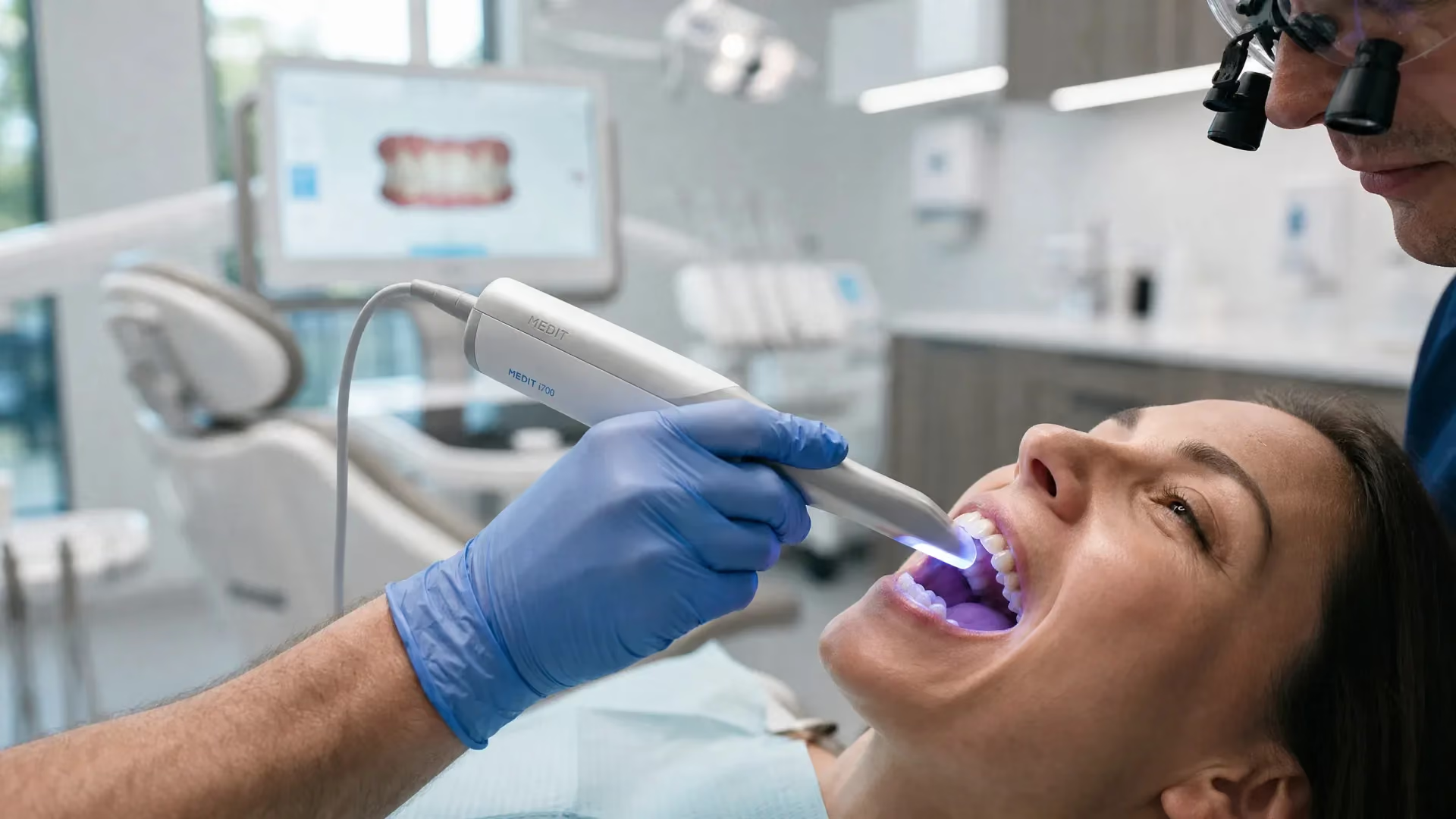
Before a crown, the tooth and surrounding area are examined and necessary preparatory treatment clarified. This is followed by tooth preparation, an impression or scan, manufacture and checking the completed crown. If there is an intervening period, a temporary crown usually protects the prepared tooth. The exact process and number of appointments depend on the findings and selected procedure.
After fitting, cleaning at the crown margin, between teeth and check-ups remain important. Persistent pain, a loose crown or an uncomfortable bite should be assessed by a dentist. The crown treatment process explains each step. Initial guidance is available on the prices page. The average market prices shown there are non-binding, typical market guidance for initial orientation. Which services and costs apply to you depends on findings and treatment scope. § 18 ZÄG provides for a written treatment and cost plan in certain cases or on request. The dental crown costs page describes cost factors and the insurance question.
When a tooth is missing: distinguish crown from bridge
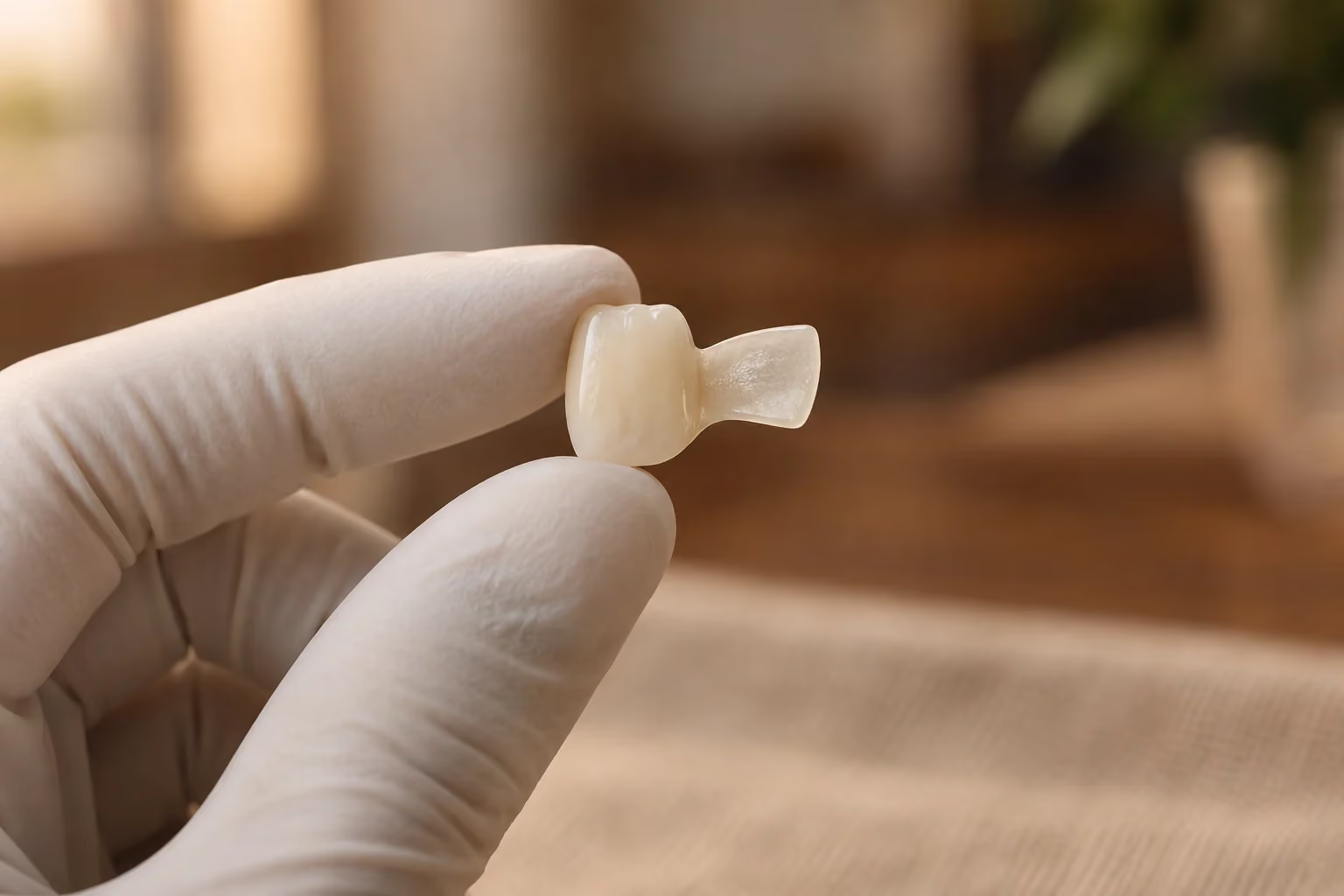
A single crown restores an existing tooth. A gap requires additional replacement teeth. A dental bridge may rest on suitable neighbouring teeth. For certain short gaps, a Maryland bridge attached to a suitable neighbouring tooth may be considered. An implant restoration follows its own planning. The appropriate choice also depends on how healthy neighbouring teeth are and how much load they can bear.
YOUR CONCERNS
What is on your mind?

A large filling or decay
We assess which tooth walls can still provide support.
A fractured tooth
The type and course of the fracture determine the options.
After root canal treatment
The restoration is selected to suit the remaining tooth.
SUITABILITY CHECK
Is this treatment right for you?
YOUR OPTIONS
TREATMENT OPTIONS COMPARED
We will discuss payment terms with you prior to treatment.
The indicative market prices in our price overview provide an initial guide. We will discuss which services are planned for you and the costs involved based on your examination findings and individual cost plan.
Advanced Dental Aesthetics & Implantology
Priv.Doz.Dr.Dr. K. Yerit
“Aesthetics is not a coincidence, but the result of precise planning and deep passion.”
A crown is only as good as the diagnosis beforehand — a thorough examination shows which material and preparation your tooth actually needs.
View profile →Scientific references
Institute for Implantology and Digital Dentistry Vienna
Österreichische Gesellschaft für Zahn-, Mund- und Kieferheilkunde (ÖGZMK)
Deutsche Gesellschaft für Zahnärztliche Prothetik
European Prosthodontic Association (EPA)
Academy of Prosthodontics
Yerit Practice – Dentist Vienna
Excellence
Why Smile4Life
Preserve natural teeth
Before a crown, we assess which smaller restoration may be possible.
Select a suitable material
Tooth colour, space and loading are considered together.
Consider the long term
Care, checks and possible further treatment belong in planning.
Frequently asked questions
Frequently asked questions
Do you have a specific question about your diagnosis? Book a consultation appointment directly →
Questions about your treatment?
Discuss what matters to you and what the next steps look like with us.
Book your appointment nowYour orientation
Planned for the long term, with regular care and checks.
Understanding what’s involved
Appointments and the work involved depend on your findings and the chosen procedure.
In everyday life
Who this information is for
If an existing tooth needs a new restoration. The defect is assessed to decide whether a filling, partial restoration or full crown is suitable.
Important limitations
A restoration needs suitable supporting teeth and an appropriate bite. Disease and possible more conservative alternatives are assessed beforehand.
Our approach
A crown should fit the findings. Studies help put the options in context; they replace neither examination nor consideration of a smaller restoration.
The YERIT guide Dental crowns: uses and limitations explains the basics and puts the research in closer context.
SCIENTIFIC STUDIES
A crown should fit the findings. Studies help put the options in context; they replace neither examination nor consideration of a smaller restoration.
The YERIT guide Dental crowns: uses and limitations explains the basics and puts the research in closer context.
Wang et al. (2022)
In suitable back teeth, a partial restoration may be an alternative to a full crown. The review found no statistically significant difference in restoration survival after one and three years. Few studies and short follow-up. This does not establish general equivalence or mean that every tooth can be restored with a partial restoration.
36411462
Patel, Youngson und Jarad (2025)
Not every root-treated tooth needs the same restoration. Remaining tooth structure, tooth position, loading and a well-sealed restoration are relevant to planning. A narrative review, not a comparative effectiveness study. Choosing the specific restoration requires an examination.
40217033
More topics in this area
Deepen your knowledge – find all information regarding the treatment process, costs, and results.




Kärntner Straße 9
100 meters from Stephansplatz, Innere Stadt.

Partnerships & Memberships & References




