
Dental Crown Treatment in Vienna: What to Expect
Several important steps lead from the first assessment to your finished crown. Find out what is checked and what you can look out for afterwards.
Preserve your own tooth
Compare options
Plan around your findings
Consider ongoing care
Dental Crown Procedure Vienna
zahnkrone-ablauf-wien
4.9★
Doctify rating
25+
Years of experience
Personal
In-practice consultation
1010 Vienna
Kärntner Straße 9
At a glance
What does the dentist do when you get a crown?
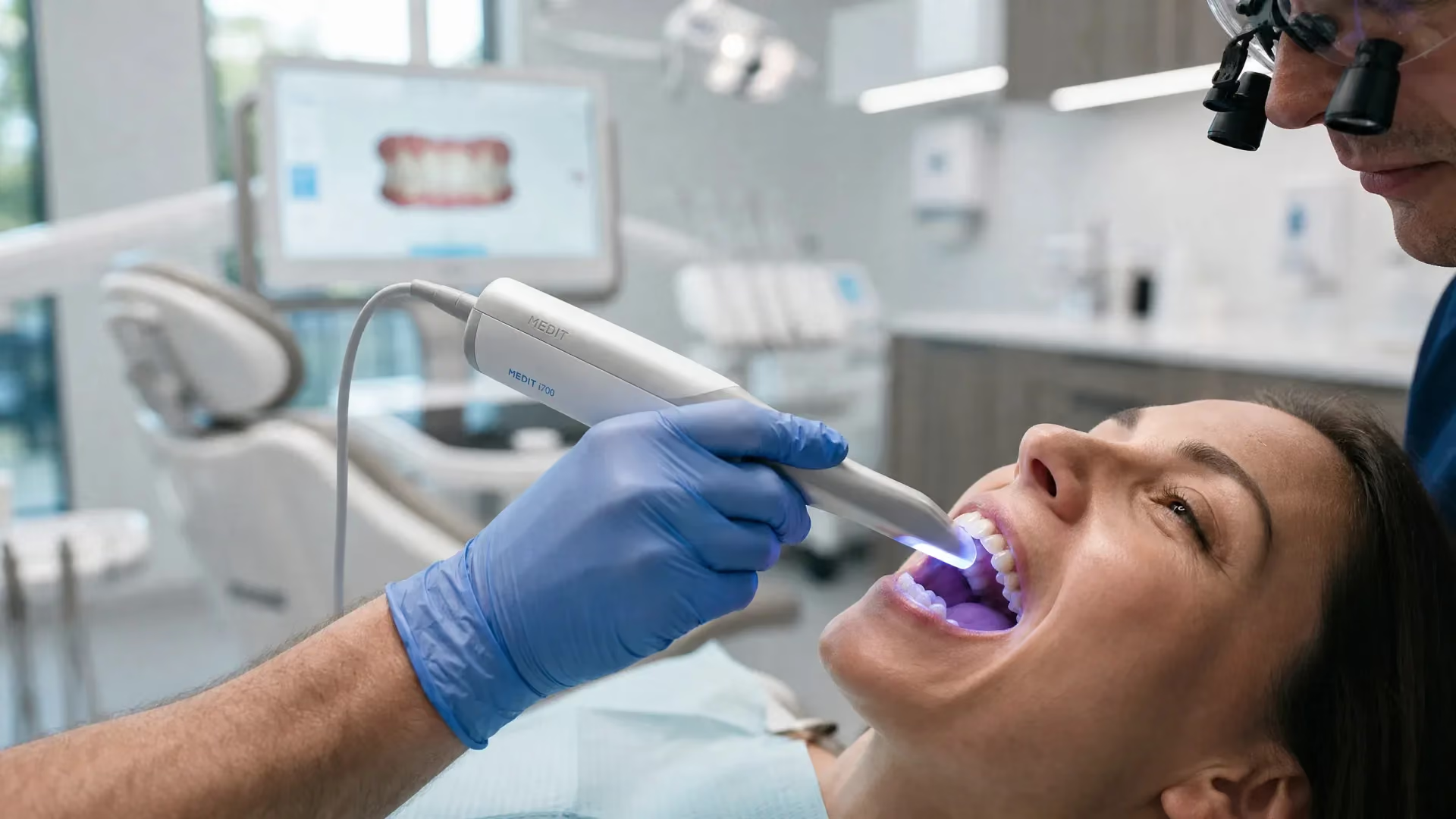
After examination and any necessary images, the tooth is prepared to suit the restoration. Whether local anaesthetic is needed depends on the situation. An impression or digital scan follows. A temporary restoration protects the tooth until the crown is ready; at the next appointment, the crown is adjusted and attached.
How many appointments does a dental crown need?
A laboratory-made crown usually requires two to three appointments; a temporary restoration protects the tooth between them. Suitable fabrication at the practice may allow a single visit. Before attachment, the crown is tried in: fit, contacts with neighbouring teeth, colour and bite are checked.
How long should you avoid eating after a crown is fitted?
Wait until the anaesthetic has worn off; otherwise you can easily bite your lip, cheek or tongue. The time needed for the cement depends on the material; the practice will tell you when you can chew normally again.
How is a dental crown attached to the tooth?
With a cement or, particularly for all-ceramic crowns, a resin adhesive that bonds to the tooth. The fit and bite are checked first, and excess material is removed. Crowns on implants, in contrast, are often screwed in place.
The procedure at a glance
From examination and preparation through an impression or digital scan and temporary restoration to fitting and aftercare.


1. Dental crown treatment: examination and preparation
Your concerns and an examination of the tooth come first. This includes the remaining tooth structure, existing fillings, gums and bite. Further examinations or X-rays may be necessary depending on the findings. Only then can it be decided whether a full crown or a smaller restoration is appropriate. You can arrange this examination through appointment booking.
Root canal treatment is not routine preparation for a crown. It requires its own indication. If a tooth has already had root canal treatment, we assess how to restore the remaining tooth with stability and a sound seal. Study on PubMed.
Replacing a dental crown: how does it work? In principle, as with a new crown: the old crown is removed, the tooth underneath is checked for decay, leaking margins and remaining structure, and built up again if necessary. Preparation, impression and fitting then follow as described below. The clinical findings determine whether replacement is needed.
2. Preparing the tooth for the crown
The tooth is prepared to provide enough space for the restoration and allow secure attachment. The amount of tooth structure that must be removed depends on the material, construction and defect. A rigid measurement in millimetres is of little help for an individual decision.
Local anaesthetic can make treatment easier. Let us know during treatment if you feel pain. The type of anaesthesia and possible sensitivity are discussed according to your situation; complete freedom from pain cannot be promised in general.
3. Impression, fabrication and temporary restoration
The shape of the prepared teeth and the way they bite together are recorded with an impression or digital scan. The desired tooth colour is also determined. This information provides the basis for making the crown.
A temporary restoration may be necessary between preparation and final fitting. It protects the tooth and helps maintain the intended shape and contacts. Treat it carefully and follow the instructions on cleaning and eating. If it comes loose, contact the practice promptly. Do not reattach it with household glue.
A laboratory-made crown usually requires two to three appointments: preparation with an impression and temporary restoration, fitting, and a check-up if needed. If the tooth is suitable for a crown milled at the practice, treatment in a single visit may be possible (a crown in one visit). The clinical findings determine how many appointments you will need.
4. Fitting the finished crown
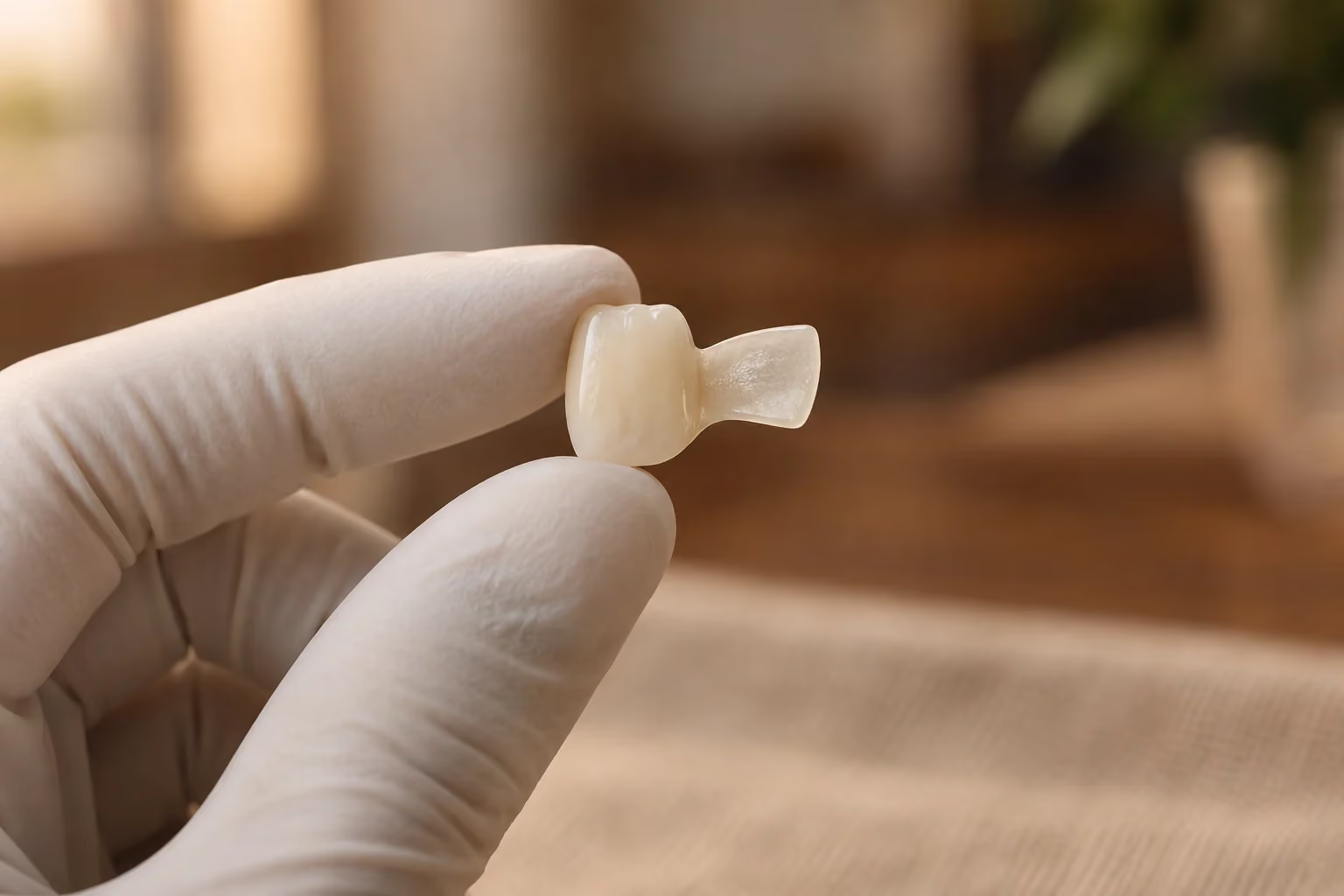
Before final attachment, the marginal fit, contacts with neighbouring teeth, shape, colour and bite are checked. The crown is then cemented or bonded according to the material. Whether anaesthetic is useful at this stage depends on the tooth and your sensitivity. The durability of a fitted crown depends on material, care and individual circumstances: a recent systematic review (Pjetursson et al., Int J Prosthodont 2026) found five-year survival rates of around 90 to 98.5 percent for different crown materials. This indicates whether the crown is still present, not whether it is symptom-free, and cannot be extrapolated over decades.
When you can eat and chew again depends in part on the anaesthesia and attachment material used. Ask for specific instructions. A blanket promise that you can eat normally immediately does not fit every situation.
How long does treatment take?
The procedure, duration and number of appointments for a dental crown depend on preliminary treatment and the fabrication method. A restoration involving a laboratory stage differs from a suitable process with fabrication at the practice. No fixed laboratory turnaround or particular method is promised here for every case.
Digital fabrication is a process, not a separate type of crown or an automatic guarantee of quality. Its possible use is assessed against the clinical findings. Details are provided in the topic on CAD/CAM ceramic restorations in one visit.
After fitting: care and symptoms
Clean the crown margin and between your teeth regularly. Ask to be shown which cleaning aids are suitable. The crown itself cannot develop decay, but the tooth underneath still can.
A tooth may be sensitive after treatment. Persistent or increasing pain, swelling, a loose crown or a bite that feels clearly too high should be checked. The feeling alone cannot reliably identify the cause. Information on cost planning and the overview of dental crowns help with further questions. The guide Dental crown procedure explains the individual treatment steps in greater detail at YERIT.
Dental crown materials and costs
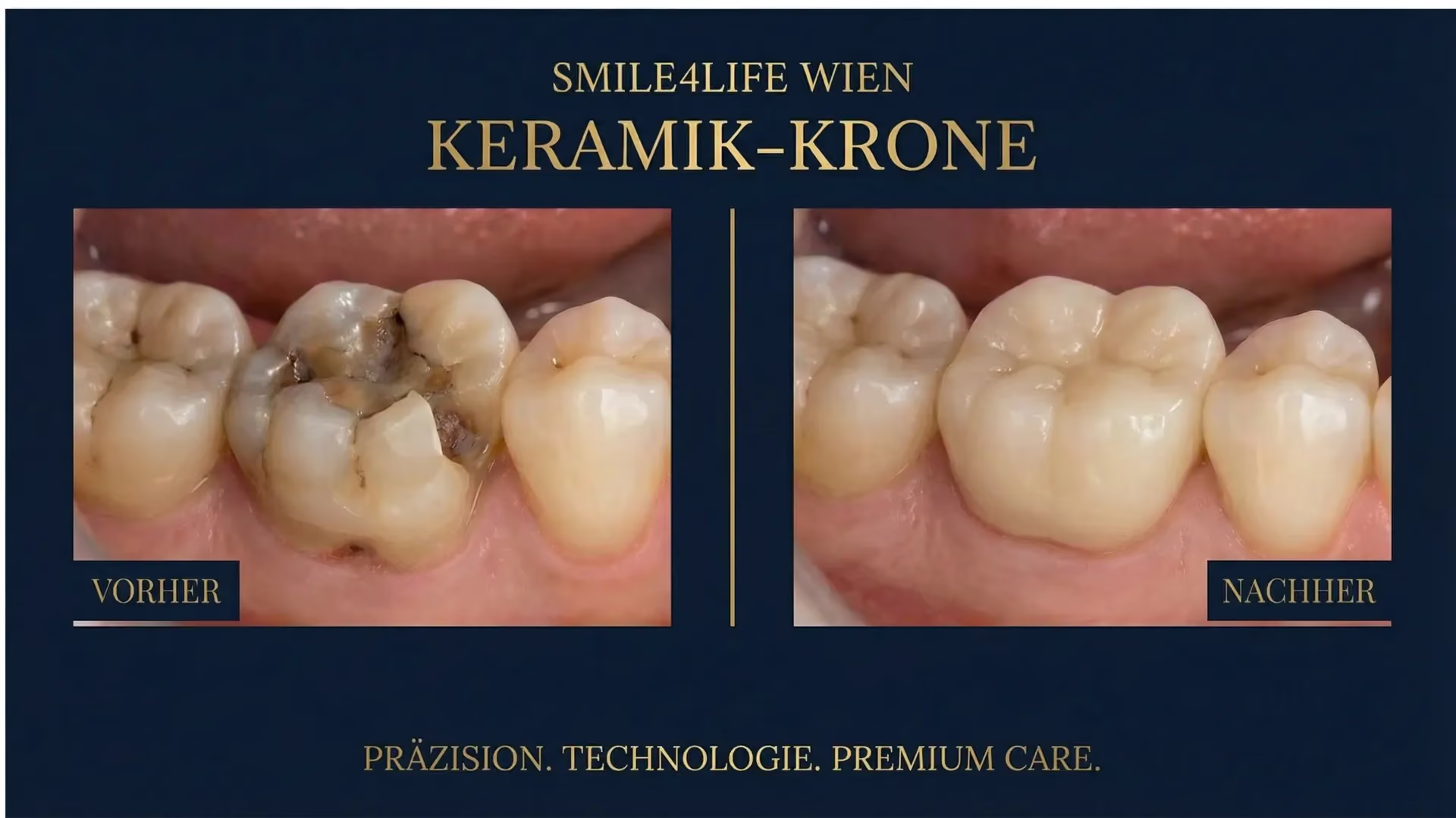
The appropriate material, such as an all-ceramic zirconia crown or metal-ceramic, depends on position, loading and desired appearance. The differences are explained on the pages Dental crowns and Ceramic crowns.
The market guide prices on our prices page provide initial guidance. We draw up your personal cost plan based on the findings and intended restoration and discuss it with you before treatment begins. Read more under Dental crown costs.
Appointments and the work involved depend on your findings and the chosen procedure.
YOUR OPTIONS
TREATMENT OPTIONS COMPARED
We will discuss payment terms with you prior to treatment.
The indicative market prices in our price overview provide an initial guide. We will discuss which services are planned for you and the costs involved based on your examination findings and individual cost plan.
Advanced Dental Aesthetics & Implantology
Priv.Doz.Dr.Dr. K. Yerit
“Aesthetics is not a coincidence, but the result of precise planning and deep passion.”
A well-planned procedure takes uncertainty out of treatment: you know what to expect from the start.
View profile →Scientific references
Institute for Implantology and Digital Dentistry Vienna
Österreichische Gesellschaft für Zahn-, Mund- und Kieferheilkunde (ÖGZMK)
Deutsche Gesellschaft für Zahnärztliche Prothetik
European Prosthodontic Association (EPA)
Academy of Prosthodontics
Yerit Practice – Dentist Vienna
Frequently asked questions
Frequently asked questions
Do you have a specific question about your diagnosis? Book a consultation appointment directly →
Questions about your treatment?
Discuss what matters to you and what the next steps look like with us.
Book your appointment nowYour orientation
Planned for the long term, with regular care and check-ups.
Understanding what’s involved
Appointments and treatment requirements depend on your examination findings and the chosen procedure.
In everyday life
Who this information is for
When an existing tooth needs a new restoration. The defect is assessed to determine whether a filling, partial restoration or full crown is appropriate.
Important limitations
A restoration needs suitable supporting teeth and an appropriate bite. Disease and potentially less invasive alternatives are assessed beforehand.
Our approach
The restoration is planned around your examination findings. Options, limitations and any preliminary treatment all form part of the decision.
SCIENTIFIC STUDIES
The restoration is planned around your examination findings. Options, limitations and any preliminary treatment all form part of the decision.
Patel, Youngson und Jarad (2025)
Not every root-treated tooth needs the same restoration. Remaining tooth structure, tooth position, loading and a well-sealed restoration are relevant to planning. A narrative review, not a comparative effectiveness study. Choosing the specific restoration requires an examination.
40217033
More topics in this area
Deepen your knowledge – find all information regarding the treatment process, costs, and results.




Kärntner Straße 9
100 meters from Stephansplatz, Innere Stadt.

Partnerships & Memberships & References




