

Dental bridge in Vienna: a fixed restoration for a gap
A bridge can close a gap left by a missing tooth. What matters is which teeth can support it and which alternative suits you.
Restore a gap
Assess neighbouring teeth
Compare options
Consider care
Dental Bridge Vienna
zahnbruecke-wien
1900
4500
4.9★
Doctify rating
25+
Years of experience
Personal
In-practice consultation
1010 Vienna
Kärntner Straße 9
At a glance
When is a dental bridge appropriate?
A conventional dental bridge is fixed on prepared neighbouring teeth; a connected pontic replaces the missing tooth.
It is appropriate when a gap is bordered by neighbouring teeth able to bear the load — particularly if they need crowns anyway. If neighbouring teeth are healthy, an implant or adhesive bridge merits comparison because a conventional bridge requires tooth structure to be removed.
How long does a dental bridge usually last?
Usually many years: a recent review found that 91.3 per cent of metal-ceramic and 92.9 per cent of veneered zirconia bridges remained in function after five years.* However, around 29 per cent had experienced a complication by then, such as chipping or decay at the margin.
What happens if a supporting tooth develops decay?
Decay at the crown margin often causes no symptoms for a long time and may threaten the bridge’s support. If detected early, it can sometimes be treated at the margin without removing the bridge; if the supporting tooth is badly damaged, the bridge needs replacing.
How a dental bridge is structured
A conventional tooth-supported bridge rests on prepared neighbouring teeth. These supports carry crowns; a pontic between them replaces the missing tooth. The components are connected and fixed in place. You do not remove the bridge yourself for cleaning.
For one missing tooth, a three-unit bridge with two supporting crowns and one pontic may be an option. Other designs are possible but need individual planning. A single crown alone does not close a gap.
When a bridge may be an option
The neighbouring teeth must be able to bear the planned load. Existing damage, roots, gums and supporting tissues, tooth positions and bite are among the factors assessed. The length of the gap and access for cleaning also matter.
If neighbouring teeth already need new crowns, this may favour a bridge. Existing crowns do not, however, mean that no further tooth structure will be removed or that the supports are automatically suitable. Where neighbouring teeth are largely healthy, the necessary removal of tooth structure carries particular weight.
Conventional bridge, Maryland bridge or implant?
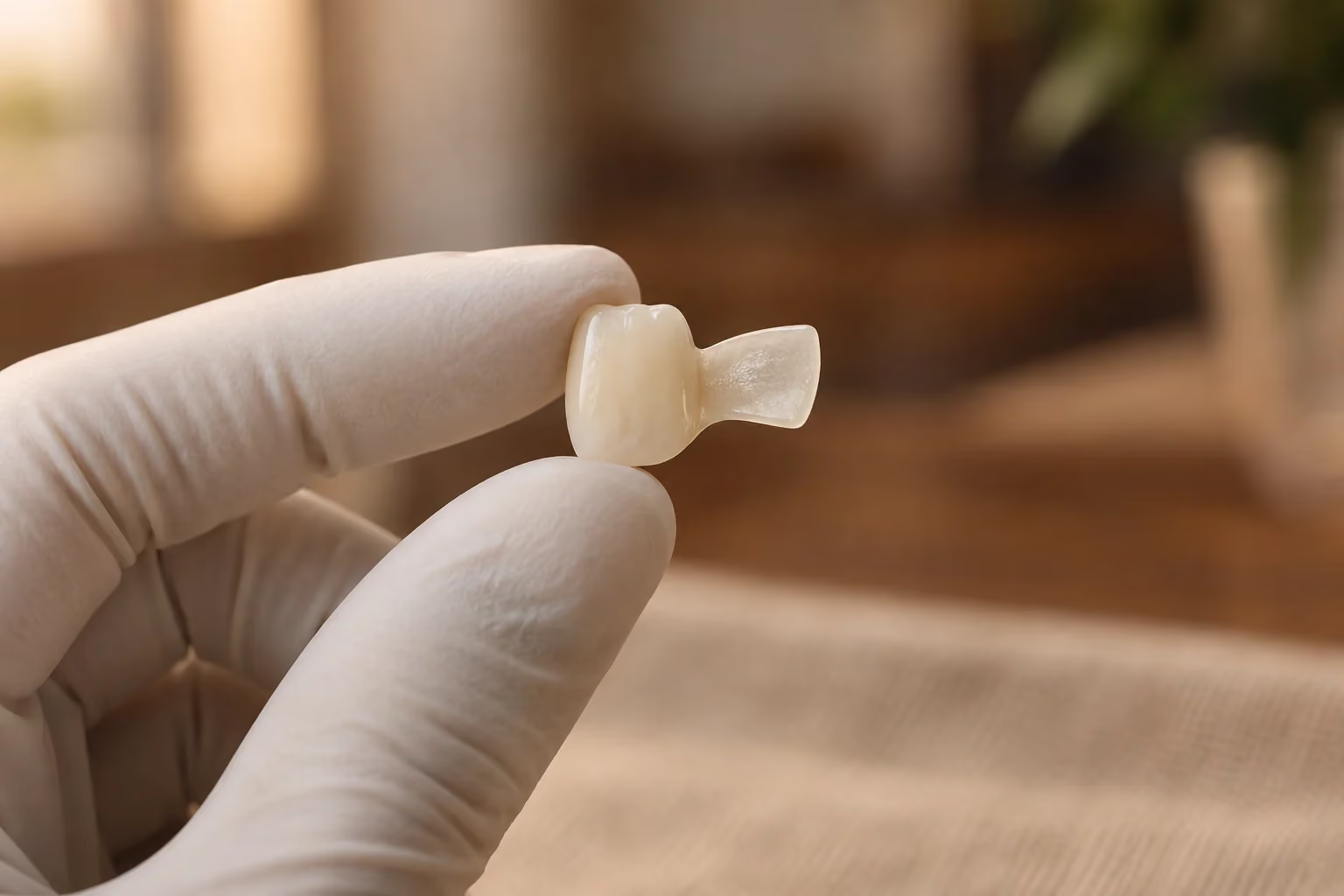
A Maryland bridge is attached by a wing to suitable tooth structure and may suit selected short gaps. Its design principles differ from those of a conventional bridge.
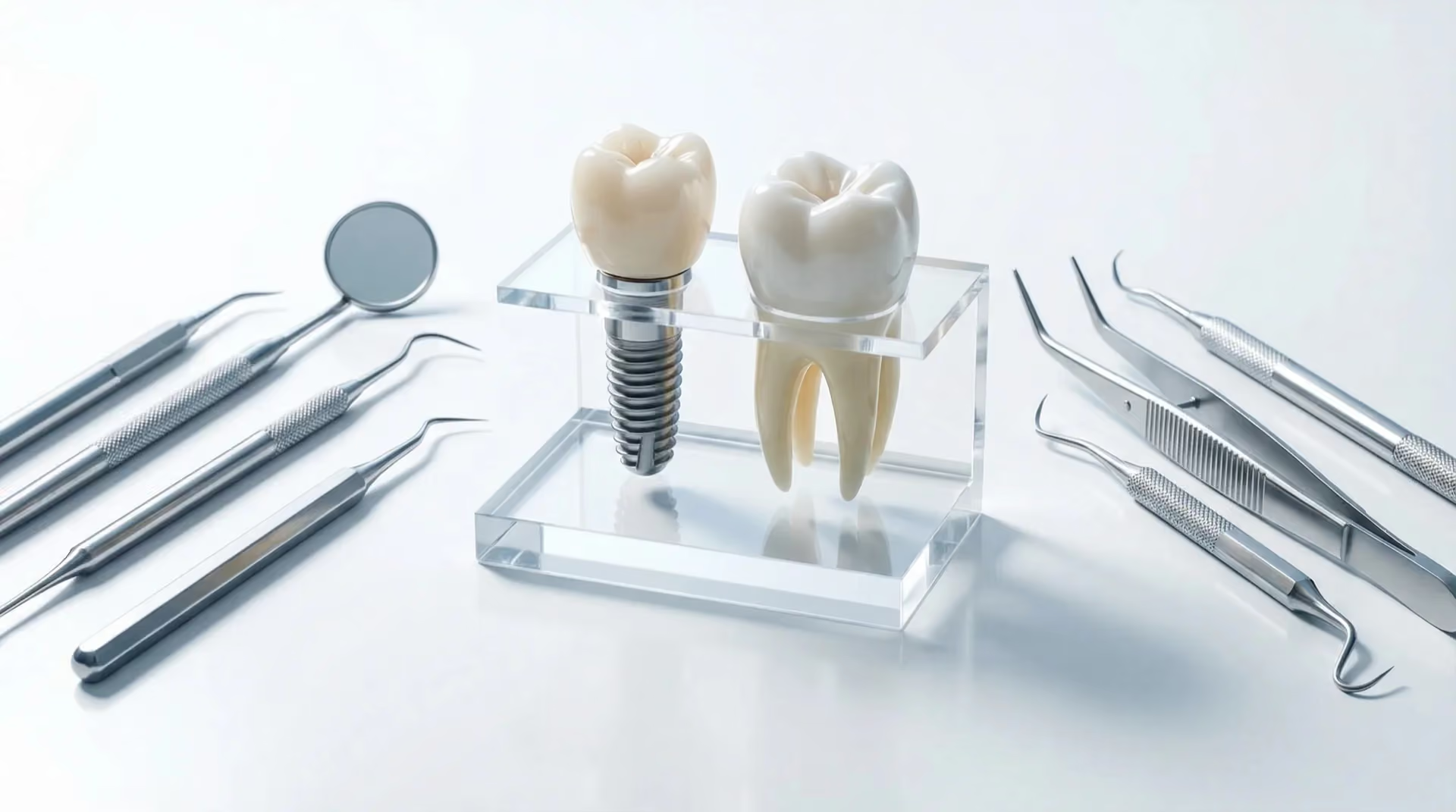
A single-tooth implant supports replacement teeth on an artificial root and requires separate surgical planning. Removable replacement teeth are another option. None of these solutions is automatically more stable or conservative for everyone; comparison requires individual examination findings.
From planning to fitting
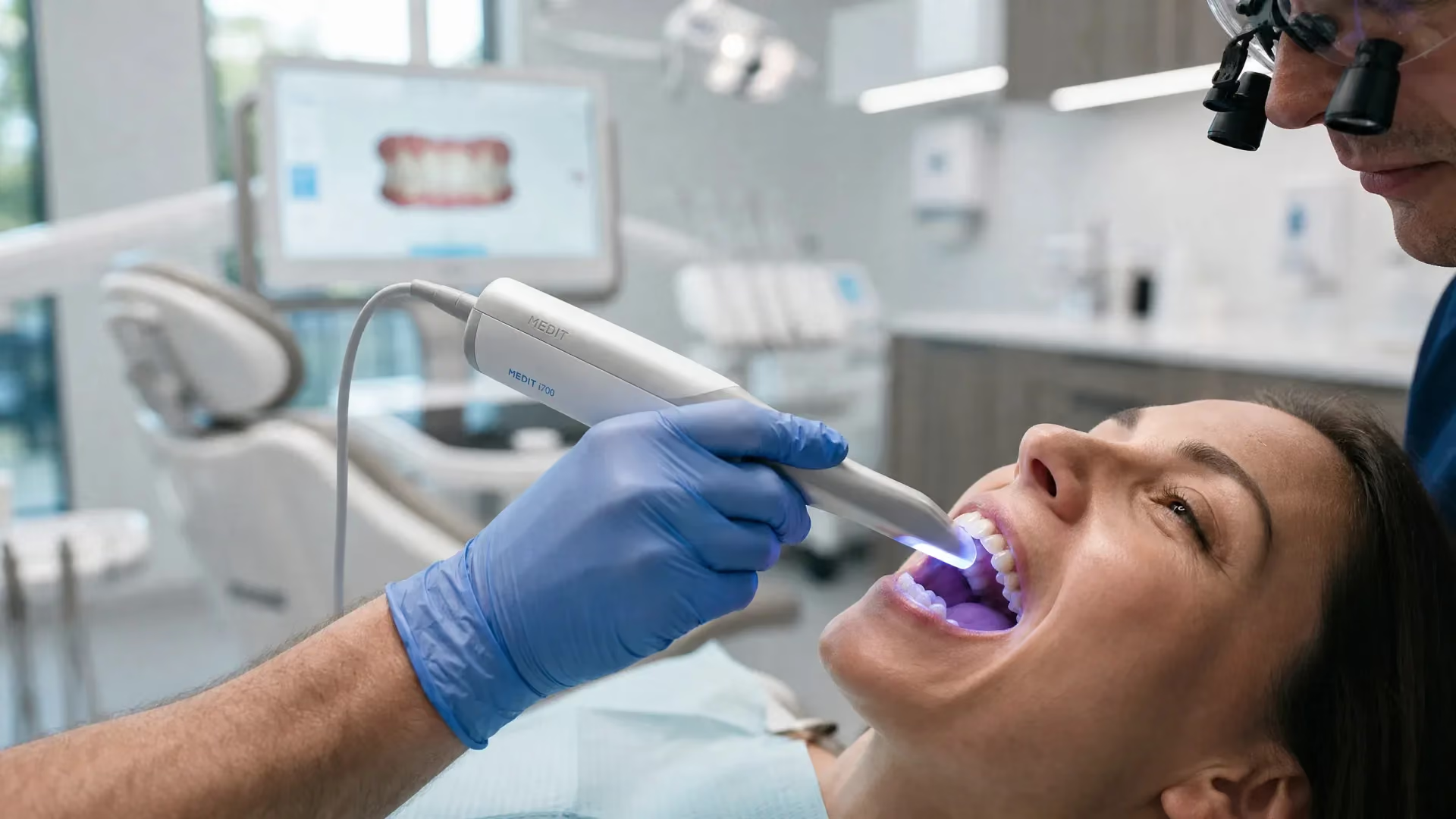
Following examination, the supporting teeth for a conventional bridge are prepared and their shape and bite recorded. Depending on the manufacturing process, a temporary restoration protects them until the final bridge is ready. Fit, contacts, bite and cleaning access are checked before fitting.
The number of appointments depends on necessary preparatory treatment and manufacture. A different material alone does not make a bridge on diseased or insufficiently strong supports a suitable restoration.
Durability and care
Studies of multi-unit tooth-supported bridges distinguish survival of the restoration from freedom from complications. A bridge can continue functioning despite requiring treatment along the way. Material, design and the condition of supporting teeth affect outcomes. A recent review analysed 41 studies with over 2,000 multi-unit bridges (study on PubMed). A fixed lifespan cannot be promised from this.
Alongside brushing, clean under the pontic and around the supporting teeth, for example with suitable interdental brushes or floss with a threader. Ask to be shown the technique. Decay in a supporting tooth, looseness, persistent pain or chipping should be checked.
What determines the costs
The central prices page gives a non-binding market range of 1,900 to 4,500 euros for a three-unit bridge. This is a total for that restoration, not a price per tooth or a range for a Maryland bridge. The average market prices shown there are non-binding, typical market guidance — a firm figure can only be established after examination. Your personal treatment costs are then clarified in an individual cost plan. The extent of the bridge, its design, material and preparatory treatment determine the work involved. ÖGK generally does not contribute towards fixed replacement teeth such as crowns and bridges. Exceptions exist for particular medical circumstances and require approval. Clarify any possible entitlement with your insurer before treatment starts. The ÖGK information on replacement teeth explains the requirements. Overview of crowns and bridges.
Bridge material and appearance
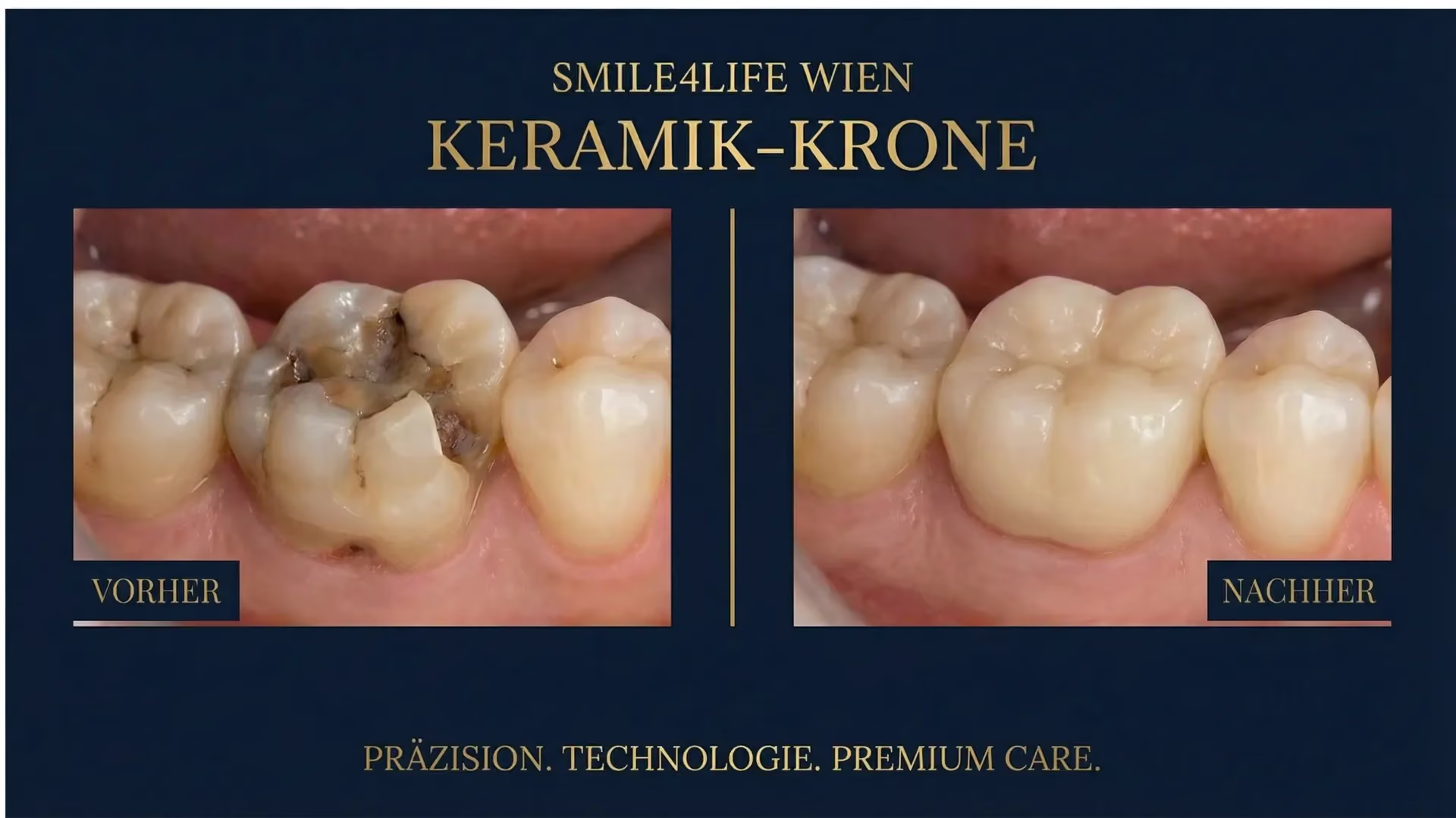
Dental bridges can be made from metal-ceramic or suitable all-ceramic materials, for example. All-ceramics include zirconia. Which design is appropriate depends on bridge length, loading and available space. A material name alone says little about whether the restoration can provide adequate support in your mouth.
For a natural appearance, shape and tooth colour are matched to neighbouring teeth. Appearance and access for cleaning go together: a pontic should restore the gap while remaining accessible in daily life. Discuss the advantages and disadvantages of the proposed shape with your dentist.
YOUR OPTIONS
TREATMENT OPTIONS COMPARED
We will discuss payment terms with you prior to treatment.
The indicative market prices in our price overview provide an initial guide. We will discuss which services are planned for you and the costs involved based on your examination findings and individual cost plan.
Advanced Dental Aesthetics & Implantology
Priv.Doz.Dr.Dr. K. Yerit
“Aesthetics is not a coincidence, but the result of precise planning and deep passion.”
A well-maintained dental bridge is an established way to close a gap.
View profile →Scientific references
Institute for Implantology and Digital Dentistry Vienna
Österreichische Gesellschaft für Zahn-, Mund- und Kieferheilkunde (ÖGZMK)
Deutsche Gesellschaft für Zahnärztliche Prothetik
European Prosthodontic Association (EPA)
Academy of Prosthodontics
Yerit Practice – Dentist Vienna
Frequently asked questions
Frequently asked questions
Do you have a specific question about your diagnosis? Book a consultation appointment directly →
Questions about your treatment?
Discuss what matters to you and what the next steps look like with us.
Book your appointment nowYour orientation
Planned for the long term, with regular care and checks.
Understanding what’s involved
Appointments and the work involved depend on your findings and the chosen procedure.
In everyday life
Who this information is for
For a gap where suitable supporting neighbouring teeth and an appropriate bite are present.
Important limitations
A restoration needs suitable supporting teeth and an appropriate bite. Disease and possible more conservative alternatives are assessed beforehand.
Our approach
The restoration is guided by your findings. Options, limitations and necessary preparatory treatment all belong in the decision.
The YERIT guide Dental bridges: structure, types and limitations explains the basics and puts the research in closer context.
SCIENTIFIC STUDIES
The restoration is guided by your findings. Options, limitations and necessary preparatory treatment all belong in the decision.
The YERIT guide Dental bridges: structure, types and limitations explains the basics and puts the research in closer context.
Romandini P et al. (2026)
A systematic review of 41 studies on tooth-supported multi-unit bridges. Estimated five-year survival was 91.3 percent for metal-ceramic and 92.9 percent for veneered zirconia; other material groups achieved 82.5 to 88.4 percent. Overall, 71 percent were free of complications after five years. These group results are not an individual lifespan guarantee and do not apply to removable dentures.
41650383
More topics in this area
Deepen your knowledge – find all information regarding the treatment process, costs, and results.



Kärntner Straße 9
100 meters from Stephansplatz, Innere Stadt.

Partnerships & Memberships & References




