
Inlay, Onlay or Crown: Which Restoration Suits the Damage?
Preserve as much of your own tooth as possible while repairing the damage reliably: this calls for a close look at the remaining tooth walls.
Preserve your own tooth
Compare options
Plan around your findings
Consider ongoing care
Inlays & Onlays Vienna
inlays-onlays-kronen-wien
4.9★
Doctify rating
25+
Years of experience
Personal
In-practice consultation
1010 Vienna
Kärntner Straße 9
At a glance
Inlay, onlay or crown: what determines the choice?
The tooth walls that still provide support. An inlay sits within the chewing surface; if a cusp is weakened, an onlay covers it. A crown is needed only when tooth structure has been extensively lost. This often only becomes clear once the old filling has been removed.
Which is better, an inlay or a filling?
A direct composite filling is usually sufficient for small and medium defects. An inlay may be considered for larger defects: the cited review compared indirect partial restorations. After ten years, estimated survival rates were 89 to 91 percent for ceramic and 75 percent for indirect resin-based restorations. This is not a general comparison with direct fillings.*
Does an intact old filling need to be replaced with an inlay?
Not simply because another material is available. An intact filling with a sound seal can remain. Replacement is discussed only if examination shows decay at the margin, a crack or a fracture; we then assess whether a new filling, inlay or onlay would better protect the tooth.
Ceramic or gold inlay: which is better?
Neither is generally superior. Ceramic is tooth-coloured and bonded with a resin adhesive; a gold inlay made from a dental alloy is visible and cast. Tooth position, space, bite and possible intolerances are the deciding factors.
What is the difference between a filling, an inlay and an onlay?
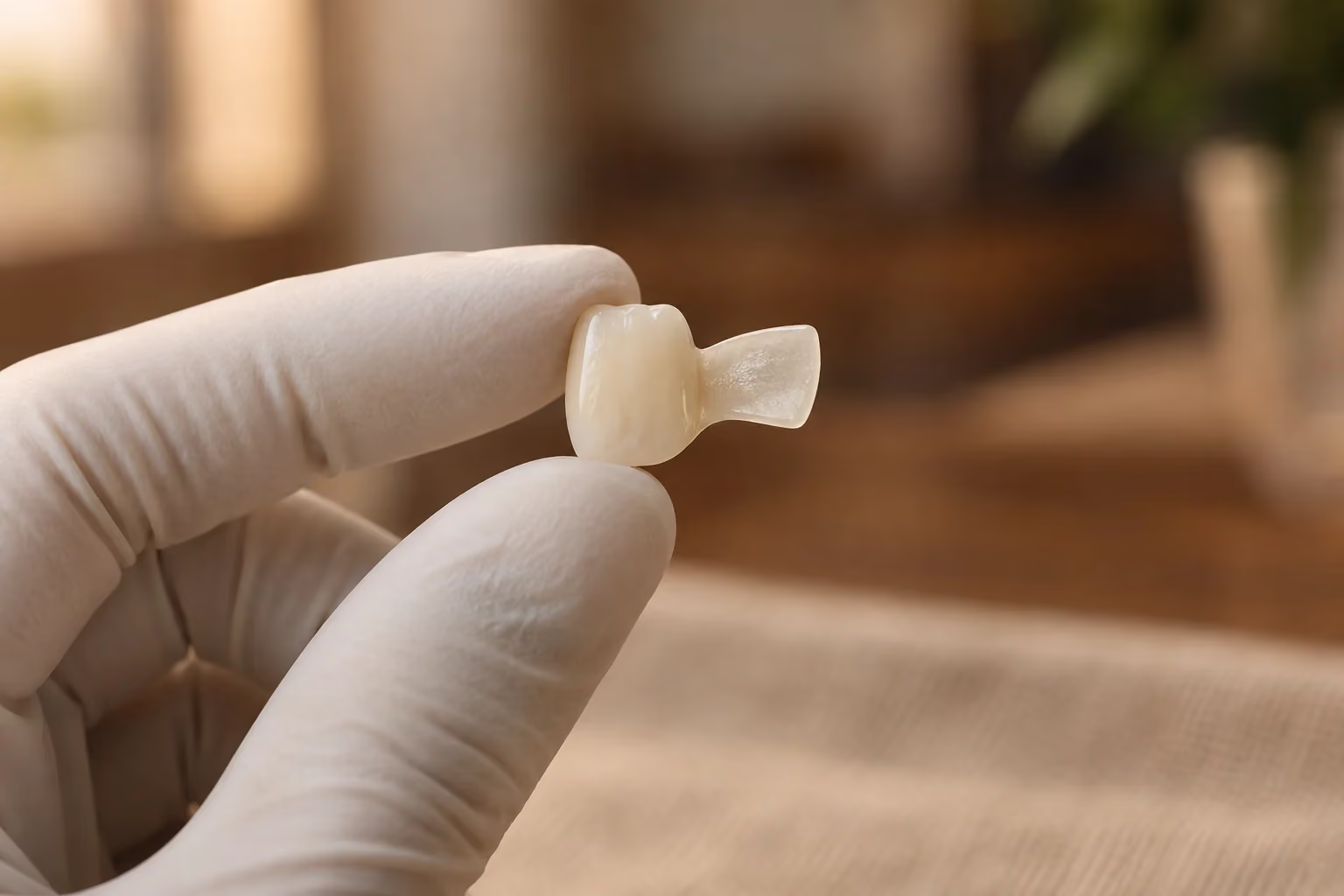
A direct filling restores the defect directly in the tooth. An inlay is made outside the tooth and then fitted. It sits within the chewing surface without extensively covering the cusps. An onlay additionally covers one or more cusps. More extensive partial coverings are also called overlays or partial crowns, depending on their shape.
These terms describe the extent of the restoration. They are not a fixed sequence that every tooth must go through. What matters is which parts remain strong enough to support the restoration and which need protection.
When is a partial restoration sufficient instead of a crown?
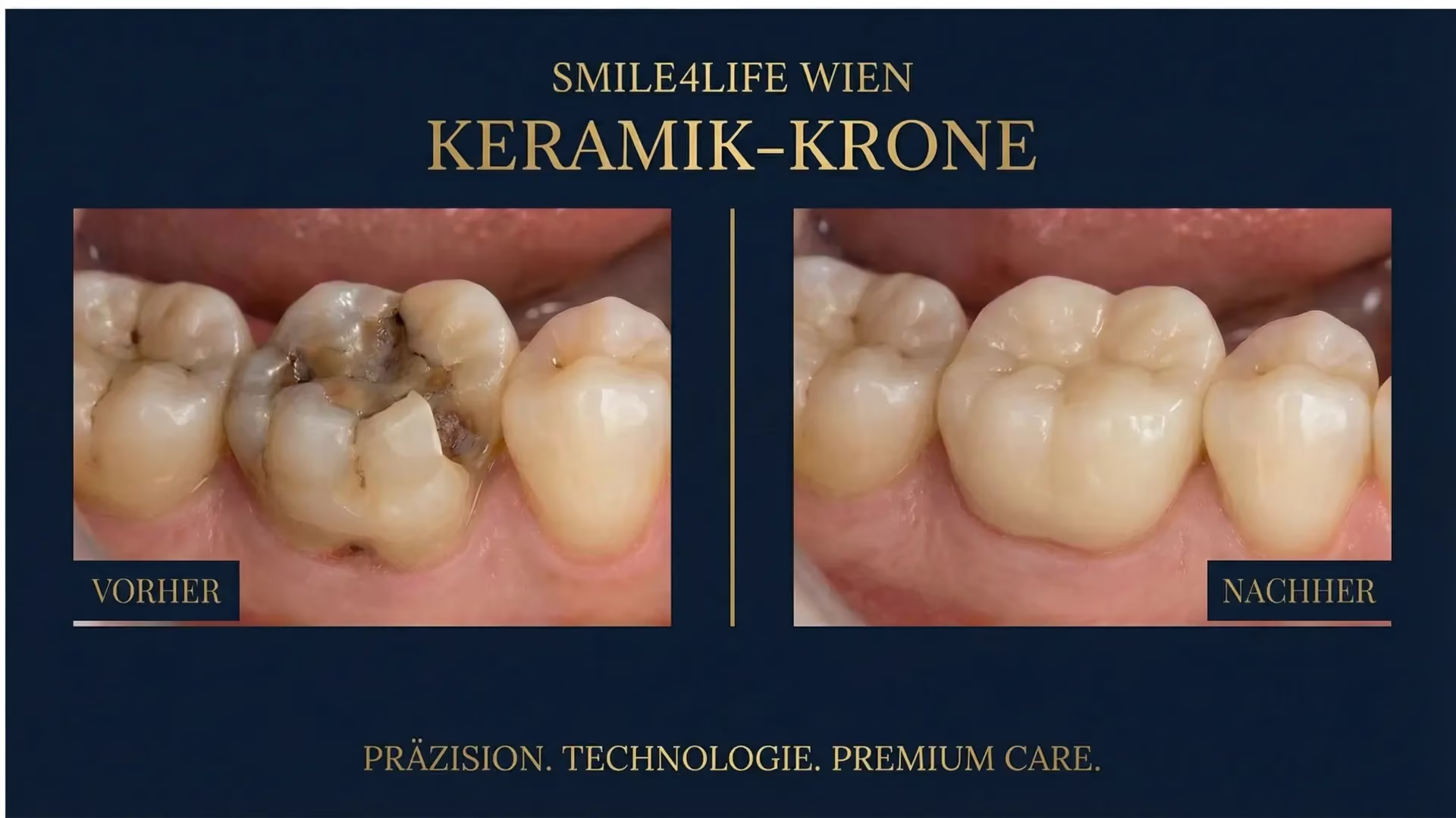
A full crown surrounds the tooth. It also requires preparation of tooth structure beyond the immediate defect. Where an inlay or partial covering provides sufficient support, more healthy structure can be retained.
Whether this is possible depends on factors such as cracks, sound supporting walls, existing fillings, the bite and a suitable bonding surface. A blanket rule that a crown is needed once half the tooth is affected is inappropriate. After root canal treatment too, the extent of the restoration is chosen to suit the remaining tooth. Study on PubMed.
What research can contribute
A systematic comparison of onlays or partial crowns with full crowns found no statistically demonstrable difference in survival over short follow-up in selected back teeth. There were few studies; this does not establish equivalence for every starting situation or over long periods. Study on PubMed.
Another review compares ceramic and resin-based partial restorations. It describes different outcomes and complications depending on the materials and periods studied. It does not prove that every inlay has a better seal or is more precise than every direct filling. Study on PubMed.
Materials: ceramic, gold or composite
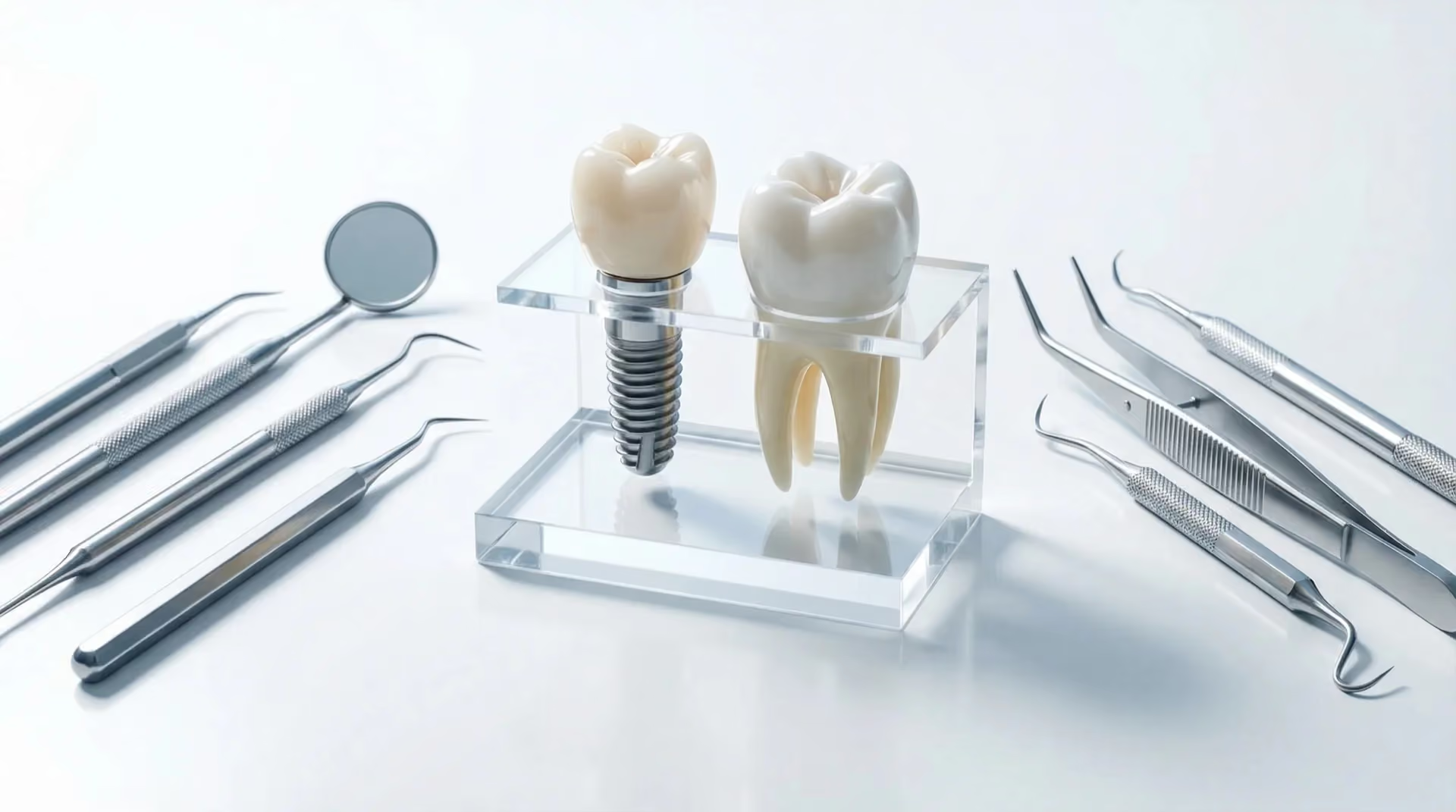
Inlays and onlays are made from ceramic, a gold alloy or resin-based composite. Ceramic is tooth-coloured and attached with a resin adhesive. Composite inlays are also tooth-coloured and usually somewhat less expensive than ceramic, whereas gold remains visible in the mouth.
The appropriate material depends on loading, space, bonding and your preferences about tooth colour. Appearance matters more in visible areas than for a back molar. There is no overall winner. With every material, durability also depends on oral hygiene and regular check-ups.
The procedure: from examination to the fitted inlay or onlay
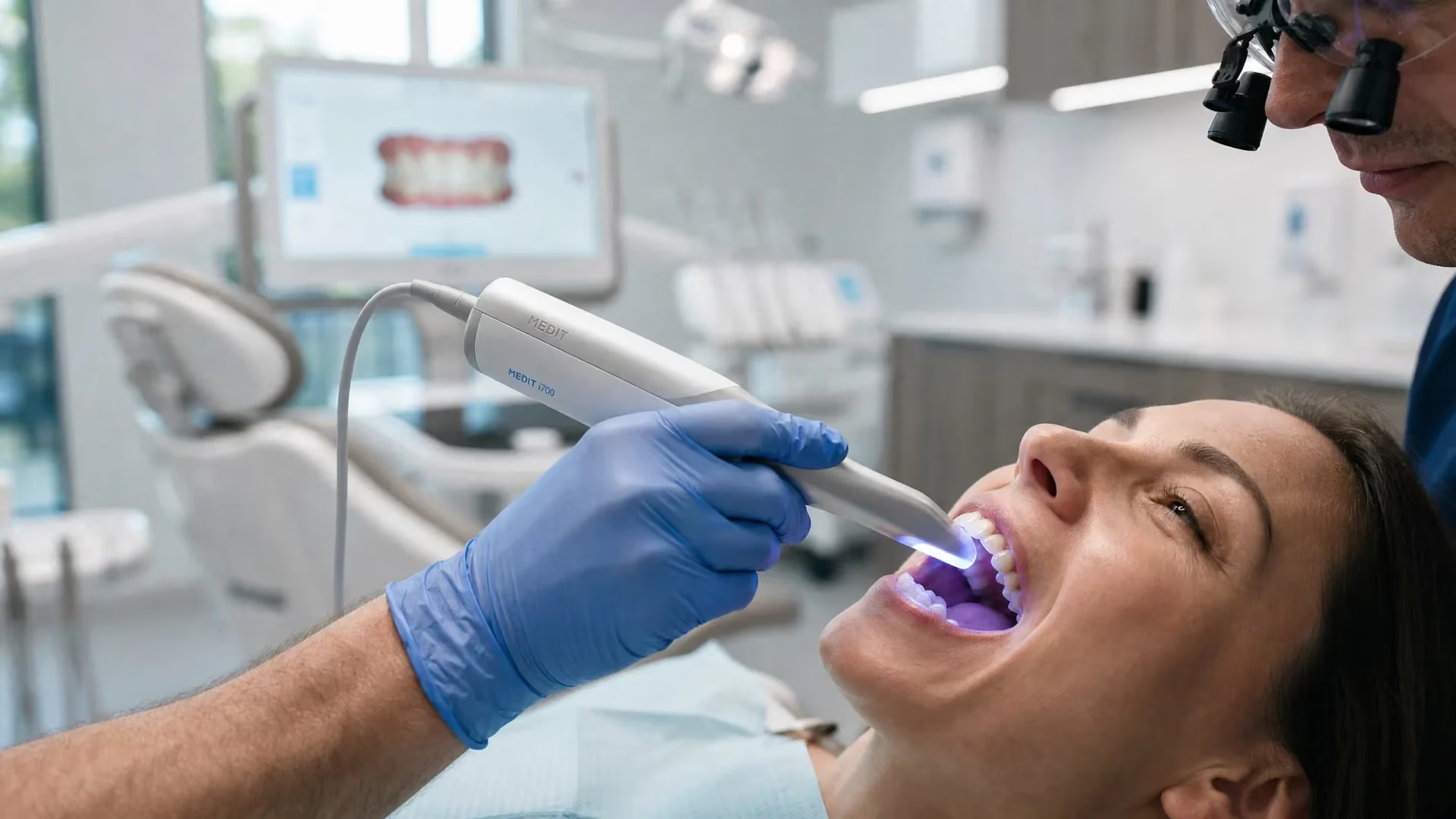
First, the tooth is examined, usually with an X-ray. The old filling and decay are then removed under local anaesthetic. Only then does it become clear how much sound tooth structure remains and whether an inlay is sufficient or a weakened cusp should be protected with an onlay. The shape is then recorded with a scan or impression.
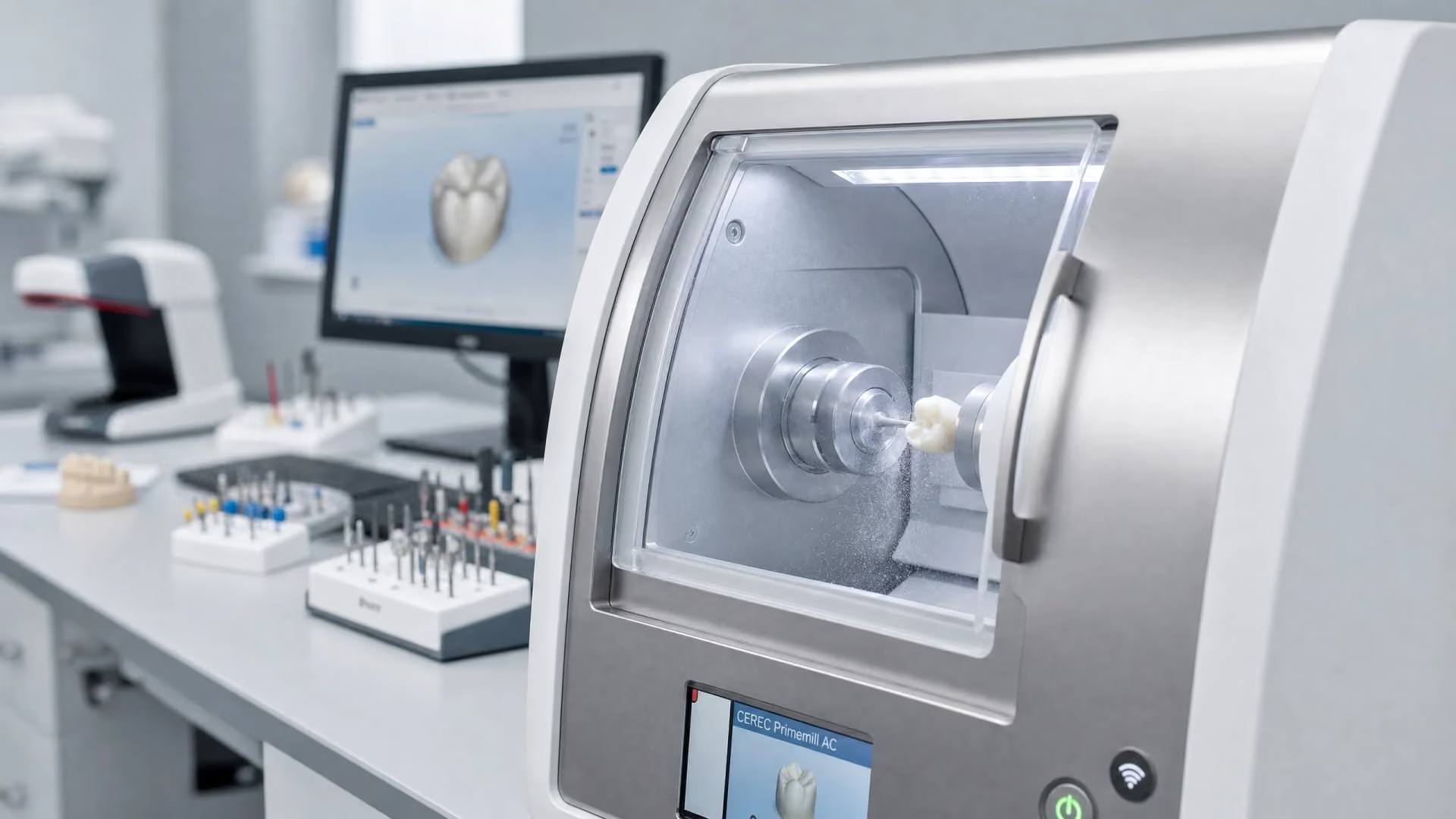
There are two fabrication routes. If the restoration is made in a dental laboratory, the tooth has a temporary restoration until the next appointment. With the CAD/CAM process, a ceramic restoration can instead be designed, milled and fitted at the practice in the same visit. The appropriate route depends on the material, size of the defect and clinical findings.
At fitting, the fit is checked first. Ceramic and composite are bonded; gold can also be cemented. Finally, the bite is checked and the margins polished.
A question to take to your examination
Ask which tooth walls can be retained and why the proposed restoration should provide sufficient support. An intact old filling does not need replacement simply because another material is available. If replacement is necessary, the defect and alternatives are considered together.
The dental filling treatment is explained separately. This page compares it with partial restorations and a full crown. Initial guidance is available on the prices page. The average market prices listed there are non-binding market guide prices; a firm figure can only be determined after an examination. Your personal treatment costs are then clarified in an individual cost plan. The guide Inlays and onlays: an overview explains material selection in greater detail at YERIT.
YOUR OPTIONS
TREATMENT OPTIONS COMPARED
We will discuss payment terms with you prior to treatment.
The indicative market prices in our price overview provide an initial guide. We will discuss which services are planned for you and the costs involved based on your examination findings and individual cost plan.
Advanced Dental Aesthetics & Implantology
Priv.Doz.Dr.Dr. K. Yerit
“Aesthetics is not a coincidence, but the result of precise planning and deep passion.”
Whether a filling, inlay or partial covering is possible instead of a full crown depends on the defect and the stability required. The aim is to retain enough sound tooth structure to provide support.
View profile →Scientific references
Institute for Implantology and Digital Dentistry Vienna
Österreichische Gesellschaft für Zahn-, Mund- und Kieferheilkunde (ÖGZMK)
Deutsche Gesellschaft für Zahnärztliche Prothetik
European Prosthodontic Association (EPA)
Academy of Prosthodontics
Yerit Practice – Dentist Vienna
Frequently asked questions
Frequently asked questions
Do you have a specific question about your diagnosis? Book a consultation appointment directly →
Questions about your treatment?
Discuss what matters to you and what the next steps look like with us.
Book your appointment nowYour orientation
Planned for the long term, with regular care and check-ups.
Understanding what’s involved
Appointments and treatment requirements depend on your examination findings and the chosen procedure.
In everyday life
Who this information is for
When an existing tooth needs a new restoration. The defect is assessed to determine whether a filling, partial restoration or full crown is appropriate.
Important limitations
Whether a partial restoration provides sufficient support depends on the defect, cracks, remaining tooth structure and loading. A fixed percentage threshold is inappropriate.
Our approach
The restoration is planned around your examination findings. Options, limitations and any preliminary treatment all form part of the decision.
SCIENTIFIC STUDIES
The restoration is planned around your examination findings. Options, limitations and any preliminary treatment all form part of the decision.
More topics in this area
Deepen your knowledge – find all information regarding the treatment process, costs, and results.



Kärntner Straße 9
100 meters from Stephansplatz, Innere Stadt.

Partnerships & Memberships & References