Dental Fillings Vienna: Materials, Procedure and Longevity
A cavity, broken corner or damaged filling? Learn which restoration may be appropriate and what matters at your appointment.
Preserve tooth structure
Understand material selection
Understand the work involved
Clarify questions beforehand
Dental Fillings Vienna
zahnfuellung-wien
4.9★
Doctify rating
25+
Years of experience
Personal
In-practice consultation
1010 Vienna
Kärntner Straße 9
At a glance
What is a dental filling and when is it needed?
A dental filling replaces lost tooth structure, closes the defect and restores tooth shape. Reasons include decay, a broken corner or a defective old filling.
Treatment usually causes little pain: for deeper decay, local anaesthetic is given, after which you mainly feel pressure and vibration. According to ÖGK, the anaesthetic injection is generally not included with insurance-covered fillings. The tooth may be sensitive to cold for a few days afterwards.*
What is a temporary filling?
A provisional seal, for example between two root canal appointments or until an inlay is ready. It seals the tooth but is less resistant to loading than a permanent filling. If it falls out, contact the practice promptly to prevent bacteria entering.
When does a filling need replacement?
If it is broken or leaking, decay forms at its margin or the tooth develops symptoms — age alone is not a reason. Repair is often sufficient instead of complete replacement, preserving healthy tooth structure.
A filling should restore the defect while preserving as much natural tooth as possible. At Smile4Life in Vienna, we assess the individual tooth to establish which solution fits.
When a dental filling is appropriate
A dental filling replaces lost tooth structure. It aims to seal the defect and restore tooth shape. Decay is a frequent reason; sometimes it is a broken corner or a defective old filling. A tooth may need treatment even without pain.
Examination considers how far damage extends, how stable the remaining tooth is and whether the tooth nerve may be affected. An X-ray may help if the findings cannot otherwise be assessed adequately. Not every early decay lesion needs an immediate filling: while no cavity has formed, other measures may be appropriate.
Repair or complete replacement?
A filling with a noticeable change does not automatically need complete removal. For a localised defect, repair may preserve tooth structure. Whether this is sufficient depends on decay, fractures and the condition of the rest of the filling, among other factors. Staining alone does not prove leakage.
Direct filling or inlay?
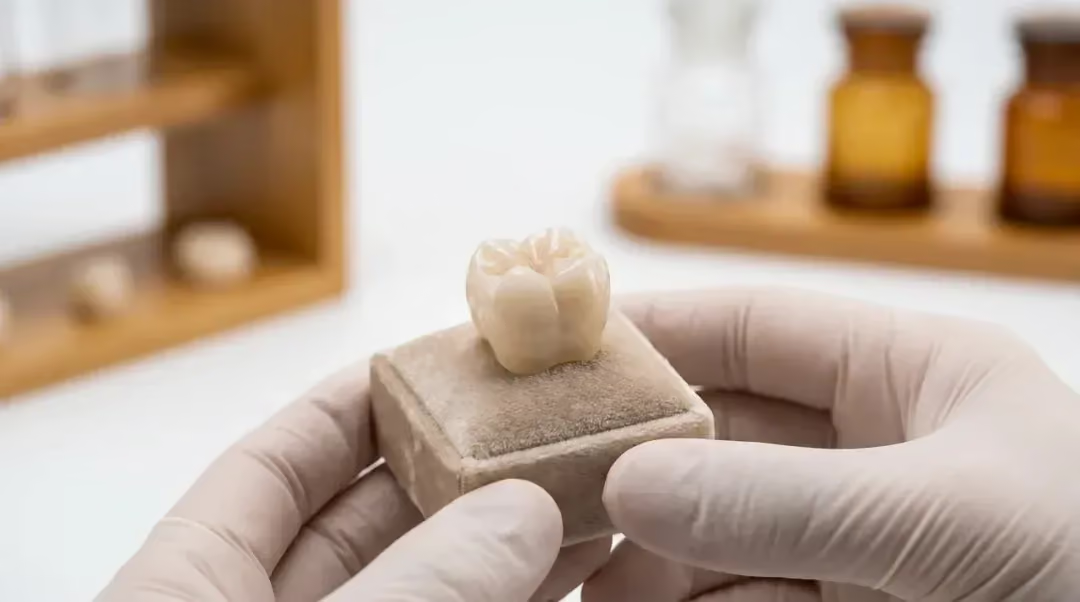
For a direct filling, material is shaped in the tooth. An inlay is instead a precisely fitting piece made outside the mouth in a laboratory from an impression or digital scan, then fixed in place. An onlay also covers one or more tooth cusps. Material and manufacturing process are separate questions: composite can also be used indirectly. Ask why the proposed approach fits the defect. More extensive treatment does not automatically offer greater benefit for your tooth.
How a direct filling is made
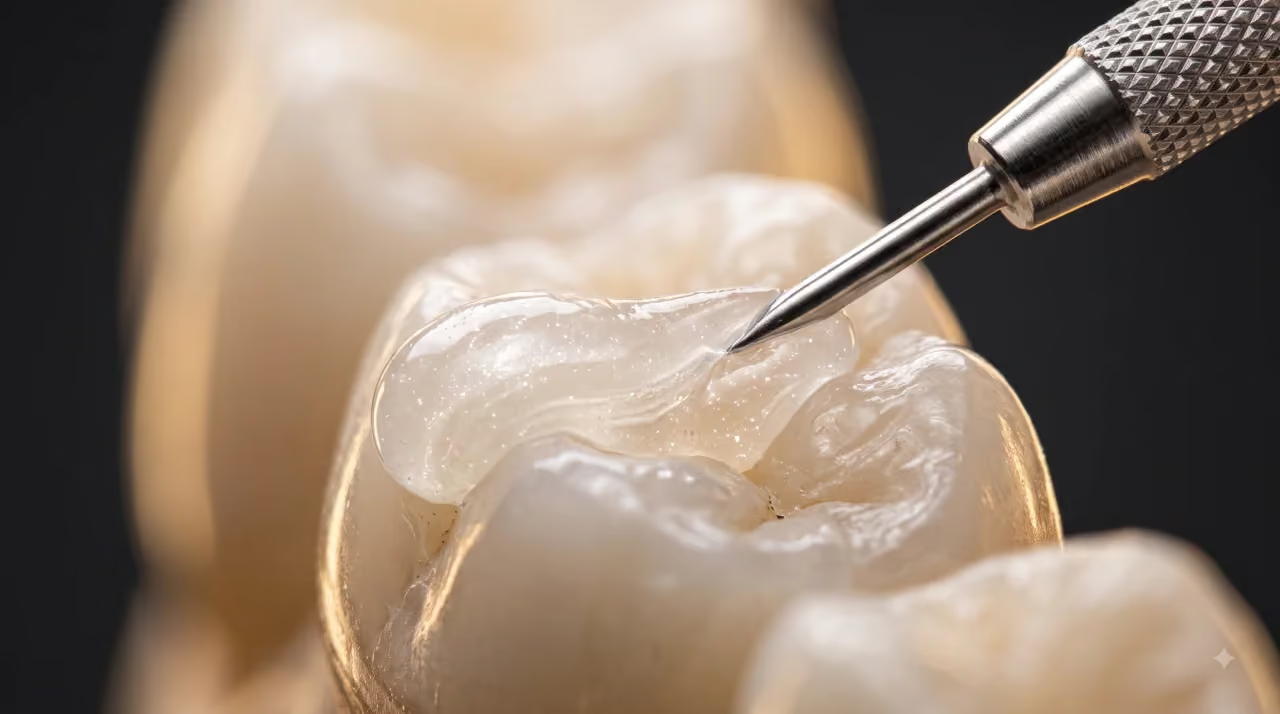
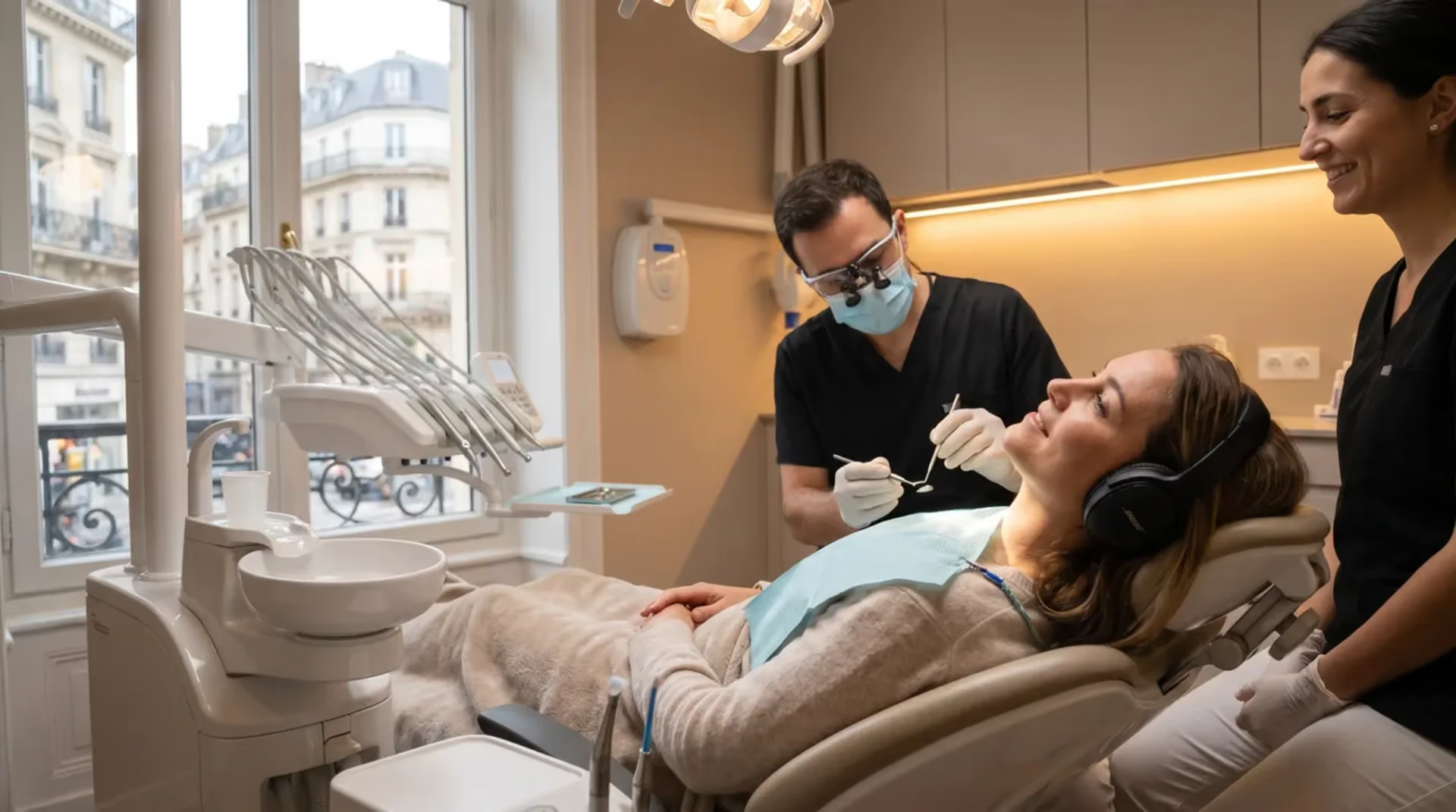
Findings, material and any anaesthetic are discussed before treatment. For a composite filling, the tooth is prepared and protected from saliva. Tooth-coloured material is attached with a bonding agent, shaped and light-cured. Finally, the bite and contact with the neighbouring tooth are checked and the surface polished.
A direct filling can often be made in one appointment. The treatment involved depends on the defect and any preparation needed. This does not promise a fixed duration or complete absence of pain. Tell us during treatment if something feels uncomfortable.
Materials at a glance: composite, ceramic and amalgam
Composite may suit many defects in front and back teeth. Other direct filling materials include glass ionomer cement and compomers, for example for temporary care or baby teeth. Colour and size are not the only considerations: chewing load and the ability to keep the tooth dry also matter. Appearance is particularly relevant in visible front teeth — suitable composites and ceramic inlays can be closely matched to neighbouring tooth colour, while ceramic fillings and inlays also offer high dimensional stability. The page Dental Filling Types in Vienna helps you prepare for your material decision. Read more about tooth-coloured restoration under white fillings.
Since 2025, mercury-containing dental amalgam has generally no longer been permitted for new fillings in the EU. The narrow exception concerns specific medical needs. Existing amalgam fillings do not therefore need preventive removal; their condition is assessed individually.
Alongside composite and ceramic, a gold alloy inlay may sometimes be considered for larger defects — any intolerance to nickel or other metals in the alloy must be clarified beforehand. A known metal allergy therefore belongs in the medical history just as much as the cavity findings.
How long does a dental filling last in Vienna?
Longevity depends on material, defect and care — there is no universal number of years. A review of direct composite fillings in back teeth reported around 85 to 90 per cent survival at ten years; glass ionomer and compomer fillings were assessed over six years, with around 80 per cent survival (Review on PubMed). Another review examined indirect inlays, onlays and overlays: five-year survival was estimated at around 90 to 92 per cent for ceramic groups and 86 per cent for the resin group (Review of indirect restorations). These different restoration types and time periods do not form a material ranking or predict your tooth's lifespan.
Research does not give a uniform answer on whether direct or indirect composite fillings last longer. One review finds a considerably lower failure risk for direct restorations. Both reviews qualify their own evidence — the starting condition of your individual tooth matters more than the statistical average.
Does an old filling with a problem really need complete replacement? Not necessarily. A systematic review of repaired and replaced fillings found no reliable difference in failure risk between the approaches, although certainty was very low. For you, this means targeted repair is often an option worth considering alongside complete replacement — which is what we assess before deciding on your tooth in Vienna.
After treatment: care and follow-up
After local anaesthetic, wait until numbness has worn off before eating. Temporary fillings have their own instructions. Temporary sensitivity may occur. If pain persists or increases, or the bite feels wrong, have the tooth checked. Pain alone cannot reliably identify the cause.
If a filling falls out, contact a dentist promptly. Keep the area gently clean and avoid heavy loading of that tooth. Swelling, fever or severe symptoms need urgent assessment; breathing or swallowing problems require immediate medical help.
How long a filling lasts depends on the defect, handling, load and care. Brush with fluoride toothpaste and clean between your teeth. Follow-up intervals depend on personal risk. Grinding or clenching belongs in treatment planning, but does not automatically mean a particular splint is needed.
Plaque at a filling margin is a common starting point for new decay. Regular professional preventive care reduces this risk but does not replace daily cleaning at home.
Costs and health insurance: what affects filling care
Costs depend on the planned restoration and treatment involved. Insurance coverage also depends on the insurer, material and practice's contractual status. The dental filling cost page explains what to clarify beforehand. The central pricing page provides general guidance; your personal costs follow the cost plan after examination.
Material and manufacturing process affect the treatment involved. A British survey of willingness to pay found that, on average, respondents were willing to pay more for a tooth-coloured than a silver-grey filling; willingness to pay was lower among those with lower income. This describes patient preferences, not treatment prices in Vienna (Survey on PubMed). Whether repair or replacement is appropriate depends on the findings. A retrospective analysis from a German university clinic found similar treatment costs and cost-effectiveness over several years for both approaches; no statistically established difference was found in annual costs. The clinical decision based on findings remains separate from this (Cost study on PubMed).
Whether your health insurance contributes, and how much, depends on the practice's contractual status and the material selected; optional services generally involve a personal contribution. We clarify this together before treatment begins.
This information provides general guidance rather than a personal quotation. Your specific costs follow the planned services after examination. Before treatment, you receive a cost plan tailored to your restoration.
Severely damaged teeth may need another restoration. Inlays, Onlays and Crowns are weighed against one another based on the findings. A diseased tooth nerve may require root canal treatment; deep decay alone does not determine this.
If you would like a defect or an old filling assessed, arrange an appointment. General background is explained in the YERIT guide to dental fillings.
Filling materials at a glance: terms explained briefly
Plastic filling materials such as composite, also called resin fillings, are placed in layers into the prepared tooth defect and cured by the dentist; the amount of tooth structure that needs removal depends on the extent of decay. Glass ionomer cements are another generally well-tolerated filling material with their own uses, for example temporary care. Inlays and onlays made from ceramic or gold, by contrast, are made to fit outside the mouth, for example from an impression in a dental laboratory. The number and spacing of appointments depend on material and manufacturing process. Historical amalgams contained mercury and metals including silver, tin and copper; today this material plays practically no role in new fillings. Which material suits your filling depends on its size, chewing pressure in that area and your wish for a discreet appearance alongside your natural teeth. Whether statutory health insurance contributes, and how much, depends on material and the practice's contractual status.
YOUR CONCERNS
What is on your mind?
A defect from decay
Have the damage and its extent assessed.
Damaged filling
Weigh repair and replacement based on findings.
Broken tooth structure
Check which restoration gives the tooth adequate support.
SUITABILITY CHECK
Is this treatment right for you?
YOUR JOURNEY
Your treatment process
Individual initial consultation
Getting to know your goals and your teeth
We will discuss your goals and examine which treatment is best suited for your teeth.


Individual treatment planning
Defining the next steps together
You will learn which steps are planned and which questions should be clarified in advance.
Precise execution
Guiding you through your treatment step by step
Your treatment follows your personal plan. Please ask questions and tell us about any discomfort at any time.


Aftercare and check-ups
Discuss care and follow-up appointments
Finally, we will discuss ongoing care and the follow-up appointments that are right for you.
In everyday life
Care and follow-up intervals depend on your situation. Persistent or increasing symptoms should be checked.
YOUR OPTIONS
TREATMENT OPTIONS COMPARED
We will discuss payment terms with you prior to treatment.
The indicative market prices in our price overview provide an initial guide. We will discuss which services are planned for you and the costs involved based on your examination findings and individual cost plan.
Advanced Dental Aesthetics & Implantology
Priv.Doz.Dr.Dr. K. Yerit
“Aesthetics is not a coincidence, but the result of precise planning and deep passion.”
Carefully placed tooth-coloured composite fillings can offer good longevity — modern adhesive techniques allow minimally invasive preparation that preserves healthy tooth structure.
View profile →Scientific references
Institute for Implantology and Digital Dentistry Vienna
Österreichische Gesellschaft für Zahnheilkunde
Deutsche Gesellschaft für Zahnerhaltung (DGZ)
European Federation of Conservative Dentistry (EFCD)
Österreichische Zahnärztekammer
Yerit Practice – Dentist Vienna
Excellence
Why Smile4Life
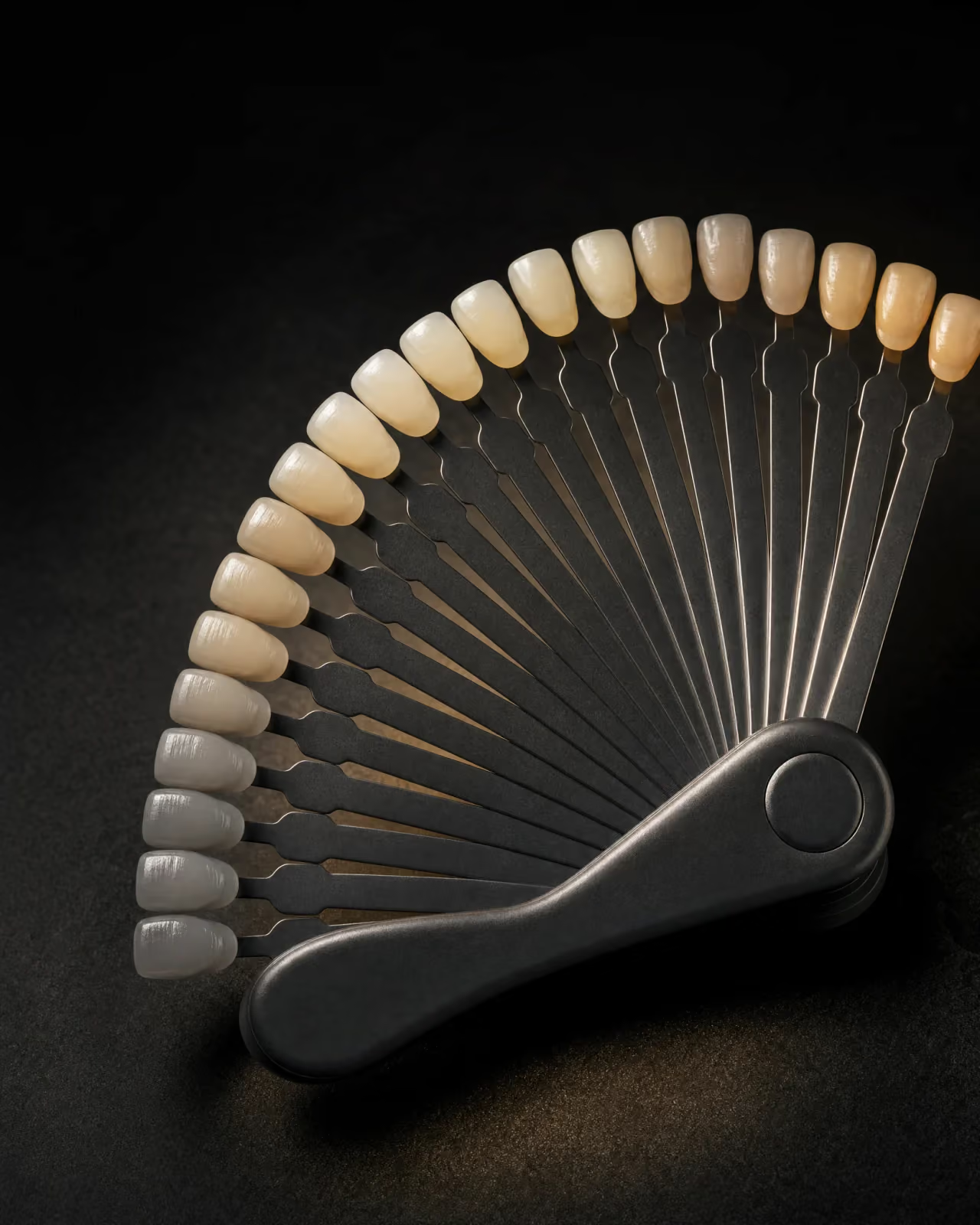
Tooth colour
Composite can be matched to the natural tooth.
Tooth preservation
The restoration follows the existing defect.
Possibility of repair
For limited damage, partial preservation may be appropriate.
Frequently asked questions
Frequently asked questions
Do you have a specific question about your diagnosis? Book a consultation appointment directly →
Questions about your treatment?
Discuss what matters to you and what the next steps look like with us.
Book your appointment nowYour orientation
An appropriate restoration begins by looking at your tooth.
Understanding what’s involved
The treatment involved depends on the defect and necessary steps.
In everyday life
Care and follow-up intervals depend on your situation. Persistent or increasing symptoms should be checked.
Who this information is for
For decay needing treatment, a fractured tooth or a defective filling. Suitability is assessed for the individual tooth.
Important limitations
Insufficient remaining structure, a diseased tooth nerve or difficulty controlling the working area may require another approach.
Our approach
The tooth's condition determines the restoration. For suitable defects, repair is considered as an alternative to complete replacement.
SCIENTIFIC STUDIES
The tooth's condition determines the restoration. For suitable defects, repair is considered as an alternative to complete replacement.
Tennert C et al. (2024). Longevity of posterior direct versus indirect composite restorations
A systematic review of five randomised studies found a lower failure risk for direct than indirect composite restorations in back teeth (RR 0.61). All studies had high risk of bias; certainty of evidence was very low. This does not establish general superiority for every tooth.
39122602
Naik VB et al. (2022). Comparative evaluation of clinical performance of ceramic and resin inlays, onlays, and overlays
A systematic review with meta-analysis finds 5-year survival of 90 to 92 % and 10-year survival of 89 to 91 % for ceramic inlays, onlays and overlays — higher than comparable composite inlays.
36187858
Heintze SD et al. (2022). Clinical efficacy of resin-based direct posterior restorations and glass-ionomer restorations
An updated meta-analysis finds that direct composite fillings in back teeth show 10-year survival of around 85 to 90 %; at 6 years, glass ionomer and compomer fillings show around 80 % survival.
35221127
Kanzow P et al. (2021). Long-term treatment costs and cost-effectiveness of restoration repair versus replacement
A retrospective analysis at a German university clinic compared repair and replacement of partially defective composite fillings. Treatment costs and cost-effectiveness were similar over several years; no statistically established difference was found in annual costs. The clinical decision on an appropriate restoration remains separate and depends on findings.
33663883
ÖGK: Zahnbehandlung
ÖGK lists tooth-coloured fillings in front and canine teeth and root canal treatment among contracted services. It classifies extractions, surgery and apicectomies as surgical dental treatment. It covers tariff costs for contracted services at contracted providers; special requests are different. For eligible private-dentist services, reimbursement concerns the insurance tariff rather than the entire private fee. Qualifying items must be clarified using the specific plan.
More topics in this area
Deepen your knowledge – find all information regarding the treatment process, costs, and results.


Kärntner Straße 9
100 meters from Stephansplatz, Innere Stadt.

Partnerships & Memberships & References