Dental Filling Types in Vienna: Direct Filling or Inlay?
Composite, cement or an indirect restoration? What your tooth needs matters. This overview helps you discuss material choice at your appointment.
Preserve tooth structure
Understand material selection
Understand the work involved
Clarify questions beforehand
Dental Filling Types Vienna
zahnfuellung-arten-wien
4.9★
Doctify rating
25+
Years of experience
Personal
In-practice consultation
1010 Vienna
Kärntner Straße 9
At a glance
Which types of dental filling are available?
Direct fillings, such as composite or glass ionomer cement, are placed while soft and harden in the tooth. Inlays and onlays made from ceramic, gold or resin are made in a laboratory and then fixed in place.
Which is better: a ceramic or resin filling?
It depends on the defect's size. Composite is shaped directly in one session and suits many defects; ceramic is made as an inlay and may be considered for large defects. For indirect ceramic inlays, onlays and overlays, a review estimated around 89 to 91 per cent survival at ten years. This does not necessarily mean freedom from complications or predict your personal result.*
Why is amalgam still used in Austria?
Since 1 January 2025, new amalgam fillings have generally been prohibited across the EU. An exception applies only when the dentist considers amalgam strictly necessary because of specific medical needs.* What you still see are older fillings — according to ÖGK, intact fillings may remain, and replacement is not necessary for health solely on that basis.
The tooth first, then the material
Choosing an appropriate filling in Vienna depends on the defect's size and location, the condition of the tooth nerve and remaining tooth walls. Chewing load, decay risk and known intolerances also matter. The question of the best material can therefore be answered only alongside the clinical findings.
A direct filling is placed and shaped in the mouth. An indirect restoration is made outside the mouth and fitted later. This distinction alone does not establish which solution is more suitable for your tooth.
Composite: tooth-coloured and built directly
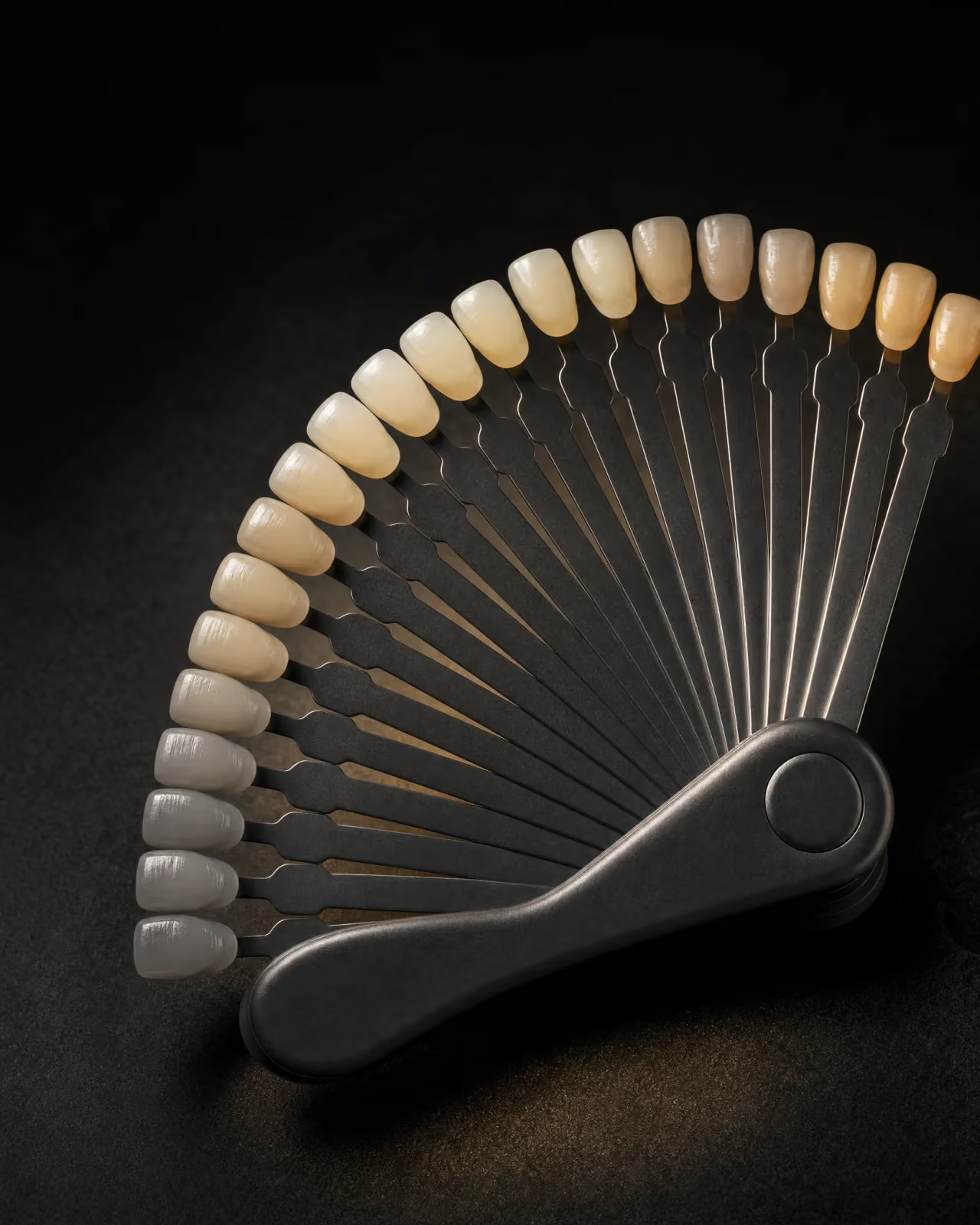
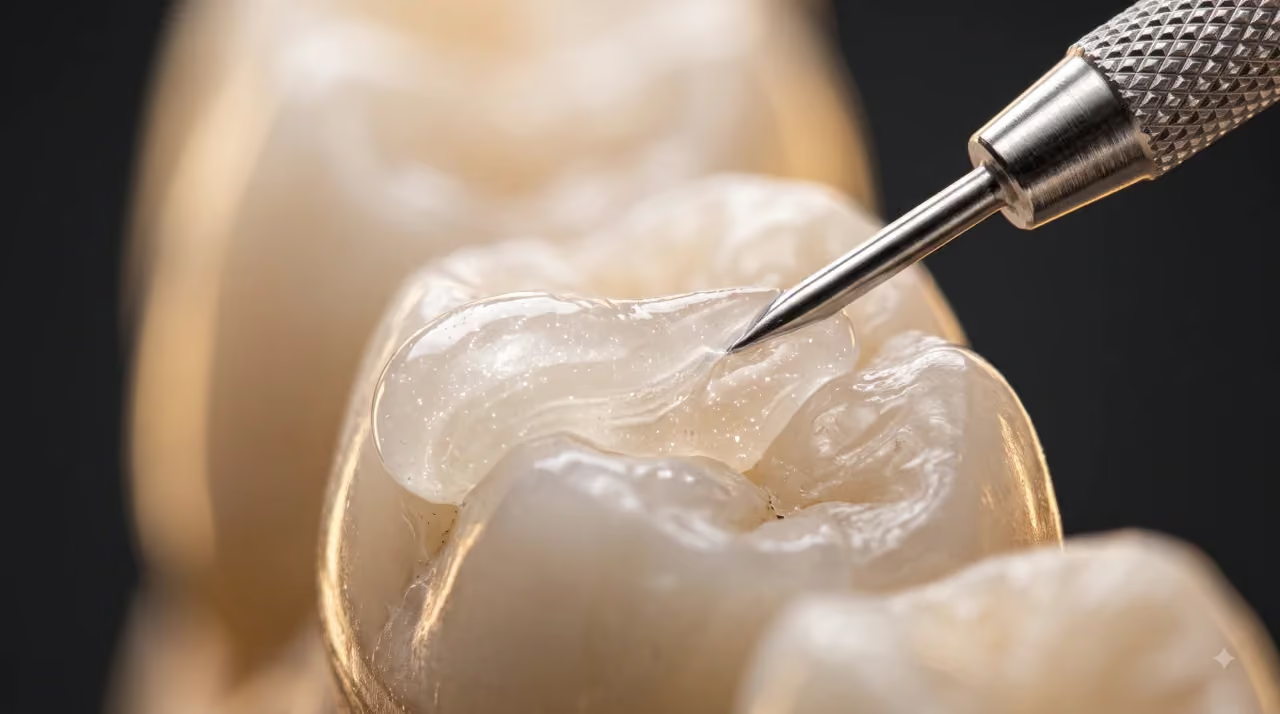
Composite consists of resin with fine fillers, such as glass. It can be used on front and back teeth and matched to tooth colour. The material is attached with a bonding agent and light-cured. A well-controlled working area protected from moisture is important.
A direct composite filling may suit many defects, including greater loss of structure in selected cases. Shape, bite and contact points must fit the situation. Read more about the treatment pathway under white fillings in Vienna.
Glass ionomer cement and other direct filling materials
Glass ionomer cements and other amalgam-free materials have their own uses. Some release fluoride. Suitability depends, among other factors, on the product, load and defect. Describing them all as temporary materials, or as equivalent replacements for every composite filling, would be too imprecise.
For children, whether a baby or permanent tooth is being treated and how well treatment can be carried out also matter. A baby tooth needs appropriate care too; eventual replacement by a permanent tooth alone is not a reason to leave decay untreated.
Ceramic and gold: brief context
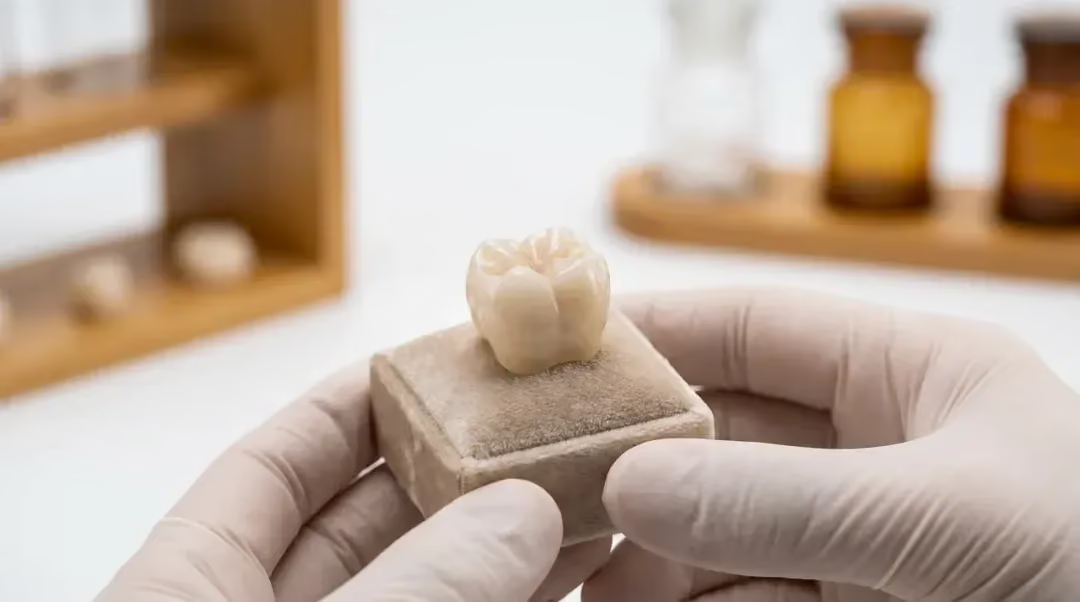
Ceramic or gold alloys may be used for indirect restorations. An inlay lies within the chewing surface; an onlay covers one or more tooth cusps. Whether this design is appropriate depends on remaining tooth structure and other findings. The manufacturing process determines the number of appointments.
Detailed guidance belongs on the page Inlays, Onlays and Crowns. The key point here is that a larger filling does not automatically require ceramic, and a higher price does not prove greater longevity.
The role amalgam still plays today
Amalgam is mainly relevant as the material in existing silver-grey fillings. Its use for new fillings has generally been prohibited in the EU since 2025; a narrow exception remains for specific medical needs.
An intact old amalgam or gold restoration does not need replacement solely because of its material. If part is defective, repair and replacement are weighed against the particular findings. Discuss existing fillings and any symptoms at your appointment.
Dental filling types in Vienna compared
| Material | What you should know | Question for your appointment |
|---|---|---|
| Composite filling | Tooth-coloured resin with mineral fillers; built directly on the tooth. | Can this restore the defect reliably? |
| Glass ionomer cement and related materials | Direct fillings with different properties and applications. | Which specific material is planned, and why? |
| Ceramic or gold | Mainly used for indirect inlays; separate planning needed. | What advantage would this restoration offer for my findings? |
| Existing amalgam filling | Its condition matters; no preventive replacement solely because of the ban. | Is treatment necessary, and might repair be sufficient? |
How long does a filling last? What research shows
Longevity depends on material, position in the mouth and handling — one figure never applies to every tooth. For the direct composite fillings studied in back teeth, a review reported about 85 to 90 per cent survival after ten years. For glass ionomer and compomer fillings, the figure was around 80 per cent after six years — a different follow-up period (Heintze et al., 2022). A review of direct versus indirect composite restorations found a lower failure risk for direct restorations, but rated the evidence very uncertain because of high risks of bias (Tennert et al., 2024). For indirect ceramic inlays, onlays and overlays, another review estimated around 90 to 92 per cent survival at five years and 89 to 91 per cent at ten years; the compared indirect resin groups performed less well in that analysis (Naik et al., 2022). The figures concern the particular groups and restoration types studied. Survival does not necessarily mean freedom from complications.
These figures come from systematic reviews and are averages, rather than predictions for your individual tooth. Oral hygiene, chewing load and careful handling affect the result at least as much as the material chosen. The specific studies, with author, year and source, are listed below under ‘Evidence-based medicine’. Examination at your appointment shows whether an existing filling can still be repaired or should be replaced.
Weigh advantages and disadvantages for your own tooth
Composite offers adjustable tooth colour and direct placement. It also requires careful handling with protection from moisture. For cement materials, the specific use matters; a light colour alone does not make them the same restoration. Ceramic can be tooth-coloured, while a gold alloy remains visible. Both are mainly used indirectly. Alongside appearance, therefore ask about the treatment involved and remaining tooth structure. A ranking by material alone does not answer these questions.
How to compare the choices meaningfully
| Question | What matters |
|---|---|
| How much tooth remains? | Stable walls, defect location and possible fractures. |
| What loads act on the tooth? | Chewing contacts, grinding or clenching. |
| How can the material be placed? | Access to the defect and protection from moisture. |
| Which preferences matter? | Colour, treatment involved and understandable costs. |
Study figures for different materials cannot be read as a ranking. Studies differ in defects, restorations and follow-up periods. The YERIT material comparison explains the principles in more detail.
What happens when the filling is placed?
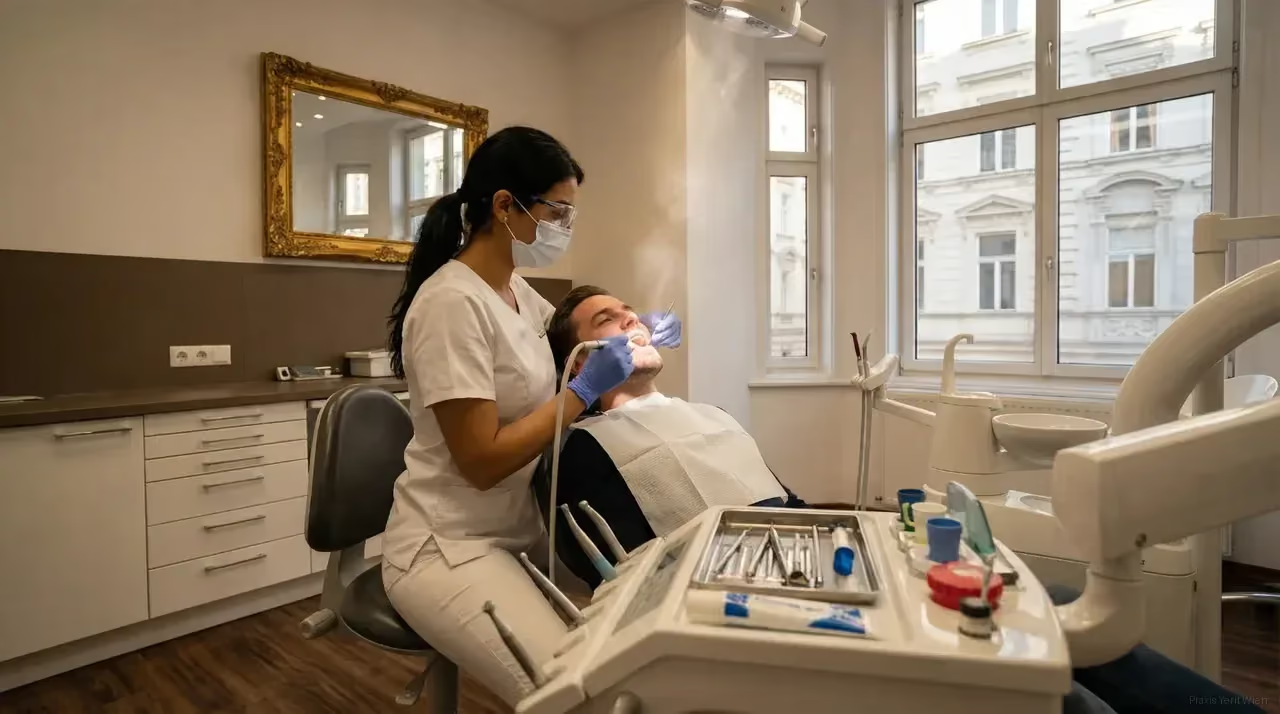
Findings and any anaesthetic are discussed before treatment. For a direct composite filling, the tooth is prepared, material placed and cured. Bite and surface are checked at the end. Tell us during treatment if you feel pain or discomfort. After local anaesthetic, wait until numbness has worn off before eating.
Costs, care and the next step
Dental filling costs depend on the planned extent of care. Insurance also considers its own rules, material and contractual status. General guidance is available on the pricing page; your individual cost plan follows the findings.
Every filling needs care and appropriate follow-up. Clean your teeth and between them; have rough margins, an uncomfortable bite or symptoms checked. Whether repair is sufficient should be considered before complete replacement. Find the full procedure under Dental Fillings in Vienna.
Dental filling types in Vienna: terms and material choice explained briefly
In modern dentistry, fillings in Vienna and elsewhere broadly fall into two groups: fillings formed directly in the mouth, such as resin fillings (composite), and indirect restorations made in a laboratory, such as ceramic inlays. Tooth-coloured composite is built in layers and cured with a suitable polymerisation lamp; whether composite or ceramic suits a tooth damaged by decay depends on the defect's extent and remaining tooth structure, rather than simply a wish for a particularly attractive, high-quality or long-lasting restoration. Amalgam fillings now play little role in new restorations. Rules for insurance coverage are discussed in the material-choice section above. Regular dental check-ups help a filling — direct or laboratory-made — last as long as possible; they protect the tooth by allowing early recognition of a developing problem at the filling margin.
An appropriate restoration begins by looking at your tooth.
YOUR OPTIONS
TREATMENT OPTIONS COMPARED
We will discuss payment terms with you prior to treatment.
The indicative market prices in our price overview provide an initial guide. We will discuss which services are planned for you and the costs involved based on your examination findings and individual cost plan.
Advanced Dental Aesthetics & Implantology
Priv.Doz.Dr.Dr. K. Yerit
“Aesthetics is not a coincidence, but the result of precise planning and deep passion.”
There is no universally best filling — only one appropriate for your tooth and situation. We make this decision together.
View profile →Scientific references
Institute for Implantology and Digital Dentistry Vienna
Österreichische Gesellschaft für Zahnheilkunde
Deutsche Gesellschaft für Zahnerhaltung (DGZ)
European Federation of Conservative Dentistry (EFCD)
Österreichische Zahnärztekammer
Yerit Practice – Dentist Vienna
Frequently asked questions
Frequently asked questions
Do you have a specific question about your diagnosis? Book a consultation appointment directly →
Questions about your treatment?
Discuss what matters to you and what the next steps look like with us.
Book your appointment nowYour orientation
An appropriate restoration begins by looking at your tooth.
Understanding what’s involved
The treatment involved depends on the defect and necessary steps.
In everyday life
Care and follow-up intervals depend on your situation. Persistent or increasing symptoms should be checked.
Who this information is for
For decay needing treatment, a fractured tooth or a defective filling. Suitability is assessed for the individual tooth.
Important limitations
Insufficient remaining structure, a diseased tooth nerve or difficulty controlling the working area may require another approach.
Our approach
The tooth's condition determines the restoration. For suitable defects, repair is considered as an alternative to complete replacement.
SCIENTIFIC STUDIES
The tooth's condition determines the restoration. For suitable defects, repair is considered as an alternative to complete replacement.
Tennert C et al. (2024). Longevity of posterior direct versus indirect composite restorations
A systematic review of five randomised studies found a lower failure risk for direct than indirect composite restorations in back teeth (RR 0.61). All studies had high risk of bias; certainty of evidence was very low. This does not establish general superiority for every tooth.
39122602
Naik VB et al. (2022). Comparative evaluation of clinical performance of ceramic and resin inlays, onlays, and overlays
A systematic review with meta-analysis finds 5-year survival of 90 to 92 % and 10-year survival of 89 to 91 % for ceramic inlays, onlays and overlays — higher than comparable composite inlays.
36187858
Heintze SD et al. (2022). Clinical efficacy of resin-based direct posterior restorations and glass-ionomer restorations
An updated meta-analysis finds that direct composite fillings in back teeth show 10-year survival of around 85 to 90 %; at 6 years, glass ionomer and compomer fillings show around 80 % survival.
35221127
Kanzow P et al. (2021). Long-term treatment costs and cost-effectiveness of restoration repair versus replacement
A retrospective analysis at a German university clinic compared repair and replacement of partially defective composite fillings. Treatment costs and cost-effectiveness were similar over several years; no statistically established difference was found in annual costs. The clinical decision on an appropriate restoration remains separate and depends on findings.
33663883
ÖGK: Infos zu Amalgam
Replacing intact amalgam fillings is neither required by the EU nor necessary for health solely on that basis, and is entirely privately funded. At ÖGK dental health centres and practices with a billing agreement, insured patients receive tooth-coloured fillings without an additional charge (oegk.at, accessed 03.11.2026).
More topics in this area
Deepen your knowledge – find all information regarding the treatment process, costs, and results.


Kärntner Straße 9
100 meters from Stephansplatz, Innere Stadt.

Partnerships & Memberships & References