Single-tooth implant in Vienna: restoring one gap
A single-tooth implant can restore one gap. Together, we consider neighbouring teeth, the condition of the bone and your wishes for appearance and function.
Restore one gap
Consider neighbouring teeth
Plan a suitable crown
Discuss alternatives
Single-Tooth Implant Vienna
einzelzahnimplantat-wien
4.9★
Doctify rating
25+
Years of experience
Personal
In-practice consultation
1010 Vienna
Kärntner Straße 9
At a glance
When is a single-tooth implant appropriate?
When one tooth is missing and the neighbouring teeth are healthy: unlike a bridge, an implant does not require them to be prepared. Requirements include enough jawbone or possible augmentation, gums free from inflammation and completed jaw growth.
How long does single-tooth implant treatment take?
Healing and the timing of the restoration depend on stability, findings, progress and the planned loading protocol. An early temporary restoration is only possible under suitable conditions; it does not mean unrestricted loading is allowed. Necessary bone augmentation may lengthen the process.*
Does a single-tooth implant hurt?
The procedure is usually performed under local anaesthesia. Discuss questions or previous experiences with the treatment team beforehand. Wound pain and swelling are possible afterwards; the course of symptoms and appropriate aftercare will be discussed with you.*
Is there an age limit for a single-tooth implant?
There is no upper limit; health, bone and oral hygiene are decisive. In adolescents, treatment waits until jaw growth is complete because an implant in the bone does not grow along with the jaw like a natural tooth.
How does an implant replace a single tooth?
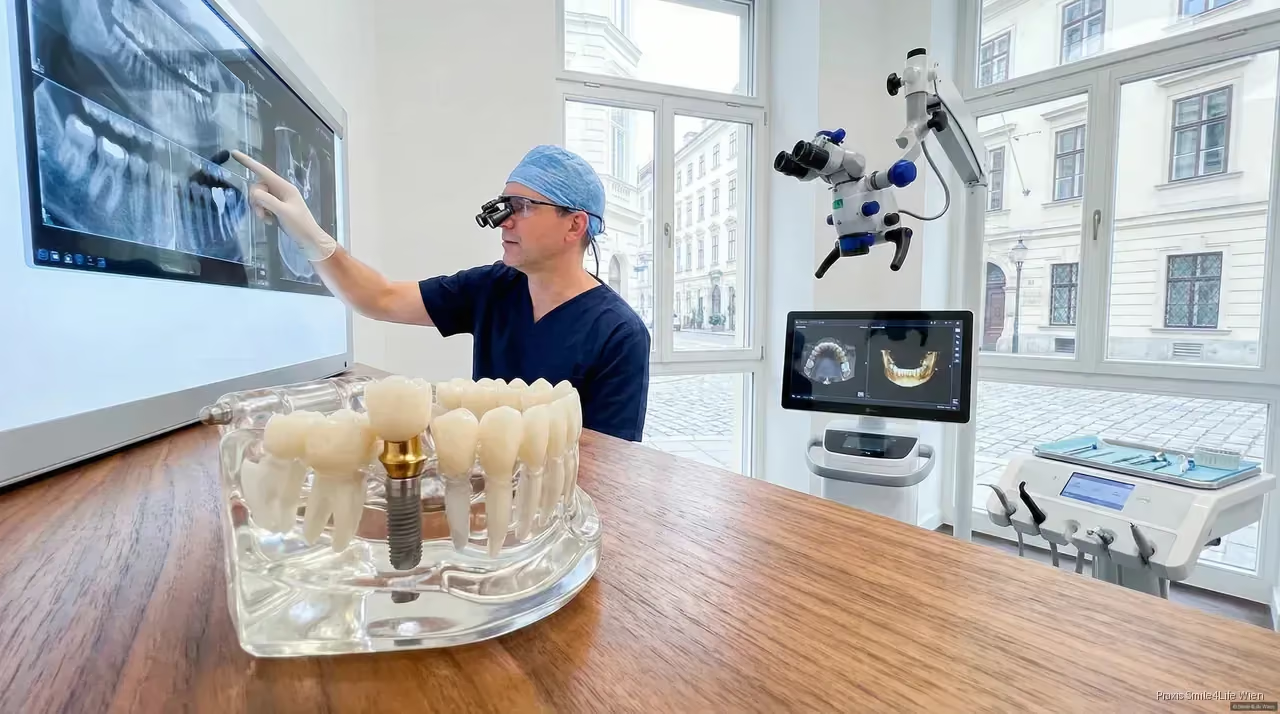
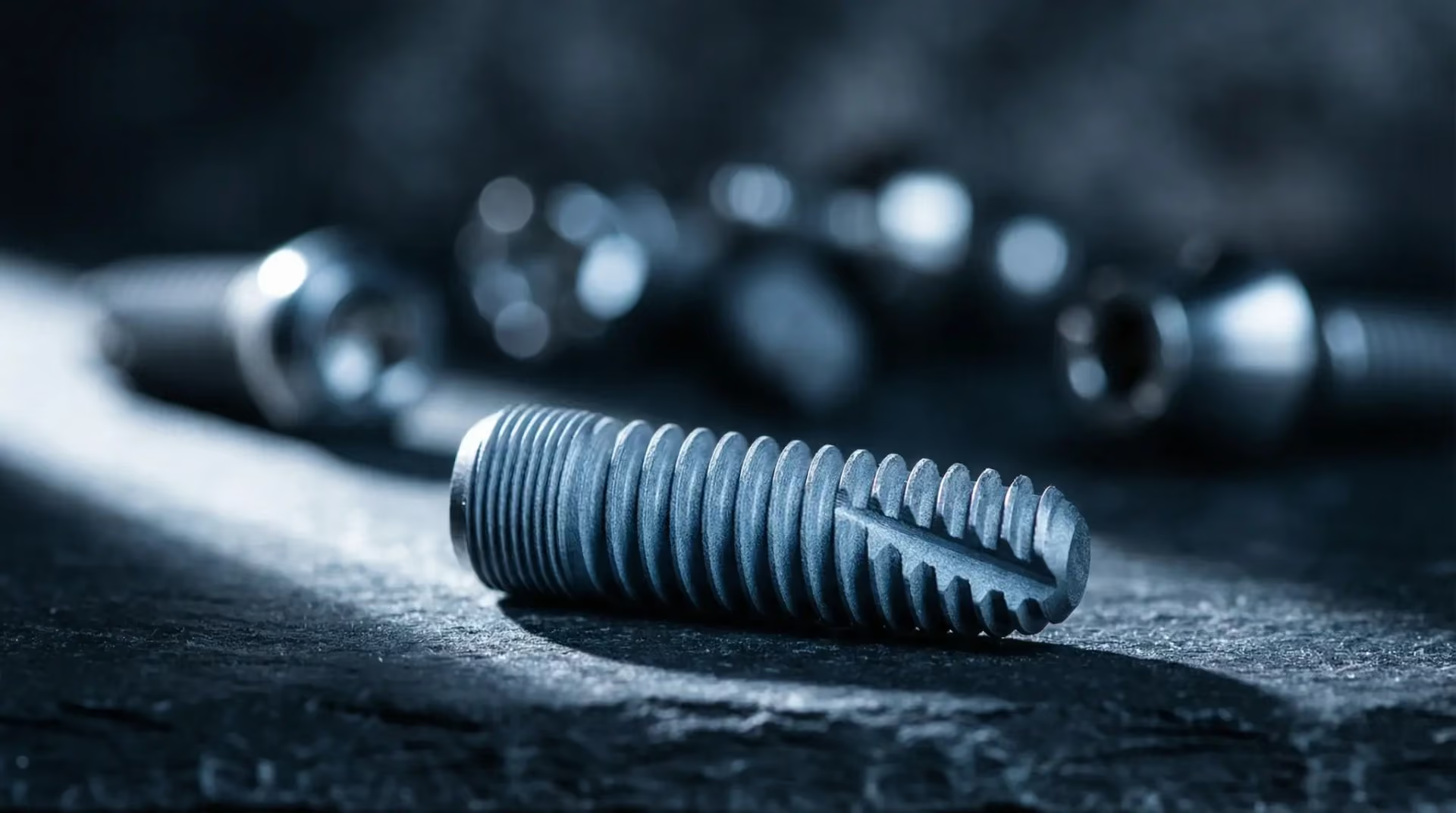
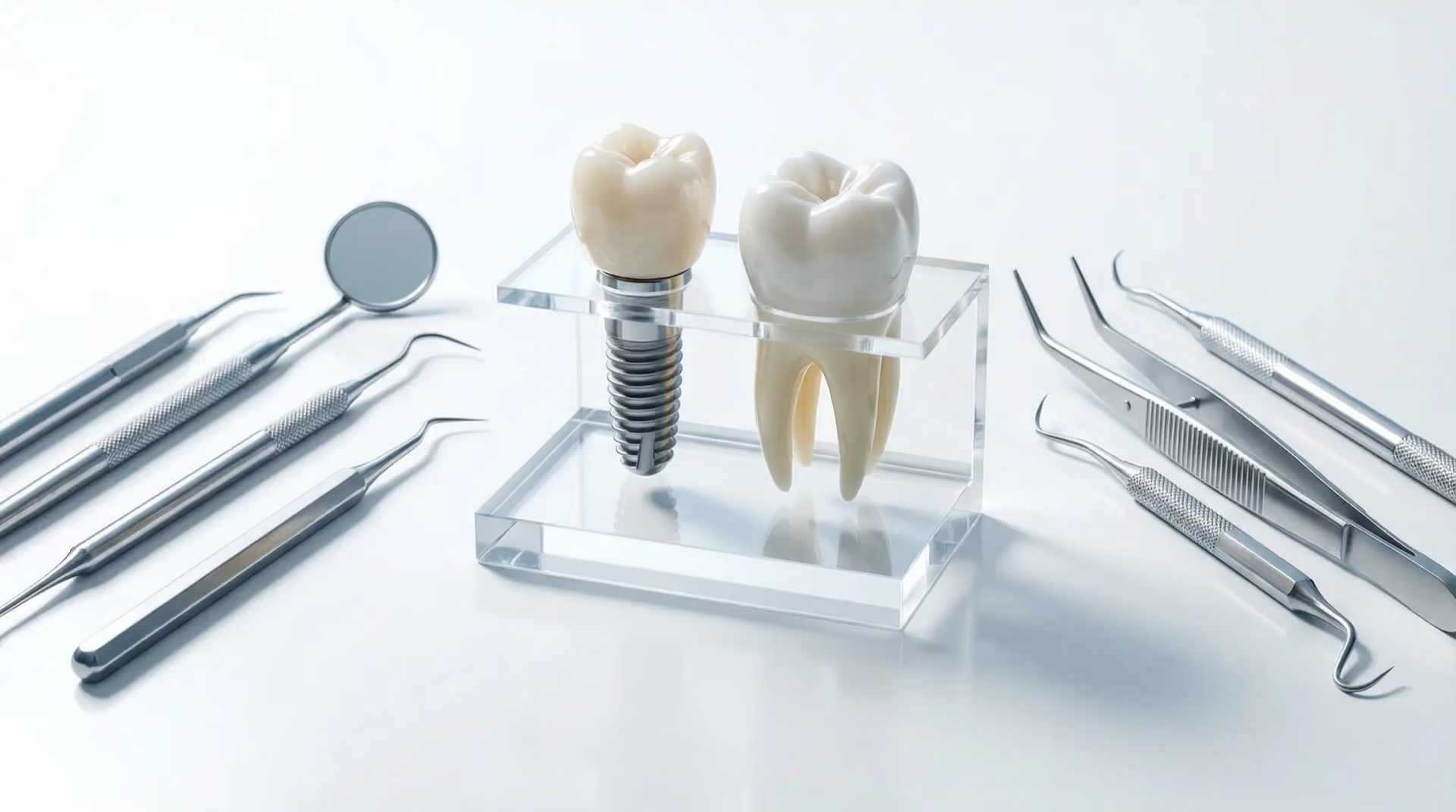
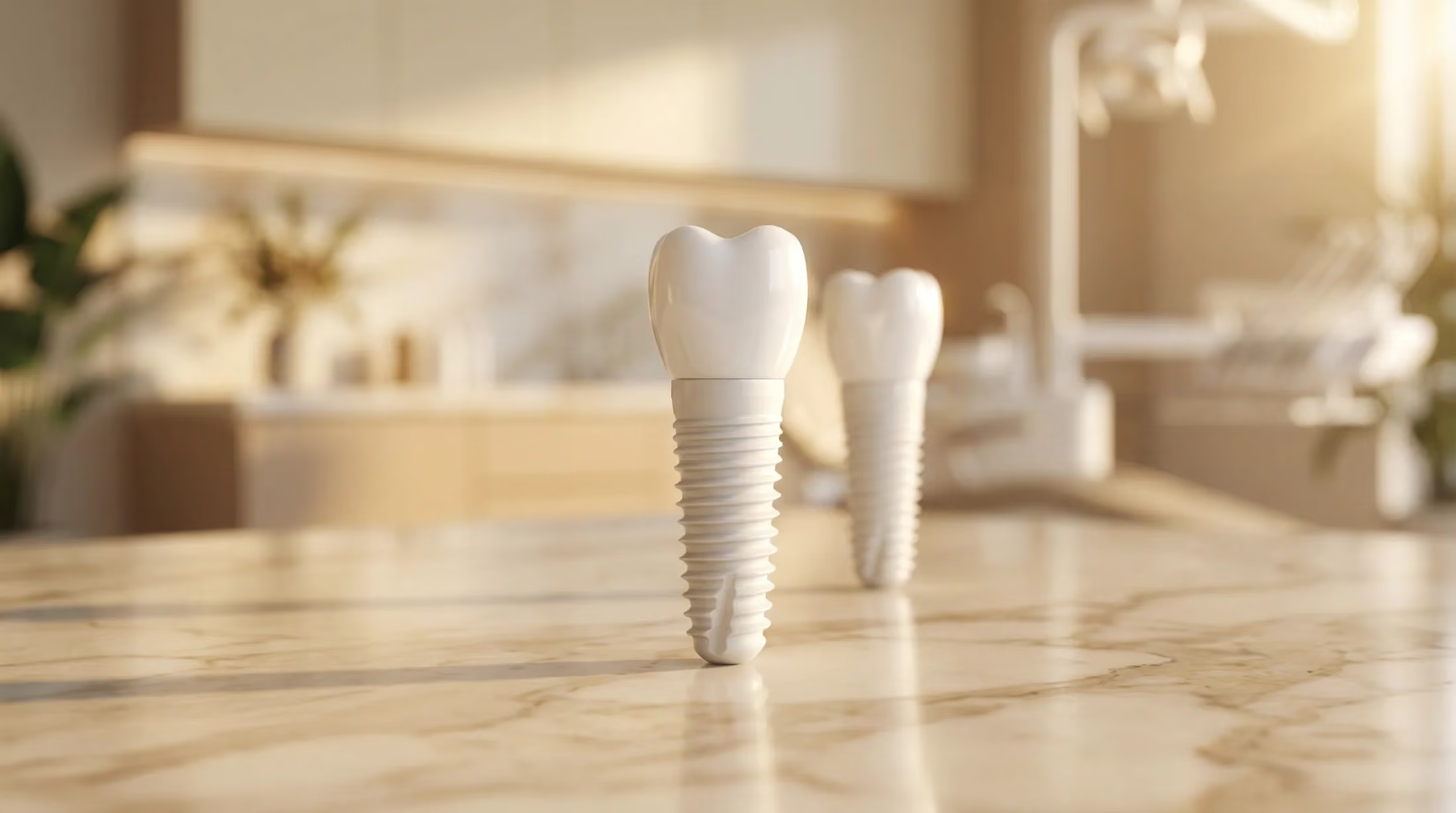
In a typical two-piece restoration, a single-tooth implant consists of the implant in the jawbone, a connecting component and the visible crown. The connecting component is called an abutment. It connects the implant and crown; it is not simply the retaining screw.
The crown’s shape and function are tailored to the gap. Planning therefore starts with the eventual tooth. Space, bite and access for cleaning are among the factors that must be suitable. An implant is not selected solely according to where bone happens to be available.
Single-tooth implant or bridge?
An implant can restore the gap without preparing healthy neighbouring teeth as supports for a conventional bridge. It does, however, require surgery and healing. The tissue around the implant also needs long-term care and checks.
A bridge may also be appropriate, depending on the findings, for example if neighbouring teeth already need substantial restorations. Their condition, the position of the gap and your wishes matter for the comparison. Neither an implant nor a bridge is the better or cheaper long-term solution in every situation.
What matters in the visible front-tooth area?
When an incisor is missing, shape and colour are particularly noticeable. The gum line is equally important. Bone, soft tissue and neighbouring teeth help determine what result is achievable. A perfectly invisible restoration cannot be guaranteed in advance.
Discuss early on how the gap can be bridged during treatment. A temporary restoration is not automatically suitable for every type of load. Whether and how it may be worn forms part of the individual treatment plan.
What does treatment involve?
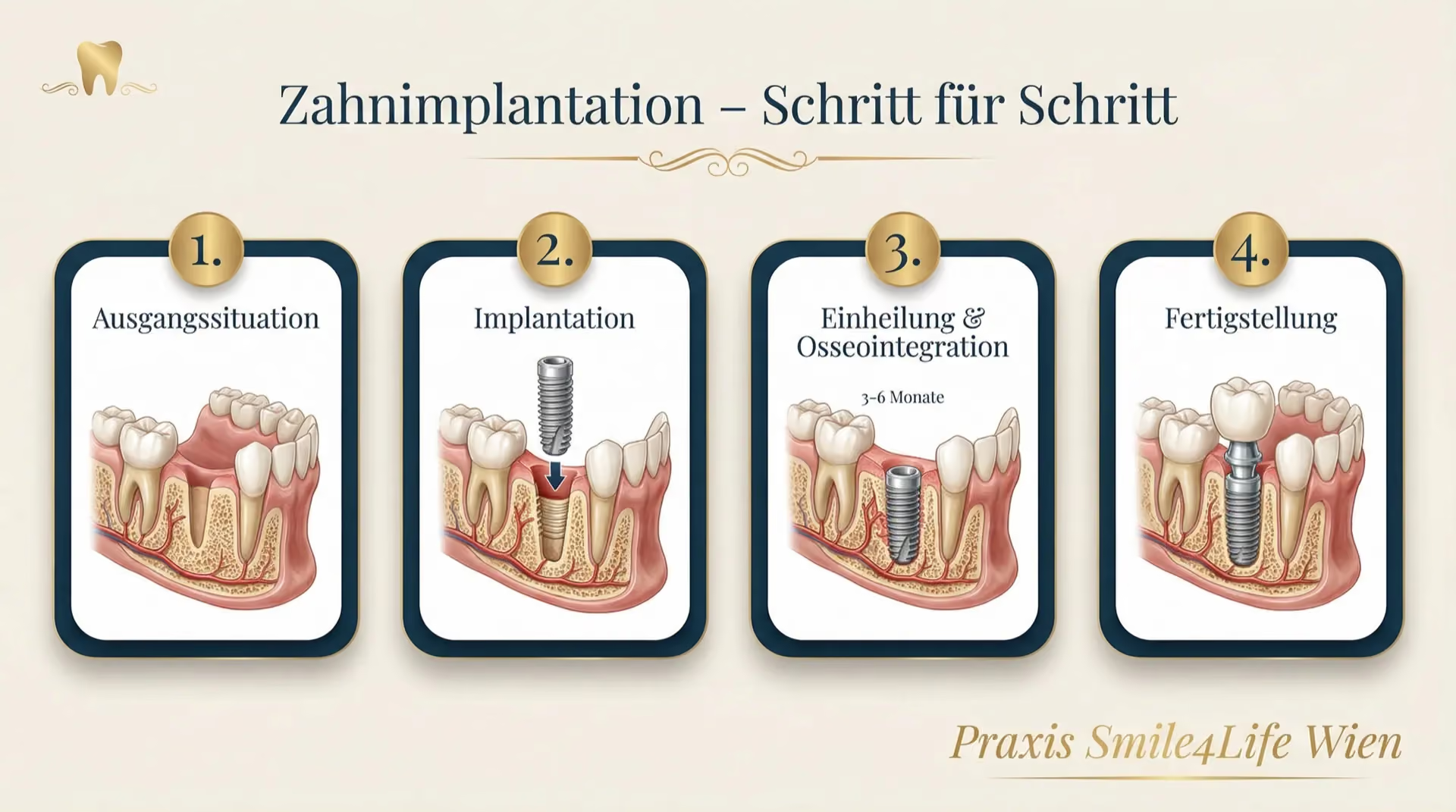
Following examination and planning, the implant is placed. Biological anchorage in the bone develops during healing. When the crown can be attached and loaded depends on factors including stability and healing progress.
Placement on the day of tooth extraction and immediate restoration are different decisions. They are not a standard promise for every gap. The implant treatment process explains the individual steps.
How does tooth loss affect planning?
A missing front tooth or back tooth creates different requirements. In the visible area, the gum line and appearance are particularly important; in the back-tooth area, equal care is given to the bite and available bone. The upper and lower jaw have different anatomical limits.
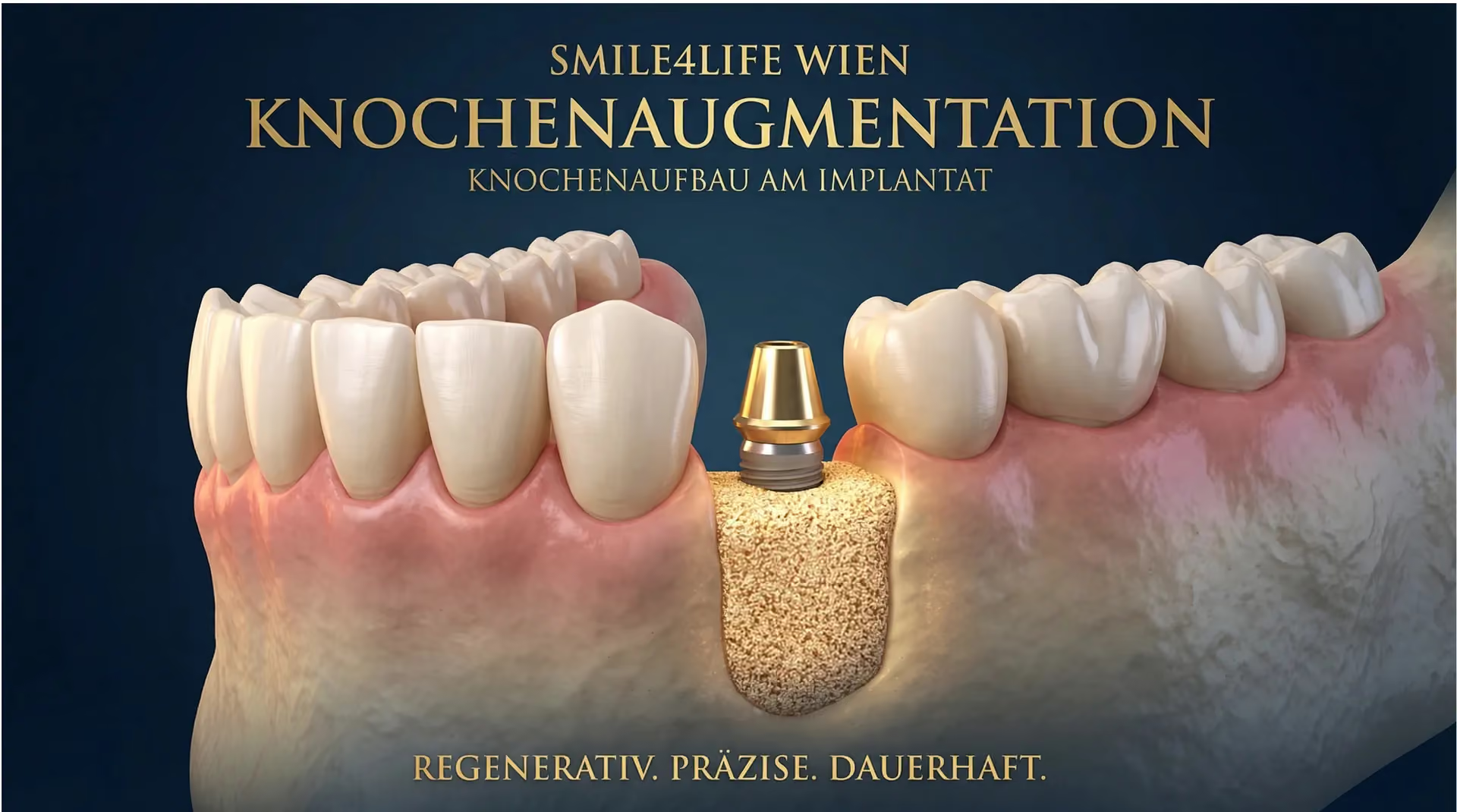
The dentist assesses whether further treatment is needed before implant placement. If there is insufficient jawbone, possible bone augmentation and alternatives are discussed. This neither automatically means additional surgery nor guarantees that an implant will be possible.
What belongs in a cost comparison?
Compare the full scope: examination, implant placement, abutment, crown and, where necessary, preparatory treatment or a temporary restoration. A price for the implant alone does not describe the completed replacement tooth. A health-economic model found greater health benefit but also higher total costs for implant-supported single crowns compared with tooth-supported replacement teeth (Tekpınar & Yiğit, 2024). This model comes from another healthcare system and cannot be applied to fees in Vienna. Our prices page gives a typical market range of 1,900 to 3,500 € for a single implant including a crown, depending on material and complexity; bone augmentation is listed separately there. We clarify your personal treatment scope and cost plan after an examination at the practice. The costs page helps you read a treatment plan.
Cleaning and aftercare remain important once treatment is complete. For a single gap, the next step is to assess which restoration fits the remaining teeth. Our implant overview leads to further questions. The guide Dental implants at a glance explains the basics in more detail at YERIT.
Sources and context
Shape, bite and cleaning are considered when planning the crown. An implant needs regular care.
YOUR OPTIONS
TREATMENT OPTIONS COMPARED
We will discuss payment terms with you prior to treatment.
The indicative market prices in our price overview provide an initial guide. We will discuss which services are planned for you and the costs involved based on your examination findings and individual cost plan.
Scientific references
Institute for Implantology and Digital Dentistry Vienna
Österreichische Gesellschaft für Implantologie (ÖGI)
European Association for Osseointegration (EAO)
Deutsche Gesellschaft für Implantologie (DGI)
International Team for Implantology (ITI)
Yerit Practice – Dentist Vienna
Frequently asked questions
Frequently asked questions
Do you have a specific question about your diagnosis? Book a consultation appointment directly →
Questions about your treatment?
Discuss what matters to you and what the next steps look like with us.
Book your appointment nowYour orientation
Restore single gaps in keeping with your bite.
Understanding what’s involved
The extent of treatment, appointments and aftercare are discussed based on your examination findings.
In everyday life
Shape, bite and cleaning are considered when planning the crown. An implant needs regular care.
Who this information is for
Important limitations
Our approach
SCIENTIFIC STUDIES
Lupi SM et al. (2026). Dental implant survival and marginal bone loss after a minimum of 20 years: systematic review and meta-analysis of prospective studies
This systematic review examines the survival of titanium implants over at least 20 years. The findings describe implant retention under different study conditions, not a personal guarantee, the lifespan of the crown or freedom from complications.
42173763
Tekpınar L, Yiğit V (2024). Cost-Effectiveness Analysis of Implant-Supported Single Crown and Tooth-Supported Fixed Dental Prostheses in Turkey
A Markov model from Türkiye compared implant-supported single crowns with tooth-supported bridges over 20 years. In the model, single crowns provided greater quality-adjusted benefit from the restoration, but also involved higher costs. The study examined single-tooth replacement, not restoration of an entire jaw. The results are not a price forecast for treatment in Vienna.
38340673
Stiller HL et al. (2024). The Effects of Smoking on Dental Implant Failure: A Current Literature Update
In 25 of the 33 studies examined, there was a clear association between smoking and an increased risk of implant loss, with a dose-response relationship: the more cigarettes smoked each day, the higher the risk (Dentistry Journal, 2024).
39452439
Probst LF et al. (2019). Cost-effectiveness of implant-supported dental prosthesis compared to conventional dental prosthesis
The health economic model (Markov model) compares conventional complete dentures and implant-supported restorations for an edentulous lower jaw over 20 years in the Brazilian healthcare system. The modelled cost-benefit result cannot be applied to a single missing tooth, fees in Vienna or immediate implant placement (Probst et al., 2019).
31432931
Borda MF et al. (2025). Comparative outcomes of endodontically treated teeth versus dental implant-supported prostheses: a systematic review
Dental implants and root canal treatments show comparably high success rates and similar patient quality-of-life and satisfaction scores (Acta Odontologica Scandinavica, 2025).
40552466
Having a dental implant (Patient information, Resource 2846/VER4)
For the treatment pathway described, the patient information from Guy’s and St Thomas’ generally states a healing period of at least three months before an implant can support a dental restoration; where bone grafting is performed beforehand, it mentions around four to six additional months (guysandstthomas.nhs.uk, accessed 03.11.2026).
After having a dental implant (Patient information, Resource 2846/VER4)
The patient information from Guy’s and St Thomas’ describes possible wound pain, swelling and bruising after the procedure. For the treatment pathway described there, it mentions usual painkillers, discomfort lasting up to one week and removal of stitches after 7 to 14 days (guysandstthomas.nhs.uk, accessed 03.11.2026).
More topics in this area
Deepen your knowledge – find all information regarding the treatment process, costs, and results.




Kärntner Straße 9
100 meters from Stephansplatz, Innere Stadt.
Partnerships & Memberships & References