What are dental implants — what makes up an implant restoration?
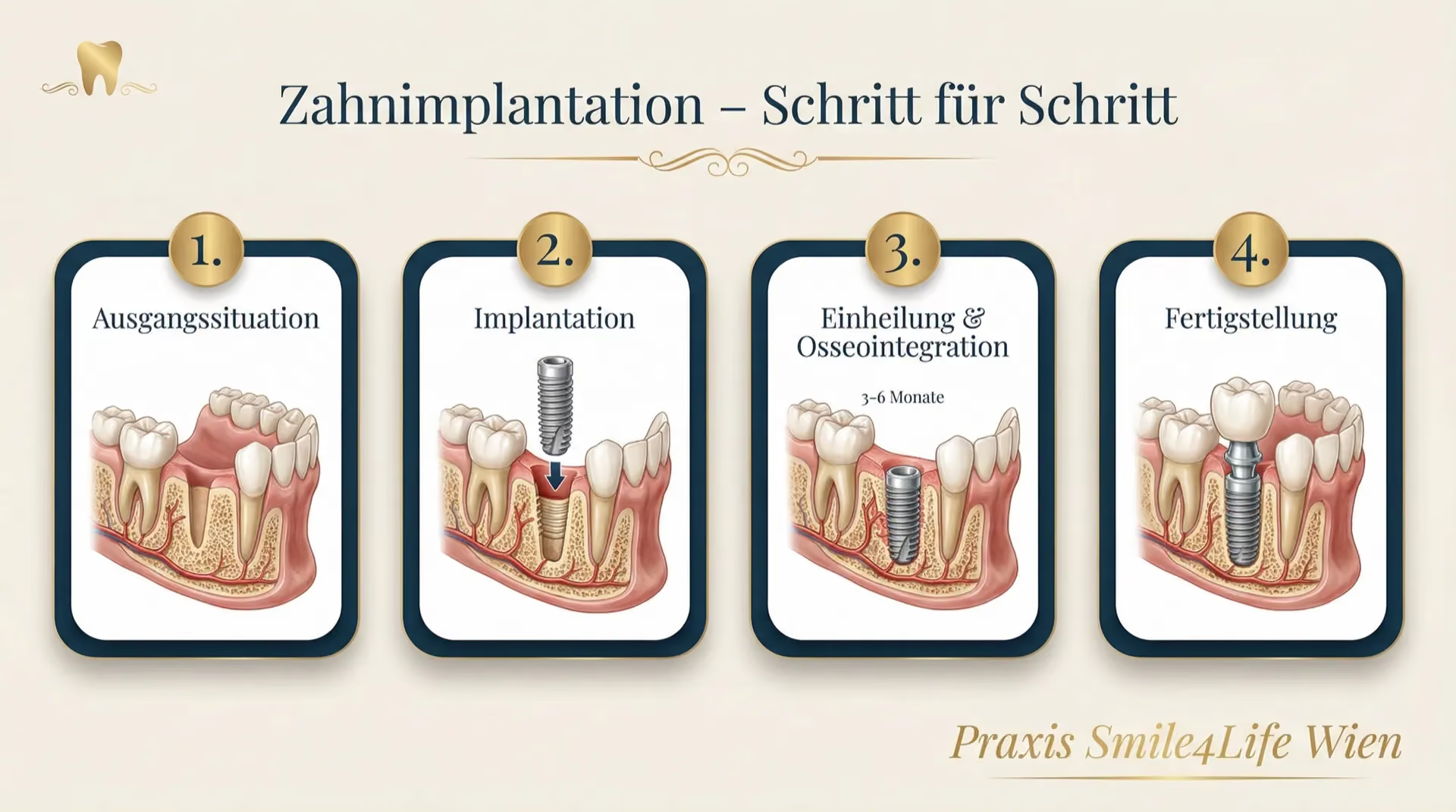
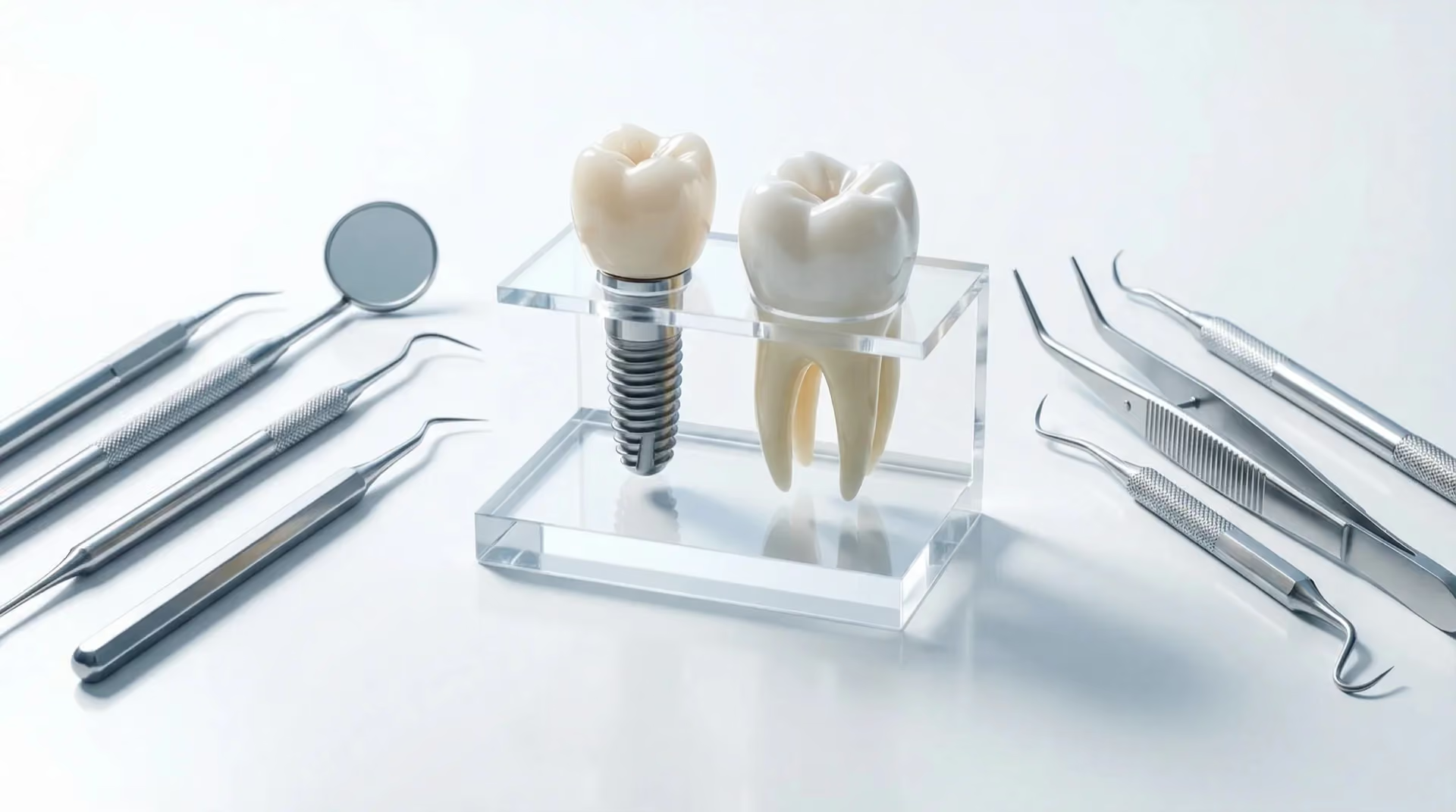
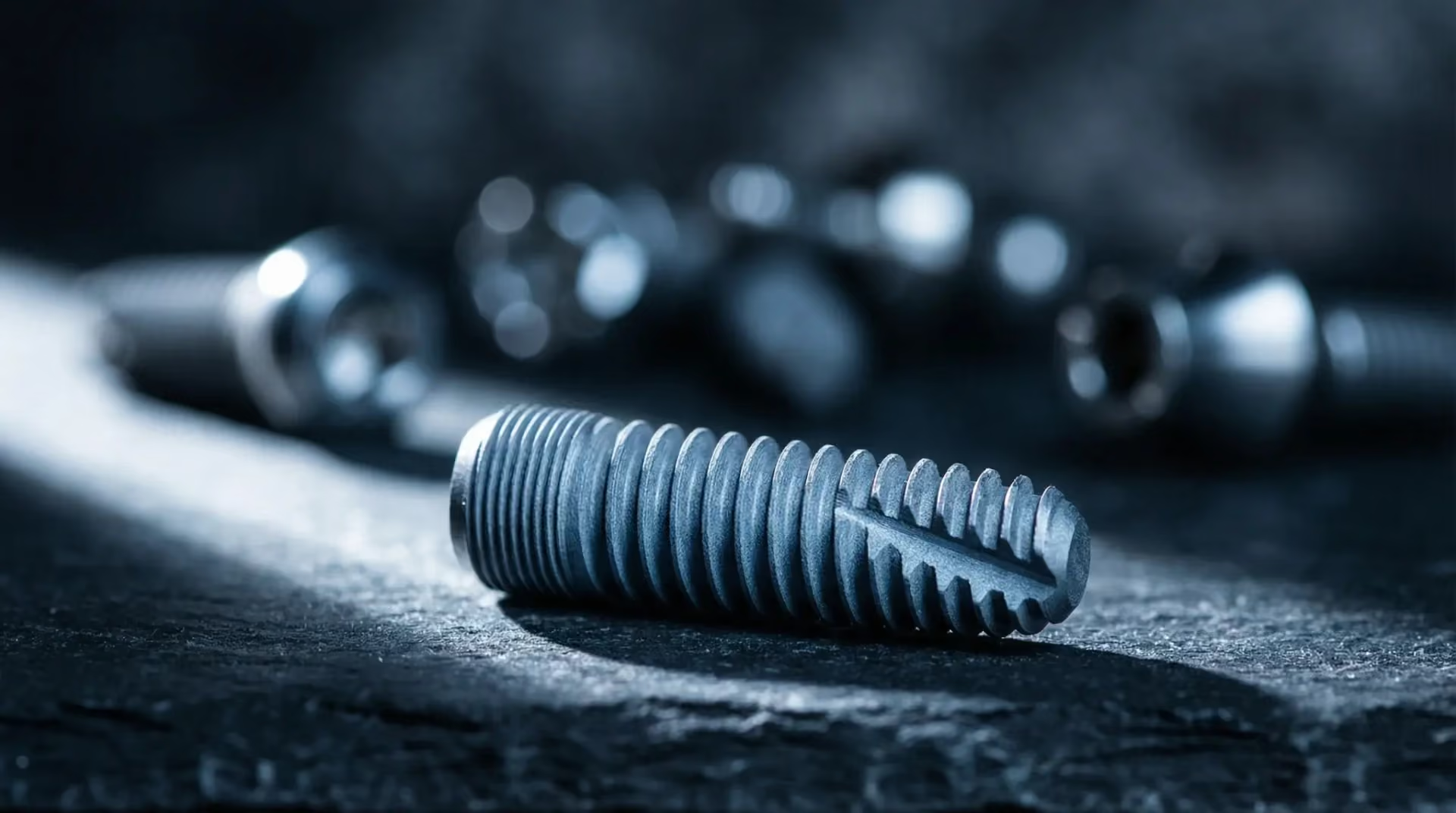
The part in the jawbone is called the implant. It provides the anchorage supplied by the root of a natural tooth. What is mainly visible later is the restoration. For a single gap, this is usually a crown.
In a typical two-piece system, an abutment connects the implant to the crown. Components and their attachment vary by system and restoration. When people talk about a “new tooth”, they usually mean the entire restoration, not just the implant.
How does an implant stay in the bone?
Immediately after placement, initial stability comes from the fit in the bone. During healing, close biological contact develops between the bone and implant surface. This process is called osseointegration. This biological anchorage is what enables an implant to bear load at all — implant design, bone quality and the chosen loading protocol influence how reliably it develops (Pandey et al., 2022).
A newly placed implant is therefore not automatically ready for every type of load. When the restoration is attached and how much load it can bear depend on the findings and treatment progress. A temporary restoration may have different purposes and limitations from the final crown.
Which gaps can be restored?
An implant can restore a single gap. Several implants may also form part of a larger fixed or removable restoration. How many are needed and where they should be placed depend on the planned restoration and examination.
For a single gap, the single-tooth implant page discusses the comparison with a bridge. Larger restorations need their own plan. Not every missing tooth position automatically needs an individual implant.
Which advantages and limitations should I know about?
For a single gap, neighbouring teeth can often be retained without being prepared as bridge supports. Against this, surgery, healing and long-term care are needed. Tissue around the implant can become inflamed; the restoration may also need repairs. Several reviews have examined how often this inflammation occurs: one found signs of peri-implantitis in around 19.5 per cent of patients and 12.5 per cent of implants (Diaz et al., 2022); a newer, larger analysis of over 13,000 people found 21 per cent at person level, with periodontitis, smoking and diabetes as key risk indicators (Galarraga-Vinueza et al., 2025). Regular checks are therefore part of every implant restoration, not an extra for high-risk cases.
An implant guarantees neither lifelong freedom from symptoms nor a particular appearance. Whether it is appropriate also depends on the alternatives for your starting situation. A natural tooth that can be preserved is not replaced merely because an implant would in principle be possible.
What materials are dental implants made from?
Many dental implants are made from titanium. Ceramic implants are also available, usually made from zirconia. The implant material must be distinguished from that of the visible crown: a ceramic crown can also sit on a titanium implant.
The choice does not depend solely on a wish to be “metal-free”. The implant system, findings and planned restoration must fit together. A material name alone is neither a guarantee of durability nor proof of individual tolerance. A detailed comparison of implant materials belongs in a separate consultation.
How is an implant restoration planned at our practice?
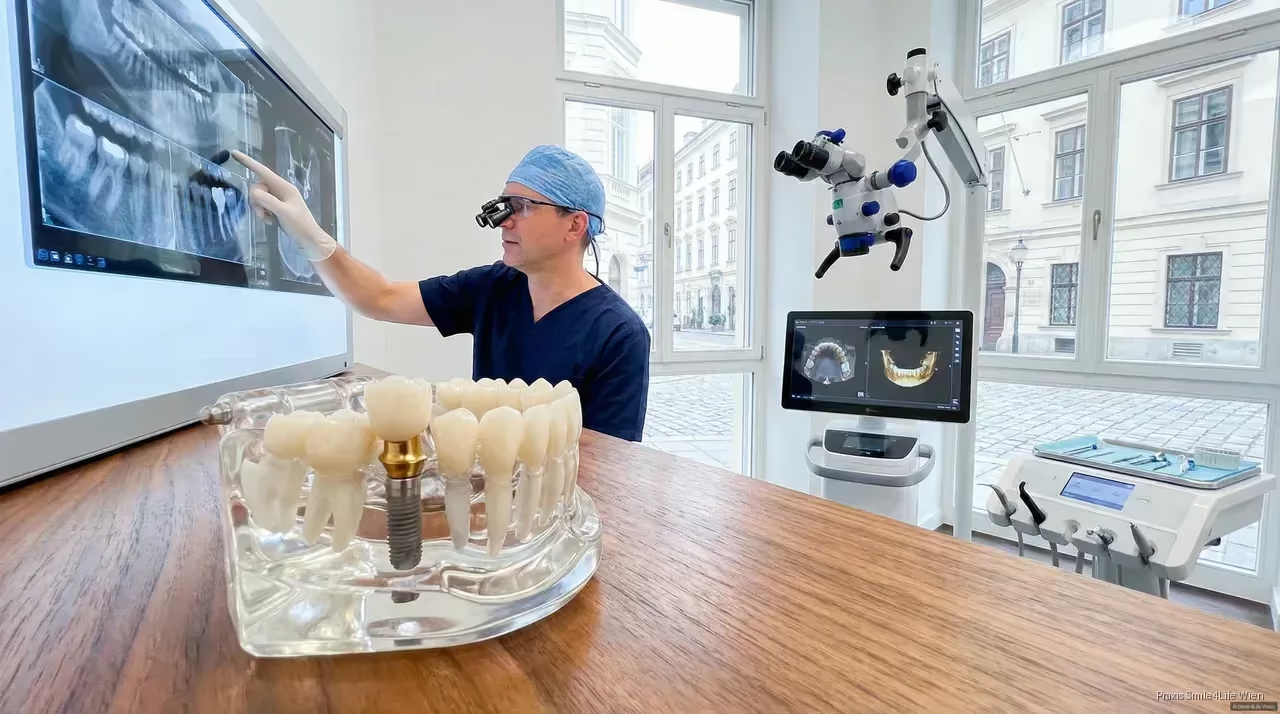
An examination and appropriate imaging establish which restoration suits your findings. If a two-dimensional image is insufficient for spatial assessment, a three-dimensional image (CBCT) may be added. Alternatives without implants are also discussed.
The dental implant treatment process explains the next steps. The prices page and dental implant costs provide financial guidance; the cost plan establishes your personal scope after examination.
How do I find the right next step?
If you would first like to understand your personal situation, Am I suitable for dental implants? can help. Individual planning then involves an examination, discussing alternatives and a clear treatment scope.
The dental implants in Vienna overview leads to treatment steps, costs and care. This lets you explore the questions that matter for your decision now. For a detailed introduction to what an implant is and how it is structured, see the dental implant guide at YERIT.