Ceramic implants in Vienna: zirconia as an alternative to titanium
Would you like a light-coloured ceramic solution for a missing tooth? Explore the options and bring your questions to the consultation.
Light-coloured ceramic
Understand material selection
Discuss the options
Decide in your own time
Ceramic Implants Vienna
keramikimplantate-wien
4.9★
Doctify rating
25+
Years of experience
Personal
In-practice consultation
1010 Vienna
Kärntner Straße 9
At a glance
What is a ceramic implant and when may it be an option?
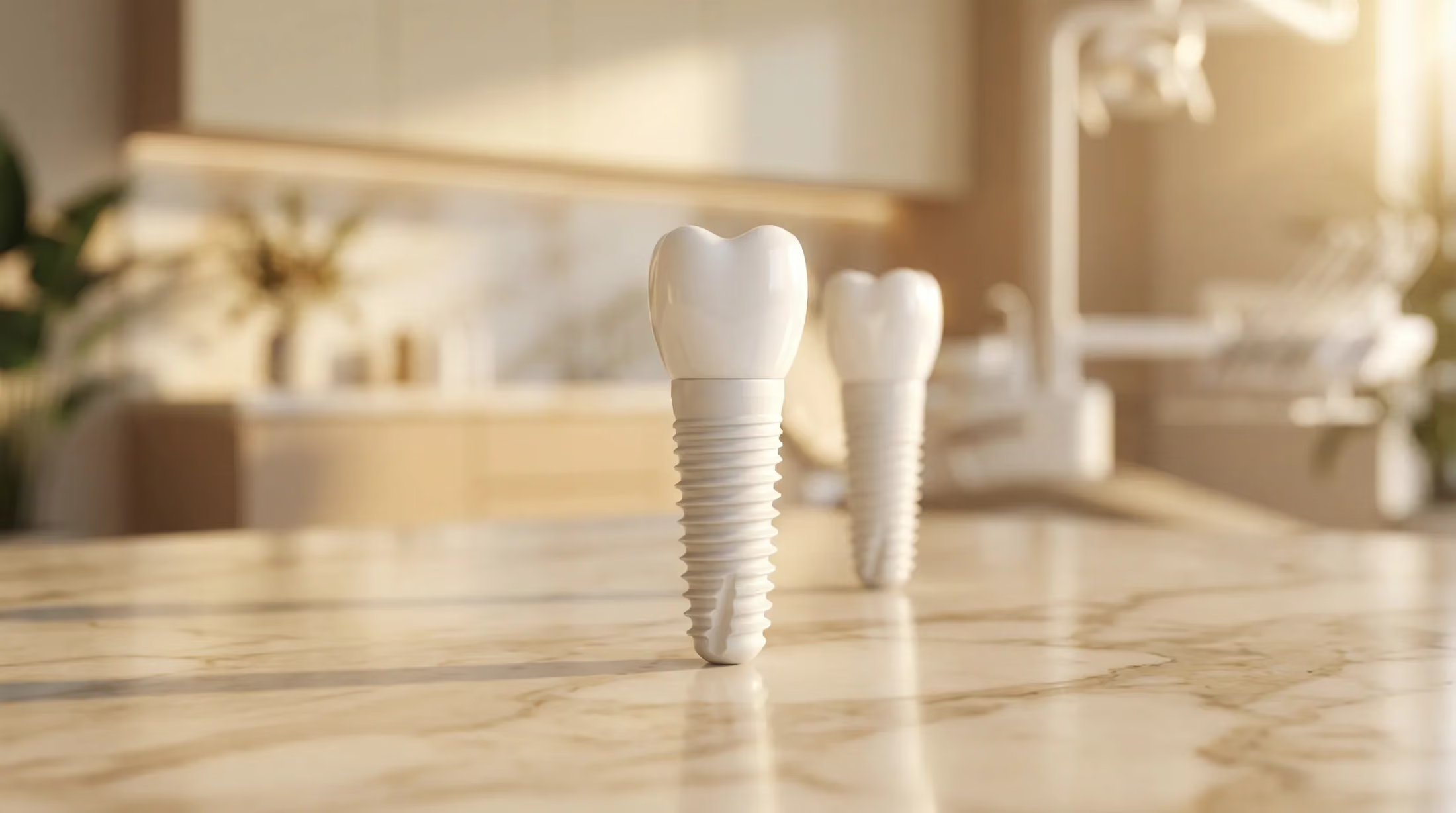
A ceramic implant replaces the missing root in the jawbone. The implant body is made from zirconia, a light-coloured ceramic.
Raise a wish for a metal-free restoration or a known intolerance in the consultation. Whether a ceramic implant suits you depends on factors including bone, gums, the planned restoration and the specific system. Ceramic is a material option, not a blanket promise of being allergy-free.
What does ceramic implant treatment involve?
Following examination and imaging, implant, abutment and crown are planned together. Placement is followed by healing; loading and final-crown timing depend on findings and system. The material comparison puts study outcomes for ceramic and titanium in context.
How long do ceramic implants last?
A review of 4,017 zirconia implants calculated survival of 95.1 % after ten years.* Only seven of the 25 studies lasted longer than five years; long-term data are therefore thinner than for titanium. A fixed lifespan for individuals cannot be derived from this.
What is included in the cost of a ceramic implant?
The scope may include placement, abutment, crown, necessary preparatory treatment and an interim restoration. Which items are planned for you is clarified after examination. General guidance does not replace a personal cost plan.
A ceramic foundation for your new tooth
Choose the material thoughtfully
A ceramic implant replaces the missing root in the jawbone. The implant body is made from zirconia, a light-coloured ceramic. Colour, design and your starting situation are considered together when choosing the material.
Consider the restoration as a whole
Implant, abutment and crown are different components. A ceramic crown alone does not turn a titanium implant into a ceramic implant. Discuss every part of the planned restoration.
Does a ceramic implant suit your situation?
Material selection considers your wishes and starting situation together. Where is the missing tooth? What are the bone and gums like? Which restoration will be supported? Implant colour alone cannot answer these questions. An overview of implant types is available under dental implants in Vienna.
If a metal intolerance is known, mention it. Ceramic is a material option, not a general promise of being allergy-free. The comparison of ceramic and titanium implants helps organise the main criteria.
Ceramic implants in Vienna: planning, healing and restoration
First we clarify which restoration may suit the missing tooth. This includes examination, necessary imaging — where needed a three-dimensional CBCT scan — and coordinating implant, abutment and crown. For the abutment itself, a study of different abutment materials shows no differences in biological endpoints between titanium and zirconia up to five years, but points to possible technical complications such as fractures in ceramic abutments. The exact scope depends on your findings.
Placement, loading and final restoration are separate steps. Placement timing and when you may chew on the implant depend on the situation and system used. Ceramic does not automatically mean either longer healing or restoration in one day.
If these questions matter to you, read the separate overview of immediate implants. Any necessary bone augmentation is planned separately.
What should you know about durability and care?
Ceramic implants are clinically studied, but the long-term evidence base is smaller than for titanium. An analysis of 25 studies with over 4,000 zirconia implants found around 95 per cent survival at ten years, although only seven studies lasted longer than five years. Results also depend on the specific system and design. A recent comparative review describes larger differences for two-piece systems and individual one-year endpoints than in the remaining data. Neither a fixed lifespan nor superiority for everyone can be promised. A review of ten studies of titanium, titanium-zirconium and zirconia implants reported differing implant retention rates by material. The limited, heterogeneous evidence does not allow an individual prognosis or general ranking.
Even a metal-free implant needs care and checks. An AO and AAP review of 102 studies and around 13,000 people identifies periodontitis, smoking, diabetes, alcohol consumption and excess weight among risk indicators for peri-implant disease; it did not measure a protective effect of aftercare or oral hygiene. Claiming that a smooth ceramic surface prevents inflammation would go too far. The EFP S3 guideline on preventing and treating peri-implant disease states that cleaning, risk control and aftercare remain separate treatment steps and no procedure guarantees implant retention. The YERIT guide to ceramic implants explains study findings and their limitations.
What belongs in your cost plan?
The scope may include placement, abutment, crown, necessary preparatory treatment and an interim restoration. Which items are planned for you is clarified after examination.
The ceramic implant cost guidance shows which questions help. General non-binding market guidance is available on the prices page; a binding estimate requires findings and service scope. Your individual cost plan matters for the decision.
Write down what matters to you: a light gum margin, material composition or a clear explanation of alternatives. You can discuss these questions during the consultation.
YOUR CONCERNS
What is on your mind?

A missing visible tooth
You would like to understand how implant, gums and crown work together. The light-coloured material may play a role.
A wish to avoid metal
Discuss all components of the planned restoration, including abutment and connecting parts.
Questions about tolerance
Known intolerances belong in the assessment. They do not establish general suitability.
SUITABILITY CHECK
Is this treatment right for you?
YOUR JOURNEY
Your treatment process
Individual initial consultation
Getting to know your goals and your teeth
We will discuss your goals and examine which treatment is best suited for your teeth.


Individual treatment planning
Defining the next steps together
You will learn which steps are planned and which questions should be clarified in advance.
Precise execution
Guiding you through your treatment step by step
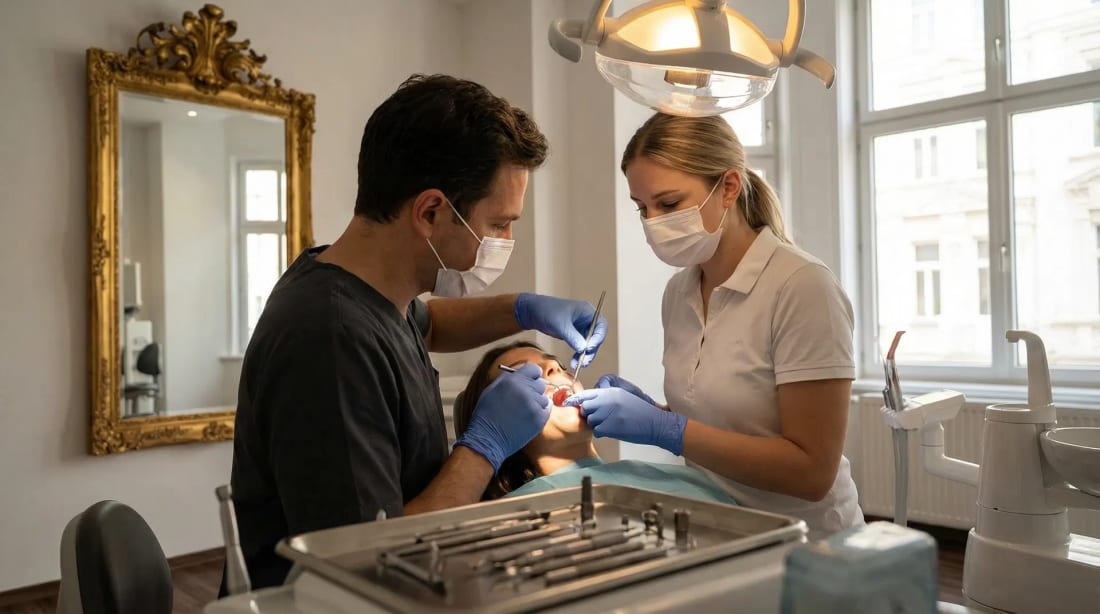
Your treatment follows your personal plan. Please ask questions and tell us about any discomfort at any time.
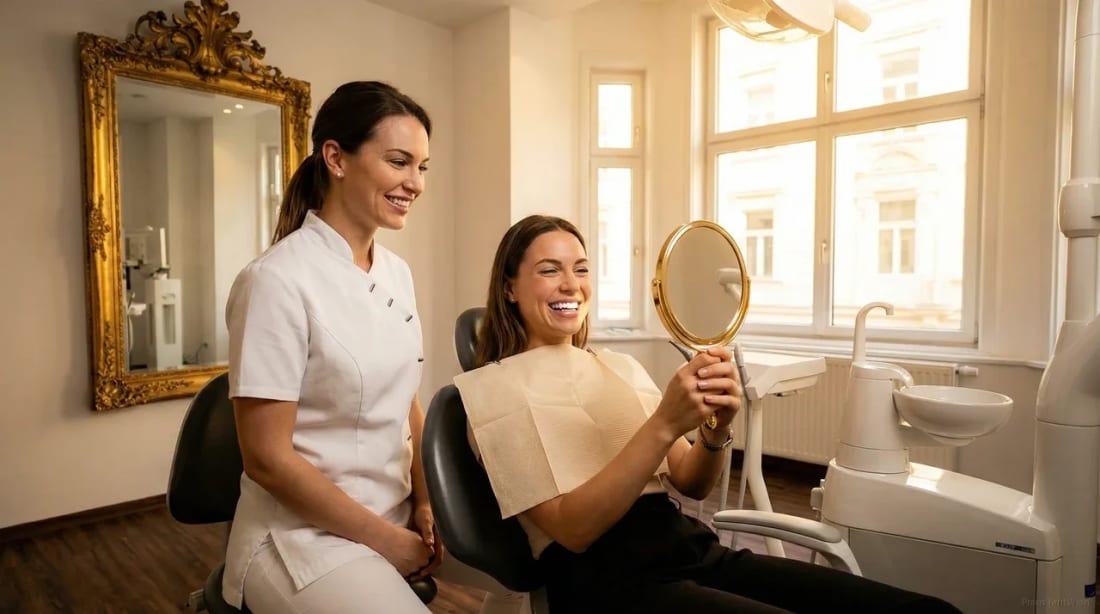
Aftercare and check-ups
Discuss care and follow-up appointments
Finally, we will discuss ongoing care and the follow-up appointments that are right for you.
In everyday life
Care and checks also form part of the restoration. Ask how to clean the area around the implant thoroughly.
YOUR OPTIONS
TREATMENT OPTIONS COMPARED
◆ Metal-free
Ceramic implant
Zirconia: a metal-free ceramic with a light, tooth-like colour.
Established
Titanium implant
Over 40 years of clinical experience — the reliable standard for heavy chewing loads.
We will discuss payment terms with you prior to treatment.
The indicative market prices in our price overview provide an initial guide. We will discuss which services are planned for you and the costs involved based on your examination findings and individual cost plan.
Advanced Dental Aesthetics & Implantology
Priv.Doz.Dr.Dr. K. Yerit
“Aesthetics is not a coincidence, but the result of precise planning and deep passion.”
Ceramic implants give my patients the option of replacing a missing tooth without metal. Whether that is right for you depends on the findings and system, not material preference alone.
View profile →Scientific references
Institute for Implantology and Digital Dentistry Vienna
Österreichische Gesellschaft für Implantologie (ÖGI)
European Association for Osseointegration (EAO)
Deutsche Gesellschaft für Implantologie (DGI)
International Team for Implantology (ITI)
Yerit Practice – Dentist Vienna
Excellence
Why Smile4Life
Light-coloured implant body
Ceramic provides a light starting colour. The final appearance also depends on tissue and the restoration.
Another material option
Zirconia expands material choices. Your personal starting situation remains decisive.
A clear decision
Compare requirements, alternatives and cost scope before committing.
Frequently asked questions
Frequently asked questions
Do you have a specific question about your diagnosis? Book a consultation appointment directly →
Questions about your treatment?
Discuss what matters to you and what the next steps look like with us.
Book your appointment nowYour orientation
A new tooth should fit your smile and daily life.
Understanding what’s involved
The process depends on your findings, the selected system and healing.
In everyday life
Care and checks also form part of the restoration. Ask how to clean the area around the implant thoroughly.
Who this information is for
Ceramic may be assessed as a material option when a tooth is to be replaced with an implant. Bone and gum condition and the intended system count alongside your wishes.
Important limitations
A material preference alone is insufficient. Known conditions, inflammation, grinding or limited space must be raised before planning. Ceramic suitability is assessed individually.
Our approach
Material selection should be guided by your starting situation and understandable evidence. The comparative review by Pachiou and colleagues shows similar results for several examined endpoints up to five years, with long-term data still limited. The zirconia analysis by Mohseni and colleagues also reveals differences between systems and designs. This does not establish general superiority of one material.
SCIENTIFIC STUDIES
Material selection should be guided by your starting situation and understandable evidence. The comparative review by Pachiou and colleagues shows similar results for several examined endpoints up to five years, with long-term data still limited. The zirconia analysis by Mohseni and colleagues also reveals differences between systems and designs. This does not establish general superiority of one material.
Mohseni P et al. (2023). Clinical outcomes of zirconia implants: a systematic review and meta-analysis
The analysis of 25 studies with 4,017 zirconia implants calculated cumulative ten-year survival of 95.1 percent. Only seven studies lasted longer than five years. Survival describes retention, not a complication-free course; this review provides no direct comparison with titanium.
38135804
Pachiou A et al. (2026). Survival and Clinical Performance of Zirconia Compared to Titanium Implants: A Systematic Review and Meta-Analysis (ZrO Summit 2025, Group 1)
Nine studies with 323 people and 435 implants compared zirconia with titanium. In healthy people, several clinical outcomes were similar for up to five years. Individual one-year endpoints and two-piece systems showed differences; fewer studies were available for each endpoint. The data do not establish general long-term equivalence.
42139228
Prevention and treatment of peri-implant diseases—The EFP S3 level clinical practice guideline
Inflammation around implants requires its own diagnosis and treatment. Cleaning, risk control and aftercare are part of this. No procedure guarantees implant preservation or complete tissue regeneration. These outcomes must not be equated with treatment outcomes for natural teeth.
37271498
Haimov E et al. (2023). Differences in Titanium, Titanium-Zirconium, and Zirconia Implant Treatment Outcomes: A Systematic Literature Review and Meta-Analysis
This systematic literature review and meta-analysis brings together ten papers on titanium, titanium-zirconium and zirconia implants. The pooled results come from different studies and populations. This is not a single direct comparison of all three materials under identical conditions. It does not provide an individual lifespan or material recommendation (Haimov et al., 2023).
37969951
Laleman I et al. (2023). The effect of different abutment materials on peri-implant tissues — A systematic review and meta-analysis
The study examined the connectors between implants and restorations (abutments), not the implant bodies. Titanium and zirconia abutments showed no differences in the biological endpoints studied for up to five years. Ceramic abutments could develop technical complications such as fractures. This does not establish superiority of ceramic implant bodies.
37750527
Galarraga-Vinueza ME et al. (2025). Prevalence, incidence, systemic, behavioral, and patient-related risk factors and indicators for peri-implant diseases: An AO/AAP systematic review and meta-analysis
An AO/AAP review of 102 studies and 13,030 people reports a person-level prevalence of 46 percent for peri-implant mucositis and 21 percent for peri-implantitis. Periodontitis, smoking, diabetes, alcohol consumption and excess weight were identified as risk indicators; the review did not measure a protective effect of follow-up care or oral hygiene (Journal of Periodontology, 2025).
40489307
More topics in this area
Deepen your knowledge – find all information regarding the treatment process, costs, and results.


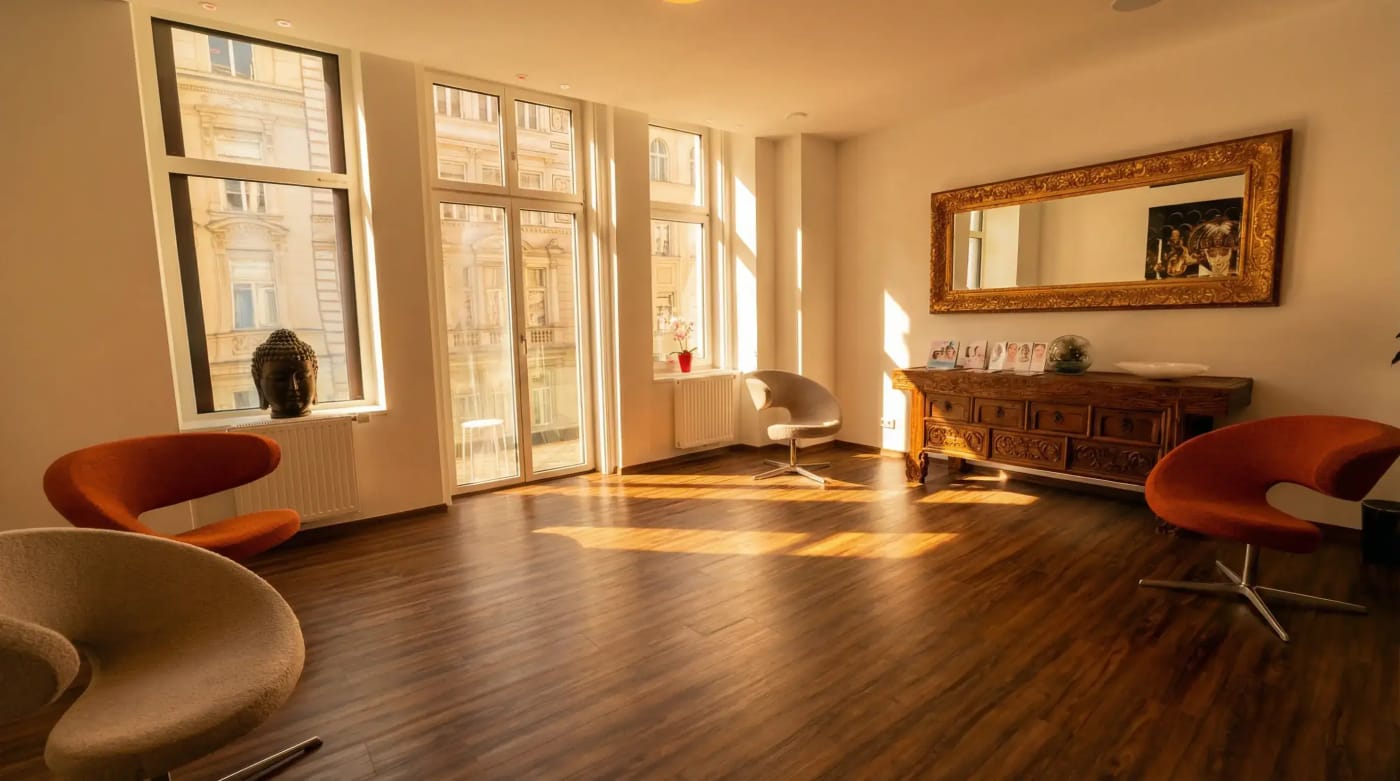
Kärntner Straße 9
100 meters from Stephansplatz, Innere Stadt.
Partnerships & Memberships & References