Ceramic or titanium implants: what is the difference?
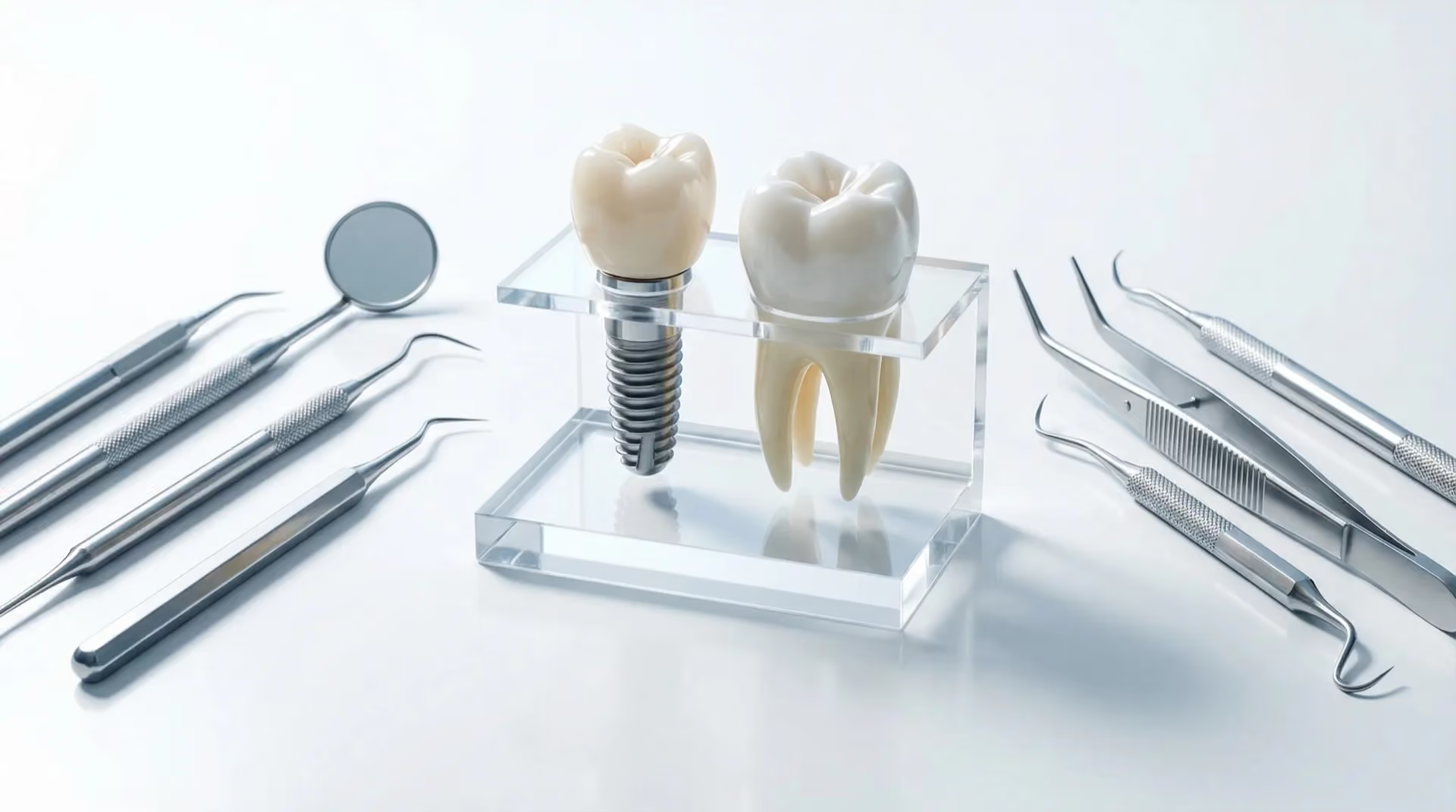
Both materials are used for dental implants. The main initial difference is the implant body: zirconia is a light-coloured ceramic, while titanium is a metal. This alone does not establish a recommendation for your dental situation.
If avoiding metal matters to you, ask about the entire restoration. A ceramic implant may consist of several parts. A ceramic crown on a titanium implant is also not entirely metal-free.
The main criteria compared
| Criterion | Ceramic implant | Titanium implant |
|---|---|---|
| Material | Ceramic implant body made from zirconia; check the other components. | Metal implant body; a ceramic abutment may be possible depending on the system. |
| Colour | Light base colour; the overall result also depends on the tissue and restoration. | Grey; the visible effect depends on position, tissue and abutment. |
| Research evidence | Less long-term data; examine the system and design carefully. | Studied clinically for longer and more extensively. |
| Individual suitability | Not automatically recommended for metal allergy or a front-tooth restoration. | Not automatically recommended solely because of a back-tooth position. |
| Costs | Compare only offers with the same scope of services; the material name does not give the total price. | |
What benefits may ceramic offer?
A light-coloured implant body and a preference for a metal-free material option may matter to your decision. Particularly in visible areas, it is worth discussing how the gums, abutment and crown work together. For the abutment itself, a study of different abutment materials found no differences in biological endpoints up to five years, but notes possible technical complications such as fractures of ceramic abutments. This is a point worth raising, particularly in visible areas. Ceramic alone cannot guarantee a particular colour or tissue outcome.
With known intolerances, it is important to clarify what causes the reaction and which components are planned. Statements such as “ideal for people with allergies” or “allergy-free” would be too general.
What disadvantages and limitations should you know about?
There is less long-term data for ceramic implants than for titanium. An analysis of 25 studies with over 4,000 zirconia implants reported ten-year survival of around 95 percent, but only seven of these studies continued beyond five years. Of the 4,017 implants, 26 were lost through fracture, most of them with a narrow diameter. In addition, ceramic implants are not a single uniform system: one-piece and two-piece designs and different diameters may produce different results. An analysis of two randomised studies with 199 implants found comparable survival after twelve months, but with widely varying success rates of around 57 to 93 percent for zirconia and 57 to 100 percent for titanium.
The recent comparative review describes broadly similar outcomes in healthy people up to five years, but shows differences in individual one-year endpoints and subgroups. This research therefore does not establish lifelong equivalence. A review of randomised studies even found slight advantages for titanium in implant retention and bone loss after twelve months, although the evidence base was small and heterogeneous. This too does not establish a general material recommendation. The YERIT guide Ceramic implants: benefits and disadvantages compared explains the difference between survival and success without complications.
What helps with your individual choice?
Whether ceramic or titanium suits you is decided at the consultation based on the clinical findings. The assessment focuses particularly on bone availability, gum thickness, the position of the gap in the jaw and chewing forces. A suspected metal intolerance is medically assessed beforehand; a recommendation only follows from this overall picture.
- Explain whether your concern is appearance, a known reaction or a preference for avoiding metal.
- Ask which design and size are planned, and why.
- Ask about data on the specific system and the possible alternatives.
- Clarify care, check-ups, the planned restoration and possible later treatment.
Whether bone augmentation is also needed or when the implant can be placed is a separate planning question. Choosing a particular material does not replace this assessment. The ceramic implant treatment overview brings the next questions together.
Making costs comparable
Compare implant placement, abutment, crown and any preliminary treatment together. A cheaper individual item may cover a different scope of services. The page on clarifying ceramic implant costs explains what to consider. Market guide prices for orientation are listed on the prices page. A binding figure can only be determined after examination because it depends on your findings; you receive your personal cost plan following assessment at the practice.