
Root-end surgery in Vienna: preserving your natural tooth
Would you like to know whether your tooth can still be preserved? Learn when root-end surgery may be an option, and discuss your findings personally.
Assess tooth preservation
Understand the procedure
Know the alternatives
Discuss questions personally
Root-End Surgery Vienna
wurzelspitzenresektion-wien
4.9★
Doctify rating
25+
Years of experience
Personal
In-practice consultation
1010 Vienna
Kärntner Straße 9
At a glance
What is root-end surgery?
A small operation on an already root-treated tooth: the root tip and inflamed tissue are removed through the jawbone and the canal end sealed. It may be an option when inflammation does not heal after root canal treatment.
Is root-end surgery very painful?
Local anaesthesia prevents pain during surgery, although you feel pressure. Wound pain and swelling are common afterwards; swelling is usually most noticeable around two days later. Contact us if symptoms increase again.
Which is better: root-end surgery or extracting the tooth?
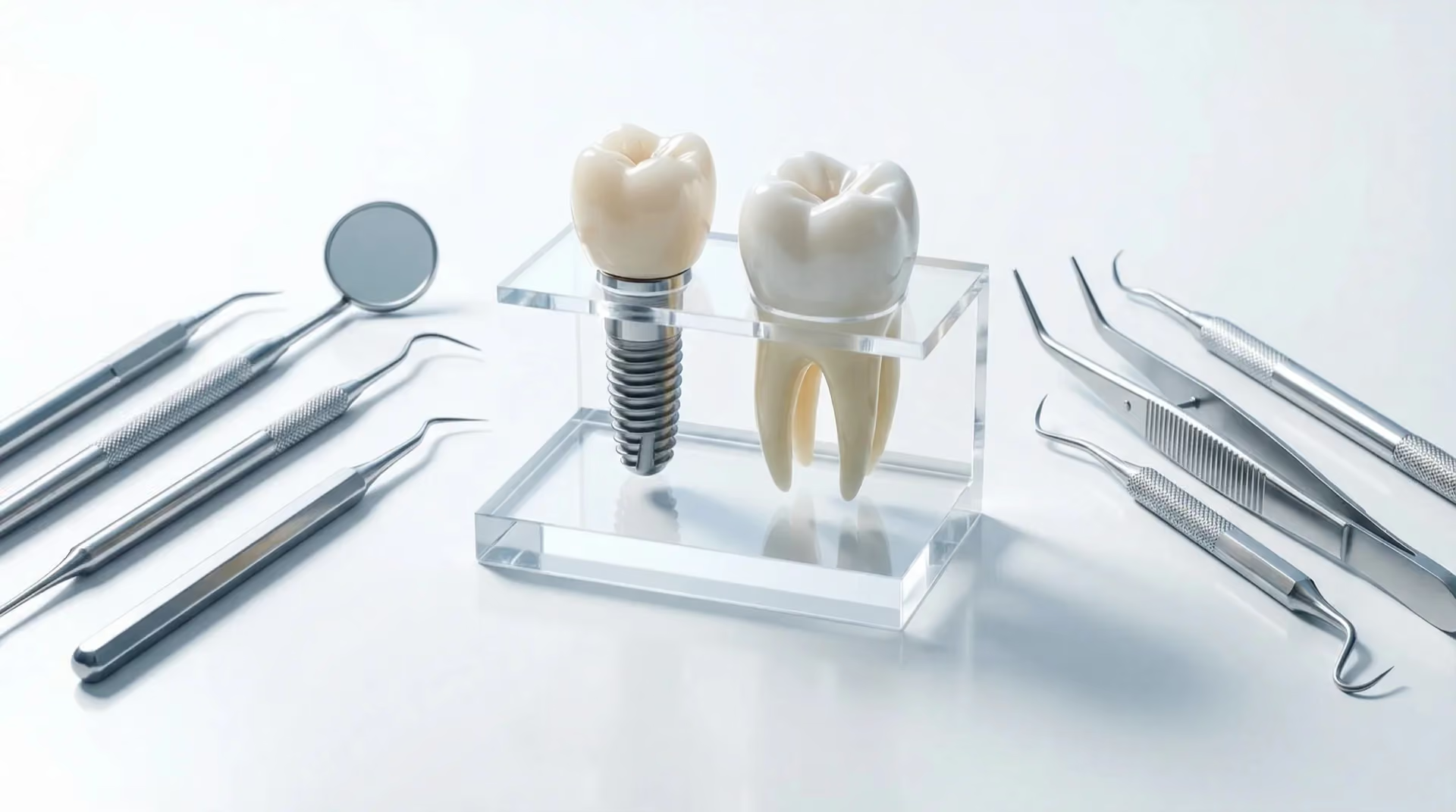
Root-end surgery and repeat root canal treatment may be options according to cause and findings. Whether a tooth can be preserved and which step suits it depend on restorability, previous treatment and prognosis. A longitudinal crack or insufficient bone support may argue against preservation.*
How long does a tooth last after root-end surgery?
A fixed lifespan cannot be promised. Prognosis depends on tooth condition, the cause of inflammation, procedure and follow-up checks. Healing, freedom from symptoms and tooth retention are different study endpoints, not individual durability promises.* A well-sealed filling or crown and check-ups support retention.
When inflammation persists at the root tip
Understand the findings
Even after root canal treatment, biting may hurt or the gum may swell repeatedly. Sometimes a change is first seen on an X-ray. Root-end surgery, or apicectomy, may then be an option for preserving the tooth.
An option for preserving your tooth
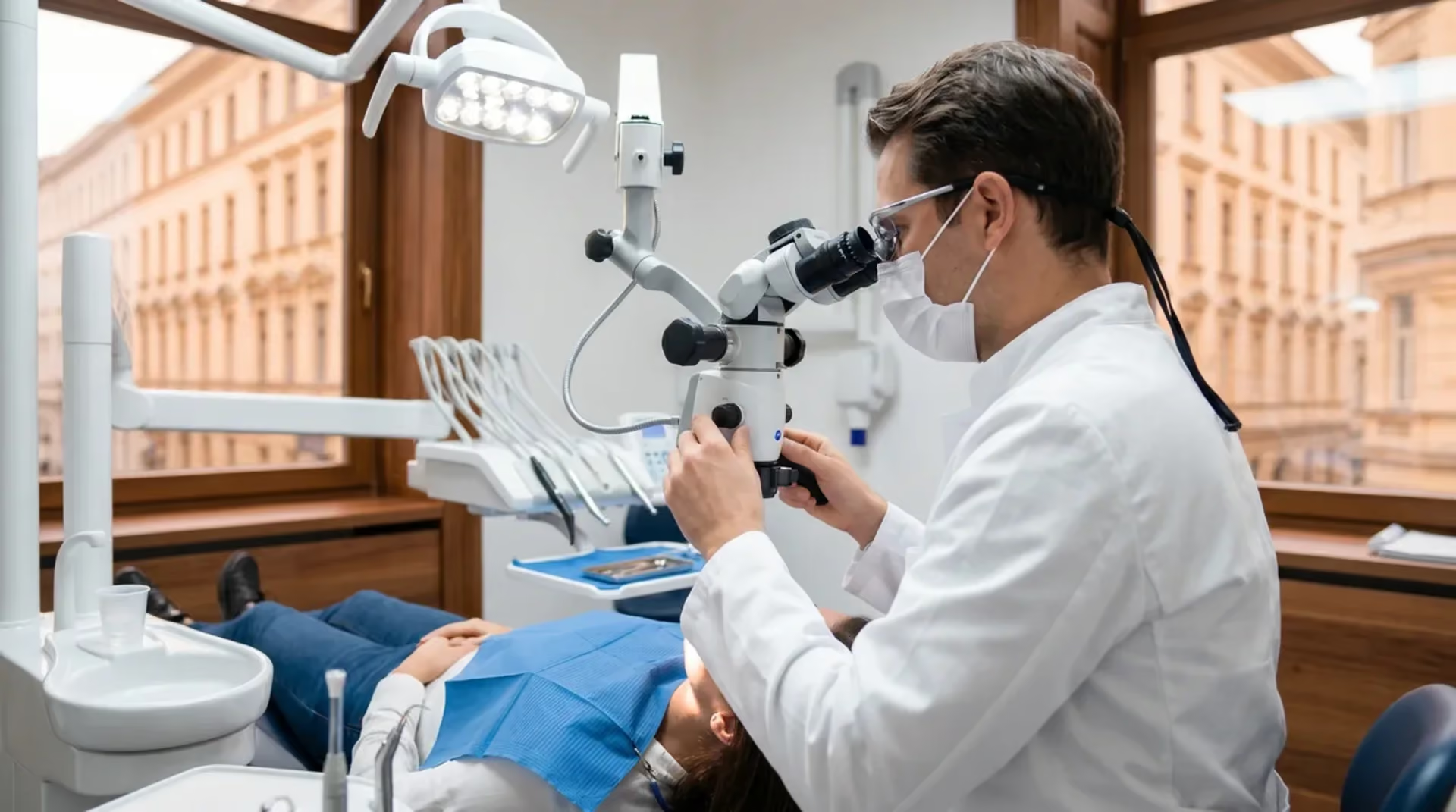
The root is accessed from outside through the gum and jawbone. The root tip and inflamed tissue are removed. Whether surgery is appropriate depends on the cause and tooth condition.
[Source]When may root-end surgery be an option?
Before deciding, we assess whether the tooth can still be restored reliably. This includes the existing root filling, crown, gums and support in bone. A crown, post or suspected cyst alone does not mean surgery is required.
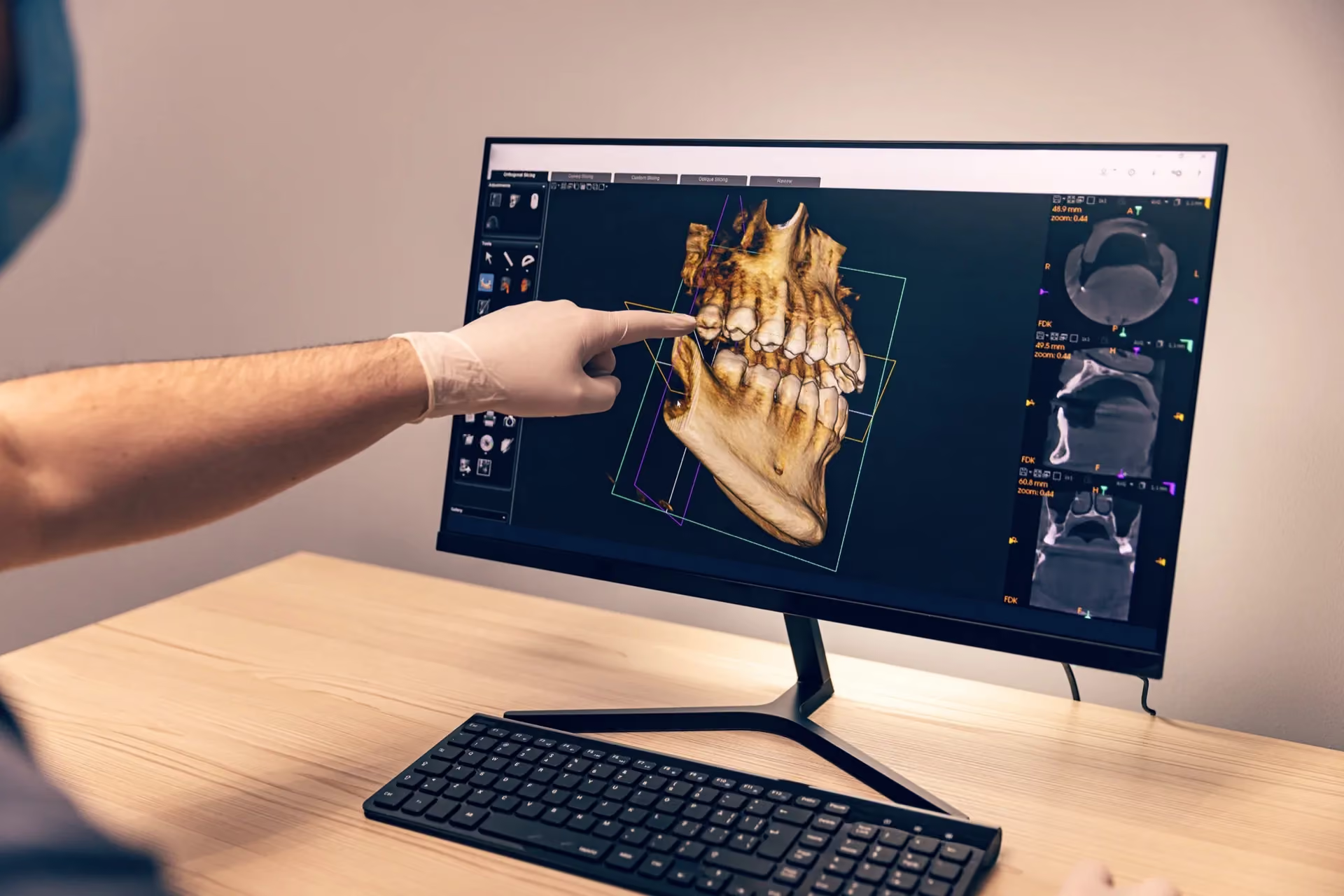
Assessment includes examination and appropriate X-rays. Three-dimensional imaging may help with unresolved diagnostic questions; it is not automatically the first step for every tooth. Bring existing findings and information about previous treatment to the consultation.
[Source]Surgery or repeat root canal treatment?
In retreatment, the canal is treated again from inside. Root-end surgery accesses it from outside. If internal treatment is not reasonably feasible, surgery may be considered. No fixed sequence fits every tooth. A direct comparison of both approaches in 529 teeth has not found a clear winner so far (Bucchi et al., 2022).
Read more about root canal treatment and the detailed comparison of retreatment and root-end surgery at YERIT.
What does surgery involve?
Local anaesthesia is usual. After accessing the root tip, the affected area is removed and, where needed, the canal sealed from its tip. The wound is then sutured. The process including preparation and aftercare is explained on a separate detail page.
Suitable dental cements may be used for the seal. A review of newer bioceramics and MTA found no established superiority of newer materials. Material selection belongs in individual treatment planning.
[Source]Prospects of success: what can be said for your tooth?
The operation aims to treat inflammation and preserve the tooth. Further treatment or later removal may nevertheless be necessary. Pain, swelling, postoperative bleeding and wound-healing problems are possible risks. Neighbouring structures must also be considered according to location.
[Source]Studies distinguish radiographic healing, freedom from symptoms and the tooth remaining in the mouth. Follow-up duration also changes outcomes. Ko and colleagues’ analysis of endodontic microsurgery, for example, reports lower pooled success values with longer follow-up. A fixed lifespan for your tooth cannot be derived from this.
[Source]The size of the original inflammatory lesion also affects prospects: smaller lesions up to 5 mm heal significantly more often in studies than larger ones (Sabeti et al., 2023).
Ask what prospect your individual findings offer, which checks are planned and what the next step would be if healing does not occur.
Studies of root-end sealing and additional procedures
A randomised study examined teeth with treatment-resistant periapical disease after endodontic microsurgery. At one year, success with iRoot BP Plus and iRoot SP root-end filling was 94.5 per cent (104/110), versus 92.8 per cent (103/111) with iRoot BP Plus alone; the difference was not significant (Dong et al., 2024). These figures refer to those treatment groups and the one-year timepoint, not individual prospects. For larger bone defects, additional augmentation may improve healing prospects according to the evidence, but is not required for every finding (Flynn et al., 2024).
Costs and your next decision
Your costs depend on the planned surgery and possible additional treatments. General average market prices are available on the prices page as non-binding guidance. Your costs depend on findings and necessary treatment steps. § 18 ZÄG provides for a written treatment and cost plan in certain cases or on request. The root-end surgery costs page explains the factors and possible reimbursement.
Other surgical approaches are available under oral and maxillofacial surgery. Arrange a consultation at Smile4Life to discuss the options for your tooth.
YOUR CONCERNS
What is on your mind?
Symptoms despite previous treatment
Pain when biting or recurrent swelling should be examined again.
Findings without symptoms
An unusual X-ray finding also needs context. It does not automatically mean surgery is needed.
Preserve or remove the tooth
Before deciding, the remaining tooth, its support and possible treatment approaches matter.
SUITABILITY CHECK
Is this treatment right for you?
YOUR JOURNEY
Your treatment process
Individual initial consultation
Getting to know your goals and your teeth
We will discuss your goals and examine which treatment is best suited for your teeth.


Individual treatment planning
Defining the next steps together
You will learn which steps are planned and which questions should be clarified in advance.
Precise execution
Guiding you through your treatment step by step
Your treatment follows your personal plan. Please ask questions and tell us about any discomfort at any time.

Aftercare and check-ups
Discuss care and follow-up appointments
Finally, we will discuss ongoing care and the follow-up appointments that are right for you.
In everyday life
Allow time for recovery and follow-up checks. Postoperative advice is adapted to your procedure.
YOUR OPTIONS
TREATMENT OPTIONS COMPARED
We will discuss payment terms with you prior to treatment.
The indicative market prices in our price overview provide an initial guide. We will discuss which services are planned for you and the costs involved based on your examination findings and individual cost plan.
Advanced Dental Aesthetics & Implantology
Priv.Doz.Dr.Dr. K. Yerit
“Aesthetics is not a coincidence, but the result of precise planning and deep passion.”
Root-end surgery may help preserve a tooth. Whether it is appropriate depends on tooth condition, the cause and possible alternatives.
View profile →Scientific references
Institute for Implantology and Digital Dentistry Vienna
Medizinische Universität Wien
Österreichische Gesellschaft für Mund-, Kiefer- und Gesichtschirurgie (ÖGMKG)
European Society of Endodontology (ESE)
Österreichische Gesellschaft für Endodontologie (ÖGEndo)
Yerit Practice – Dentist Vienna
Excellence
Why Smile4Life
Consider the whole tooth
Root, crown and support in the bone belong together.
Weigh up the options
Treatment from inside and surgery address different tasks.
Know the next steps
Treatment, aftercare and costs should be understandable before you decide.
Frequently asked questions
Frequently asked questions
Do you have a specific question about your diagnosis? Book a consultation appointment directly →
Questions about your treatment?
Discuss what matters to you and what the next steps look like with us.
Book your appointment nowYour orientation
Gain clarity before deciding.
Understanding what’s involved
Examination, possible surgery and follow-up checks are planned from your findings.
In everyday life
Allow time for recovery and follow-up checks. Postoperative advice is adapted to your procedure.
Who this information is for
Assessment is useful when symptoms or inflammation around the root tip persist after root canal treatment. What matters is whether the tooth can be preserved and which access route appears promising.
Important limitations
A longitudinal fracture, severe loss of tooth support or too little preservable tooth structure may argue against attempting preservation. Medical conditions and medication belong in planning. Please do not change your medication on your own.
Our approach
A success figure alone does not answer whether a tooth can be preserved. The outcomes measured, follow-up and individual findings matter. The main-text sources explain these limitations.
SCIENTIFIC STUDIES
A success figure alone does not answer whether a tooth can be preserved. The outcomes measured, follow-up and individual findings matter. The main-text sources explain these limitations.
Ko MJ et al. (2025). Success rates comparison of endodontic microsurgery and single implants with comprehensive and explicit criteria: a systematic review and meta-analysis
The review combined separate study pools for endodontic microsurgery (22 studies) and single implants (6 studies). Using explicitly defined success criteria, it reported pooled microsurgery success of 89 percent, 90 percent with follow-up below five years and 80 percent from five years onwards; 78 percent was reported for single implants. These were not direct randomised comparisons or personal survival or cost forecasts. Suitable tooth-preserving or replacement treatment is chosen according to the clinical findings.
39979225
Sabeti M et al. (2023). The effect of hard tissue defects on the clinical outcome of endodontic microsurgery: a systematic review and meta-analysis
A meta-analysis of 19 studies estimated pooled success of endodontic microsurgery at 84.5 %. Lesion size was an important prognostic factor: lesions up to 5 mm healed in 78.4 % of cases, compared with 63.3 % for larger lesions (RR 1.12; p ≤ 0.05). Purely endodontic lesions tended to perform better than combined endodontic-periodontal lesions (81.4 % versus 68.2 %), but this difference was not statistically significant (Clinical Oral Investigations, 2023).
37932638
Bucchi C et al. (2022). Non-surgical root canal treatment and retreatment versus apical surgery in treating apical periodontitis: A systematic review
Five direct comparative studies involving 529 teeth and follow-up from six months to 8.7 years were assessed. Trends differed depending on the endpoint; neither option was clearly superior. Four studies had a high risk of bias and another raised concerns. Differences between studies prevented meta-analysis. This result does not establish equivalence for every clinical situation (International Endodontic Journal, online publication 2022, issue 2023).
35762859
Ibáñez-Aravena PC et al. (2025). New Bioceramics vs. Mineral Trioxide Aggregate (MTA) in the Success of Endodontic Microsurgery: A Systematic Review and Meta-Analysis
Five studies (three randomised controlled trials and two retrospective cohorts) compared newer bioceramics with established Mineral Trioxide Aggregate (MTA) for root-end filling. The meta-analysis found no significant difference in treatment success (RR 1.00; 95% confidence interval 0.94–1.07). Evidence quality was rated moderate. Newer bioceramics are therefore not demonstrably superior to MTA, but may be preferred because they are easier to handle (Australian Endodontic Journal, 2025).
40637350
Flynn R et al. (2024). The impact of bone grafting with/without barrier membrane placement on the outcome of apical surgery: A systematic review and meta-analysis
Eight randomised clinical trials assessed whether additional bone grafting — with or without a barrier membrane — improves healing after apicoectomy. The meta-analysis found a significant advantage for regenerative procedures over conventional surgery (odds ratio 2.18; 95% confidence interval 1.32–4.31; p = 0.004). Subgroup analyses did not establish an independent effect for individual bone substitute materials, membrane type or their combination (International Endodontic Journal, 2024). The paper does not justify routine use of these adjuncts in every apicoectomy; the authors call for further well-designed randomised trials.
38491954
Dong X et al. (2024). The outcome of combined use of iRoot BP Plus and iRoot SP for root-end filling in endodontic microsurgery: a randomized controlled trial
In this randomised controlled trial, 240 teeth with treatment-resistant inflammation at the root tip underwent microsurgery; 221 reached the twelve-month follow-up. Success rates in the two material groups were 94.5 % and 92.8 %, with no significant difference. Tooth type, a through-and-through bone lesion, the periodontal condition of the tooth and the Kim lesion classification were important factors affecting one-year success (Clinical Oral Investigations, 2024).
38430316
Gesundheitsportal: Wurzelbehandlung und Wurzelspitzenresektion
Before root canal treatment, vitality is tested with cold spray and the tooth is X-rayed; several dental visits are usually needed. An apicoectomy may help preserve the tooth if previous root canal treatment has not resolved the inflammation (gesundheit.gv.at, accessed 03.11.2026).
More topics in this area
Deepen your knowledge – find all information regarding the treatment process, costs, and results.



Kärntner Straße 9
100 meters from Stephansplatz, Innere Stadt.
Partnerships & Memberships & References