How long does professional cleaning take?
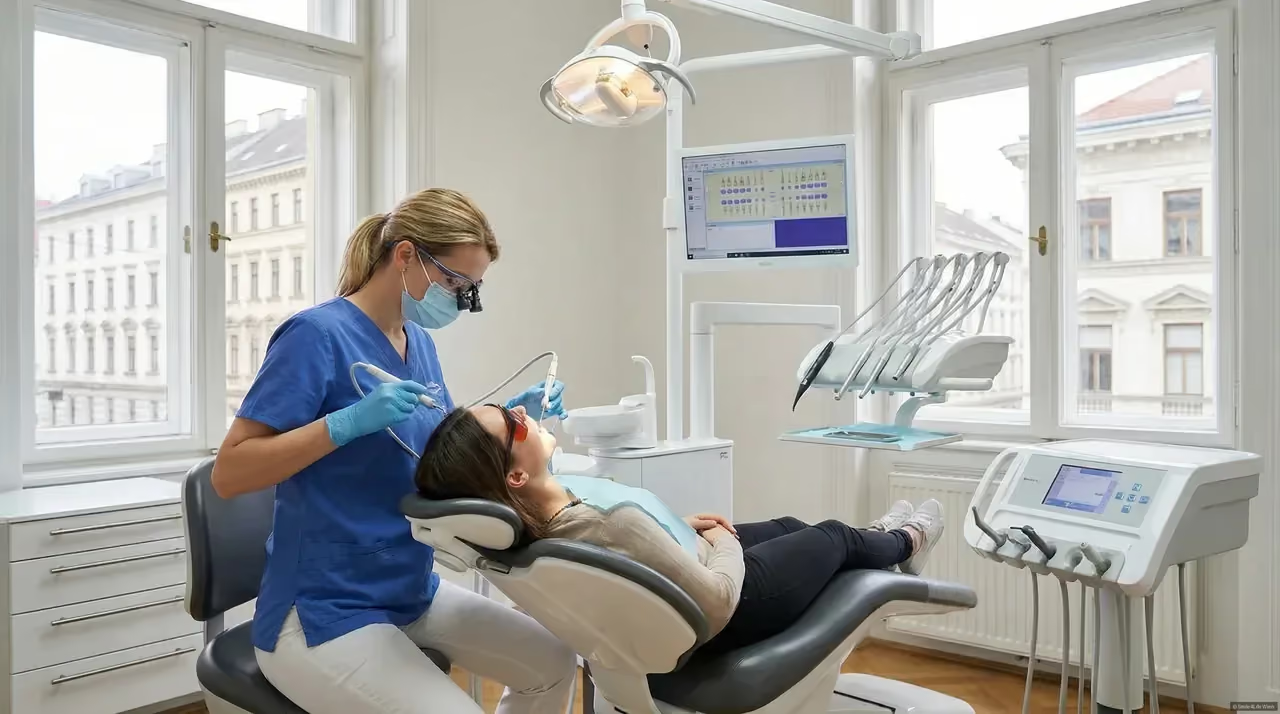
The Austrian Health Insurance Fund gives around 30 to 45 minutes for professional dental cleaning, depending on dental status. This is a reference range, not a promise for your Smile4Life appointment. The actual duration depends on your teeth: the clinical assessment in the chair decides, rather than the calendar. A first appointment usually takes longer than later visits. Our page on oral hygiene in Vienna explains the full treatment.
Five factors affect the time. First, the amount and hardness of deposits: soft plaque is removed quickly, while persistent tartar is loosened tooth by tooth with ultrasonic scaling and hand instruments. Second, gum condition: inflamed gums bleed more easily, so we work more gently and slowly. Third, staining from coffee, tea or tobacco that needs polishing. Fourth, restorations: implants, bridges, fixed braces or a retainer create spaces that need more time. Fifth, advice on home care, which belongs in every professional cleaning appointment and should not be cut short.
Why a first dental appointment usually takes longer
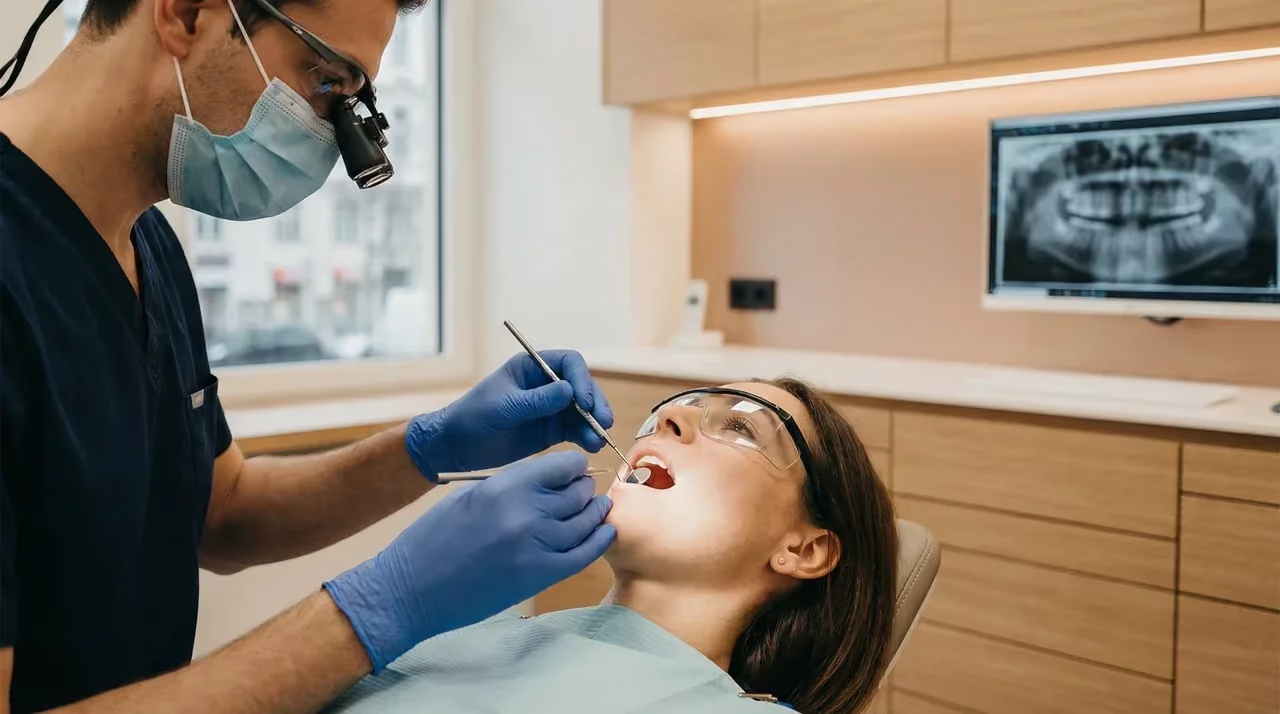
At a first visit, we assess findings more thoroughly: teeth, gums and gum pockets, record the starting point and discuss your current home care. There is often more tartar than in someone attending regularly. Whether a follow-up appointment is shorter depends on the deposits and current findings; regular attendance and good care alone do not determine duration.
What affects the time needed: daily care and technique
A review of professional deposit removal found, with very low certainty, that ultrasonic scaling plus air-polishing was similarly effective but less time-consuming than ultrasonic scaling followed by a rubber cup and polishing paste (Farina 2026). A similar finding applies to erythritol air-polishing in supportive periodontal therapy after periodontitis: it can partly replace hand and ultrasonic instruments in that setting (Abdulbaqi 2022). Good daily care helps remove soft deposits. How much tartar still forms and how long the session takes also depend on individual conditions and the treatment steps required.
Professional cleaning: what the time is used for
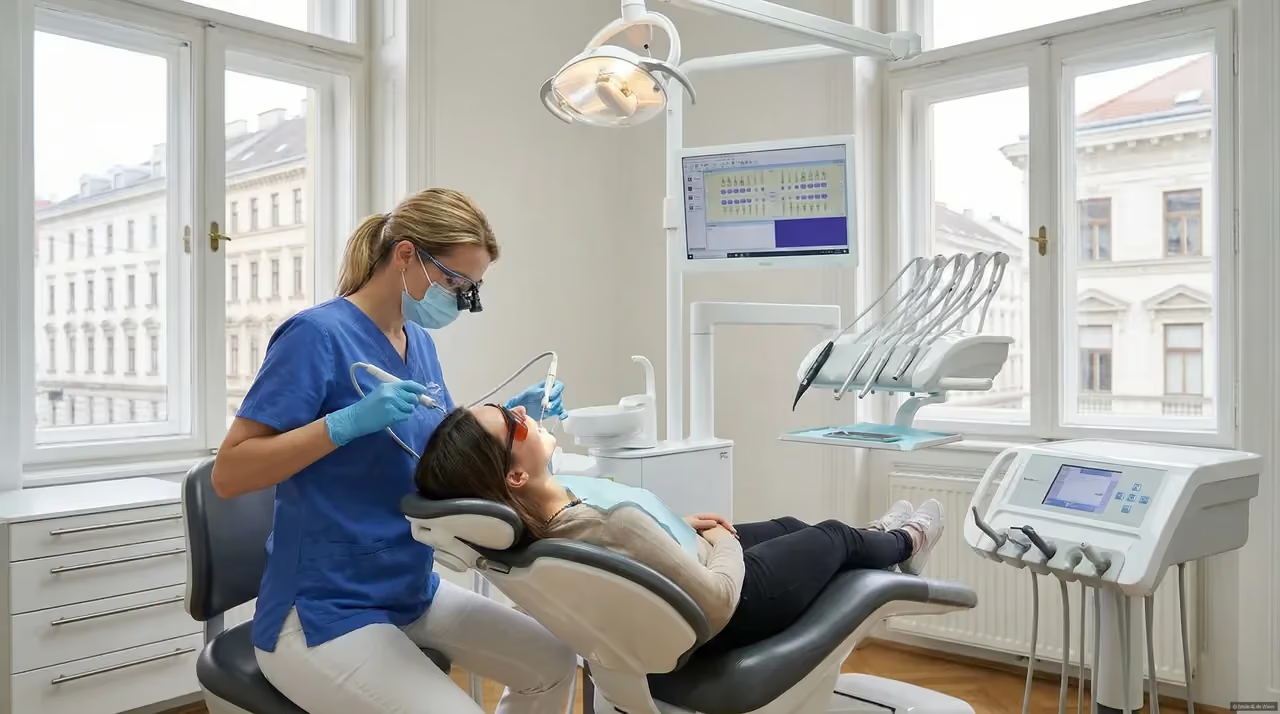
The appointment includes examination, deposit removal and home-care advice. The time needed for each step depends on your findings, access and possible sensitivity. The linked procedure page below explains the instruments and treatment steps.
This advice is not an optional extra. In plaque-induced gingivitis, home-care instruction is the first measure; professional cleaning adds benefit but does not replace instruction (Farina 2026). We therefore allow time for it rather than dropping it at the end.
With healthy gums, cleaning is tolerable for most patients; please tell us about sensitive tooth necks beforehand. For details of the steps and care afterwards, see the professional dental cleaning process in Vienna.
Arrange and prepare your cleaning appointment online
You can book your cleaning appointment online at any time, without calling. You can also reach us by phone on +43 1 410 13 52. The practice is at Kärntner Straße 9, 1010 Vienna, a short walk from Stephansplatz. Allow a few minutes for registration in addition to the treatment time.
Four things help prepare the appointment. Bring current reports if available. Tell us about medication, especially blood thinners: cleaning is usually possible with an adapted approach. Tell us about conditions such as diabetes or heart valve disease, where endocarditis prevention may be needed before tartar removal, and about pregnancy. Write down what you want to clarify: a repeatedly bleeding area, a sensitive tooth neck, bad breath or an interdental brush that does not fit.
You may eat normally and brush before the appointment. Mention pain or swelling when booking so that we can assess the purpose of the visit correctly; the cause takes priority over cleaning.
For children and adolescents from their 10th birthday until their 18th birthday, the ÖGK covers one cleaning per treatment year using the e-card, or two with fixed braces, at least six months apart. Reimbursement is possible in a private non-contract practice like ours. The page on cleaning costs and health insurance explains what applies to adults and how reimbursement works.
Oral hygiene at home: what can I do daily for healthy teeth?
The Austrian health portal’s minimum recommendation is the 2x2 formula: brush for at least two minutes twice daily, in the morning and before bed. Use fluoride toothpaste: toothpastes containing 1,000 to 1,500 ppm fluoride demonstrably protect against decay better than fluoride-free products (Walsh 2019). Use short, gentle movements from gum to tooth; vigorous scrubbing does more harm than good to enamel and gums.
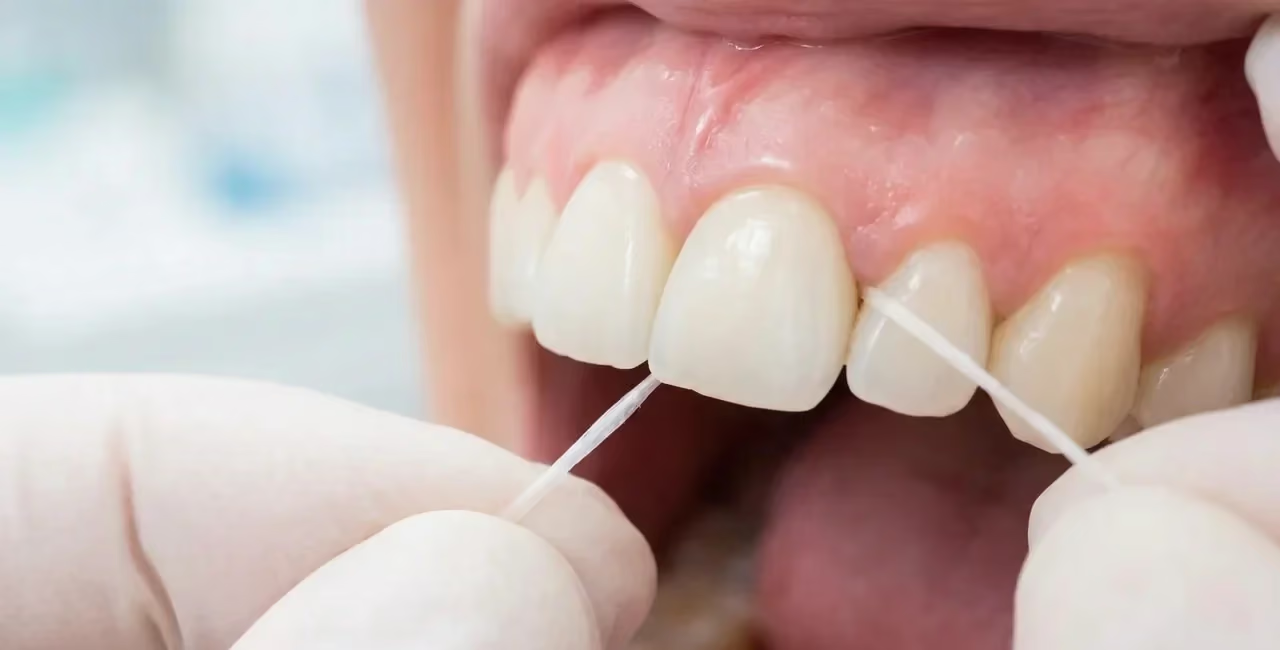
A toothbrush does not reach between the teeth. Bacteria accumulate there, and decay and gum disease can begin there. Cleaning between the teeth therefore matters alongside brushing. Floss or interdental brushes used in addition to brushing reduce gingivitis and plaque; interdental brushes may be more effective than floss, but certainty is low (Worthington 2019). Floss suits tight contacts, while brushes suit larger spaces. We show you the right size on your own teeth at the appointment.
Cleaning routes differ beside implants, under bridges, around fixed braces or along a bonded retainer. Never force a brush through. Tell us if you cannot reach an area so that we can find an appropriate aid together.
How long should I avoid eating after cleaning?
If fluoride varnish is applied, the team will explain how long to wait before eating and drinking; this depends on the product. It is preferable to avoid strongly staining drinks such as coffee, black tea or red wine that day because freshly polished surfaces can initially take up pigments more readily. Whether and when to brush afterwards also depends on the product instructions; ask the team to explain them.
Electric toothbrush, floss or mouthwash?
A Cochrane review found lower average plaque and gingivitis scores after one to three months with electric toothbrushes than with manual brushes. The relevance for everyday dental health remained unclear (Yaacob 2014). A newer review in people aged 55 and over found no clear advantage (Saroya 2024). Correct use and a device you can handle comfortably matter; cleaning between the teeth is still required.
Mouthwash replaces neither brushing nor flossing, whether bought from a shop or pharmacy. Antiseptic rinses used alongside mechanical cleaning measurably reduce plaque and gingivitis (Figuero 2020). Chlorhexidine has the strongest effect, but use from four weeks onwards causes external staining, temporarily alters taste and can irritate the oral lining (James 2017). We therefore use medical rinses for specific purposes and limited periods, for example after surgery, rather than as a permanent solution for everyone.
You do not need a product plan that applies to everyone. You need a cleaning aid you actually use each day.
Tartar, plaque and staining: what home care cannot remove
Plaque is a soft bacterial deposit that forms on tooth surfaces. If left in place, it takes up minerals from saliva and becomes tartar: a hard deposit firmly attached to the tooth. Brushing can no longer remove it, and sharp shop-bought tools are more likely to injure gums than remove tartar. Tartar is rough, retains further deposits and favours gum inflammation, decay and periodontitis — the diseases central to oral health.
External staining from coffee, tea, red wine or tobacco can be polished during professional cleaning: cleaning removes what is on the tooth. It does not change natural tooth colour; you can discuss other methods with us for that.
The reverse also applies: continuing unchanged home care limits the benefit of cleaning. For plaque-induced gingivitis, professional cleaning without effective personal care showed no benefit (Farina 2026). Professional cleaning establishes a condition you maintain at home: daily care between appointments matters. There is no fixed protection period that expires after a certain number of months.
How often does professional cleaning make sense?
In Austria, the ÖGK recommends professional cleaning once or twice a year. Evidence supports basing intervals on risk rather than the calendar: in regularly attending adults without severe periodontitis, there was little difference over two to three years between planned six-monthly, annual or no fixed cleaning (Lamont 2018). Over four years, risk-based examination intervals also showed little difference from fixed six-monthly appointments in decay, gum bleeding and quality of life (Fee 2020). Twice yearly is therefore guidance rather than a rule.
Factors relevant to decay and periodontal risk include rapid tartar formation, bleeding gums, smoking, diabetes, fixed braces, implants or restorations with hard-to-reach margins. A shorter interval may then be appropriate. People who form few deposits, attend regularly and clean between teeth effectively may not need that shorter interval. Ask why we recommend a particular schedule; the answer should fit your clinical findings.
After periodontitis treatment, different rules apply. Follow-up is called supportive periodontal therapy and follows its own programme and intervals (Sanz 2020). General preventive advice does not replace this approach; see our page on periodontitis treatment in Vienna.
Costs: what to clarify before your appointment
Professional cleaning costs depend on the work involved, just as duration does. Our prices page provides typical Vienna market ranges as guidance. Art. 3 lit. e WR-ÖZÄK generally prohibits publishing a practice’s own private dental prices unless disclosure is legally required. We discuss your personal cost plan after assessment and before treatment.
The page on oral hygiene costs in Vienna explains adult insurance coverage, reimbursement in a private non-contract practice and questions to ask before deciding. The oral hygiene overview introduces the treatment. For the clinical background and evidence on plaque, tartar and prevention, see the oral hygiene knowledge article on yerit.at.