Smile4LifeADVANCED DENTAL AESTHETICS & IMPLANTOLOGY

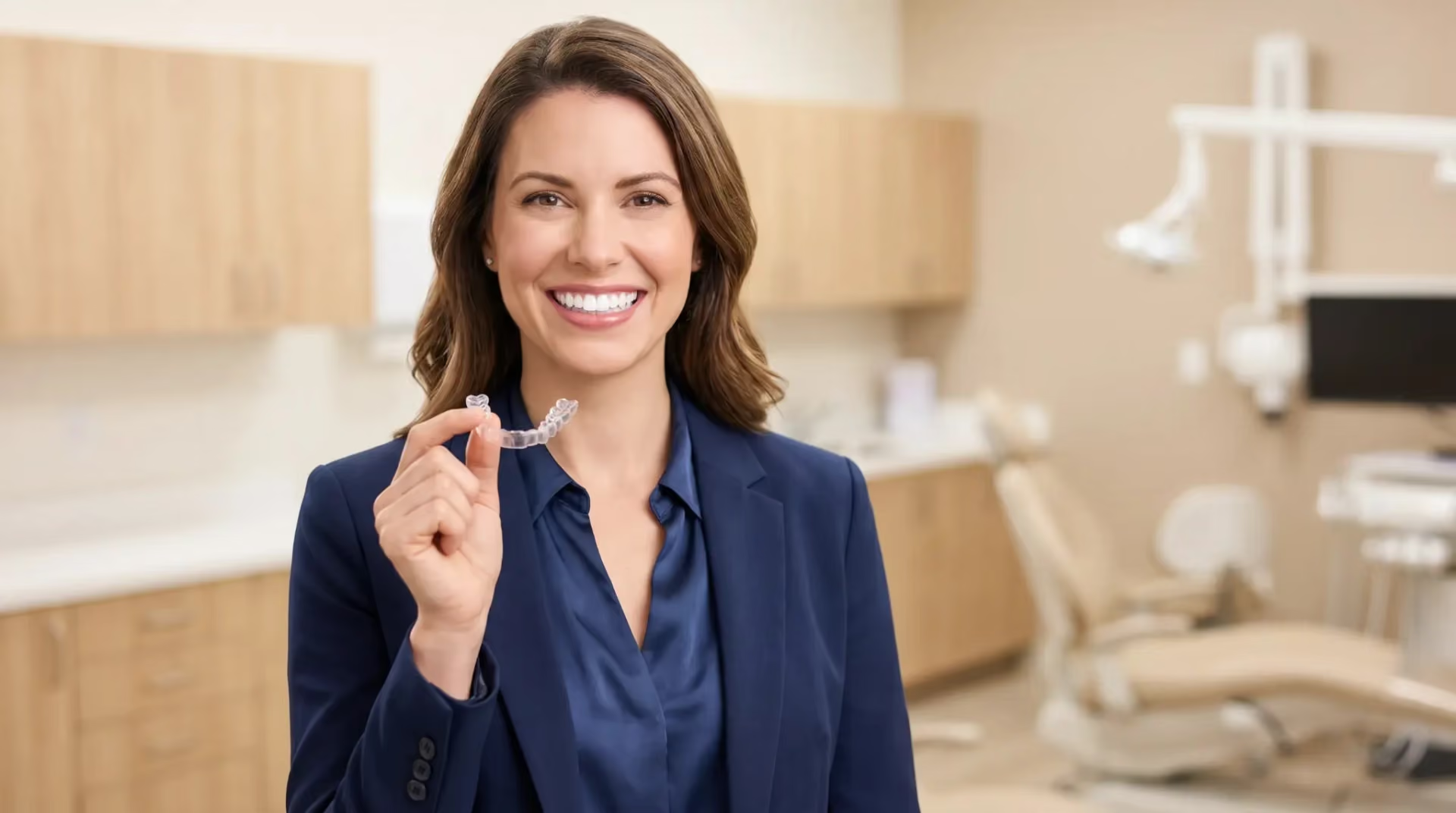
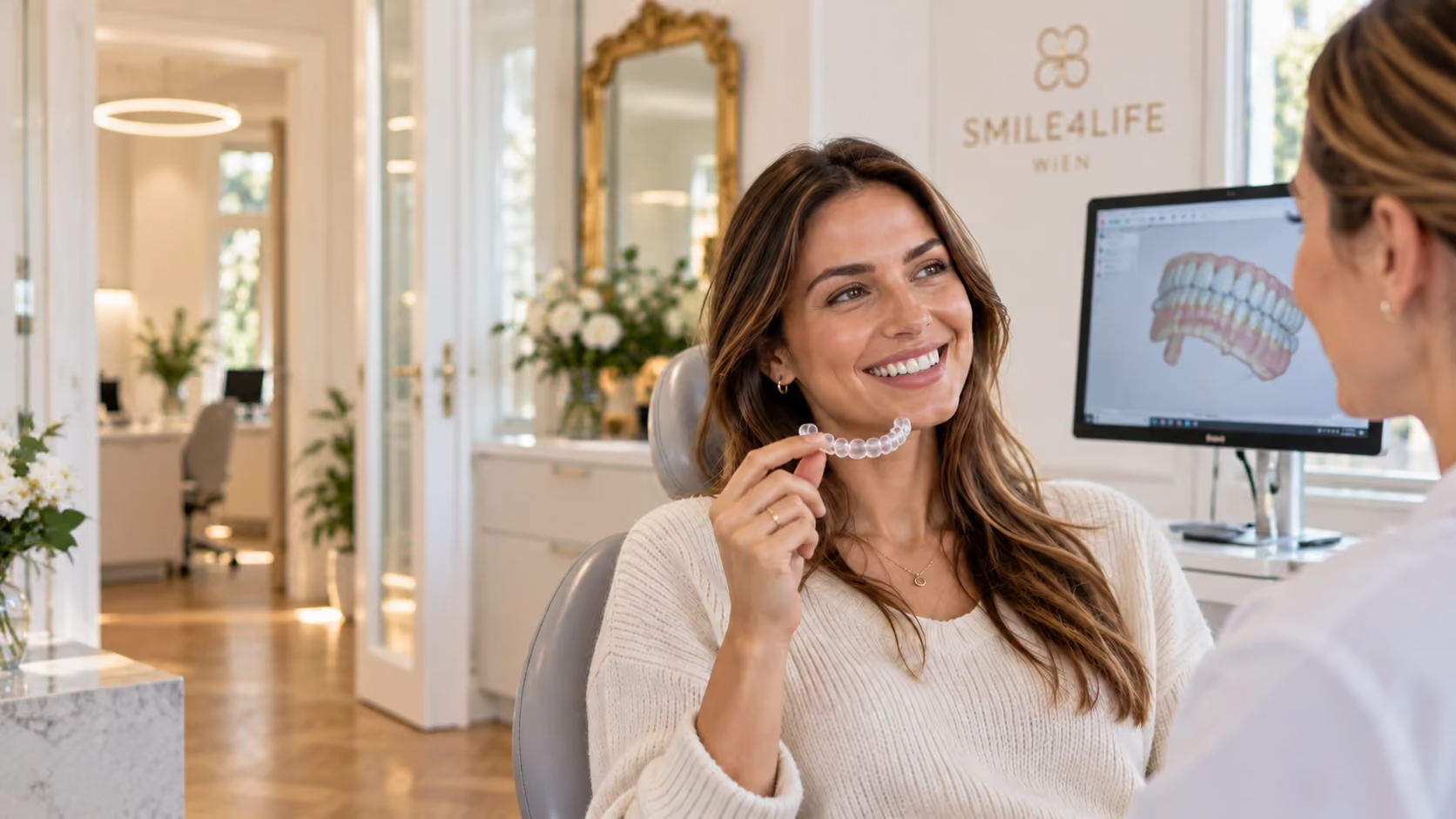
A smiling person holds a transparent aligner against their teeth.
Kieferorthopädie

Invisalign for Children and Teenagers in Vienna: Suitability and Wear

Discreet aligner treatment for teenagers, with a focus on consistent wear and cooperation

Assess tooth development individually

Close follow-up

Discreet at school

Consistent wear is decisive

Arrange a consultation

Invisalign for Teenagers Vienna

invisalign-kinder-jugendliche-wien

4.9★

Doctify rating

25+

Years of experience

Personal

In-practice consultation

1010 Vienna

Kärntner Straße 9

  • From what age is Invisalign possible?

    There is no fixed minimum age; tooth development and jaw growth are decisive. ÖGK distinguishes early treatment up to around ten years and main treatment between around 12 and 18 years.* Examination establishes which method is suitable.

    Braces for children →

  • How is wear time checked in teenagers?

    Mainly during check-ups, which show whether the aligner fits and teeth follow the plan. Blue wear indicators only provide an estimate, because laboratory tests also found fading in water, acidic drinks and during cleaning.*

    Treatment procedure →

  • Invisalign or fixed braces: which suits teenagers?

    This depends on misalignment, tooth development and cooperation; studies of mild misalignment show similar results for both. Important for planning: ÖGK does not cover aligners, including under the Gratis-Zahnspange benefit, which provides removable or fixed braces.*

    Invisalign or fixed braces →

Guide prices & costs →

For teenagers

Invisalign aligners for teenagers

Invisalign offers discreet tooth straightening for teenagers once most permanent teeth have erupted. Compared with fixed braces, transparent aligners are substantially less noticeable at school. Whether Invisalign is suitable for children with mixed dentition depends on tooth development and jaw growth; an examination clarifies this. The general treatment procedure is explained under Invisalign in Vienna. The YERIT guide Invisalign for teenagers explains this in greater detail.

Wear time for teenagers: what the practice and parents check together

Unlike fixed braces, Invisalign works only while the aligners are in the mouth, around 20 to 22 hours daily. Consistent wear affects the result and treatment duration. We do not have reliable figures for how far teenagers on average fall below the recommended wear time.

We therefore check in three ways. At regular visits, we compare tooth position with the planned ClinCheck simulation, assessing fit and actual movement. Appropriate progress does not prove an exact number of hours worn, and a deviation does not automatically prove poor cooperation. The blue wear indicators on Teen aligners are only a guide: in laboratory tests, they also faded in drinking water, acidic drinks and during cleaning (Schott and Göz, 2011). At home, a simple agreement helps, such as removing aligners only for eating and toothbrushing.

The effect of consistent wear is illustrated by a comparison: Borda et al. (2020) found outcomes in teenagers with mild misalignment at least comparable to fixed braces, with fewer check-ups, fewer emergency visits and shorter treatment duration.

ÖGK-funded braces or Invisalign: what is covered for children and teenagers

For severe misalignment, ÖGK covers braces as an insurance benefit, known as the Gratis-Zahnspange. Requirements include IOTN grade 4 or 5, a scale of misalignment severity, and treatment beginning before the 18th birthday. The statutory braces may be removable or fixed. Aligners such as Invisalign are excluded and are not paid for by ÖGK even when eligibility exists.

Anyone choosing Invisalign nevertheless pays the costs themselves. Market guide prices are listed in our price overview. Individual complexity depends on the findings and agreed services; you receive your personal cost plan after assessment at the practice. The cost components are explained under Invisalign costs in Vienna.

Arrange a consultation

Discuss individual suitability and the appropriate timing in a personal consultation.

Book an appointment now
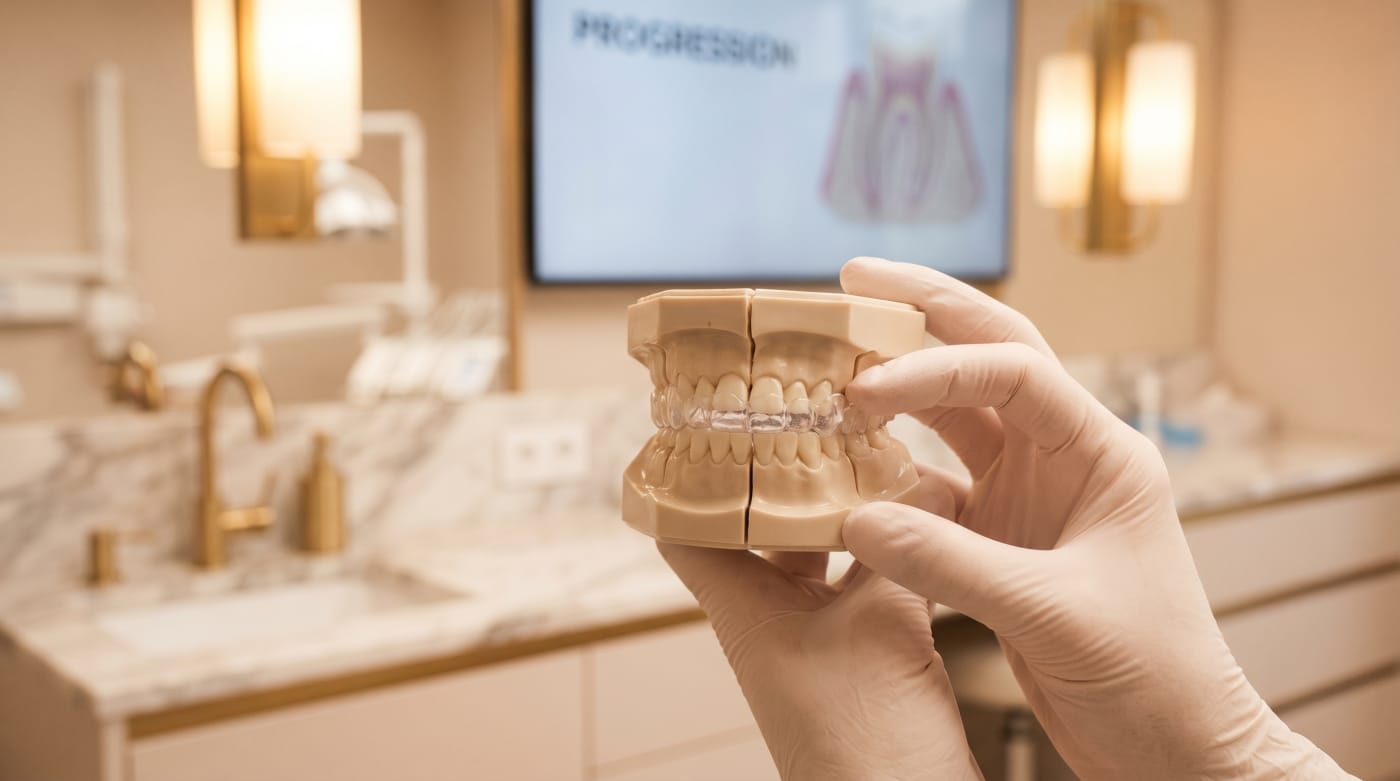
The agreed wear time must fit into daily life. At check-ups, we discuss wear and assess fit and tooth movement together. This cannot measure an exact number of hours. Deviations from the plan may have several causes and are discussed together.

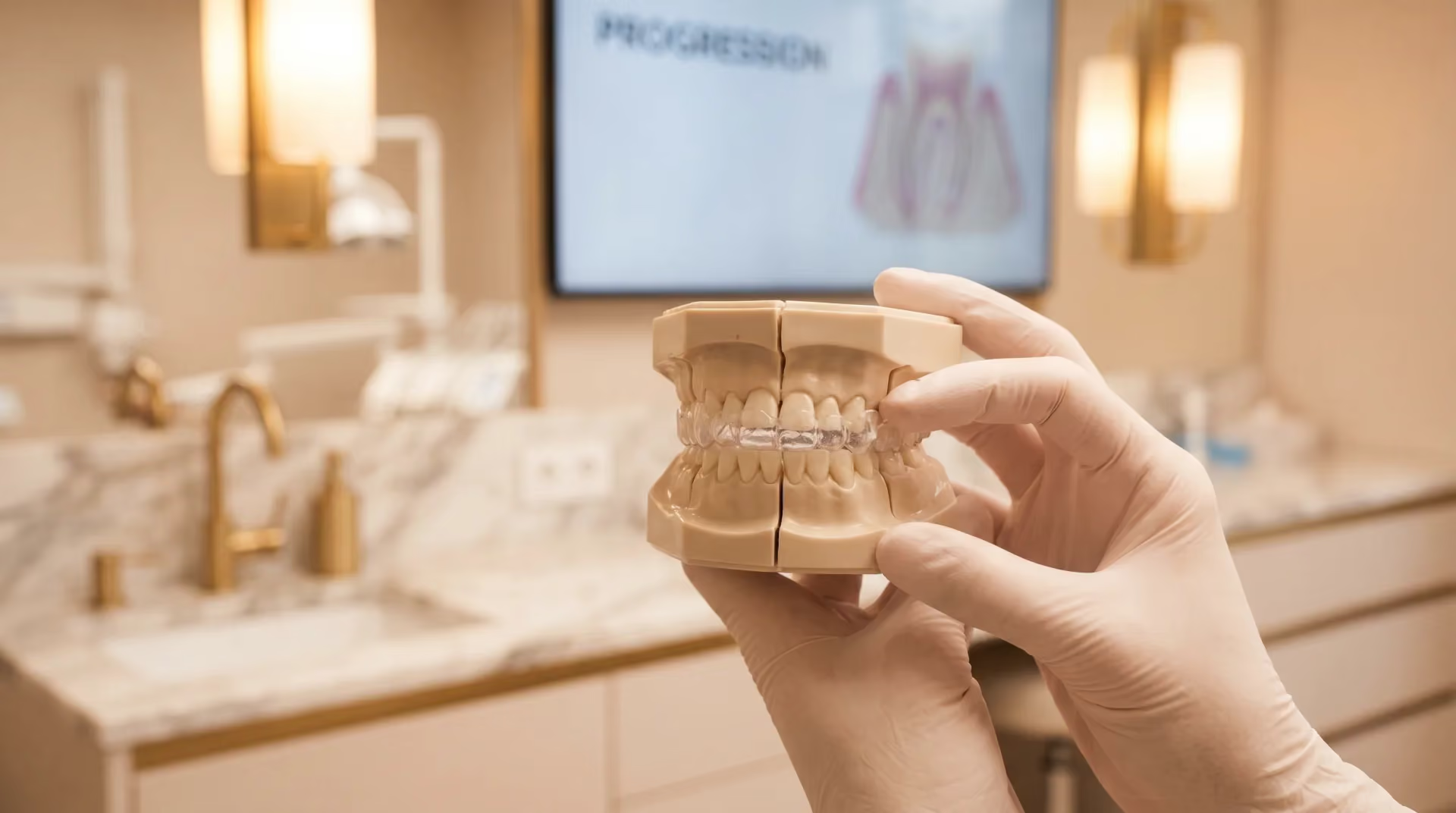
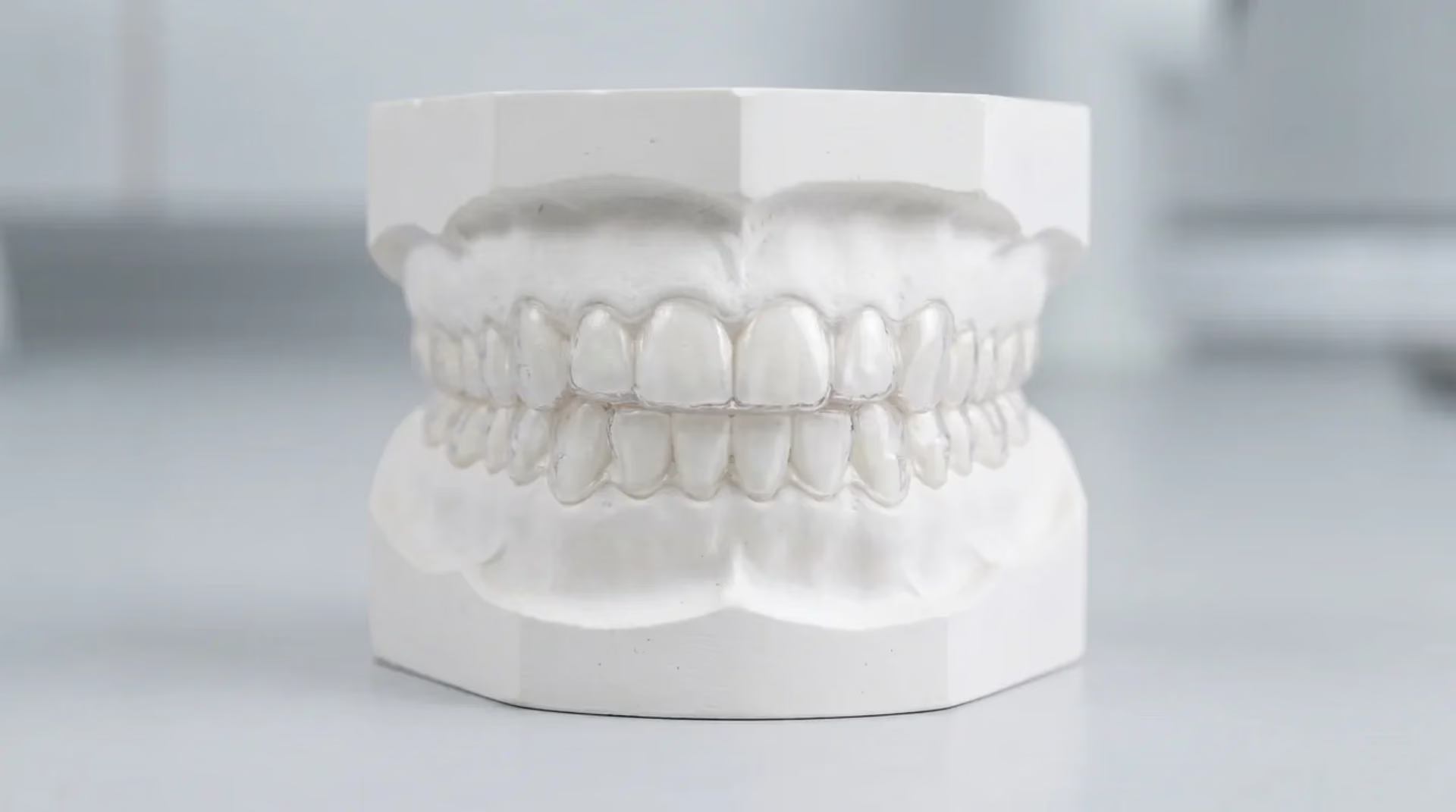
Hands holding a dental model.
20–22

Hours a day

Around 20 to 22 hours of daily wear is common guidance; your individual plan is what matters. Your cooperation is important, as are the findings, planning, technique and biological response. Actual progress is assessed at check-ups.

YOUR OPTIONS

TREATMENT OPTIONS COMPARED

We will discuss payment terms with you prior to treatment.

Advanced Dental Aesthetics & Implantology

Priv.Doz.Dr.Dr. K. Yerit

“Aesthetics is not a coincidence, but the result of precise planning and deep passion.”

In teenagers, consistent wear has a major influence on treatment success. We therefore discuss wear time at every check-up and actively involve parents.

View profile →

Scientific references

Institute for Implantology and Digital Dentistry Vienna

Deutsche Gesellschaft für Kieferorthopädie (DGKFO)

Österreichische Gesellschaft für Kieferorthopädie (ÖGKFO)

Align Technology Clinical Research

European Orthodontic Society (EOS)

Yerit Practice – Dentist Vienna

Frequently asked questions

Frequently asked questions

How noticeable is Invisalign at school?
How soon are the first Invisalign results visible?
What is Invisalign Teen?
Can teenagers continue sport and playing musical instruments?
How can I find out whether Invisalign is suitable for me?

Do you have a specific question about your diagnosis? Book a consultation appointment directly →

Questions about your treatment?

Discuss what matters to you and what the next steps look like with us.

Book your appointment now

SCIENTIFIC STUDIES

Evidence-based medicine

The sources help to classify the possibilities and limitations of the treatment. Their results are not a guarantee for any individual case.

Ke Y et al. (2019). A comparison of treatment effectiveness between clear aligner and fixed appliance therapies

The older review found differences in individual treatment objectives. Its heterogeneous studies do not support a general promise that aligners are faster or achieve a particular result.

30674307

Borda AF et al. (2020). Outcome assessment of orthodontic clear aligner vs fixed appliance treatment in a teenage population

A retrospective private-practice evaluation compared groups of 26 adolescents with mild malocclusions treated with aligners or fixed appliances. The aligner group showed better scores on the outcome index studied, fewer review and emergency appointments and shorter treatment duration. This small, non-randomised sample does not establish general equivalence or superiority for all adolescents.

33378505

Oikonomou E et al. (2021). Impact of Aligners and Fixed Appliances on Oral Health during Orthodontic Treatment

In the first weeks after treatment began, patients with aligners without additional attachments tended to show better oral health measures than those with fixed braces. However, the authors rated the certainty of this evidence as low to very low (Oral Health & Preventive Dentistry, 2021).

34874143

Muro MP et al. (2023). Effectiveness and predictability of treatment with clear orthodontic aligners: A scoping review

The review described differences between planned and achieved tooth movement. Certain movements are less predictable. A simulation therefore does not guarantee a result.

37086643

Negrutiu BM et al. (2025). Pain Perception and Dietary Impact in Fixed Orthodontic Appliances vs. Clear Aligners

Patients with fixed braces reported pain, need for painkillers and eating restrictions substantially more often than patients with clear aligners (Journal of Clinical Medicine, 2025).

40725752

Nemec M et al. (2026). Patients' needs, expectations & concerns regarding clear aligner treatment

A prospective cohort study of 82 Medical University of Vienna patients found that effectiveness comparable with fixed braces was the highest-ranked expectation among patients choosing clear aligner therapy (9.5 out of 10 points). They were scarcely willing to compromise on treatment duration or costs. A lasting result and prevention of future problems were also highly rated; discreet appearance mattered too, but ranked below expected effectiveness (Clinical Oral Investigations, 2026).

42209717

ÖGK: Die ÖGK im Überblick – Leistungen und Services 2026 (S. 77–79, Kieferorthopädie und Zahnspangen)

Early orthodontic treatment takes place up to around ten years of age; fixed braces for children and teenagers are provided between approximately 12 and 18 years (gesundheitskasse.at, accessed 03.11.2026)

Schott TC, Göz G (2011). Color fading of the blue compliance indicator encapsulated in removable clear Invisalign Teen aligners. The Angle Orthodontist 81(2):185–191. doi:10.2319/052610-288.1

The blue wear indicators in Invisalign Teen aligners also faded in drinking water, acidic drinks and during cleaning in laboratory tests. They therefore provide only an estimate of wear time, not an objective measurement (pubmed.ncbi.nlm.nih.gov, accessed 03.11.2026)

21208067

Research findings help inform treatment decisions; they do not guarantee an individual outcome. We discuss suitable options with you based on your clinical findings and the planned treatment.

Evidence-based dentistry

ESCD
DGÄZ
AACD
AAED
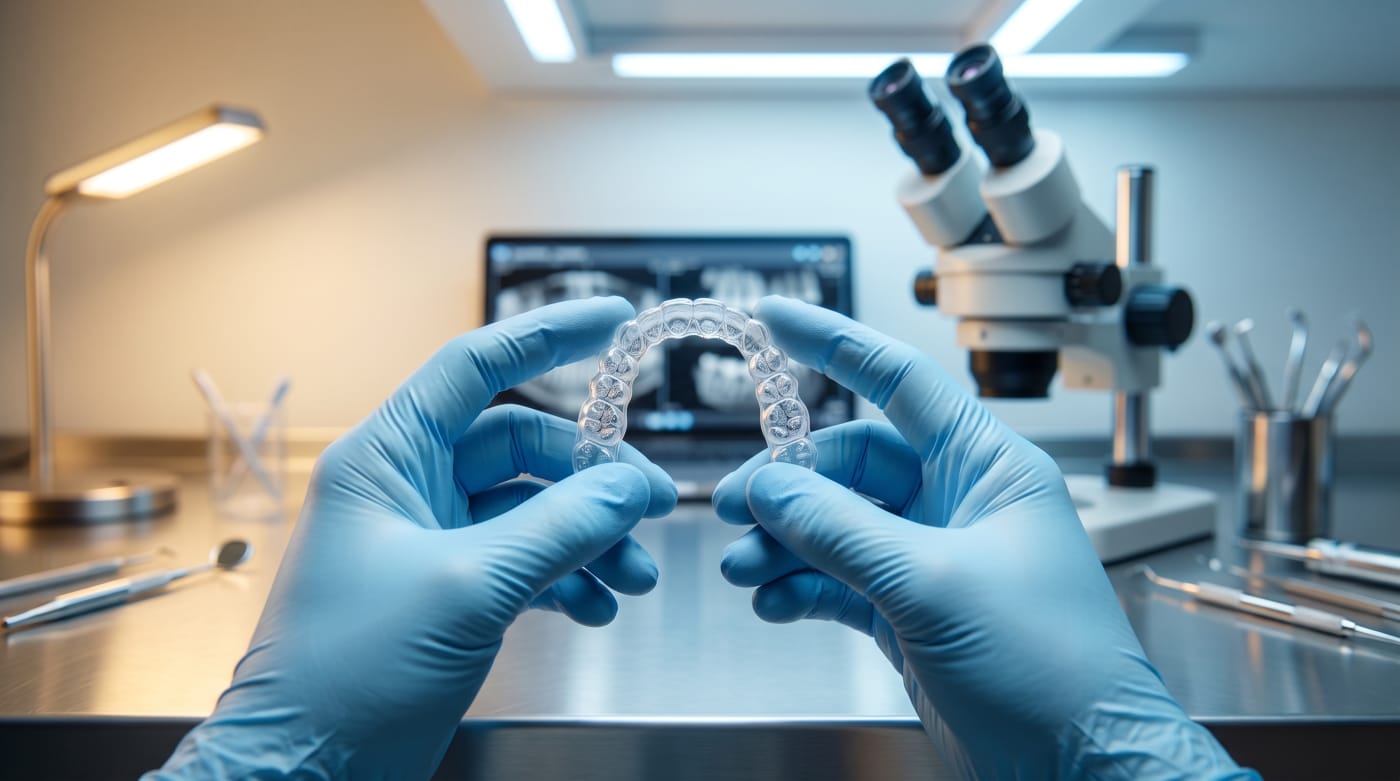
Gloved hands holding a transparent dental aligner in front of a microscope.

Clear aligners for your treatment plan

A simulation of the entire treatment is created from the 3D scan of your teeth. The aligner series is manufactured only once the target position has been established.

Bright waiting area with large windows, chairs and a gold-framed wall mirror.

Kärntner Straße 9

100 meters from Stephansplatz, Innere Stadt.

Personal Consultation

Priv.Doz.Dr.Dr. K. Yerit

During a personal consultation, we will discuss your goals and the appropriate treatment options. The information on this page does not replace such an examination.

Partnerships & Memberships & References