

Bleeding gums during brushing are common, but should they be dismissed or could there be an underlying problem?
The answer is not always clear. Minor bleeding may follow mechanical irritation, but this alone does not establish the cause. Daily bleeding is a warning sign to take seriously. This article explains possible causes and next steps.
Why Do Gums Bleed? Understanding the Causes
Bleeding gums are a warning sign rather than a normal finding. Healthy gums do not bleed.
The main cause: Bacteria in plaque produce substances that irritate the gums. The body responds with inflammation: blood vessels widen, blood flow increases and the gums become more sensitive. Even gentle brushing may then cause bleeding.
Other possible causes:
- A hard toothbrush or excessive brushing pressure
- Hormonal changes, including pregnancy or menopause
- Certain medicines, such as blood thinners
- Vitamin C deficiency
- General conditions such as diabetes
- Stress and inadequate oral hygiene
The main point: Many cases are related to inadequate plaque removal, something you can improve with suitable care.
Gingivitis or Periodontitis? An Important Distinction
The distinction matters because it affects the tissues involved and prospects for retaining teeth.
- Only the gums are affected
- Symptoms: bleeding, redness and mild swelling
- Inflammation limited to the gums can resolve with appropriate oral hygiene and professional treatment
- Initial improvement often within 1–2 weeks; progress depends on the findings
Periodontitis: inflammation of the supporting tissues:
- Inflammation extends deeper, damaging jawbone and supporting fibres
- Gum pockets form
- Not curable in the sense of reversing all damage, but progression can be controlled
- Ordinary cleaning does not automatically rebuild lost bone
- Without treatment, tooth loss may follow
The key distinction: Gingivitis is reversible; periodontal destruction is not. Early assessment and appropriate treatment can reduce the risk of progression.
What You Can Do, and When to See a Dentist
Measures for early inflammation:
- Brush appropriately: soft bristles, a 45-degree angle at the gum line and small circular movements without pressure
- Floss or use interdental brushes daily, where much plaque accumulates
- Clean thoroughly at least twice daily
- Ensure sufficient vitamin C, for example from citrus fruit and broccoli
- Avoid alcohol and tobacco, which can aggravate inflammation
When to seek dental care promptly:
- Daily gum bleeding
- Spontaneous bleeding without an obvious trigger
- Swollen, red gums
- Persistent bad breath despite good hygiene
- Receding gums, making teeth appear longer
- Severe pain, fever or pus
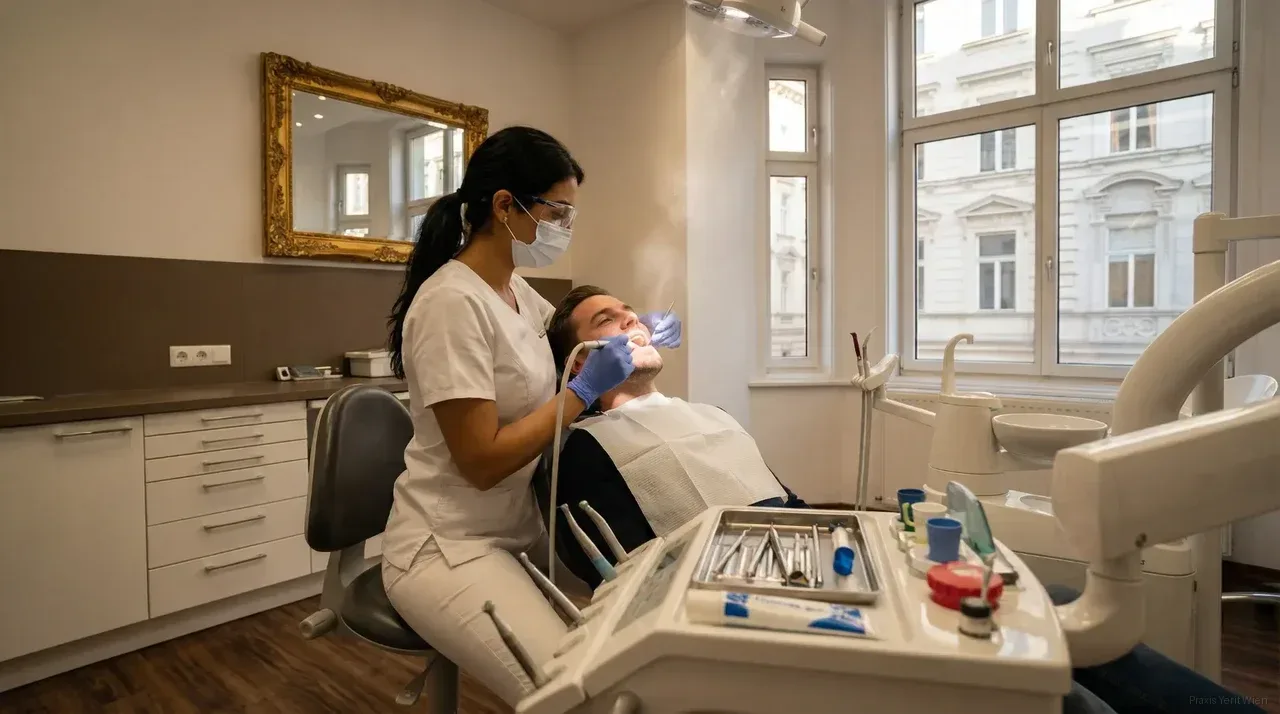
At Smile4Life Vienna, examination helps distinguish gingivitis from periodontitis. With professional cleaning and targeted treatment, inflammation can be controlled and tooth-loss risk reduced. Whether a particular tooth can be retained depends on the findings.
Contents

Your dental consultation in Vienna
Discuss which treatment may suit your teeth and clinical findings.
Learn morewurzelbehandlung-wien