
One of the questions I hear most often in my practice is: “Should I choose a public-insurance dentist or a private dentist?” There is no single answer, because both systems have advantages and disadvantages.
This guide explains what ÖGK actually pays for, where private patients may benefit and how to consider the decision for your situation. It aims to provide clear facts without hidden costs.
What Does ÖGK Pay for at the Dentist?
ÖGK (Österreichische Gesundheitskasse, the Austrian Health Insurance Fund) covers the following services:
- Tartar removal: 1× per year without a co-payment
- Dental treatment (fillings): tooth-coloured composite fillings in front teeth. Since 1 January 2025, amalgam may only be used in medically justified exceptional cases throughout the EU (Regulation (EU) 2024/1849). Amalgam-free fillings in back teeth are available without a co-payment at ÖGK dental health centres and contracted dentists with a billing agreement; otherwise, ÖGK reimburses part of the submitted invoice.
- Tooth extraction: covered without a co-payment
- Tooth replacement: removable dentures according to the applicable approval and cost-sharing rules; different requirements apply to fixed restorations
- Preventive care: some teeth cleaning, but not always
Important: ÖGK focuses on function rather than aesthetics. Once a tooth functions, treatment may be regarded as complete for coverage purposes, even if its appearance is not what you would like.
What Does ÖGK NOT Pay for?
The following points matter when considering costs. ÖGK does not generally cover:
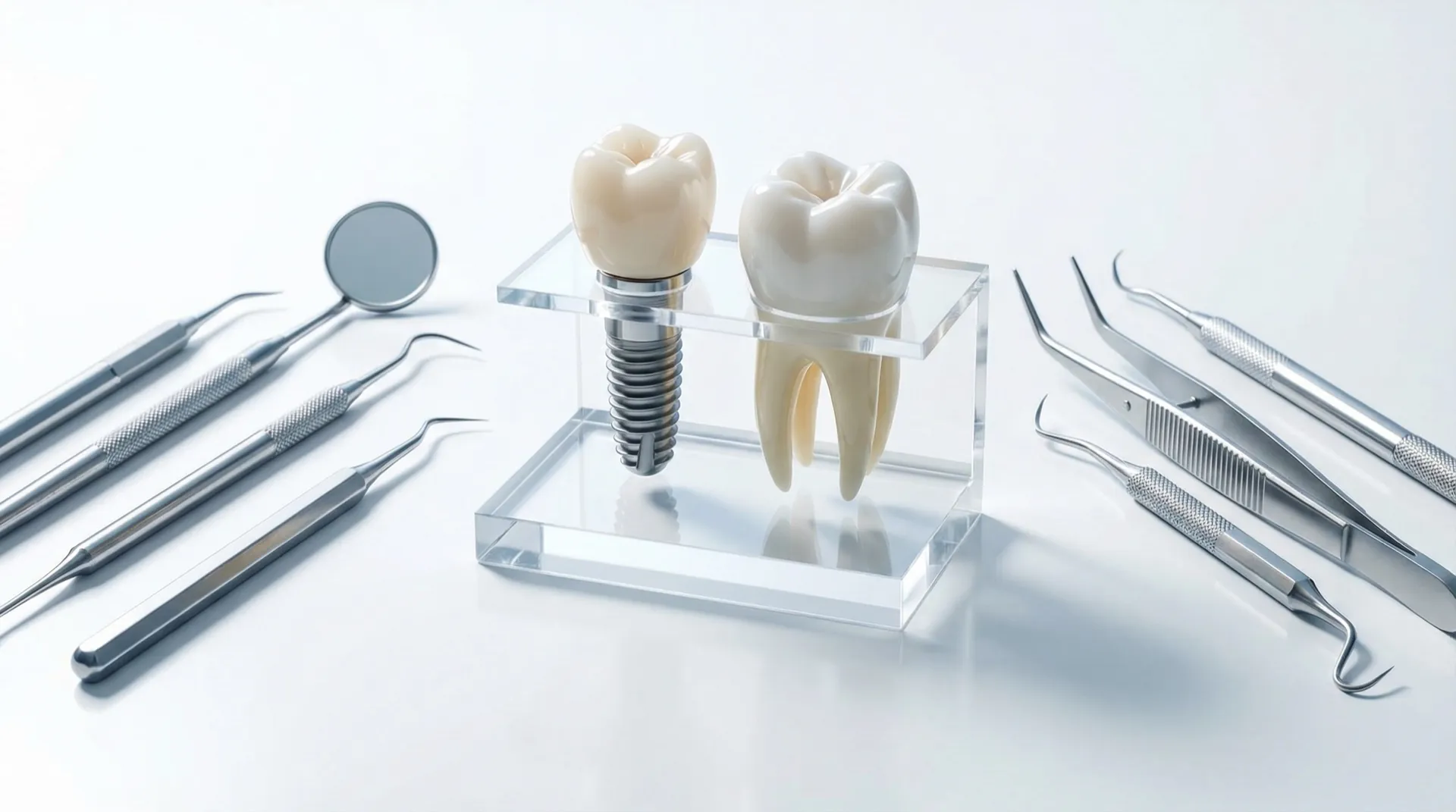
- Implants: generally private treatment; subsidies may be available for medically justified exceptional cases with prior approval (typical market guide €1,900–3,500 per implant including crown)
- Veneers: entirely self-funded (guide €750–2,500 per ceramic veneer)
- Teeth whitening: entirely self-funded (guide €400–700 for whitening at the practice)
- Amalgam-free back-tooth fillings without a billing agreement: private treatment, with ÖGK reimbursing 80% of the public-insurance tariff
- Crowns: fixed restorations are generally private treatment under ÖGK; medically justified exceptional cases require prior approval
- Orthodontics (braces): generally private for adults; any insurance benefit must be clarified individually
- Professional teeth cleaning: not routinely covered
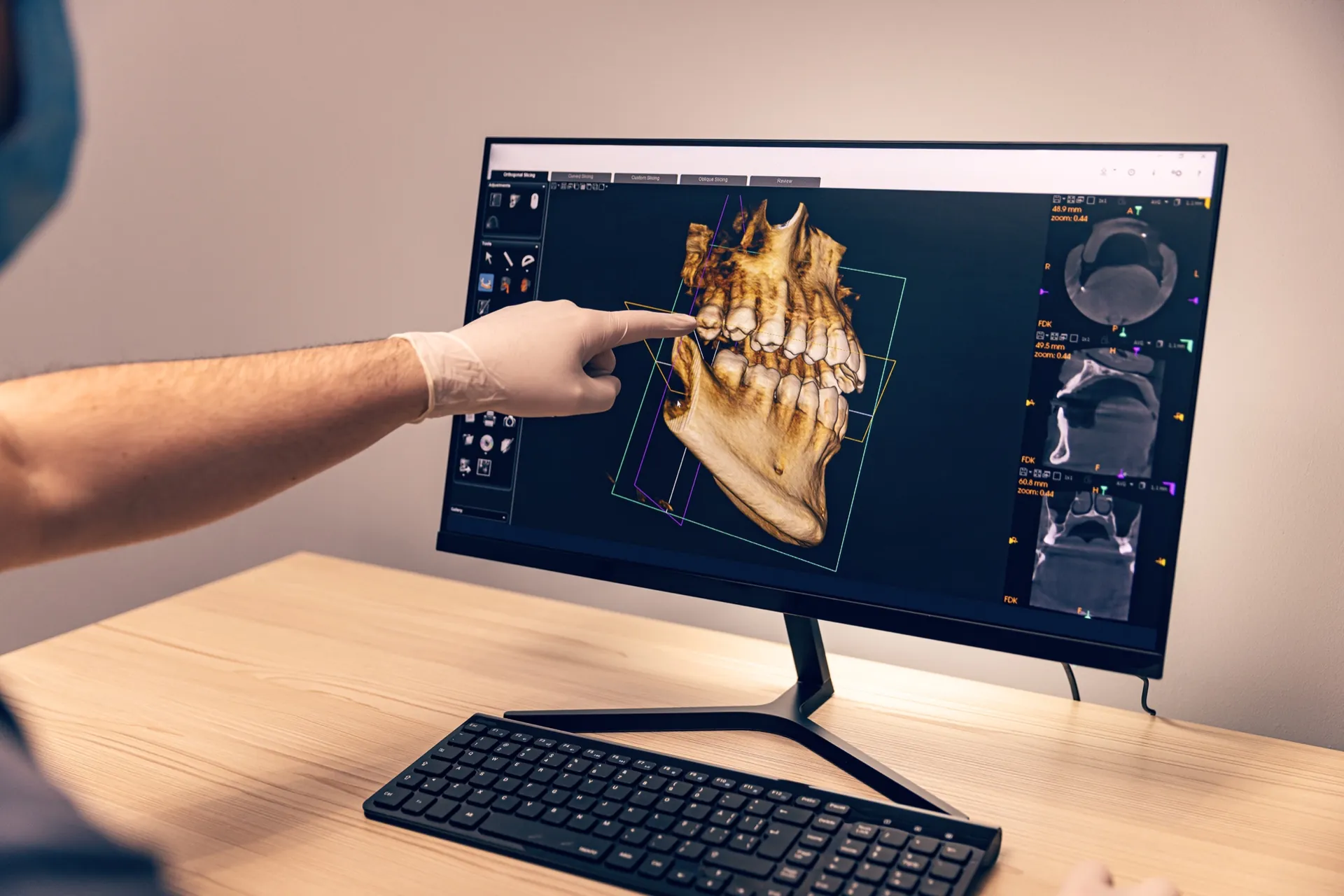
- Digital diagnostics (3D CBCT): partly self-funded
In practice: If you place importance on aesthetics or would like modern treatment options, significant additional costs may arise even with public insurance.
Public-Insurance vs Private Dentist: Differences in Quality
Myth: Public-insurance dentists are worse than private dentists.
Reality: No. The quality of dental treatment depends on the dentist’s experience and commitment rather than whether treatment is billed publicly or privately. There are excellent public-insurance dentists and average private dentists, and vice versa.
The practical differences concern:
- Choice of materials: private patients may choose higher-grade materials
- Time per patient: private practices often have more time per appointment
- Additional services: professional cleaning and digital diagnostics
- Waiting times: private practices are often more flexible
- Environment: private practices often invest more in facilities
However: A good public-insurance dentist with modern equipment and enough time may be a better choice than a poor private dentist focused only on profit.
Costs: Public Insurance vs Private Treatment
Example 1: A simple dental filling
Public-insurance dentist: ÖGK pays; a small personal contribution may be required
Private dentist: private treatment, with cost depending on material and scope
Example 2: A dental crown
ÖGK generally treats crowns as private services, regardless of whether the practice has a public-insurance contract. Medically justified exceptional cases require prior approval.
Typical market guide: €900–2,000 for a ceramic crown.
Example 3: A dental implant
Generally private treatment under ÖGK; medically justified exceptional cases with prior approval need separate assessment.
Typical market guide: €1,900–3,500 including the crown; bone grafting may be additional.
All amounts are typical market guides, as listed on our prices page. A firm figure requires an examination: you receive your personal cost plan after assessment at the practice and before treatment begins.
When comparing: There is no fixed percentage surcharge. Compare the services, materials, aftercare and the amount you will pay yourself.
Waiting Times and Access
Public-insurance dentist: Waiting time depends on the practice, treatment needed and urgency. Ask about the next available appointment and describe acute symptoms when contacting the practice.
Private dentist: For private treatment too, availability depends on the practice and treatment needed. Private billing does not guarantee shorter waits or a same-day appointment.
In practice: If you work and need flexible appointments, a private dentist may be more practical.
When Might You Choose a Public-Insurance Dentist?
- You have a small budget and need basic dental treatment
- Aesthetics are not your priority
- You can accommodate longer waits
- You need only tartar removal and simple fillings
However: You can receive good dental care as a public-insurance patient too. Quality is not automatically expensive.
When Might You Choose a Private Dentist?
- You would like to improve your smile and aesthetics matter to you
- You need implants, veneers or higher-grade materials
- You would like shorter waits and flexible appointments
- You value modern diagnostics and treatment methods
- You would like more time and discussion with your dentist
In practice: Several options need to be assessed for a missing tooth. Private implant treatment generally has to be self-funded under ÖGK; specific approval rules apply to medical exceptions. Purely aesthetic veneers are generally private services.
Can I Switch?
Yes, you can move between public-insurance and private treatment. However:
- Public-insurance patient → private patient: possible at any time
- Private treatment does not generally exclude later public-insurance services; the requirements depend on the service and the practice’s public-insurance contract
- Public-insurance rules may apply when changing contracted dentists; clarify them with your insurer rather than assuming a commitment until the end of the year
Tip: If you are unsure, ask your dentist whether both systems are offered. Many dentists provide public-insurance and private services and bill according to the treatment.
Choosing a public-insurance or private dentist is personal. There is no universal right answer, only an appropriate choice for your situation. At Smile4Life Vienna, we explain options for public-insurance services, private services and costs transparently, and leave the decision to you. Arrange an initial consultation without obligation to proceed and discuss which option may suit you best.
Contents

Your dental consultation in Vienna
Discuss which treatment may suit your teeth and clinical findings.
Learn morewurzelbehandlung-wien