Masseter Botox in Vienna: Use for Bruxism and Its Limits
Targeted relaxation of an overloaded chewing muscle — alongside a bite splint, rather than replacing it
Effect: 3–6 months
Guide price on the pricing page
Alongside a splint
Dental assessment
Masseter Botox Vienna
masseter-botox-wien
4.9★
Doctify rating
25+
Years of experience
Personal
In-practice consultation
1010 Vienna
Kärntner Straße 9
At a glance
What is masseter Botox and when may it be considered?
Botulinum toxin is injected into the chewing muscle to reduce its activity temporarily. For bruxism, this is off-label use; suitability, risks and alternatives must be clarified beforehand. Effects usually last several months. In a meta-analysis of randomised studies, effects began within four weeks, were strongest after five to eight weeks and lasted for up to 24 weeks.* The chewing muscle then regains its strength.
What are the disadvantages of masseter Botox?
The most common is temporarily weaker chewing: in a randomised study, 23 of 29 treated participants reported mild discomfort when chewing.* The effect is temporary. Whether another injection is appropriate is decided based on your clinical findings and response so far.
Does masseter Botox change facial shape?
It may: where the chewing muscle is strong, the lower face often appears slimmer afterwards. In a placebo-controlled study of 187 participants, lower facial volume decreased measurably.* In dental treatment, this is an accompanying effect rather than the treatment goal.
May a dentist in Austria inject Botox?
Only to treat conditions of the teeth, mouth and jaws, such as severe grinding. According to the Ministry of Health, practitioners authorised solely as dentists may not provide purely cosmetic Botox treatment of the face. Botox for grinding is off-label use.*
Botox at the dentist in Vienna
What is masseter Botox?
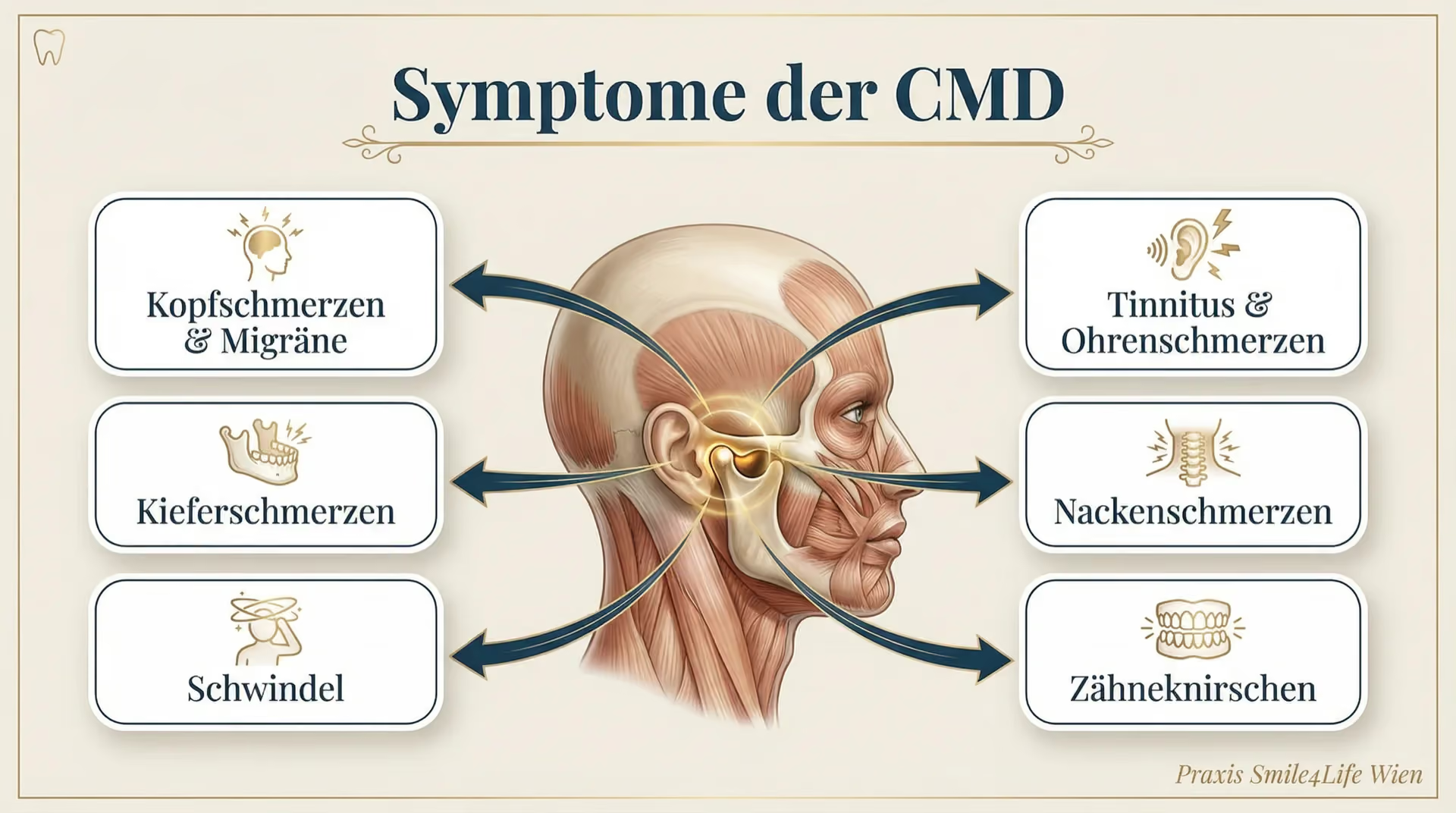
The masseter is the strongest human chewing muscle. Grinding or clenching at night loads it for hours — with tension, jaw pain and, over time, worn teeth as possible consequences. YERIT explains how masseter Botox works in the guide Masseter Botox.
Masseter treatment involves injecting a precisely determined dose of botulinum toxin type A into the chewing muscle. Botulinum toxin temporarily reduces activity in the treated muscle. Chewing function may also change; weaker or uncomfortable chewing and other side effects must be discussed beforehand. Unlike cosmetic wrinkle treatment, the goal here is functional — relieving an overworked muscle, rather than changing appearance.
A randomised phase 2 study involving 187 adults investigated prominent masseter muscles and found reduced lower facial volume after 90 days. This aesthetic outcome does not demonstrate an effect on bruxism.
Why we approach this as dentists rather than as an aesthetic treatment
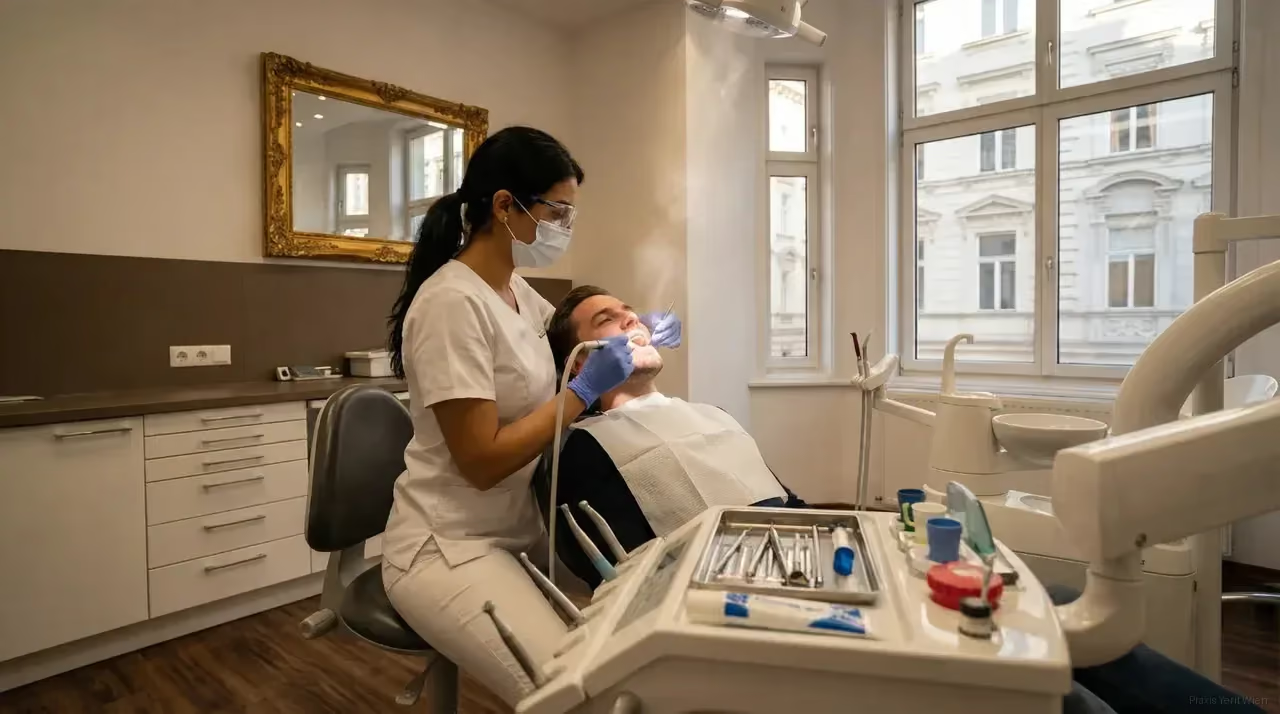
In Vienna, masseter Botox is predominantly offered by aesthetic clinics, where facial slimming is the focus. At our practice, Botox for teeth grinding is one component of treatment for teeth grinding and bruxism. This makes a practical difference: dental functional assessment comes before injection — assessing tooth wear, jaw joint findings, bite relationships and possible triggers such as stress or sleep disorders. Treatment is considered only after establishing that the chewing muscle is genuinely overloaded.
What does Botox treatment for teeth grinding involve?
1. Functional assessment. Examination of the chewing system and muscle activity, investigation of causes and discussion of your symptoms. We do not inject without this step.
2. Planning. Dose and injection points are determined according to the findings — the amount required depends on the extent of muscle overload, rather than a fixed formula.
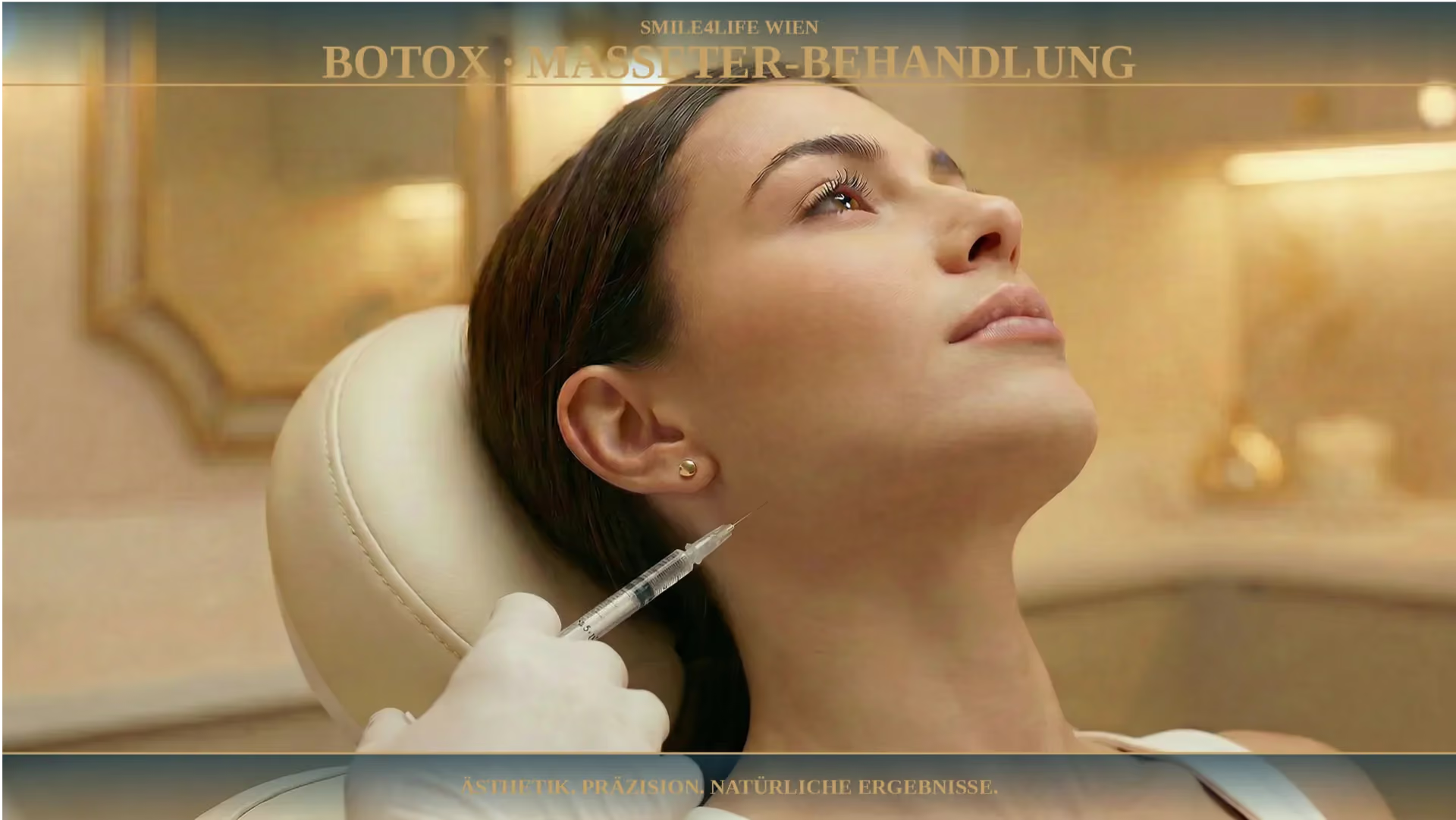
3. Injection. Into the chewing muscles on both sides, using very fine needles. The procedure is brief and generally does not require anaesthetic.
4. Follow-up. Most people notice initial changes after a few days; the meta-analysis reports a maximum effect after five to eight weeks. A follow-up appointment checks whether the dose is appropriate.
How long does the effect last?
A meta-analysis of randomised studies describes a clear time course: the effect is noticeable within four weeks, peaks after five to eight weeks and lasts for up to 24 weeks. This corresponds to the three to six months stated here. Muscle activity then gradually returns.
A four-year study investigated repeat injections for masseter hypertrophy, not treatment of bruxism. Depending on muscle strength and response, participants received further sessions in week 12 or 24. This does not establish a general repeat-treatment interval for bruxism. Whether repeat treatment is appropriate is discussed individually based on clinical findings.
Botox or a bite splint?
Both approaches may be considered depending on findings and treatment goals.
A randomised study of 60 adults with probable sleep bruxism and chewing-muscle pain found no significant difference in pain after three and six months. Botulinum toxin performed worse on several jaw-function measurements. This single study establishes neither a faster onset of effect nor a general ranking of treatments.
The appropriate treatment depends on clinical findings and the treatment goal.
Risks, side effects and limits
The most common side effect is a temporary change in how chewing feels. In the comparison study mentioned, around 79 per cent of those treated with botulinum toxin reported mild discomfort when chewing. This generally settles as the effect wears off, but it should be discussed openly.
It is equally important to be clear about temporomandibular disorders — jaw joint symptoms in the narrower sense. A meta-analysis of 14 randomised studies involving 395 participants did not demonstrate a benefit over sham treatment. Failure to demonstrate a benefit for TMD pain does not establish effectiveness for bruxism. Different treatment goals must be assessed separately. An overview of 14 systematic reviews also notes that their methodological quality is consistently low — reliable conclusions on long-term effects remain unavailable.
Botulinum toxin also treats the consequence rather than the cause. Stress, sleep disorders and bite problems remain. At our practice, injection is therefore never the entire treatment, but one part of it. Our page explains where grinding comes from and the alternatives to Botox for bruxism: Teeth Grinding and Bruxism in Vienna.
Costs and health insurance
The guide price for Botox treatment for bruxism is 300 to 500 euros per session, depending on the dose needed. An individually made bite splint is around 300 to 600 euros. These are general average market prices in Vienna for broad guidance, rather than a quotation from Smile4Life. The exact figures are on our pricing page; you receive your individual cost plan after a personal examination.
Before treatment, clarify with your insurer whether reimbursement is possible for the specific planned service. Use for bruxism is outside the approved indication (off-label); this alone does not answer the reimbursement question. Possible entitlement for a bite splint also depends on the service, findings, insurer and contractual status. Submitting an invoice is not a promise of cost coverage.

Participants assessed in 57 studies of bite splints
The current Cochrane review of occlusal splints for jaw joint symptoms assesses 57 studies involving almost 2,900 participants. Hard splints may relieve muscle pain when chewing; certainty is very low for all comparisons and outcomes examined. Reliable general conclusions on effectiveness are therefore not possible.
YOUR OPTIONS
TREATMENT OPTIONS COMPARED
We will discuss payment terms with you prior to treatment.
The indicative market prices in our price overview provide an initial guide. We will discuss which services are planned for you and the costs involved based on your examination findings and individual cost plan.
Advanced Dental Aesthetics & Implantology
Priv.Doz.Dr.Dr. K. Yerit
“Aesthetics is not a coincidence, but the result of precise planning and deep passion.”
Botox relieves an overworked chewing muscle but does not treat the cause of grinding — that is why functional assessment comes first at our practice, rather than an injection alone.
View profile →Scientific references
Institute for Implantology and Digital Dentistry Vienna
AWMF – Arbeitsgemeinschaft der Wissenschaftlichen Medizinischen Fachgesellschaften
DGZMK – Deutsche Gesellschaft für Zahn-, Mund- und Kieferheilkunde
DGFDT – Deutsche Gesellschaft für Funktionsdiagnostik und -therapie
Cochrane Oral Health
Yerit Practice – Dentist Vienna
Frequently asked questions
Frequently asked questions
Do you have a specific question about your diagnosis? Book a consultation appointment directly →
Questions about your treatment?
Discuss what matters to you and what the next steps look like with us.
Book your appointment nowYour orientation
The effect begins within four weeks and, according to the meta-analysis, lasts for up to 24 weeks.
Understanding what’s involved
One session followed by a check. Whether repeat treatment is appropriate is discussed individually based on findings and response.
In everyday life
Who this information is for
- You grind or clench at night and your chewing muscles are tense or painful in the morning.
- A bite splint alone is insufficient, or you cannot tolerate it.
- After examination, you would like to discuss whether botulinum toxin may be an additional treatment option.
- The chewing muscle is markedly enlarged and overload has been confirmed through functional assessment.
Important limitations
- Where temporomandibular disorder is the sole complaint: a meta-analysis of 14 randomised studies found no benefit over placebo. We then recommend functional therapy.
- During pregnancy and breastfeeding, and with neuromuscular conditions.
- Where the cause of grinding has not been assessed — Botox treats the consequence rather than the trigger.
- As a sole permanent solution: the effect is temporary and requires repeat treatment.
Our approach
SCIENTIFIC STUDIES
Chen Y et al. (2023). Effectiveness of Botulinum Toxin Injection on Bruxism: A Systematic Review and Meta-analysis of Randomized Controlled Trials
A meta-analysis of randomised studies shows measurable reductions in bite force and pain with botulinum toxin. Effects begin within four weeks, peak after five to eight weeks and last for up to 24 weeks. Bite splints have more sustained effects, particularly from the ninth to twelfth week.
36694050
Chisini LA et al. (2024). Occlusal splint or botulinum toxin-a for jaw muscle pain treatment in probable sleep bruxism: A randomized controlled trial
A randomised study assigned 60 adults with probable sleep bruxism and chewing-muscle pain to a bite splint or botulinum toxin; 59 were analysed. At three and six months, no significant difference was found in the primary pain outcome. This does not prove general equivalence. Botulinum toxin performed worse on several function measures; 23 of 29 people in that group reported mild discomfort when chewing.
39510242
Coelho MS et al. (2025). Botulinum Toxin for Bruxism: An Overview
An overview of 14 systematic reviews mostly finds reductions in pain, grinding episodes and maximum bite force. It also rates the methodological quality of all included reviews as low to critically low — reliable conclusions on long-term effects therefore remain unavailable.
40423331
Saini RS et al. (2024). The effectiveness of botulinum toxin for temporomandibular disorders: A systematic review and meta-analysis
The authors of a review of 14 randomised studies involving 395 people with TMD found no established advantage of botulinum toxin over placebo for the pain and function outcomes studied. Statistical results in the abstract are not presented consistently throughout. A lack of demonstrated benefit for TMD pain is not positive evidence of effectiveness for bruxism; the treatment goals must be assessed separately.
38483856
Shome D et al. (2019)
The study of 50 people with bilateral masseter hypertrophy assessed two or three initial injection sessions at 12-week intervals and followed muscle volume and facial shape for up to four years. It does not investigate an ongoing repeat-treatment routine or provide general evidence of effectiveness for bruxism. Further treatment requires an individual indication.
31461011
Carruthers A et al. (2025)
A randomised phase 2 study of 187 adults investigated prominent masseter muscles rather than the effectiveness of bruxism treatment. After one or two treatments over a year, lower facial volume decreased compared with placebo. No clinically relevant jaw or tooth changes were found during that period; local changes in smiling were reported in four people in the highest-dose group. This limited study does not establish general long-term safety.
39522729
Botox in der Zahnmedizin – Newsletter der Zahnärztekammer Steiermark (Juli 2017)
According to the Federal Ministry of Health, dentists may not use Botox or fillers for cosmetic and aesthetic purposes; dental use of Botox is permitted only to treat diseases and abnormalities of the teeth, mouth and jaws (§ 4 Abs. 3 Z 3 ZÄG) (stmk.zahnaerztekammer.at, accessed 03.11.2026).
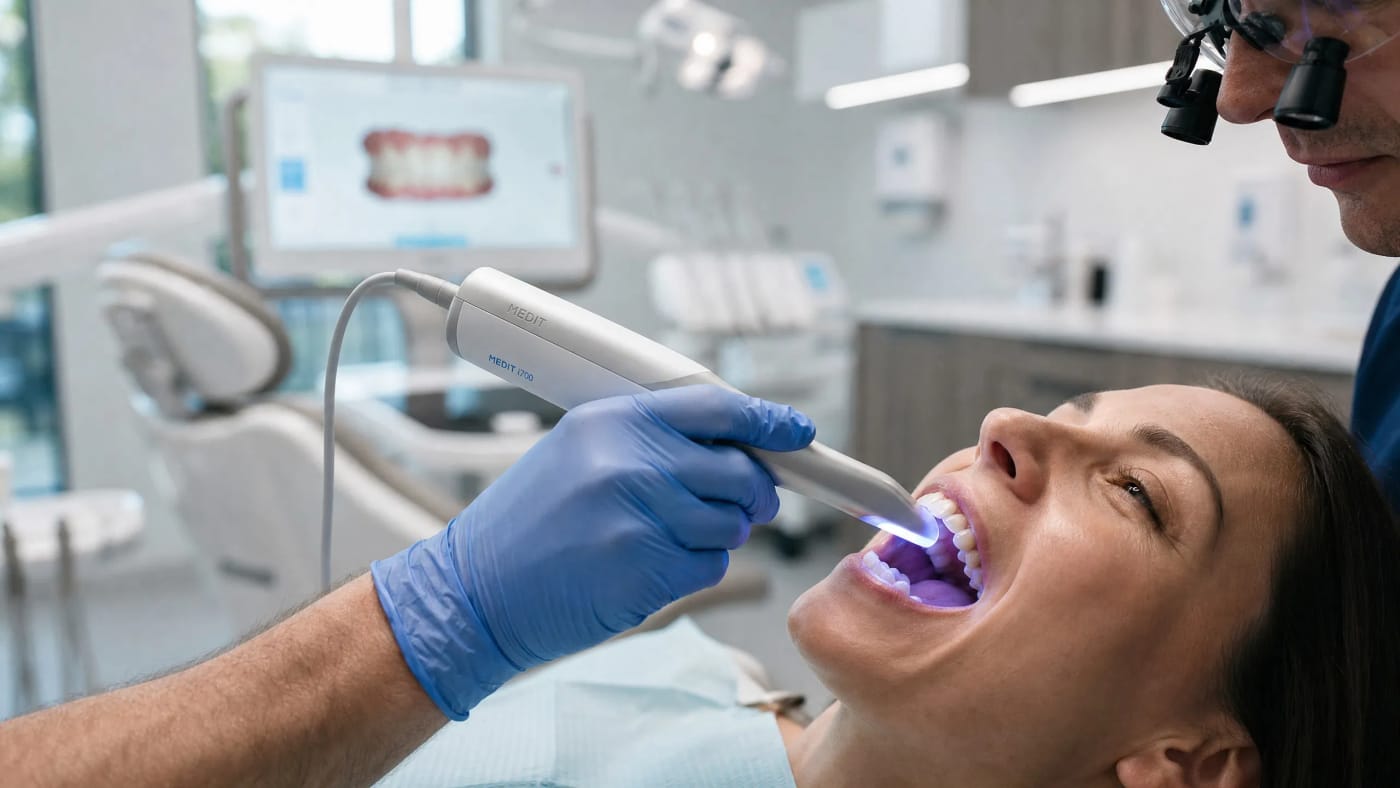
Digitally measured, carefully fitted
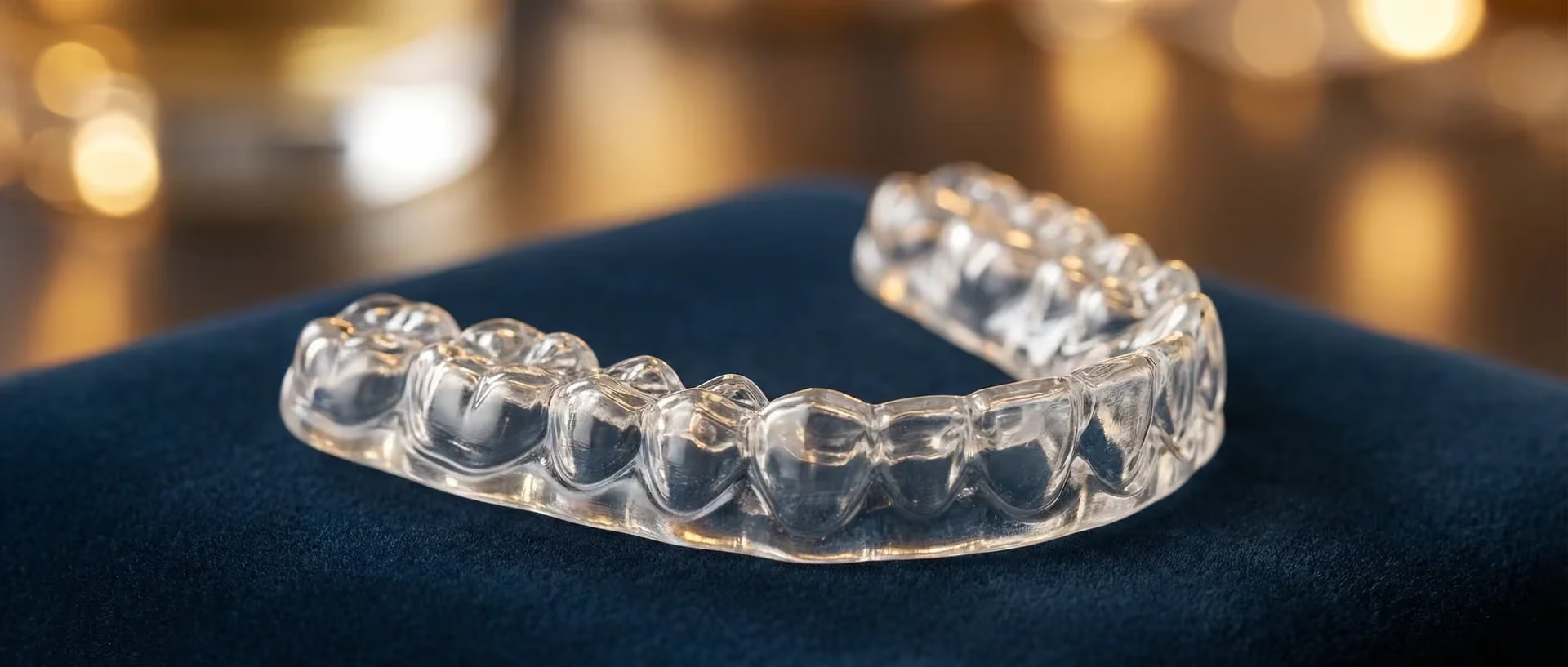
A digital intraoral scan records tooth surfaces for splint manufacture. Clinical functional examination and recording the jaw relationship are separate steps. Which records are needed depends on the findings; fit and bite contacts are checked during fitting.
More topics in this area
Deepen your knowledge – find all information regarding the treatment process, costs, and results.


Kärntner Straße 9
100 meters from Stephansplatz, Innere Stadt.
Partnerships & Memberships & References