TMD Treatment in Vienna: Assess and Treat Your Symptoms
Temporomandibular disorders (TMD) — detailed assessment and interdisciplinary treatment
Functional assessment first
Duration based on findings
Multimodal approach
Interdisciplinary care
TMD Treatment Vienna
cmd-behandlung-wien
4.9★
Doctify rating
25+
Years of experience
Personal
In-practice consultation
1010 Vienna
Kärntner Straße 9
At a glance
What is TMD and how is it treated?
TMD stands for temporomandibular disorders and covers functional problems involving the chewing muscles, jaw joints and interaction of the teeth. Treatment depends on the findings and usually begins with simple, reversible measures: information, softer food, warmth or cold and guided exercises. Hard bite splints may reduce chewing-muscle pain when chewing, but the Cochrane review finds the evidence very uncertain.*
What is done during TMD treatment?
First, the chewing muscles, jaw joints, mouth opening and bite are examined. Measures that are as reversible as possible, such as a splint, physiotherapy or exercises, are then planned. During splint therapy, fit, bite contacts and possible changes must be monitored.*
What should I avoid with TMD?
During painful periods, avoid prolonged gum chewing, opening very wide, and hard or chewy foods where possible. If the mouth cannot be closed after opening wide and this does not resolve by itself, medical help is needed.*
What causes TMD?
Usually several factors together: overloaded chewing muscles, grinding and clenching, injuries, joint changes or stress. Painless jaw joint clicking, by contrast, is common and does not in itself require treatment.*
Temporomandibular disorders
What does TMD treatment involve?
You wake up with a tense jaw. Your jaw joint clicks when you yawn, with dull headaches around the temples — many people do not realise their symptoms may originate from the jaw.
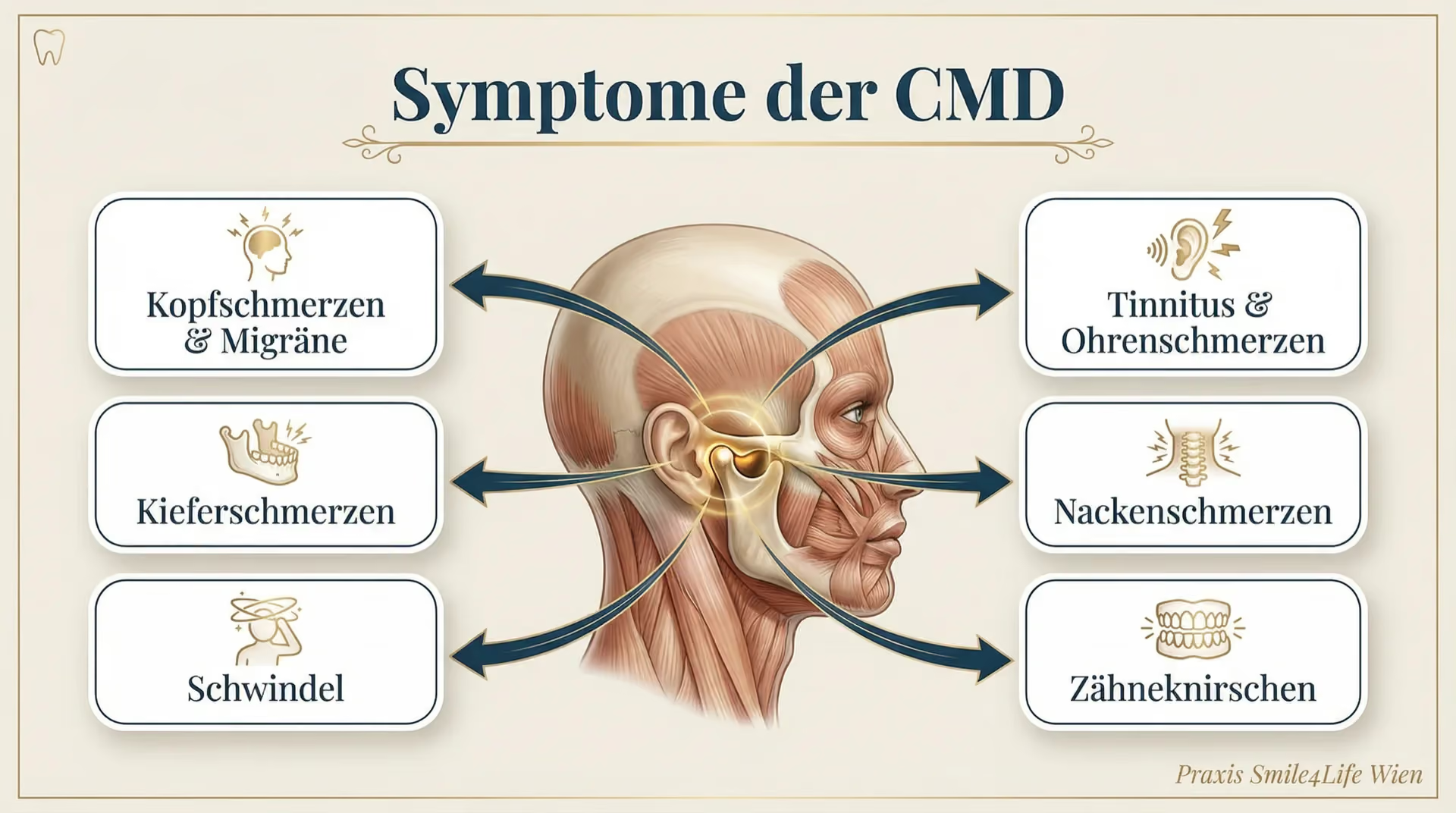
TMD — temporomandibular disorders, known in German as CMD — is an umbrella term for functional disorders involving the jaw joints, chewing muscles and tooth contacts. The German term ‘craniomandibular’ describes a disturbed interaction between the skull (cranium) and lower jaw (mandible). TMD is not a single disease; it covers different symptom patterns, from mild jaw clicking to chronic pain that may radiate into the head, neck and shoulders.
Typical symptoms include pain or clicking in the jaw joint, tense chewing muscles, limited mouth opening and headaches around the temples; some people also report tinnitus or dizziness. The guide TMD: symptoms and causes explains these symptoms and their causes in more detail.
How do we assess TMD?
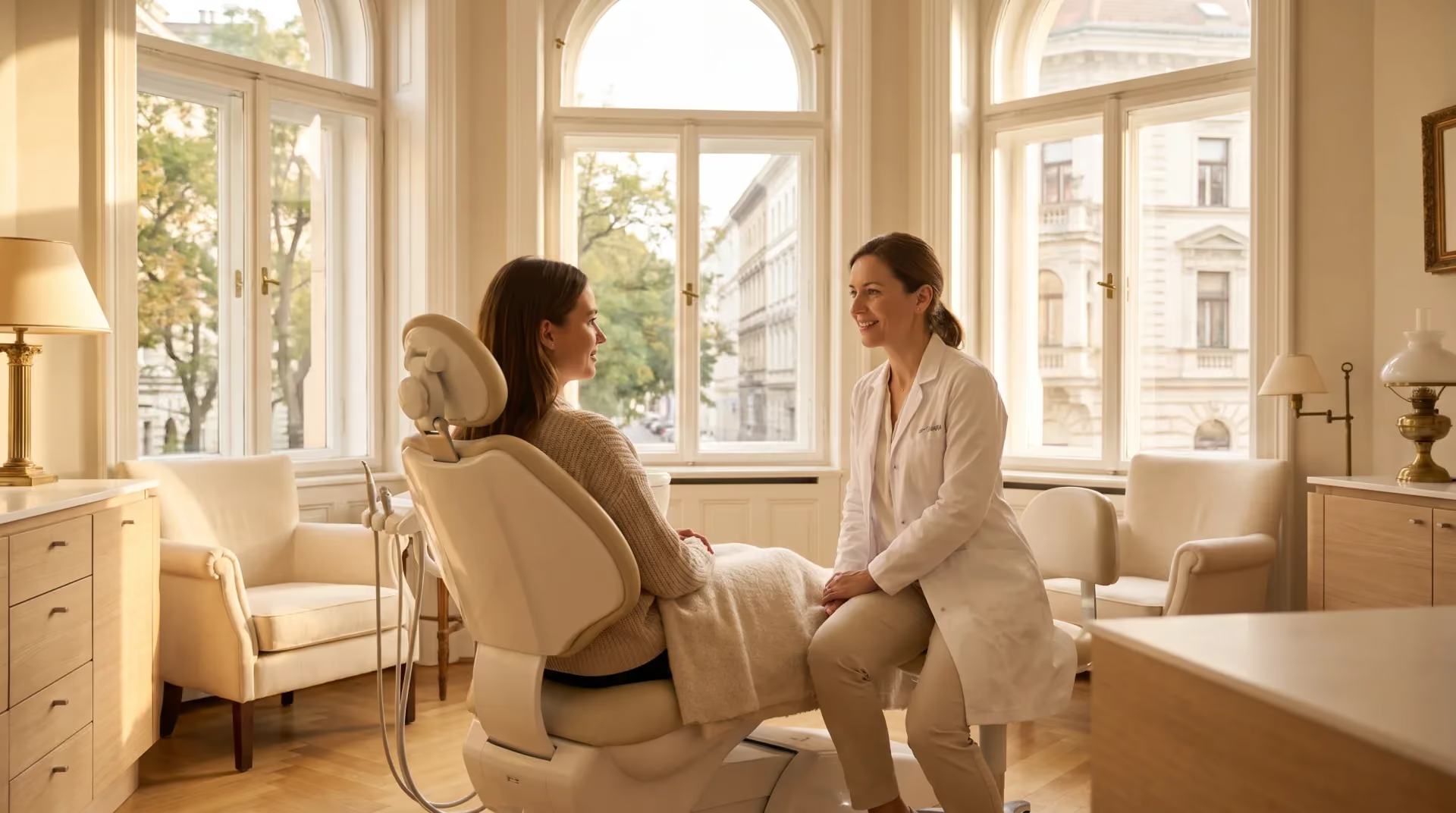
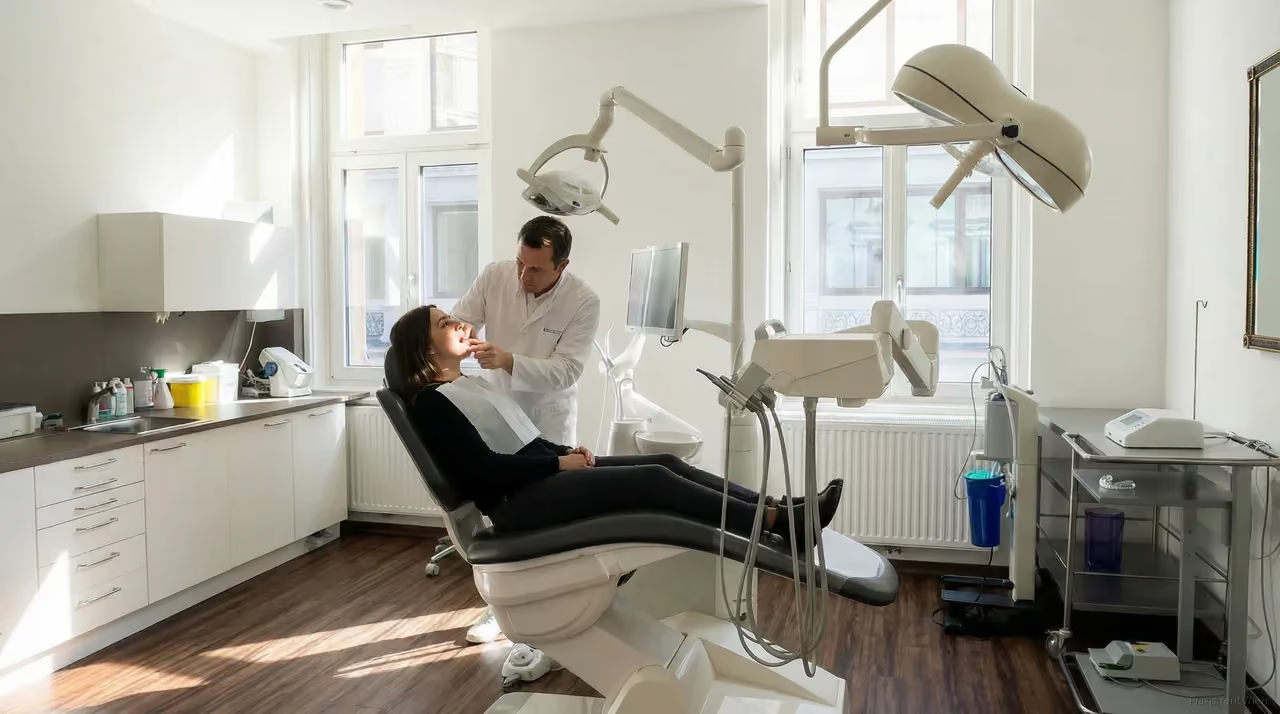
An in-depth initial discussion records your symptoms and medical history. Clinical functional assessment follows: we check jaw joint movement, examine the chewing muscles by touch and analyse your bite. Additional imaging may be appropriate depending on the findings. MRI can assess the joint disc and other soft tissues; CBCT primarily addresses questions about bone. Whether imaging is needed and where it takes place is clarified specifically.
How does TMD treatment in Vienna work?
We develop your individual treatment plan based on the diagnosis. Follow-up intervals and treatment duration depend on your diagnosis, symptoms and chosen measures.
What roles do a splint, physiotherapy and exercises play?
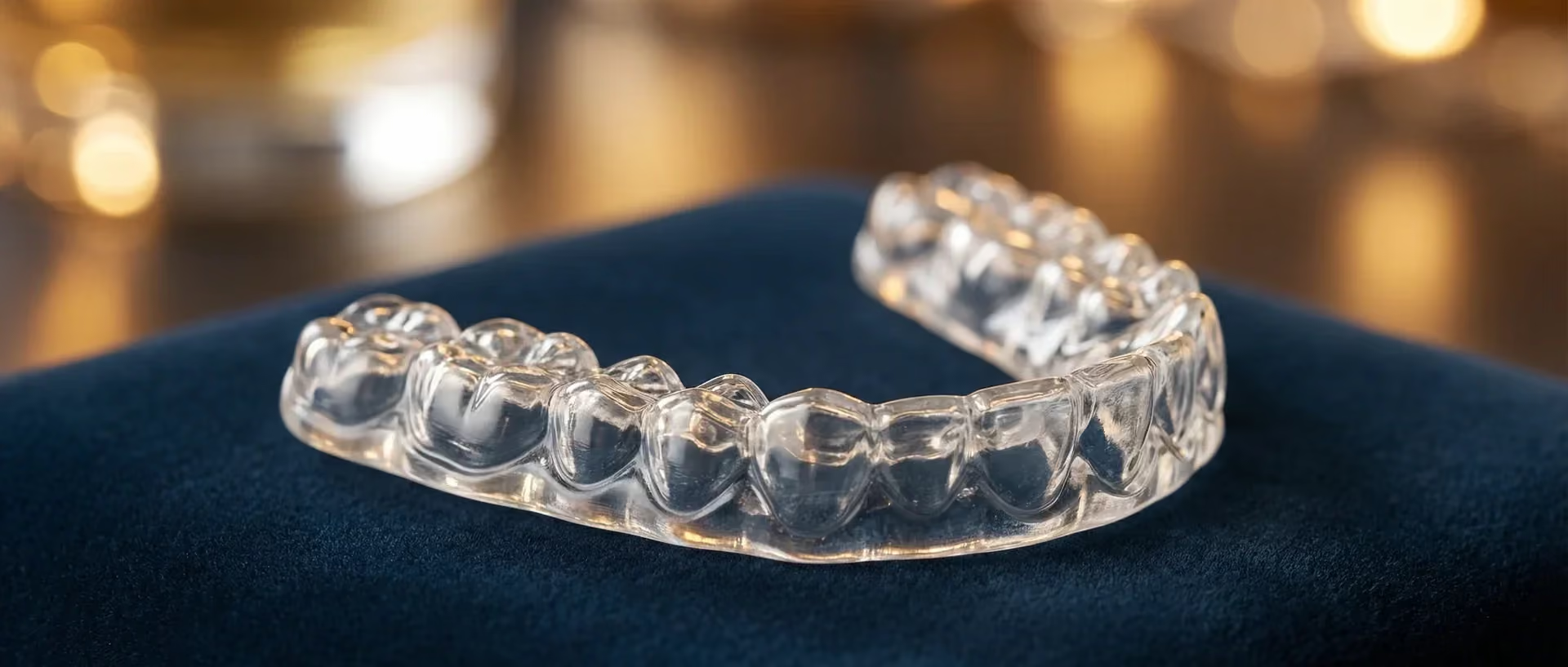
Where splint therapy is appropriate, an individually made relaxation splint (Michigan type) supports muscle and joint function — the German S2k guideline (2024) recommends hard, full-coverage splints for longer-term use. Alongside this, we plan physiotherapy with manual treatment of the chewing muscles and exercise programmes. Importantly, the guideline explicitly states that not every TMD automatically requires splint therapy — shared decision-making with you is part of the recommendation.
There is no single solution for TMD. We therefore work closely with physiotherapists and, where needed, other specialties. If severe bruxism accompanies the disorder, masseter Botox treatment may also be appropriate.
What happens after TMD treatment?
TMD treatment does not end with the last follow-up appointment. If a bite splint has been prescribed, continue wearing it at night for as long as we recommend — particularly during stressful periods. Daily exercises for the chewing muscles support treatment progress. Where needed, we arrange six-monthly follow-up appointments to check jaw joint function and adjust the splint.
Consistency matters in everyday life: regular splint use where prescribed and daily exercises. How quickly tension eases varies between individuals; we discuss progress at follow-up.

Participants assessed in 57 studies of bite splints
The current Cochrane review of occlusal splints for jaw joint symptoms assesses 57 studies involving almost 2,900 participants. Hard splints may relieve muscle pain when chewing; certainty is very low for all comparisons and outcomes examined. Reliable general conclusions on effectiveness are therefore not possible.
YOUR OPTIONS
TREATMENT OPTIONS COMPARED
We will discuss payment terms with you prior to treatment.
The indicative market prices in our price overview provide an initial guide. We will discuss which services are planned for you and the costs involved based on your examination findings and individual cost plan.
Advanced Dental Aesthetics & Implantology
Priv.Doz.Dr.Dr. K. Yerit
“Aesthetics is not a coincidence, but the result of precise planning and deep passion.”
Temporomandibular disorders can be treated — with an appropriate individual approach, rather than a splint for every case.
View profile →Scientific references
Institute for Implantology and Digital Dentistry Vienna
AWMF – Arbeitsgemeinschaft der Wissenschaftlichen Medizinischen Fachgesellschaften
DGZMK – Deutsche Gesellschaft für Zahn-, Mund- und Kieferheilkunde
DGFDT – Deutsche Gesellschaft für Funktionsdiagnostik und -therapie
Cochrane Oral Health
Yerit Practice – Dentist Vienna
Frequently asked questions
Frequently asked questions
Do you have a specific question about your diagnosis? Book a consultation appointment directly →
Questions about your treatment?
Discuss what matters to you and what the next steps look like with us.
Book your appointment nowYour orientation
Understanding what’s involved
In everyday life
Consistency matters in everyday life: regular splint use where prescribed and daily exercises. How quickly tension eases varies between individuals; we discuss progress at follow-up.
Who this information is for
Important limitations
Our approach
SCIENTIFIC STUDIES
DGFDT/DGZMK (2024). S2k-Leitlinie: Okklusionsschienen zur Behandlung craniomandibulärer Dysfunktionen und zur präprothetischen Therapie
The S2k guideline on TMD and pre-prosthetic therapy favours hard, full-coverage splints for use longer than one month; simple protective bruxism splints are excluded from this section. For relaxation splints, it describes approximately two millimetres in the molar region, with approximately four millimetres only for particular indications or lack of response. Wearing instructions and follow-up depend on findings; sufficient improvement may allow reduced use or gradual discontinuation. Not every TMD requires a splint.
DGZMK/DGFDT (2026). S3-Leitlinie: Diagnostik und Behandlung des Bruxismus, Version 2.1
The S3 guideline on diagnosing and treating bruxism is available in version 2.1 from 2026. Recommendation 24 lists botulinum toxin in adult chewing muscles as a possible option, with low GRADE certainty of evidence. Questions on target muscles, injection sites, dose and dilution remain open; off-label use and the required informed consent must be considered. This establishes no general first-line, repeat-treatment or cure schedule.
Bergmann A et al. (2020). Effect of treatment with a full-occlusion biofeedback splint on sleep bruxism and TMD pain: a randomized controlled clinical trial
A randomised controlled study finds that a biofeedback splint reduces night-time grinding episodes and muscle pain more than a conventionally adjusted occlusal splint.
32430774
Singh BP et al. (2024). Occlusal interventions for managing temporomandibular disorders
The current Cochrane review (57 studies, almost 2,900 participants) finds indications that hard bite splints may relieve muscle pain when chewing — but the evidence is very uncertain and does not permit reliable general conclusions on effectiveness.
39282765
Assiri HA et al. (2025). Bruxism treatment outcomes: A systematic review and meta-analysis
A current systematic review (22 studies) finds no single procedure universally effective for bruxism — splints, botulinum toxin and biofeedback are best combined within a multidisciplinary treatment approach.
41366915
Delcanho R et al. (2022). Botulinum Toxin for Treating Temporomandibular Disorders: What is the Evidence?
A review of 24 randomised studies finds good evidence for botulinum toxin in masseter hypertrophy and generally positive but inconsistent evidence for myogenous jaw joint pain and bruxism management.
35298571
Kiefersperre und Kieferklemme – Öffentliches Gesundheitsportal Österreichs
Restricted mouth opening can result from jaw-joint inflammation or spasm of the chewing muscles, for example after tooth extraction; the muscular form usually resolves in less than two weeks. Persistent inability to close the jaw needs medical treatment (gesundheit.gv.at, accessed 03.11.2026).
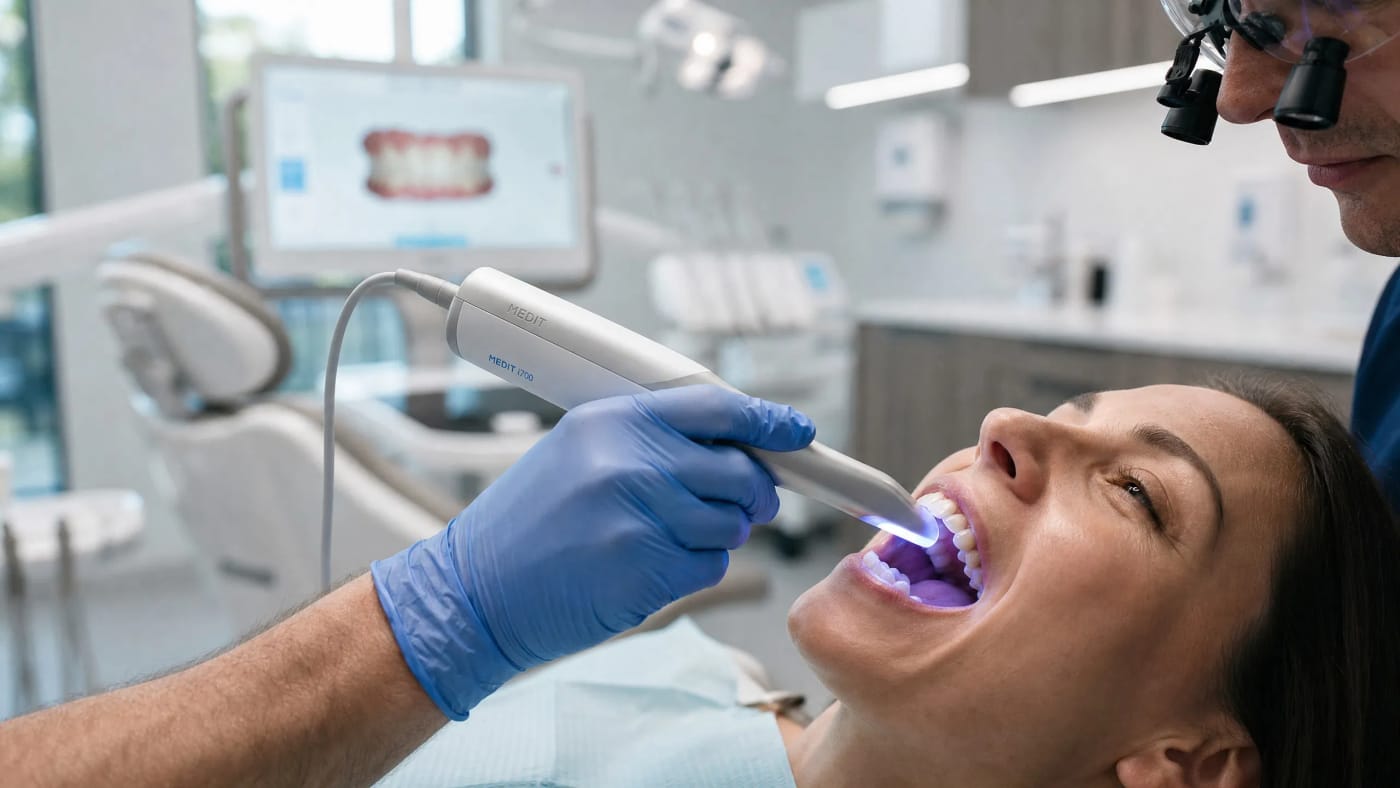
Digitally measured, carefully fitted
A digital intraoral scan records tooth surfaces for splint manufacture. Clinical functional examination and recording the jaw relationship are separate steps. Which records are needed depends on the findings; fit and bite contacts are checked during fitting.
More topics in this area
Deepen your knowledge – find all information regarding the treatment process, costs, and results.


Kärntner Straße 9
100 meters from Stephansplatz, Innere Stadt.
Partnerships & Memberships & References