
Teeth Grinding in Vienna: Diagnosing and Treating Bruxism
We investigate why you grind or clench and protect teeth and jaw joints — usually starting with an individually fitted bite splint
Functional assessment
Bite splint as a foundation
Guide prices on the pricing page
Botox only as an addition
Teeth Grinding & Bruxism Vienna
bruxismus-zaehneknirschen-wien
4.9★
Doctify rating
25+
Years of experience
Personal
In-practice consultation
1010 Vienna
Kärntner Straße 9
At a glance
What is bruxism, and how common is it?
Bruxism means repeated grinding, clenching or chewing-muscle bracing during sleep or while awake. A 2024 meta-analysis estimated that around 21 per cent of people worldwide grind or clench during sleep and 23 per cent while awake.* Many do not realise it because sleep grinding goes unnoticed.
How can I tell whether I grind at night?
Often the person sleeping beside you hears it first. Typical clues include worn teeth, tired or painful chewing muscles in the morning, difficulty opening the mouth on waking and headaches around the temples.*
Is grinding a disease?
Usually not in otherwise healthy people. A 2018 international consensus describes bruxism as a behaviour that becomes a risk when it damages teeth, chewing muscles or jaw joints.* Treatment is then appropriate.
Does a bite splint protect against grinding?
It protects teeth but does not stop grinding itself: its effect lasts only while it is worn. For longer-term use, the 2024 guideline recommends hard splints covering all teeth.*
Teeth Grinding and Bruxism in Vienna
What is teeth grinding?
The dental term for teeth grinding is bruxism. It means repeated chewing-muscle activity: the teeth are clenched or rubbed together, or the lower jaw is braced and moved without the teeth moving.
Sleep bruxism: grinding at night
With sleep bruxism, you usually grind or clench at night without realising it — often the person sleeping beside you hears it first. Night-time grinding can be loud, with the upper and lower teeth audibly rubbing together. People who sleep alone often notice only the consequences: tired chewing muscles in the morning, headaches around the temples and flattened teeth.
Awake bruxism: clenching during the day
With awake bruxism, you clench your teeth during the day, for example at your desk, while driving or during tense conversations. Often there is no sound. This silent clenching also loads the teeth and chewing muscles.
It is not rare. A 2024 meta-analysis estimated that around 21 per cent of people worldwide have sleep bruxism and 23 per cent awake bruxism; the European figures were 21 and 18 per cent. Women were affected more often. The Austrian health portal refers to about one in five people.
Regarding the definition: in 2018, an international consensus group led by Lobbezoo stated that, in otherwise healthy people, bruxism is not a disease in itself, but a behaviour. It needs treatment when it has consequences — worn teeth, chewing-muscle pain or jaw joint problems. That is where treatment focuses.
What causes teeth grinding?
Where does grinding come from, and what triggers it? There is rarely one cause. Several factors almost always occur together, often reinforcing one another for months before symptoms appear. The German S3 guideline on bruxism is available in version 2.1 from 2026. Stress, family predisposition and sleep disorders are possible influences; they do not establish a single cause for every person.
Stress and tension as possible causes
Is teeth grinding psychological? Partly. A 2020 meta-analysis found that people under stress grind or clench about twice as often as those without stress — although the authors rated certainty low. Awake bruxism is closely associated with work or family pressures. Many people notice clenching only when they deliberately pay attention, after which they may recognise it in many situations. A sudden onset of grinding often coincides with a new strain, a new medicine or poorer sleep — factors that the guideline identifies as possible triggers or aggravating influences.
The literature does not attribute a hidden ‘emotional meaning’ or message to grinding. The association with stress and tension is supported — and can be addressed.
Sleep, substances and medicines
Sleep bruxism is regarded as a process controlled by the central nervous system. Sleep disorders and sleep apnoea increase risk. People who grind strongly at night and also snore or are noticeably tired during the day should seek sleep-medicine assessment too.
High alcohol or caffeine intake, smoking and recreational drugs may promote grinding. It occurs as a side effect of some medicines, such as certain antidepressants. Never stop a medicine on your own for this reason; speak to the doctor who prescribed it.
What about a deficiency? Magnesium or vitamin D deficiency is discussed in articles as a possible aggravating factor. We have not identified controlled studies in the literature showing that a supplement stops grinding. If a deficiency is suspected, ask your GP about a blood test rather than taking tablets without assessment.
The bite and jaw joint
An unfavourable bite is often cited as a cause of grinding, but research suggests it is only one factor among several and rarely explains repeated night-time grinding on its own. We therefore do not rush to grind down healthy teeth, but first establish what is happening.
Teeth grinding in children and babies
Grinding is common in children, particularly with baby teeth and during the transition to permanent teeth. Its exact frequency is uncertain: a 2013 systematic review found values between 3.5 and 40.6 per cent, almost entirely from parental reports. It also describes grinding generally decreasing with age. Reliable figures for babies with their first teeth are scarce.
Is grinding inherited? It at least runs in families. A 2025 meta-analysis found children whose parents grind at night do so about three times as often — with very low certainty and without being able to separate genes clearly from shared daily life. According to the health portal, childhood grinders have a higher risk of grinding as adults. Passive smoking is considered a risk factor in children.
What does this mean for parents? Occasional grinding in a five-year-old is usually not an emergency. A dental check is worthwhile if your child reports pain when chewing, teeth become visibly shorter, or they also snore and sleep restlessly. Discuss snoring with your paediatrician too.
Consequences of grinding: damage to teeth and the jaw
Occasional grinding often leaves no traces. Is teeth grinding dangerous? Not in the narrower sense, but it can still damage teeth, particularly when unnoticed for years. Dentists usually see early signs on chewing surfaces. Strong, regular, untreated grinding may produce typical consequences:
- Teeth: worn chewing surfaces, enamel cracks, sensitive tooth necks and, in extreme cases, exposed dentine or an exposed nerve.
- Fillings, crowns, implants: chips and fractures in restorations designed for normal chewing forces.
- Chewing muscles: tiredness, tenderness and limited mouth opening in the morning; sometimes the chewing muscle becomes visibly larger.
- Head and neck: headaches around the temples on waking, and tension extending into the neck.
Can grinding destroy teeth? Over years, it can. It does not cause decay, which involves bacteria. Where enamel has worn away, however, softer dentine is exposed and the tooth becomes sensitive to cold and sweet foods.
Restorations are particularly vulnerable. A 2023 meta-analysis of 27 studies found that people with probable bruxism had just over twice the risk of losing a dental implant as people without bruxism. If you have or are planning veneers, crowns or implants, have grinding assessed early. In our experience with veneers, night-time grinding is a typical reason for a shell breaking sooner than expected — what happens if a veneer breaks.
The jaw joint and TMD (temporomandibular disorders)
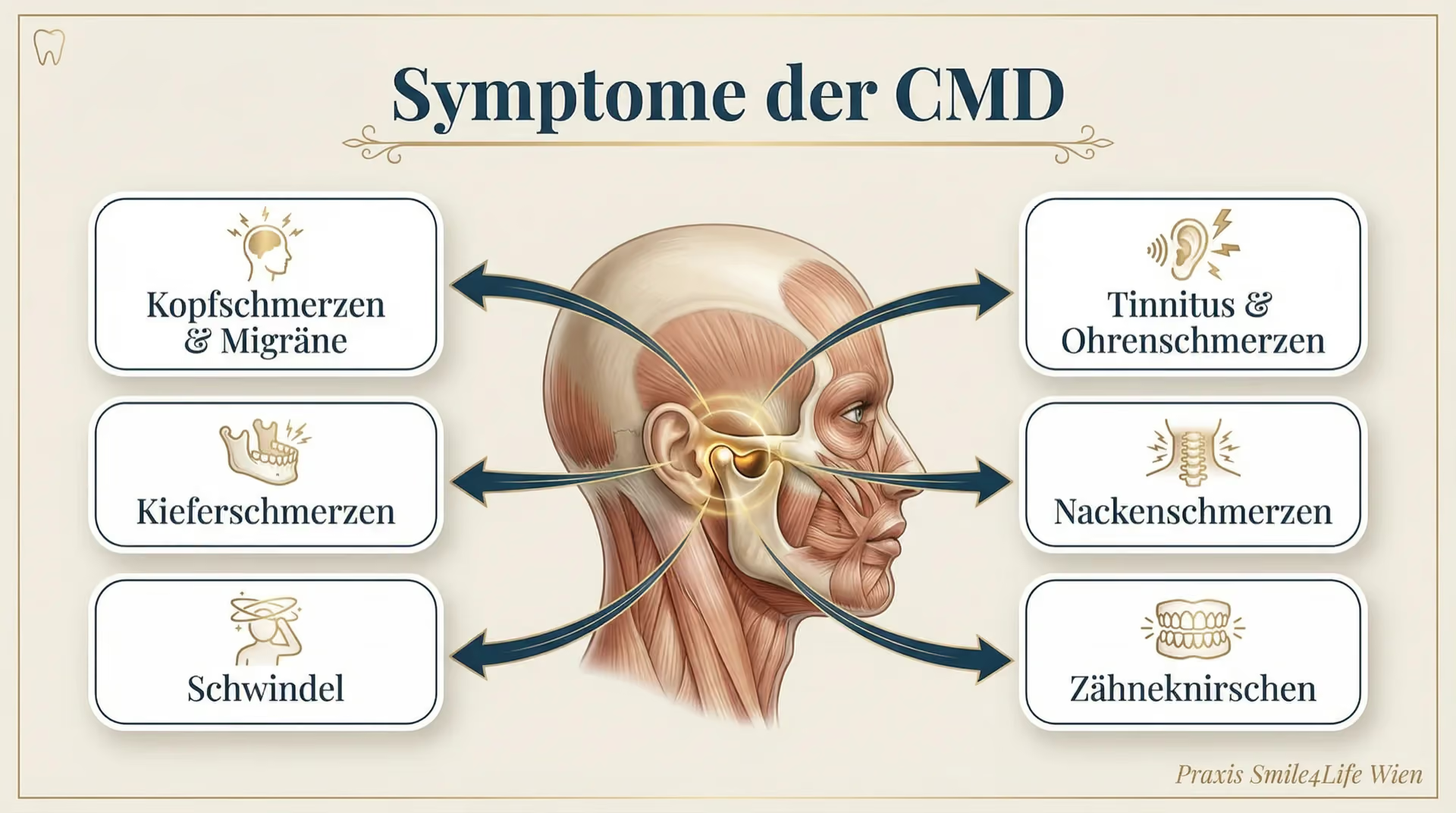
Bruxism may contribute to temporomandibular disorders (TMD) — involving jaw pain, clicking and restricted movement. What TMD means is explained in our question catalogue. Some people also report tinnitus; whether TMD may contribute to tinnitus can be clarified only through individual examination.
Treating tooth damage from grinding
Not every area of wear needs repair. A 2017 European expert consensus distinguishes natural wear from pathological tooth wear and recommends first investigating the cause, preventing further damage and monitoring progress. Fillings or crowns follow only when other measures are insufficient. If restoration is needed, the experts recommend a conservative, minimally invasive approach with bonded materials.
This is also our approach. First, we protect remaining tooth structure with a splint and document the initial findings. In suitable cases, small defects on edges and chewing surfaces may be rebuilt with composite. The preparation needed is assessed for each tooth — similarly to Composite Bonding. Where more structure is missing, options may include onlays or crowns. Grinding is considered in planning every new restoration, and we discuss appropriate protection and follow-up afterwards. Whether, when and how long a splint is worn depends on findings.
How does a dentist identify bruxism?
First, we talk. We ask when symptoms occur, whether someone has heard grinding, how you sleep and which medicines you take. Examination follows: we inspect tooth wear, assess chewing muscles and jaw joints by touch, and check how far and evenly the mouth opens. Read how a functional assessment for TMD works in the question catalogue.
Grinding can usually be identified during this assessment. Self-observation also helps. For one to two weeks, notice when your teeth touch during the day. They should not touch at rest: lips closed, teeth slightly apart, tongue relaxed against the palate.
If a sleep disorder is suspected, a sleep-laboratory study (polysomnography) that also records chewing-muscle activity may be appropriate. This is usually unnecessary for dental treatment. Where jaw joint pain is present, we add functional assessment of the jaw joint.
What does a bite splint do?
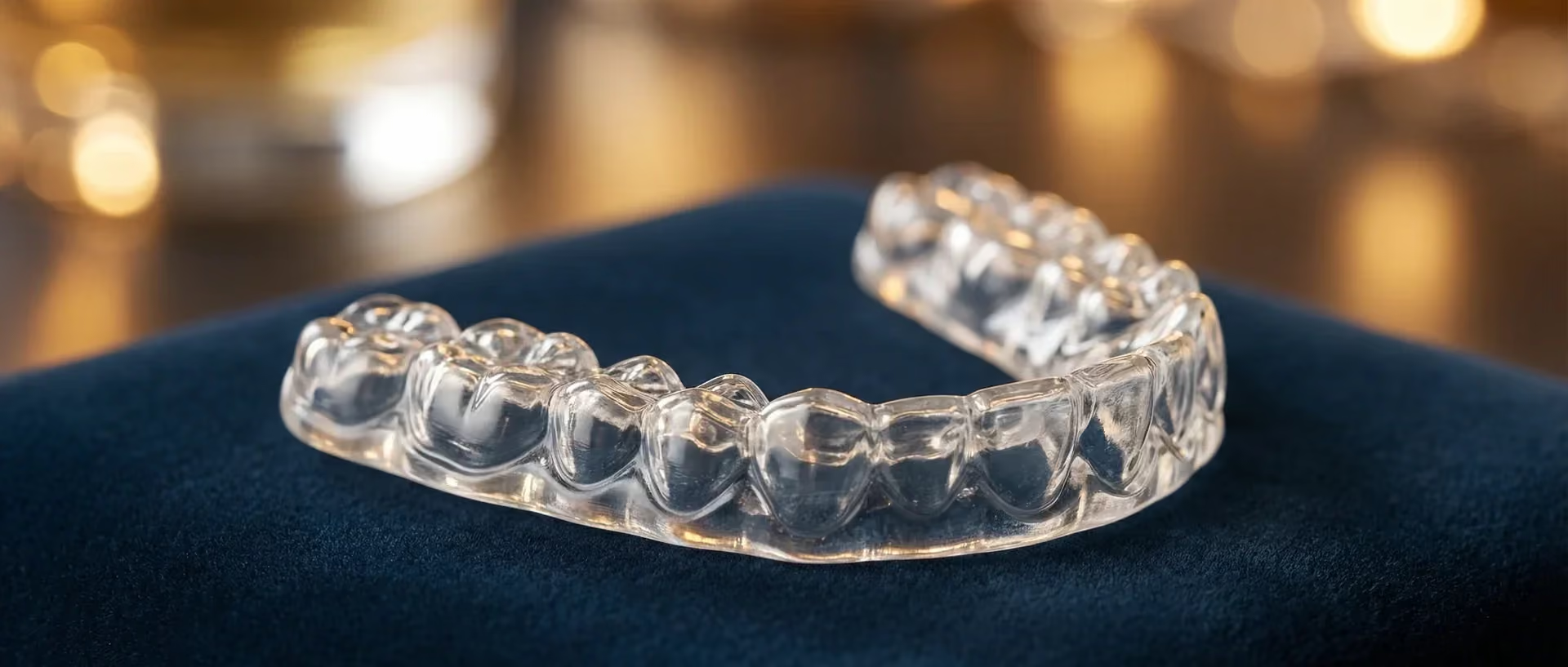
An individually made bite splint is the first step in most cases of night-time grinding.
It protects teeth against further wear and distributes clenching forces. It does not remove the cause. The health portal makes clear that its effect lasts only while it is worn. For further information on effects and limits, see the YERIT guide Bite splints for teeth grinding.
Material matters. For the TMD and pre-prosthetic applications lasting longer than one month described in the S2k guideline on occlusal splints (2024), hard, full-coverage splints are preferred. Simple protective bruxism splints are explicitly excluded from that section. Design and thickness depend on the indication; there is no general four-millimetre requirement. Soft sports guards may even increase muscle activity — read about the difference between bite splints and grinding guards.
What about effectiveness? A 2024 Cochrane review assessed 57 randomised studies involving 2846 participants. Hard splints may reduce muscle pain when chewing, but the authors rated certainty very low. Put clearly: a splint provides established tooth protection, rather than guaranteed pain treatment. We determine wearing duration and follow-up according to findings. Questions about production time and longevity are answered under production time and longevity.
What can be done about teeth grinding?
There is no miracle treatment, and sleep bruxism cannot simply be unlearned. Treatment therefore follows the findings. Combining approaches is usually most promising for reducing grinding or preventing damage. A systematic review of 22 studies published in 2025 concluded that no method works for everyone and combinations show the most promise. Another overview of 31 systematic reviews in 2024 found positive effects on grinding-episode frequency for biofeedback, physiotherapy, laser therapy and botulinum toxin. Medication results were unclear or negative, and splint findings conflicted — a splint protects teeth, while whether it reduces grinding itself remains open. The authors consider further long-term studies necessary. In practice, this means:
Relaxation and everyday behaviour
For daytime clenching, the health portal recommends learning awareness and relaxation techniques, such as progressive muscle relaxation. Exercises work best when they become a habit. Small reminders — a dot at the edge of your screen or a phone signal — help you notice and release clenching: lips closed, teeth apart, jaw relaxed.
Physiotherapy: relieving tension
Physiotherapists loosen tense chewing muscles with manual therapy, warmth or cold, massage and exercises, which may relieve symptoms. Physiotherapy is part of our interdisciplinary approach; we explain when it is worthwhile for your findings.
Biofeedback
Muscle tension is measured and fed back to you. In a randomised study of 41 patients, a biofeedback splint reduced the frequency and duration of night-time grinding episodes over three months more than a conventional splint.
Sleep and habits
Less coffee in the afternoon, less alcohol in the evening, and no smoking. Suspected sleep apnoea needs assessment by a sleep specialist. Whether medicines play a role in your case is assessed medically based on findings. The current guideline addresses drug approaches separately; it does not establish a general medication schedule. A special pillow, homeopathic globules or home remedies replace neither a splint nor assessment.
When may Botox be considered for teeth grinding?
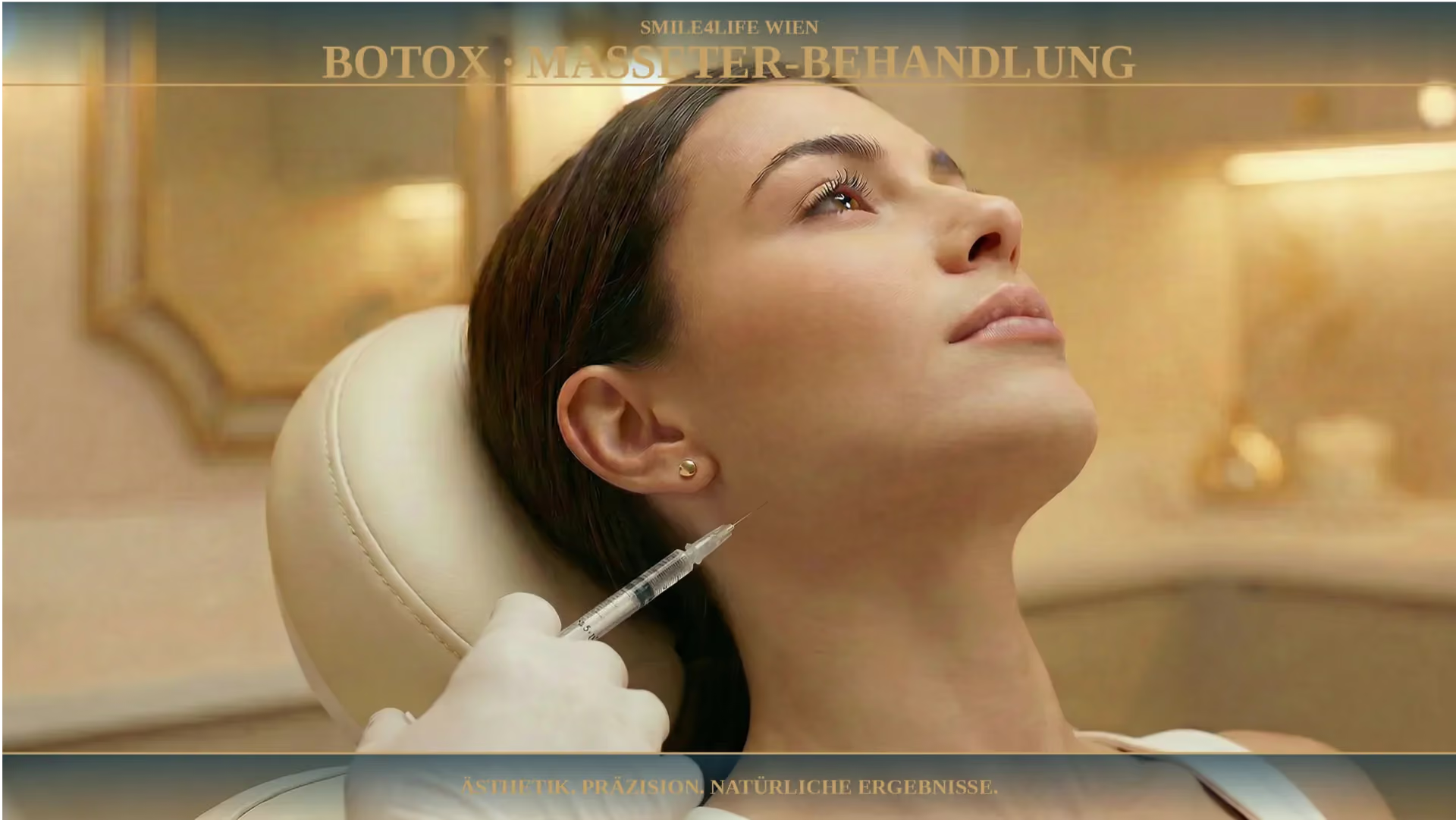
If a splint and supporting measures are insufficient and the chewing muscle is clearly overloaded, botulinum toxin in the masseter may be considered for adults. It reduces muscle activity for several months without removing the cause. In Austria, this is use outside the approved indication (off-label). The S3 guideline from 2026 lists botulinum toxin as a possible option for adults, with low certainty of evidence. This establishes neither a fixed treatment plan nor a general repeat interval. An overview of 24 randomised studies found good evidence for treating an enlarged chewing muscle and mixed evidence for chewing-muscle pain.
How Botox and a splint compare directly is explained in the question catalogue. The procedure, duration and side effects are detailed on the page Masseter Botox in Vienna.
What does treatment cost?
It depends on findings. Is a splint sufficient, is physiotherapy added, does the jaw joint need separate treatment, or must tooth damage be restored? Only examination establishes this. Find usual market guide prices for Vienna on our pricing page. You receive your individual cost plan after examination at our practice; we then also clarify whether and how your insurer contributes to the splint.
Have teeth grinding assessed in Vienna
Come for assessment if you wake with a tense jaw or temple headaches, someone has heard you grind, or your teeth have become shorter, cracked or sensitive. Our practice is at Kärntner Straße 9 in Vienna's 1st district. At the initial appointment, we examine teeth, chewing muscles and jaw joints, then discuss what you can do and which approach suits your findings.
Wear the splint at night. During the day, a simple reminder helps with clenching: lips closed, teeth apart, jaw relaxed.

Participants assessed in 57 studies of bite splints
The current Cochrane review of occlusal splints for jaw joint symptoms assesses 57 studies involving almost 2,900 participants. Hard splints may relieve muscle pain when chewing; certainty is very low for all comparisons and outcomes examined. Reliable general conclusions on effectiveness are therefore not possible.
YOUR OPTIONS
TREATMENT OPTIONS COMPARED
We will discuss payment terms with you prior to treatment.
The indicative market prices in our price overview provide an initial guide. We will discuss which services are planned for you and the costs involved based on your examination findings and individual cost plan.
Advanced Dental Aesthetics & Implantology
Priv.Doz.Dr.Dr. K. Yerit
“Aesthetics is not a coincidence, but the result of precise planning and deep passion.”
Botulinum toxin injections into the masseter muscle may noticeably reduce bruxism activity — as part of an integrated treatment approach, rather than a standalone solution.
View profile →Scientific references
Institute for Implantology and Digital Dentistry Vienna
AWMF – Arbeitsgemeinschaft der Wissenschaftlichen Medizinischen Fachgesellschaften
DGZMK – Deutsche Gesellschaft für Zahn-, Mund- und Kieferheilkunde
DGFDT – Deutsche Gesellschaft für Funktionsdiagnostik und -therapie
Cochrane Oral Health
Yerit Practice – Dentist Vienna
Frequently asked questions
Frequently asked questions
Do you have a specific question about your diagnosis? Book a consultation appointment directly →
Questions about your treatment?
Discuss what matters to you and what the next steps look like with us.
Book your appointment nowYour orientation
Understanding what’s involved
In everyday life
Wear the splint at night. During the day, a simple reminder helps with clenching: lips closed, teeth apart, jaw relaxed.
Who this information is for
Important limitations
Our approach
SCIENTIFIC STUDIES
Zieliński G et al. (2024). Global Prevalence of Sleep Bruxism and Awake Bruxism in Pediatric and Adult Populations: A Systematic Review and Meta-Analysis
A meta-analysis of studies from 2003 to 2023 estimated worldwide sleep-bruxism prevalence at 21 per cent and awake bruxism at 23 per cent; European figures were 21 and 18 per cent. Women were affected more often (J Clin Med 2024;13(14):4259, DOI 10.3390/jcm13144259).
39064299
Lobbezoo F et al. (2018). International consensus on the assessment of bruxism: Report of a work in progress
An international consensus group describes sleep and awake bruxism as chewing-muscle activity during sleep or wakefulness and states that, in otherwise healthy people, bruxism is a behaviour rather than a disease, and may be a risk factor for certain consequences (J Oral Rehabil 2018;45(11):837–844, DOI 10.1111/joor.12663).
29926505
DGZMK/DGFDT (2026). S3-Leitlinie: Diagnostik und Behandlung des Bruxismus, Version 2.1
The S3 guideline on diagnosing and treating bruxism is available in version 2.1 from 2026. Recommendation 24 lists botulinum toxin in adult chewing muscles as a possible option, with low GRADE certainty of evidence. Questions on target muscles, injection sites, dose and dilution remain open; off-label use and the required informed consent must be considered. This establishes no general first-line, repeat-treatment or cure schedule.
DGFDT/DGZMK (2024). S2k-Leitlinie: Okklusionsschienen zur Behandlung craniomandibulärer Dysfunktionen und zur präprothetischen Therapie
The S2k guideline on TMD and pre-prosthetic therapy favours hard, full-coverage splints for use longer than one month; simple protective bruxism splints are excluded from this section. For relaxation splints, it describes approximately two millimetres in the molar region, with approximately four millimetres only for particular indications or lack of response. Wearing instructions and follow-up depend on findings; sufficient improvement may allow reduced use or gradual discontinuation. Not every TMD requires a splint.
Singh BP et al. (2024). Occlusal interventions for managing temporomandibular disorders
The current Cochrane review (57 studies, almost 2,900 participants) finds indications that hard bite splints may relieve muscle pain when chewing — but the evidence is very uncertain and does not permit reliable general conclusions on effectiveness.
39282765
Assiri HA et al. (2025). Bruxism treatment outcomes: A systematic review and meta-analysis
A current systematic review (22 studies) finds no single procedure universally effective for bruxism — splints, botulinum toxin and biofeedback are best combined within a multidisciplinary treatment approach.
41366915
Bergmann A et al. (2020). Effect of treatment with a full-occlusion biofeedback splint on sleep bruxism and TMD pain: a randomized controlled clinical trial
A randomised controlled study finds that a biofeedback splint reduces night-time grinding episodes and muscle pain more than a conventionally adjusted occlusal splint.
32430774
Delcanho R et al. (2022). Botulinum Toxin for Treating Temporomandibular Disorders: What is the Evidence?
A review of 24 randomised studies finds good evidence for botulinum toxin in masseter hypertrophy and generally positive but inconsistent evidence for myogenous jaw joint pain and bruxism management.
35298571
Zähneknirschen (Bruxismus) – Öffentliches Gesundheitsportal Österreichs
A grinding splint is placed over the teeth in the evening; its effect lasts only while it is used. In certain adult cases, botulinum toxin in the chewing muscles may be considered as off-label use (gesundheit.gv.at, accessed 03.11.2026).
Chemelo VDS et al. (2020). Is There Association Between Stress and Bruxism? A Systematic Review and Meta-Analysis
A meta-analysis of observational studies in adults found that people under stress showed bruxism about twice as often as people without stress (odds ratio 2.07); the authors rated certainty of the evidence low (Front Neurol 2020;11:590779, DOI 10.3389/fneur.2020.590779).
33424744
Manfredini D et al. (2013). Prevalence of sleep bruxism in children: a systematic review of the literature
A systematic review of 22 papers found sleep-bruxism prevalence in children ranging from 3.5 to 40.6 per cent, based almost entirely on parental reports; it describes a decline with age, without a difference between sexes (J Oral Rehabil 2013;40(8):631–642, DOI 10.1111/joor.12069).
23700983
Santos-Júnior FDC et al. (2025). Association between children's sleep bruxism with that of their parents/guardians: A systematic review and meta-analysis
A meta-analysis of 14 observational studies found that children whose parents or guardians grind during sleep have around 3.2 times higher odds of sleep bruxism; certainty of the evidence is very low (Sleep Med 2025;133:106662, DOI 10.1016/j.sleep.2025.106662).
40638984
Loomans B et al. (2017). Severe Tooth Wear: European Consensus Statement on Management Guidelines
A European expert consensus distinguishes natural from pathological tooth wear and recommends diagnosis, prevention, advice and monitoring. Restorations should be delayed where possible and then use conservative, minimally invasive, adhesive techniques (J Adhes Dent 2017;19(2):111–119, DOI 10.3290/j.jad.a38102).
28439579
Häggman-Henrikson B et al. (2023). Bruxism and dental implants: A systematic review and meta-analysis
A meta-analysis of 27 studies involving 2105 implants in people with probable bruxism and 10 264 implants in people without bruxism found a higher risk of implant loss in grinders (odds ratio 2.19) (J Oral Rehabil 2024;51(1):202–217, DOI 10.1111/joor.13567).
37589382
Soares-Silva L et al. (2024). Effects of different interventions on bruxism: an overview of systematic reviews
An overview of 31 systematic reviews found positive effects on bruxism-episode frequency for biofeedback, physiotherapy, laser therapy and botulinum toxin; medicines showed unclear or negative results, and splint findings were inconsistent. Studies on safe long-term use are lacking (Sleep Breath 2024;28(3):1465–1476, DOI 10.1007/s11325-023-02961-7).
38177829
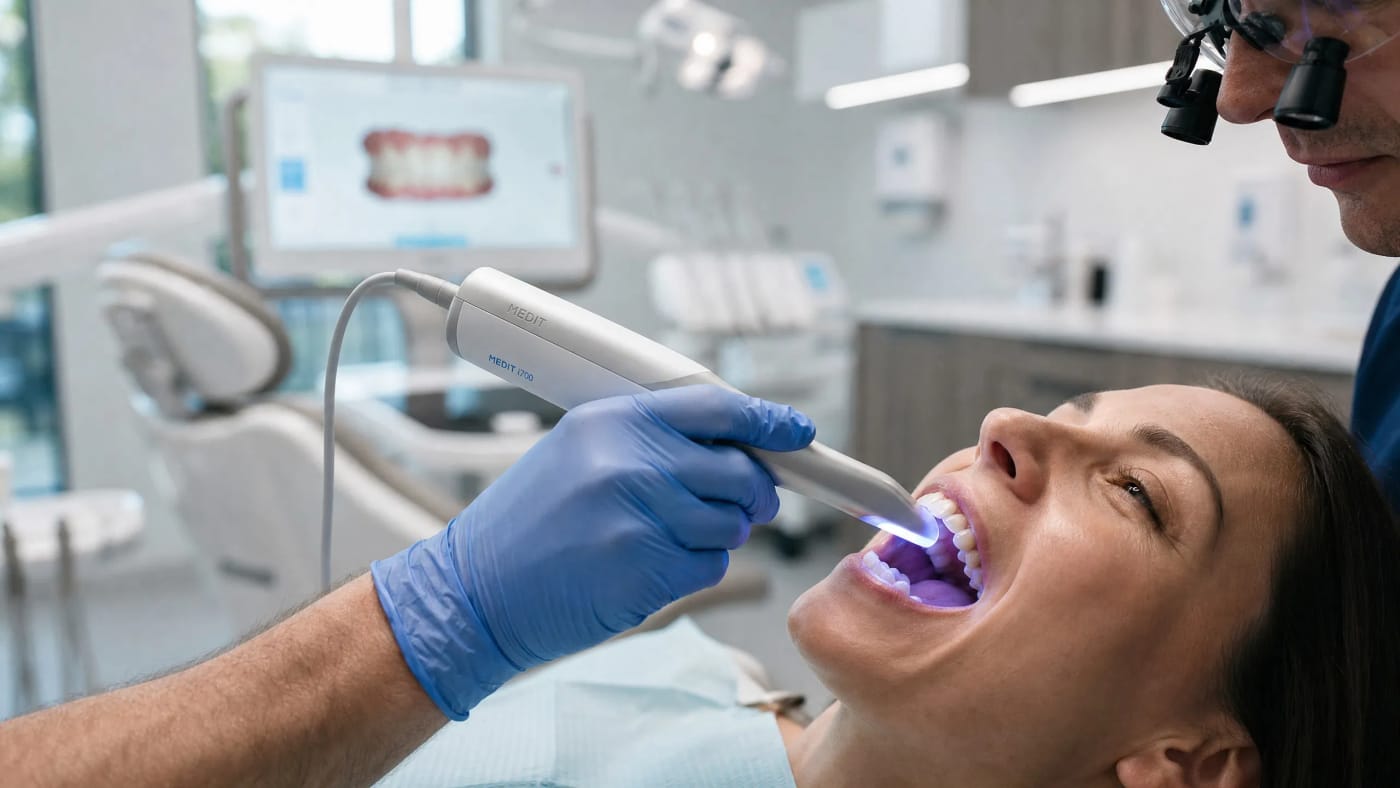
Digitally measured, carefully fitted
A digital intraoral scan records tooth surfaces for splint manufacture. Clinical functional examination and recording the jaw relationship are separate steps. Which records are needed depends on the findings; fit and bite contacts are checked during fitting.
More topics in this area
Deepen your knowledge – find all information regarding the treatment process, costs, and results.

Kärntner Straße 9
100 meters from Stephansplatz, Innere Stadt.
Partnerships & Memberships & References