
Tooth Extraction Costs in Vienna: Prices and Reimbursement
Non-binding market guide prices for simple and surgical removal, partial insurance reimbursement and payment options
Simple extraction
Surgical extraction
Private dental practice
Clarify payment options
Tooth Extraction Costs Vienna
zahnextraktion-kosten-wien
100
600
4.9★
Doctify rating
25+
Years of experience
Personal
In-practice consultation
1010 Vienna
Kärntner Straße 9
At a glance
What does tooth extraction cost in Austria?
The existing price overview gives around 100–350 euros per tooth for simple removal and 350–600 euros for difficult removal as non-binding Vienna market guide prices, not the prices of our practice.
There is no single amount: simple or surgical removal, X-rays and anaesthesia determine the treatment required. For private dentists, ÖGK reimburses 80 percent of the statutory tariff, not the fee.* The amount becomes binding with the cost plan after examination.
Does health insurance pay for tooth removal?
Yes, when it is medically necessary: extractions and surgical tooth removal are statutory surgical services, with the local anaesthetic injection included. At contracted dentists, your e-card is sufficient; you pay for special requests yourself.*
Why is surgical removal more expensive than simple extraction?
Because more steps are needed: the gum is lifted, bone removed in places and the wound often stitched. This takes more time. Medically necessary surgical removal is nevertheless an ÖGK statutory service.*
Transparent prices
Tooth extraction costs in Austria: what removal costs in Vienna
Important information: The following ranges are general average market prices in Vienna for broad guidance, not a price offer from Smile4Life. You receive your individual, binding cost plan after a personal examination.
Price overview by treatment requirements
| Service | Approximate market guide price in Vienna |
|---|---|
| Simple tooth extraction, per tooth: a single-rooted, fully erupted tooth | 100–350 € |
| Difficult tooth extraction, per tooth: a multi-rooted or fractured tooth, surgical removal | 350–600 € |
| Three-dimensional imaging (CBCT) where the tooth is close to a nerve or sinus | Charged separately |
| External sedation: clarify the method and treatment location beforehand | According to the treatment required, stated in the cost plan |
Where your tooth falls within this range depends mainly on whether it is fully erupted with a single root or needs to be divided and removed surgically. These are market guide prices from our price overview, not an offer of prices from our practice. A binding figure can only be given after examination, when the treatment required is clear. You receive your personal cost plan after assessment at the practice. Removal of wisdom teeth is listed separately.
Statutory insurance services and a private dental practice
Medically necessary tooth removal is covered by social insurance services in Austria. Smile4Life is a private practice without a statutory insurance contract: you first pay the invoice yourself and then submit it to ÖGK, SVS or BVAEB for partial reimbursement under their respective tariffs. As this tariff is lower than the fee for private treatment, reimbursement covers only part of the actual costs. Private supplementary dental insurance may cover a further share depending on the policy.
The larger cost usually comes afterwards
Removal itself is rarely the expensive part. What determines total costs is how the gap is restored: a single implant with a crown has market guide prices of around 1,900 to 3,500 €, and a three-unit bridge around 1,900 to 4,500 €, both according to our price overview and non-binding until your personal cost plan is available after examination. Filling the socket during surgery may also be necessary, a measure that can reduce loss of bone dimensions. Whether it is appropriate, what further measures may be needed later and the total costs depend on the findings and planned restoration (Canullo et al., 2022). Without this measure, the jaw ridge measurably shrinks: after an extraction without socket preservation, mean horizontal bone loss is around 3.6 mm for back teeth and 2.7 mm for front teeth, particularly when the outer bone wall is thin from the outset (Couso-Queiruga et al., 2021; 2023). Plan both in one cost plan rather than one after the other.
Payment options at Smile4Life
We discuss the payment options available for your treatment and their conditions before treatment begins. You receive a written cost plan beforehand that distinguishes statutory-insurance and private services. If you have supplementary dental insurance, ideally submit it before treatment starts.
An individual cost plan takes account of the planned procedure and possible additional services. The YERIT guide Tooth extraction: costs and health insurance explains the cost factors for surgical tooth removal in more detail.
Request a cost estimate
After examination, receive a detailed individual breakdown of the costs for your tooth.
Book an appointment now
Millimetres of mean width reduction
The review estimated mean width reduction of 3.61 mm on X-rays after undisturbed healing at molar sites (Couso-Queiruga et al., 2021). This is a study average for that tooth region and measurement method, not a fixed prediction for every tooth. We discuss whether socket preservation is appropriate based on the clinical findings and planned restoration.
YOUR OPTIONS
TREATMENT OPTIONS COMPARED
We will discuss payment terms with you prior to treatment.
The indicative market prices in our price overview provide an initial guide. We will discuss which services are planned for you and the costs involved based on your examination findings and individual cost plan.
Advanced Dental Aesthetics & Implantology
Priv.Doz.Dr.Dr. K. Yerit
“Aesthetics is not a coincidence, but the result of precise planning and deep passion.”
I can tell you what a procedure costs after examining you, not before. Anything else would be a figure without clinical findings.
View profile →Scientific references
Institute for Implantology and Digital Dentistry Vienna
Österreichische Zahnärztekammer
Österreichische Gesundheitskasse (ÖGK)
Österreichische Gesellschaft für Mund-, Kiefer- und Gesichtschirurgie (ÖGMKG)
Medizinische Universität Wien
Yerit Practice – Dentist Vienna
Frequently asked questions
Frequently asked questions
Do you have a specific question about your diagnosis? Book a consultation appointment directly →
Questions about your treatment?
Discuss what matters to you and what the next steps look like with us.
Book your appointment nowYour orientation
Understanding what’s involved
In everyday life
For cost planning, the main question is whether the tooth is fully erupted and single-rooted, placing it at the lower end of the range, or multi-rooted, fractured or impacted and requiring surgical removal. The exact amount is only known after examination. Include tooth replacement in your planning from the start: it makes up the larger share of total costs.
Who this information is for
Important limitations
Our approach
SCIENTIFIC STUDIES
Canullo L et al. (2022). Dimensional and histomorphometric evaluation of biomaterials used for alveolar ridge preservation: a systematic review and network meta-analysis
This network meta-analysis of 88 randomized studies with 2,805 patients and 3,073 sockets examines whether and with which materials bone loss after extraction can be limited. All tested materials significantly reduced horizontal and vertical loss compared with untreated sockets left to heal spontaneously. Xenografts and allografts combined with bioactive additives performed most reliably; platelet concentrates ranked highest for new bone formation (Clinical Oral Investigations, 2022).
34826029
Couso-Queiruga E et al. (2021). Post-extraction dimensional changes: A systematic review and meta-analysis
This systematic review and meta-analysis of 28 papers quantifies how much the jaw ridge shrinks after extraction without additional measures. In non-molars, clinically measured horizontal loss was 2.73 mm and outer vertical reduction 1.71 mm. In molars, X-rays suggested mean horizontal loss of 3.61 mm. As both tooth region and measurement method differ, these values do not provide a simple ranking by tooth type. Bone loss varies with the initial situation, an important basis for deciding whether to fill the socket after extraction (Journal of Clinical Periodontology, 2021).
33067890
Couso-Queiruga E et al. (2023). Effect of periodontal phenotype characteristics on post-extraction dimensional changes of the alveolar ridge: A prospective case series
This prospective case series followed 42 patients for 14 weeks after extraction of an upper-jaw non-molar and examined which initial anatomical conditions determine bone loss. The thickness of the outer bone wall was crucial: where it was at most 1 mm thick, horizontal loss of 4.57 mm was more than twice that seen with a thicker wall, at 2.17 mm. Volume loss was also markedly greater. Bone wall thickness can be assessed before surgery, explaining why we discuss socket preservation particularly in these cases (Journal of Clinical Periodontology, 2023).
36644815
Daly BJM et al. (2022). Local interventions for the management of alveolar osteitis (dry socket)
This updated Cochrane review evaluates 49 randomized studies with 6,771 participants on preventing and treating dry socket. The authors estimate its frequency at 1 to 5 percent after routine extraction, compared with up to 30 percent after surgical wisdom tooth removal. Chlorhexidine rinses before and 24 hours after the procedure markedly reduced risk (odds ratio 0.38), as did chlorhexidine gel placed in the socket (odds ratio 0.44), both with moderate certainty of evidence (Cochrane Database of Systematic Reviews, 2022).
36156769
Green VG et al. (2025). Evidence-based clinical practice guidelines for the management of acute dental pain
This summary of the guideline published in 2024 on drug treatment for acute dental pain, developed with the American Dental Association and others using GRADE methodology, expressly includes pain after extraction. The benefit-risk assessment clearly favours non-opioid medicines: NSAID anti-inflammatory drugs, alone or with paracetamol, are likely to relieve pain better than opioids and are also safer. Opioids are reserved for cases where first-line treatment is insufficient or cannot be used (The American Journal of Emergency Medicine, 2025).
39764906
Cardoso RB et al. (2024). Prevalence and factors associated with dry socket following routine dental extractions
This prospective multicentre observational study of 1,357 patients after routine tooth extraction found dry socket in 1 percent of cases. Factors favouring it were age under 50, a longer procedure and incidents during extraction, although the latter association was mediated by surgical complexity. Smoking was linked to the complication particularly with complex procedures. The authors identify moderate to severe pain lasting longer than two days as a practical warning sign (Medicina Oral, Patología Oral y Cirugía Bucal, 2024).
38288852
ÖGK: Zahnbehandlung
ÖGK lists tooth-coloured fillings in front and canine teeth and root canal treatment among contracted services. It classifies extractions, surgery and apicectomies as surgical dental treatment. It covers tariff costs for contracted services at contracted providers; special requests are different. For eligible private-dentist services, reimbursement concerns the insurance tariff rather than the entire private fee. Qualifying items must be clarified using the specific plan.
Zahnentfernung – Öffentliches Gesundheitsportal Österreichs
The Austrian patient information describes pain and swelling after tooth extraction and advises against acetylsalicylic acid as an additional painkiller. This is not an instruction to stop medically prescribed aspirin or other blood-thinning treatment yourself. Individual pain relief is agreed with the treatment team. This does not establish that removing symptom-free wisdom teeth is beneficial for every clinical situation.
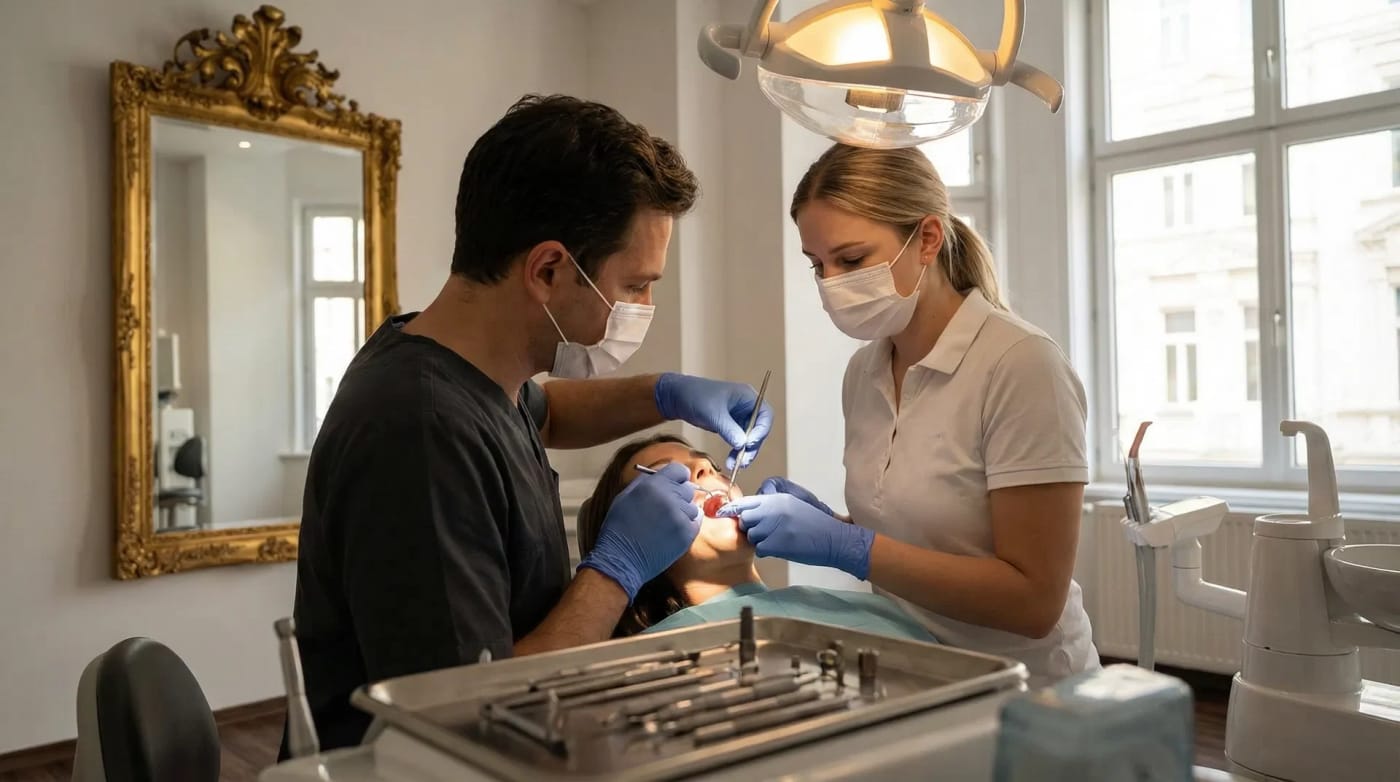
As gentle as possible
The tooth is released from its supporting tissues rather than pulled out forcefully, and divided if needed to preserve the bone walls. The more intact the socket, the more smoothly it heals and the less bone is lost.
More topics in this area
Deepen your knowledge – find all information regarding the treatment process, costs, and results.
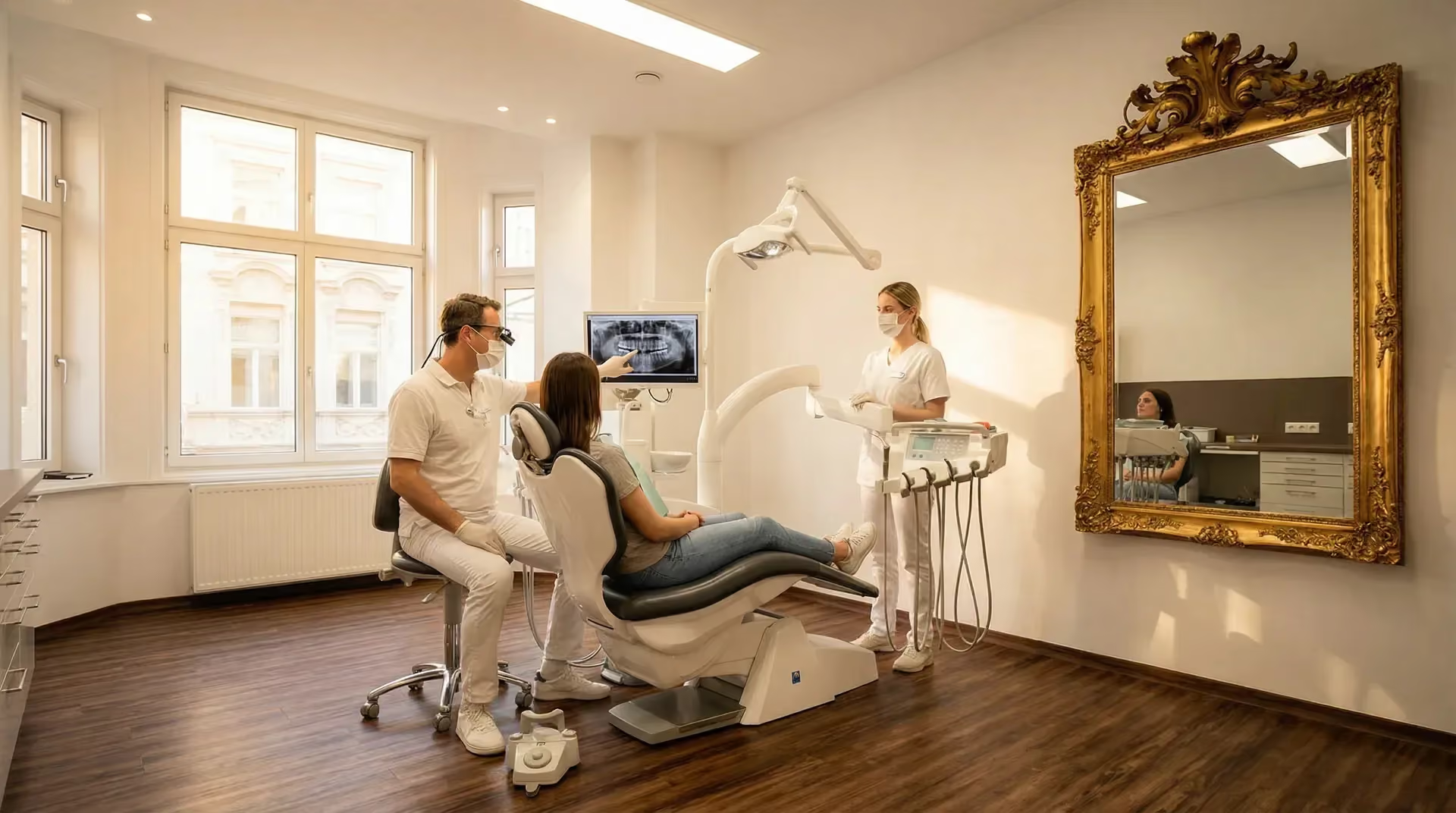
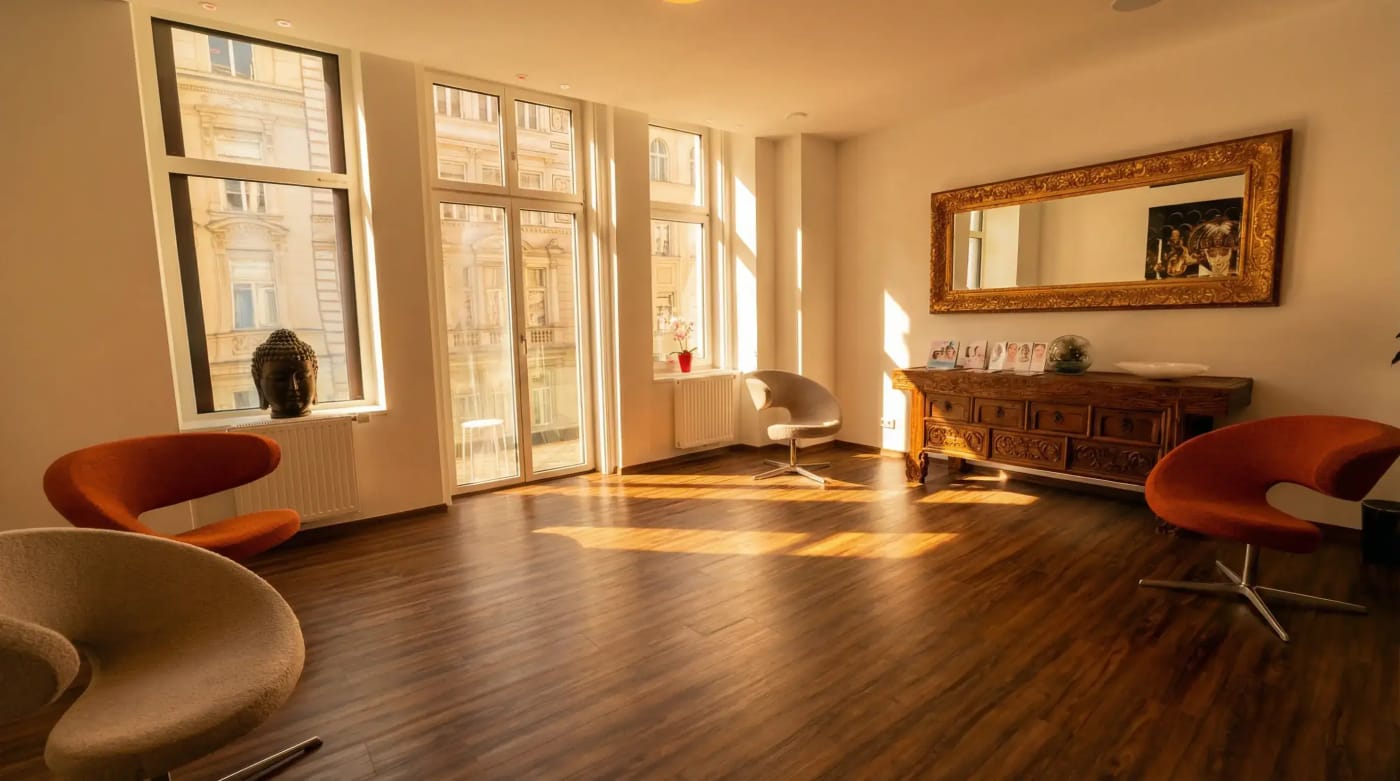
Kärntner Straße 9
100 meters from Stephansplatz, Innere Stadt.
Partnerships & Memberships & References