Laser for Periodontitis: Additional Benefit and Limits
Alongside mechanical cleaning, rather than replacing it — a clear assessment of the evidence
Alongside SRP
Diode laser
Limited evidence
Individual consultation
Laser for Periodontitis Vienna
lasertherapie-zahnfleisch-wien
4.9★
Doctify rating
25+
Years of experience
Personal
In-practice consultation
1010 Vienna
Kärntner Straße 9
At a glance
How does a laser work in periodontitis?
Depending on wavelength, laser light may remove calculus or reduce bacteria in the pocket — always alongside cleaning. Across 30 studies, the size of the effect depended on where laser treatment was applied and over how many sessions.*
Does a laser replace deep cleaning of gum pockets?
No. Mechanical cleaning of root surfaces remains the foundation. A review published in 2015 covering 72 papers found an average attachment gain of around 0.5 mm from root-surface cleaning. The additional 0.2 to 0.6 mm concerned various added procedures, not lasers alone. A uniform additional laser benefit cannot be derived from this.*
Is laser treatment for periodontitis supported by scientific evidence?
Only to a limited extent. A review found highly inconsistent results for additional laser use in untreated periodontitis; the European guideline therefore advises against its routine use alongside pocket cleaning.*
Guide
Laser for periodontitis: an addition, not a replacement
Lasers are repeatedly promoted as progress in periodontitis treatment. What does the actual research show?
How the laser is used
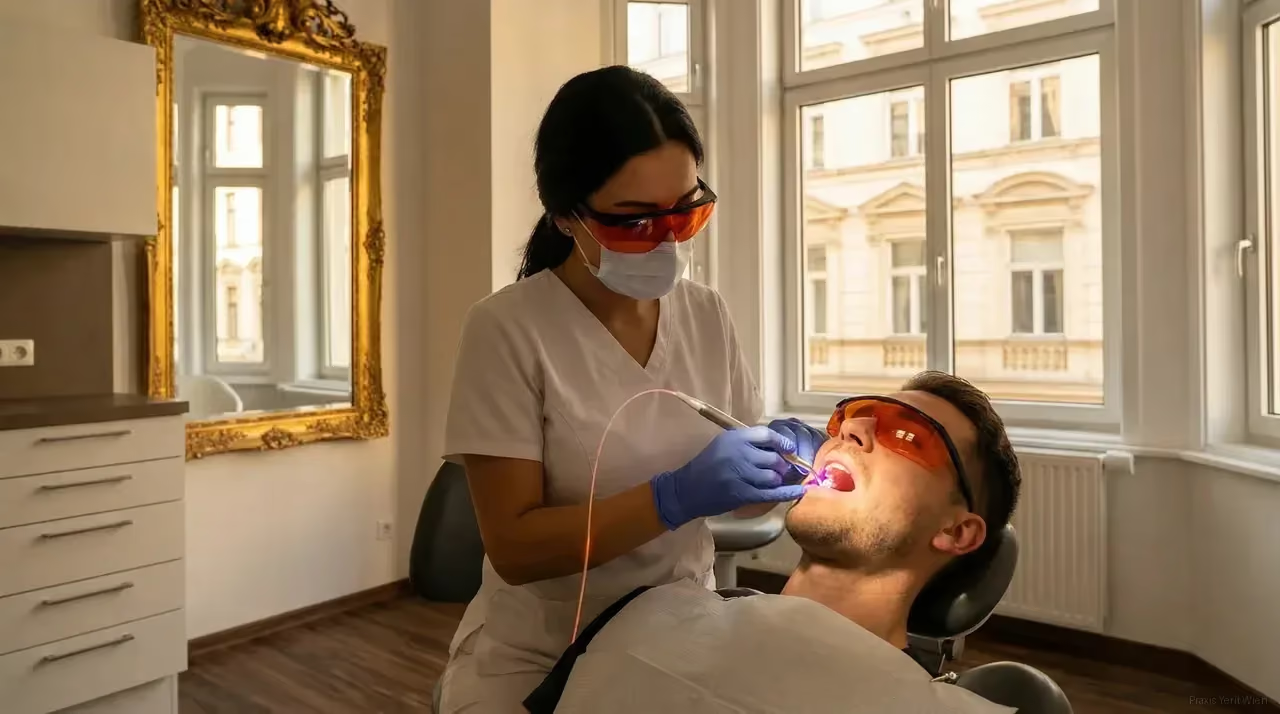
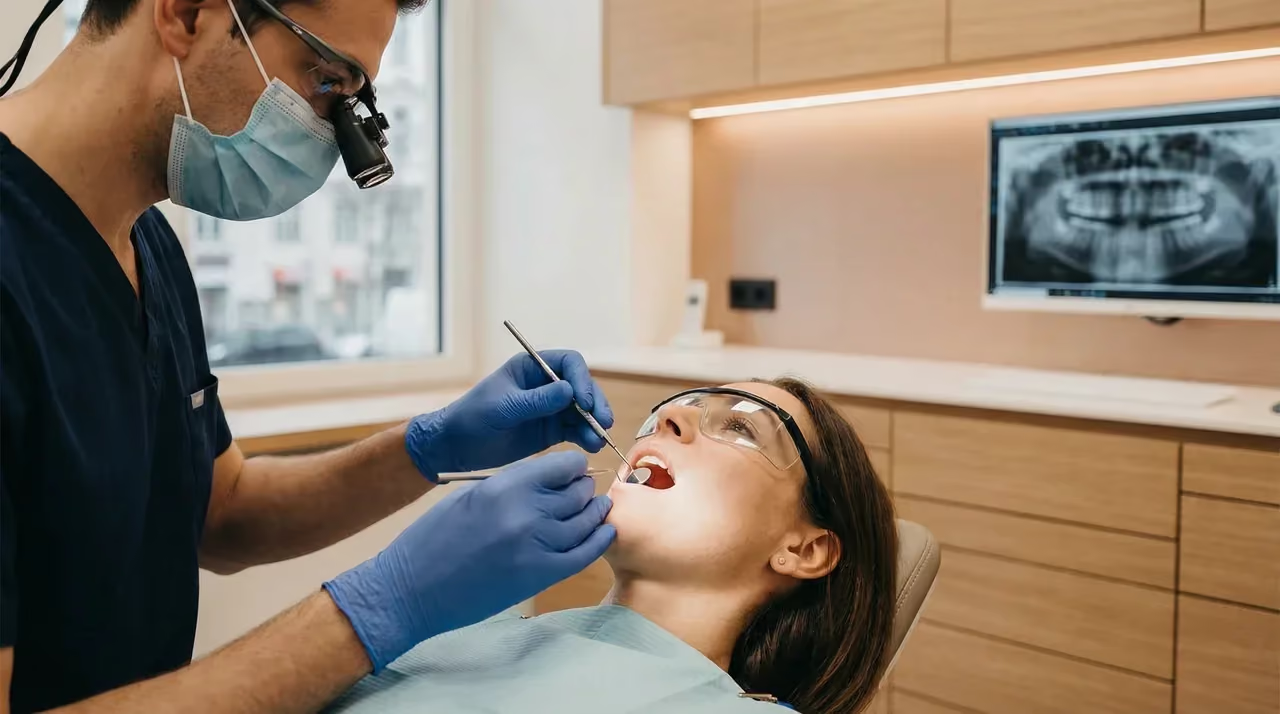
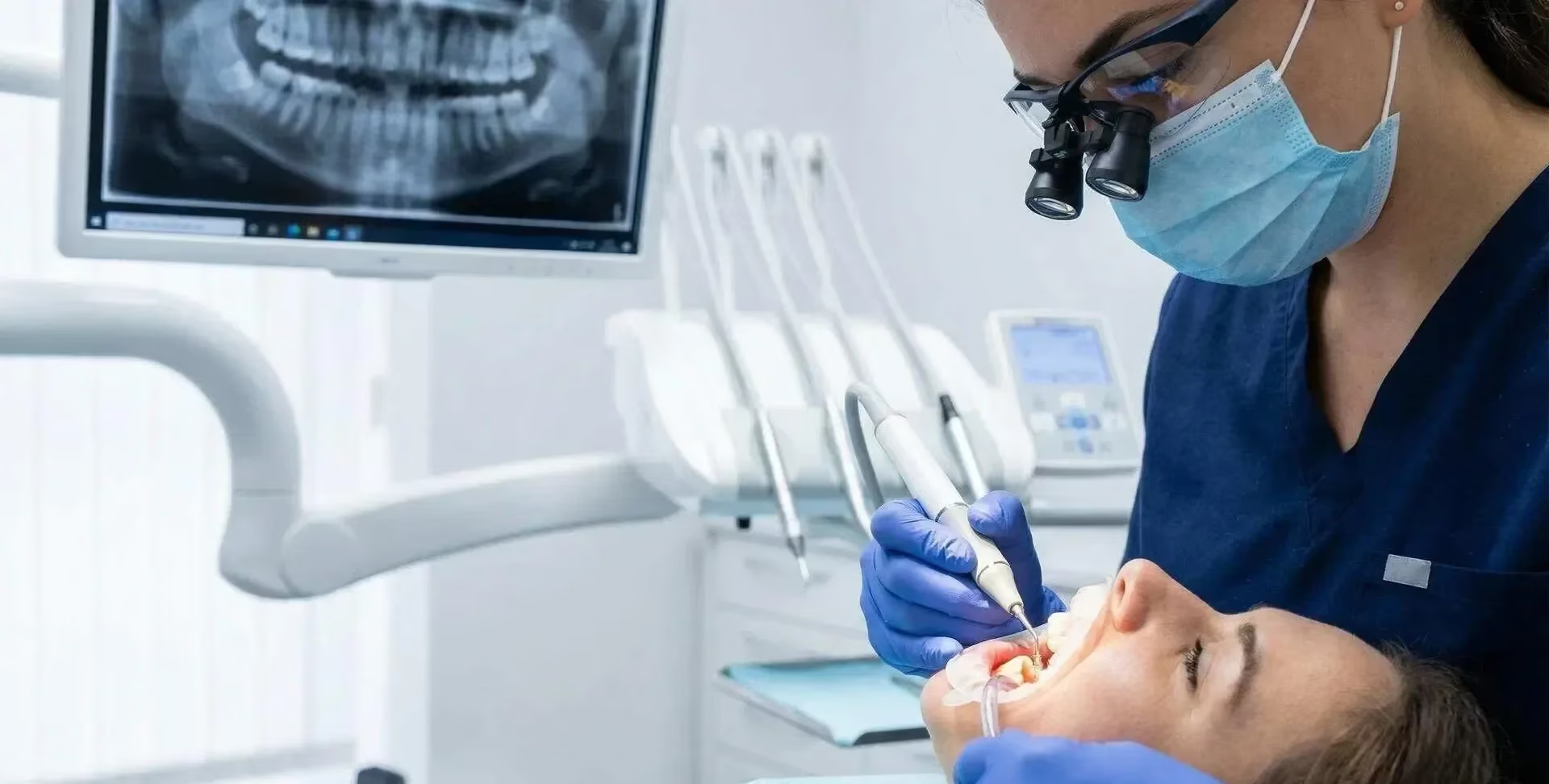
A diode laser is used alongside mechanical cleaning (scaling and root planing) to reduce bacteria in the gum pocket. Under the EFP S3 guideline, subgingival mechanical instrumentation belongs to the second treatment stage. It is preceded by home plaque control, management of modifiable risk factors and professional removal of deposits above the gum margin — read more on our page Periodontitis Vienna.
What research shows
Salvi's systematic review examined direct laser applications and antimicrobial photodynamic therapy, or aPDT, separately in untreated periodontitis. Results for direct laser applications were highly inconsistent. The meta-analysis of two studies concerned aPDT and found no statistically established additional effect on probing depth (Salvi et al., 2020). This does not establish equivalence. For peri-implant mucositis — inflammation of soft tissue around dental implants — another meta-analysis of 3 randomised controlled studies also found no statistically significant additional benefit of diode laser therapy over mechanical cleaning alone (Atieh et al., 2022).
Gums or implants: two different diagnoses
Findings for a natural tooth cannot be applied directly to an implant. Around implants, professionals distinguish peri-implant mucositis — soft-tissue inflammation that has not yet damaged bone — from peri-implantitis, where bone loss has already occurred. The European guideline addresses these conditions as a separate area with its own prevention and aftercare, distinct from the periodontitis guideline for natural teeth (Herrera et al., 2023). For peri-implant mucositis, the previously mentioned meta-analysis of three studies found no additional benefit from diode laser over mechanical cleaning (Atieh et al., 2022) — similar caution to periodontitis, but for a different tissue setting. Whether and how laser use might be appropriate around your implant is discussed based on the specific findings.
When might a laser still be appropriate?
The EFP S3 guideline does not recommend routine use of lasers alongside subgingival instrumentation. Sensitive gums or an increased bleeding tendency alone do not establish particular additional benefit or greater treatment comfort. Mechanical instrumentation remains the foundation. We discuss any additional procedure based on your findings, available evidence and preferences. YERIT provides a detailed comparison of the research in the guide Laser for periodontitis: an addition, not a replacement.
Why studies differ
Results do not differ by chance alone — they measure different things. A meta-analysis of 30 randomised studies involving 825 participants found additional clinical benefits from diode laser alongside root-surface cleaning, but also showed that these depended strongly on whether it was applied inside the pocket or externally, and over how many sessions (Yu et al., 2022). Salvi and colleagues reached a more cautious conclusion because their review focused on untreated periodontitis, where controlled studies were few (Salvi et al., 2020). Citing only one of the two gives an incomplete picture.
The particular case of residual pockets
One small study concerns residual pockets after initial active treatment or during supportive aftercare. In a randomised controlled split-mouth study of 18 patients with residual pockets of at least 5 mm, a comprehensive Er:YAG-assisted procedure (Er-LCPT) produced a greater probing-depth reduction (2.78 mm versus 1.89 mm) and greater attachment gain than root-surface cleaning alone after twelve months (Aoki et al., 2023). Er-LCPT combined root-surface cleaning with a curette and laser, removal of inflamed tissue and adjacent epithelium, and laser coagulation of the blood clot at the pocket entrance. The study is small; its result applies to this comprehensive procedure for residual pockets after prior treatment. It validates neither every laser procedure nor a standard for all residual pockets or initial periodontitis treatment.
How a professional association interprets the evidence
An American Dental Association expert panel assessed 72 papers on non-surgical periodontitis treatment. Root-surface cleaning itself produced an average attachment gain of around 0.5 mm; additional procedures added between 0.2 and 0.6 mm. Among laser procedures, the panel judged only photodynamic therapy with a diode laser beneficial with moderate certainty — certainty remained low for the other laser applications (Smiley et al., 2015). This is the scale involved: an additional effect measured in tenths of a millimetre, rather than a replacement for the main step.
One word for three procedures
‘Laser on the gums’ is not one procedure, but at least three. Direct application — the diode laser inside the gum pocket described above — acts thermally and aims to reduce bacteria directly, with the limited evidence described earlier (Salvi et al., 2020). Photodynamic therapy, or aPDT, works differently: a photosensitive dye is first placed in the pocket, and light then activates it — the aim is a photochemical antimicrobial reaction rather than thermal tissue removal. It shares the goal of targeted bacterial reduction with the diode laser, but uses a chemical rather than thermal mechanism; the same review found only two studies suitable for pooling, without a statistically established difference in pocket depth (Salvi et al., 2020). Photobiomodulation with a low-level laser, by contrast, neither removes tissue nor kills bacteria. It uses very low light power and aims to stimulate cell activity, promote wound healing or relieve symptoms — a third, distinct target for which this page provides no separate study. Three names, three mechanisms. Confusing them risks transferring a study result to a procedure for which it was never obtained.

Laser systems for targeted use
Diode lasers for soft tissue; Er:YAG lasers also for hard tooth tissue — we select the system according to the specific indication, rather than using one approach for everyone.
YOUR OPTIONS
TREATMENT OPTIONS COMPARED
We will discuss payment terms with you prior to treatment.
The indicative market prices in our price overview provide an initial guide. We will discuss which services are planned for you and the costs involved based on your examination findings and individual cost plan.
Advanced Dental Aesthetics & Implantology
Priv.Doz.Dr.Dr. K. Yerit
“Aesthetics is not a coincidence, but the result of precise planning and deep passion.”
A laser may be a useful addition — but only where it makes a meaningful difference. We explain this even when the answer is less encouraging.
View profile →Scientific references
Institute for Implantology and Digital Dentistry Vienna
Medizinische Universität Wien
Österreichische Gesellschaft für Laserzahnmedizin (ÖGZL)
World Federation for Laser Dentistry (WFLD)
Österreichische Gesellschaft für Parodontologie
Yerit Practice – Dentist Vienna
Frequently asked questions
Frequently asked questions
Do you have a specific question about your diagnosis? Book a consultation appointment directly →
Questions about your treatment?
Discuss what matters to you and what the next steps look like with us.
Book your appointment nowYour orientation
Understanding what’s involved
In everyday life
Who this information is for
For patients with diagnosed periodontitis who are receiving or planning mechanical instrumentation under the EFP S3 guideline — laser use is discussed individually as a possible addition, rather than used routinely.
Important limitations
A laser does not replace necessary mechanical cleaning. With acute, untreated inflammation, standard periodontitis treatment takes priority.
Our approach
SCIENTIFIC STUDIES
Atieh MA et al. (2022). Diode Laser as an Adjunctive Treatment for Peri-implant Mucositis: A Systematic Review and Meta-analysis
A meta-analysis of 3 randomised controlled studies found no statistically significant additional benefit from diode laser therapy over mechanical cleaning alone for peri-implant mucositis — neither in probing depth (mean difference −0.36 mm; 95 % CI −0.88 to 0.16; p = 0.18) nor bleeding on probing (International Dental Journal, 2022).
35931559
Salvi GE et al. (2020). Adjunctive laser or antimicrobial photodynamic therapy to non-surgical mechanical instrumentation in patients with untreated periodontitis
The review of untreated periodontitis examined direct laser applications and antimicrobial photodynamic therapy (aPDT) separately. Direct laser applications showed highly variable clinical results after six months. The meta-analysis of two studies concerned aPDT and found no statistically established additional effect on probing depth (WMD 0.35 mm; 95 % CI −0.04 to 0.73; p = 0.08). Evidence was limited by few controlled studies and heterogeneous procedures; patient-reported advantages remain to be demonstrated (Salvi et al., Journal of Clinical Periodontology, 2020).
31859395
Maboudi A et al. (2023). Gingivectomy with Diode Laser Versus the Conventional Scalpel Surgery and Nonsurgical Periodontal Therapy in Treatment of Orthodontic Treatment-Induced Gingival Enlargement
A systematic review of 7 randomised studies of orthodontically associated gum enlargement found significantly less pain and bleeding during and after diode-laser gingivectomy than conventional scalpel surgery or non-surgical periodontal therapy (Photobiomodulation, Photomedicine, and Laser Surgery, 2023).
37738371
Sarmadi R et al. (2020). Evaluation of upper labial frenectomy: A randomized, controlled comparative study of conventional scalpel technique and Er:YAG laser technique
A randomised controlled comparison study of 40 patients found significantly shorter treatment and less bleeding with Er:YAG laser frenectomy than with conventional scalpel surgery. The wound was initially larger immediately after laser treatment, but no difference remained after 5 days; patient satisfaction was the same in both groups (Clinical and Experimental Dental Research, 2020).
33369213
Ma Y et al. (2025). The effectiveness of lower-level laser therapy on the treatment of minor recurrent aphthous ulcers
A meta-analysis of 21 randomised studies involving 810 patients found that low-level laser therapy (LLLT) significantly reduces pain from minor recurrent aphthous ulcers, particularly during the first 1 to 3 days, and shortens healing time. No consistent effect was found on ulcer size or functional recovery (Lasers in Medical Science, 2025).
41286369
Esteves-Oliveira M et al. (2025). Efficacy of laser-assisted caries removal and hard tissue preparation: A meta-analysis
The meta-analysis of laser-assisted decay removal and hard-tooth-tissue preparation included 20 clinical studies involving at least 2,263 teeth in over 1,090 people. With low certainty, it found no clear difference from conventional drills in filling survival or pulp vitality; this does not establish equivalence. Indications of less pain and reduced anaesthetic requirements had very low certainty. Preparation took longer (Esteves-Oliveira et al., 2025).
40120794
Yu S et al. (2022). Clinical effectiveness of adjunctive diode laser on scaling and root planing in the treatment of periodontitis
A meta-analysis of 30 randomised studies involving 825 participants found additional clinical benefits from diode laser alongside root-surface cleaning, strongly dependent on whether it was applied inside the pocket or externally and over how many sessions (Lasers in Medical Science, 2022).
34536183
Aoki A et al. (2023). Er:YAG laser-assisted comprehensive periodontal pocket therapy for residual periodontal pocket treatment
A randomised controlled split-mouth study of 18 patients with residual pockets of at least 5 mm after prior treatment found greater probing-depth reduction (2.78 mm versus 1.89 mm) and greater attachment gain with Er:YAG laser-assisted pocket treatment than root-surface cleaning alone after twelve months (Journal of Periodontology, 2023).
37015852
Smiley CJ et al. (2015). Systematic review and meta-analysis on the nonsurgical treatment of chronic periodontitis by means of scaling and root planing with or without adjuncts
An American Dental Association expert panel assessed 72 papers on non-surgical periodontitis treatment. Root-surface cleaning itself produced an average attachment gain of around 0.5 mm; additional procedures added between 0.2 and 0.6 mm. Among laser procedures, the panel rated only diode-laser photodynamic therapy beneficial with moderate certainty (Journal of the American Dental Association, 2015).
26113099
Prevention and treatment of peri-implant diseases—The EFP S3 level clinical practice guideline
EFP S3 guideline on peri-implant diseases: peri-implant mucositis and peri-implantitis are addressed as a separate area with their own prevention and aftercare, distinct from the periodontitis guideline.
37271498
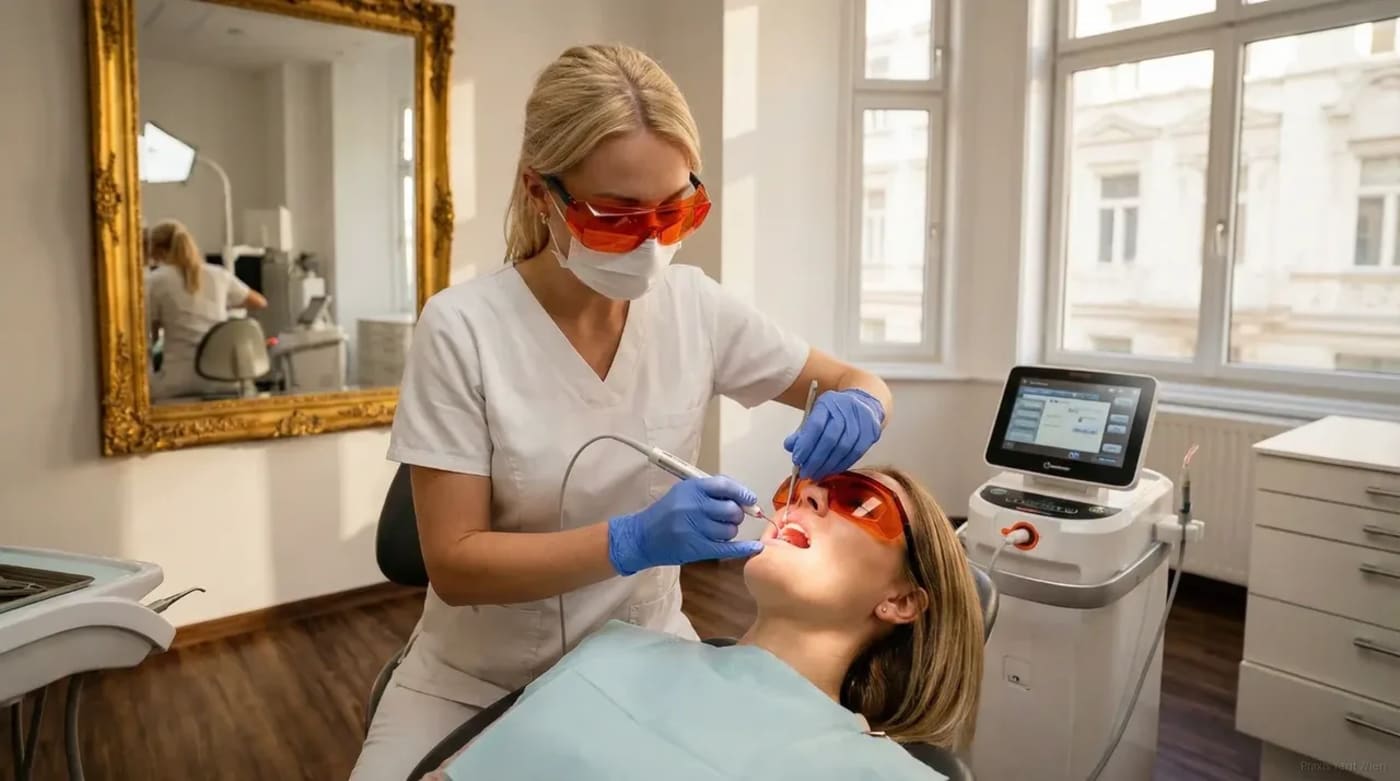
Precision at the tissue
Wavelength, power and application are matched to the treatment goal. Appropriate protective measures and experience with the specific procedure matter; a laser does not preserve healthy tissue under all conditions.
More topics in this area
Deepen your knowledge – find all information regarding the treatment process, costs, and results.
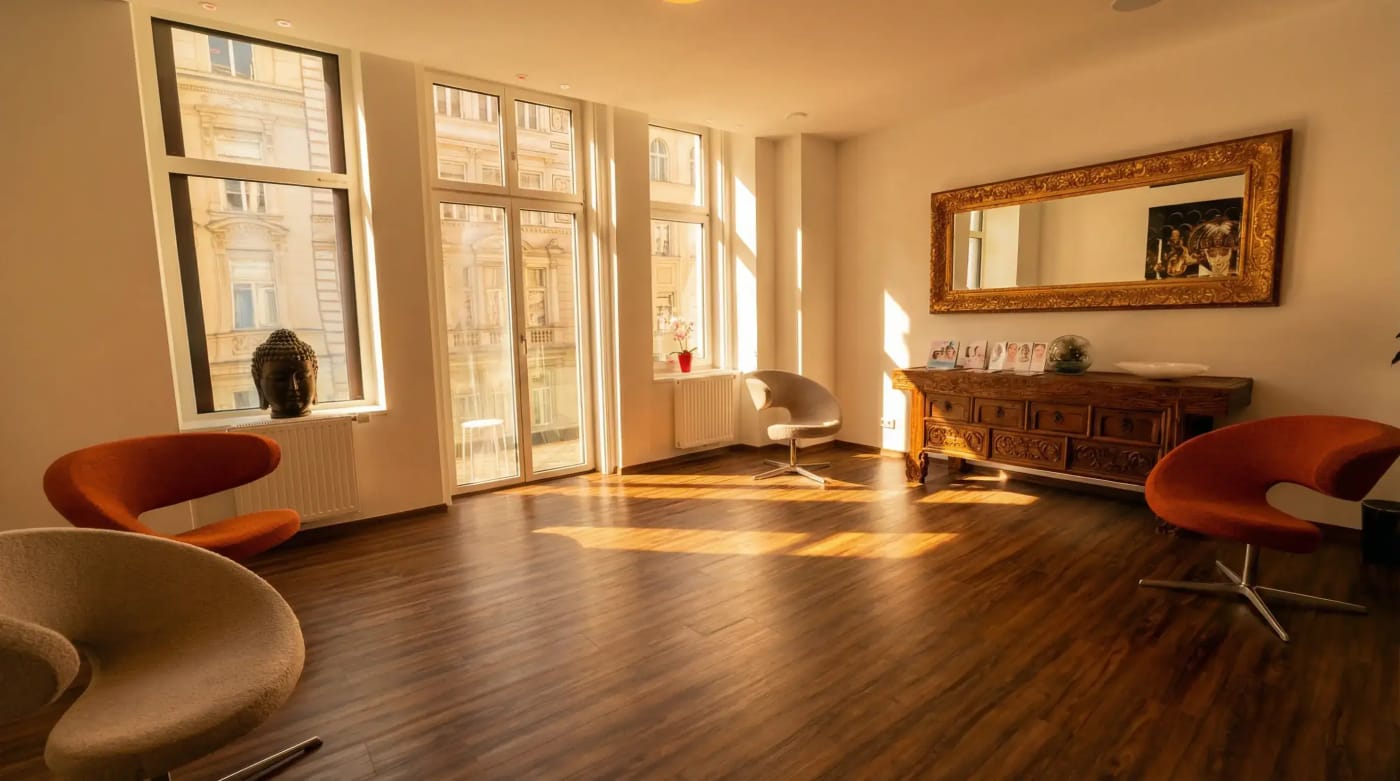
Kärntner Straße 9
100 meters from Stephansplatz, Innere Stadt.

Partnerships & Memberships & References